
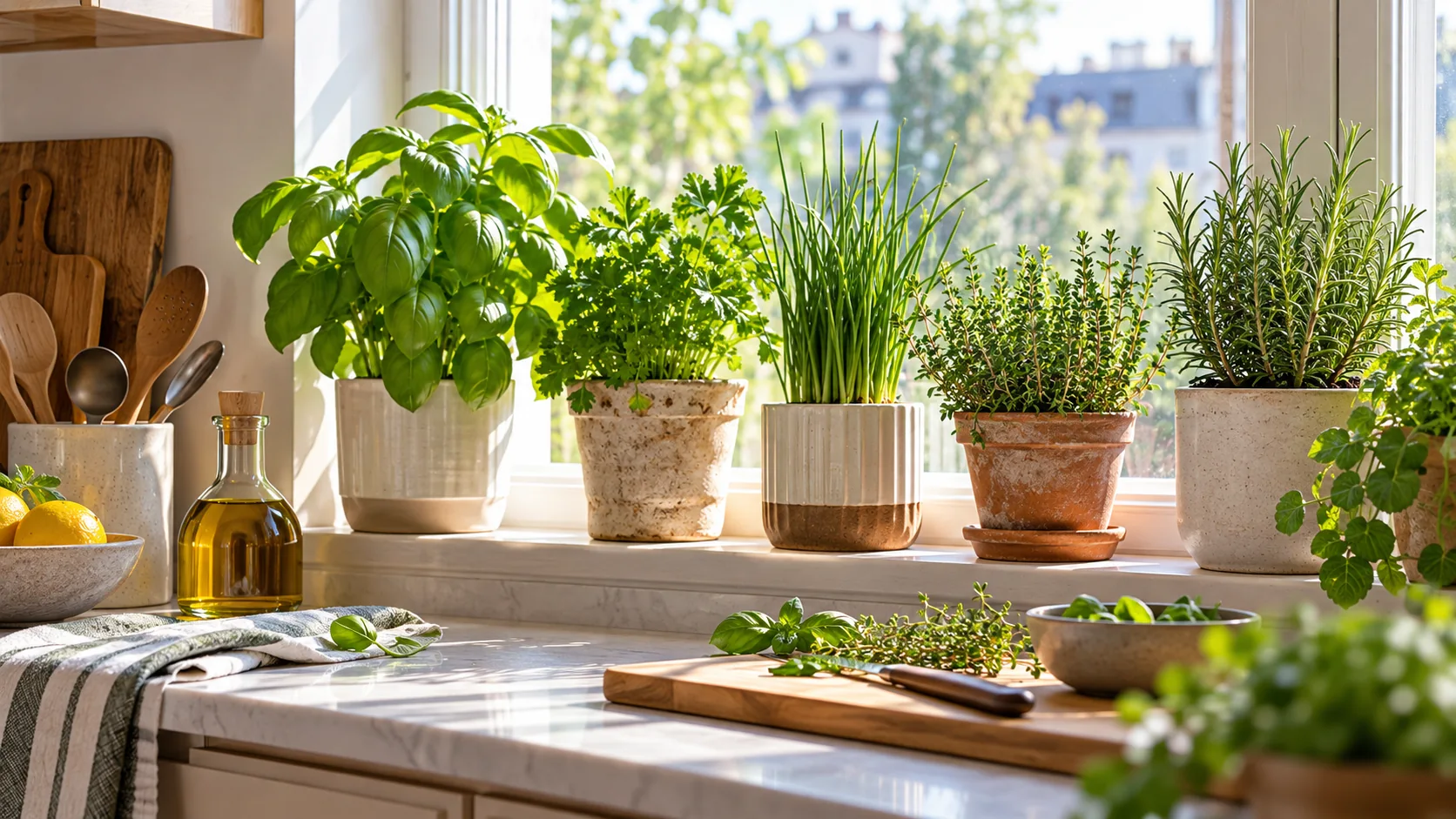
A windowsill herb garden brings fresh basil, parsley, chives and other culinary herbs within reach—even in a small kitchen. The key is matching each plant to your available sunlight, choosing pots with good drainage and watering according to the soil rather than a fixed schedule. This guide explains how to set up, care for and harvest indoor kitchen herbs throughout the seasons.
THE BOTANICAL KITCHEN JOURNAL
Fresh herbs start with the right window.
A practical field guide to growing basil, parsley, chives, mint and Mediterranean herbs in a small kitchen—without overwatering, overcrowding or wasting a season.
Observe the window before choosing plants.
Check the growing mix, not a calendar.
Cut modestly from established growth.
How to Assess Natural Light for Your Kitchen Herbs
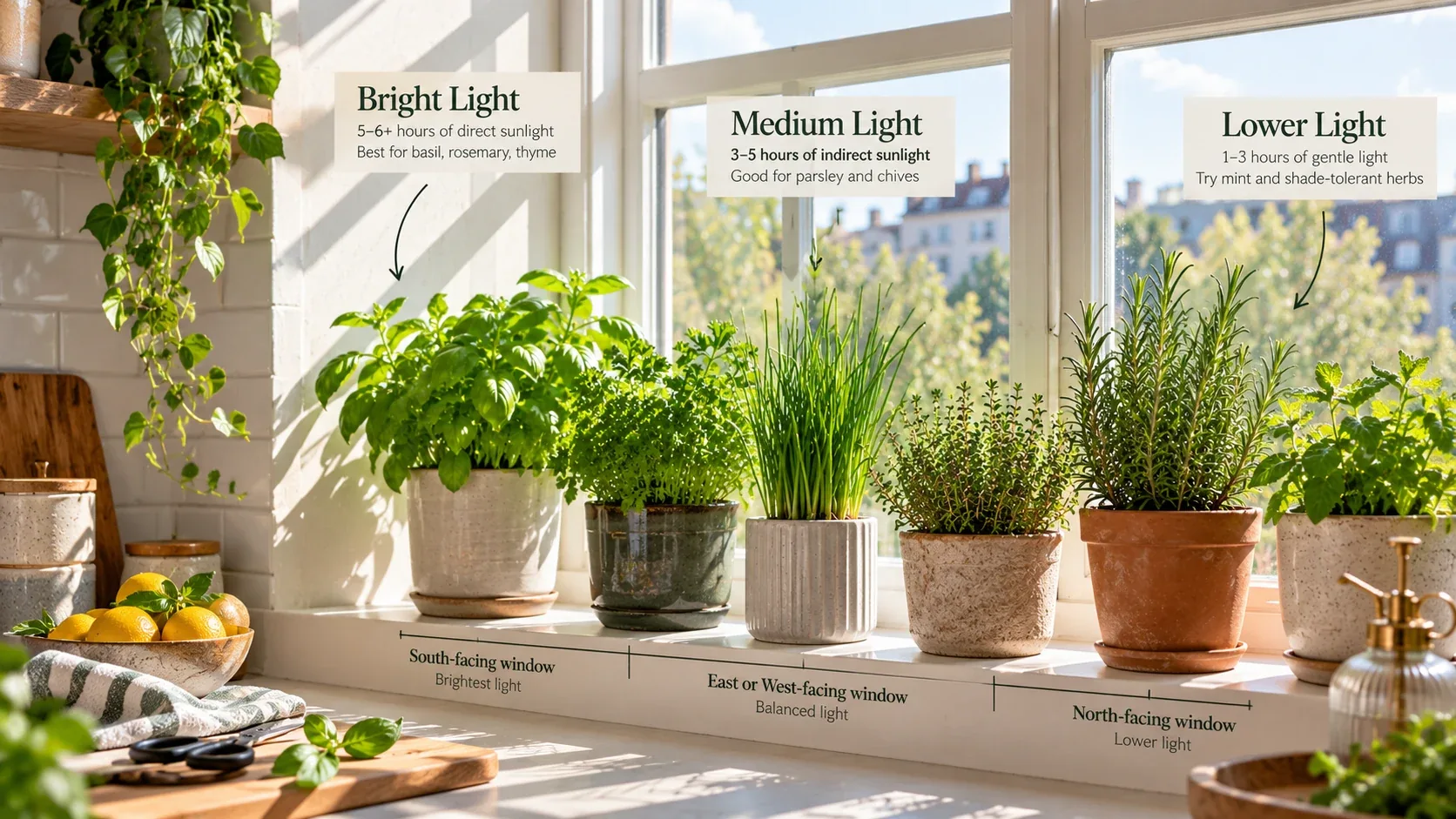
Before placing pots on the sill, observe the window over two ordinary days. Record when sunlight falls directly on the surface, how long it lasts and whether a neighbouring building casts shade. The direction of the window is a helpful clue, but it cannot tell the full story: deep window recesses, nearby trees, balconies above and seasonal sun angles can change the useful light dramatically. A room may look bright to your eyes yet provide relatively little energy for plants.
Make notes for a week if the weather is changeable. Morning light can be gentle and reliable, while a west-facing window may deliver intense heat through glass late in the day. A south-facing window can be excellent for light-loving herbs in many Northern Hemisphere homes, but monitor summer temperatures and leaf scorch. Place a simple thermometer near the pots if the area experiences large temperature swings. Judge the location by healthy new growth rather than by a compass label alone.
Best Herbs for a Windowsill Garden
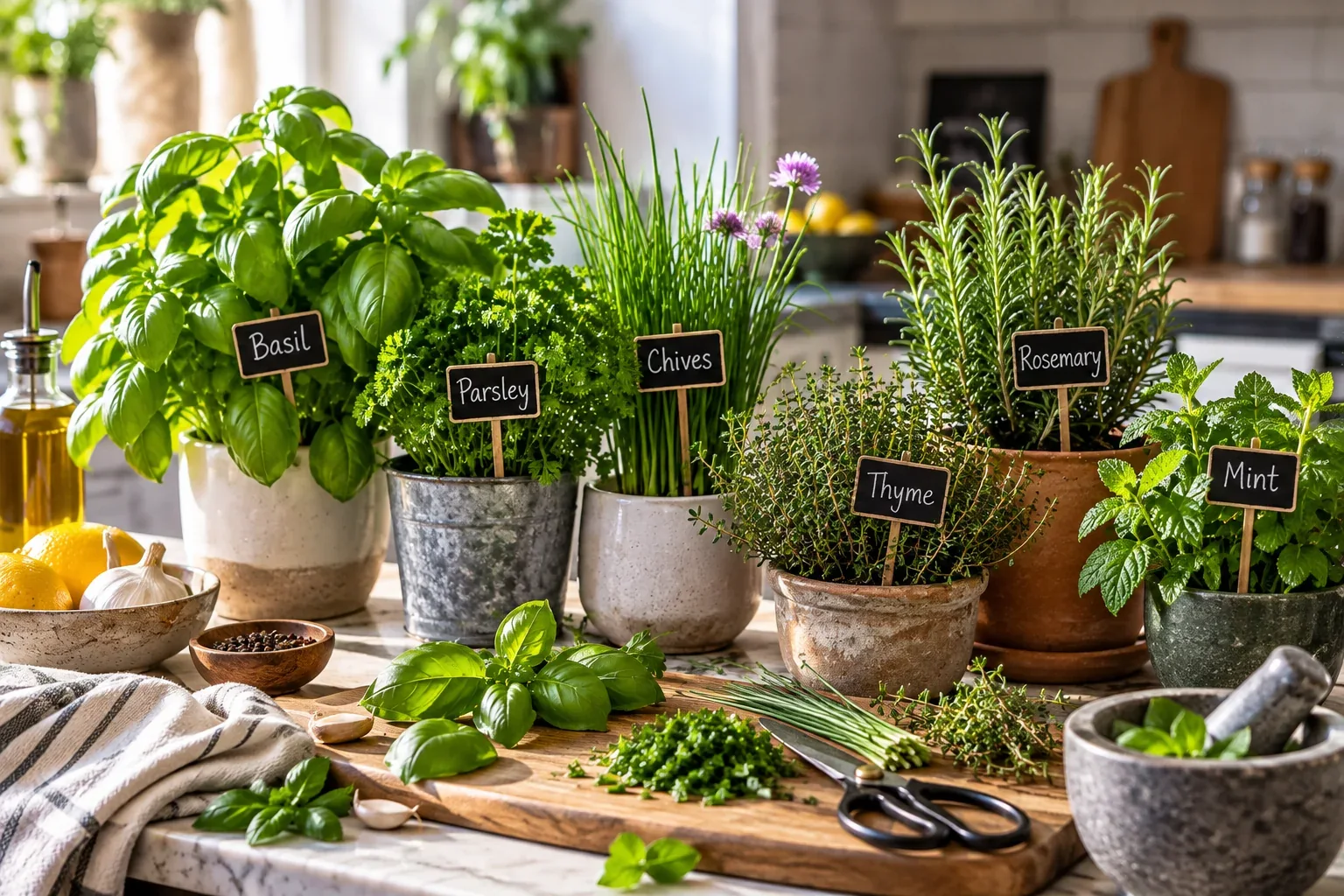
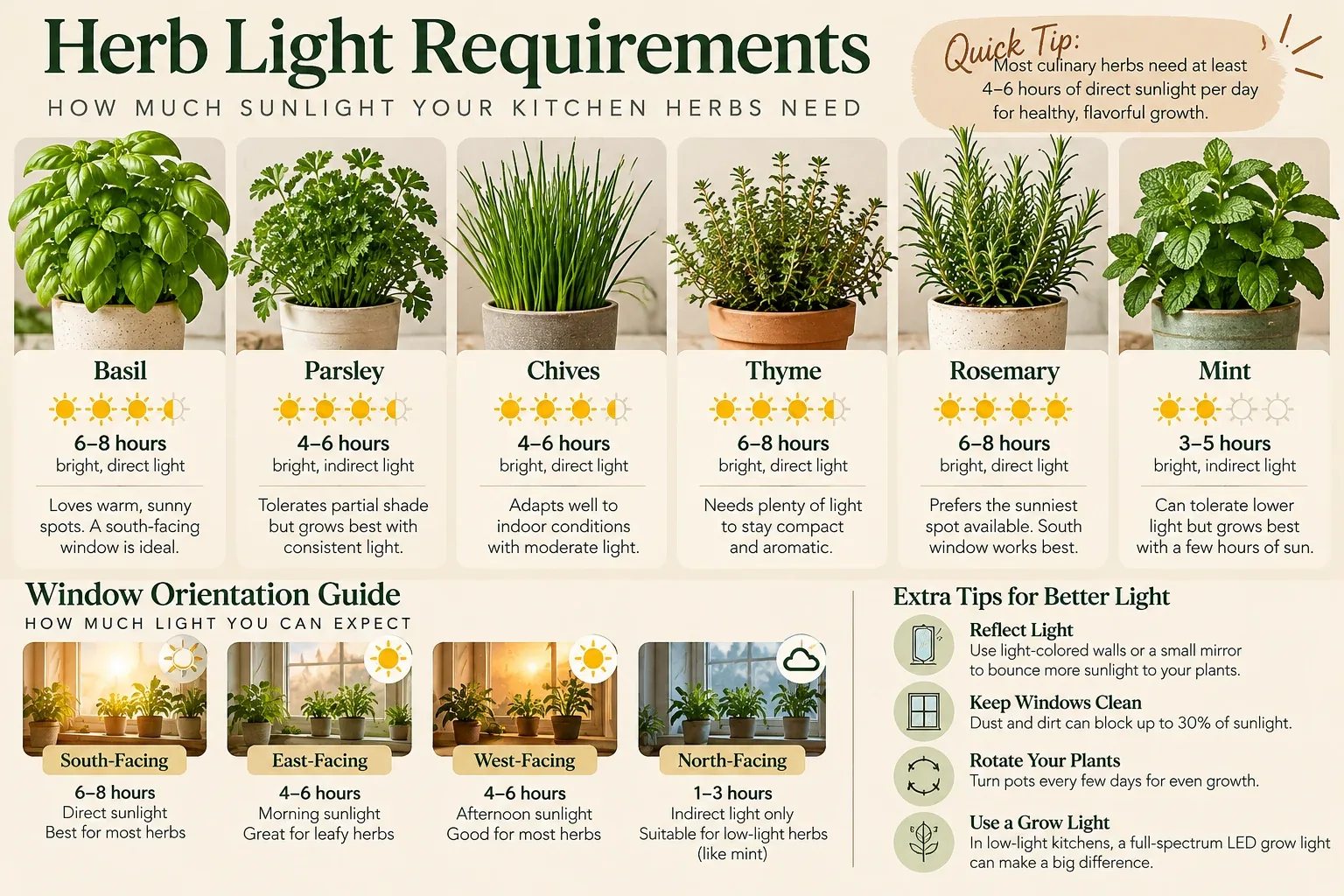
Basil is a rewarding choice for cooks who make pasta, tomato salads and pesto, but it prefers warmth and substantial light. It is often easier to treat it as a seasonal kitchen crop than to expect a lush plant through a dark winter. Parsley grows more steadily in cooler conditions, though it still needs reasonable light to produce a useful harvest. Chives are compact and convenient: small snips brighten eggs, dips and baked potatoes without requiring much counter space.
Mint offers vigorous growth and is particularly useful in tea, salads and yogurt sauces. Give it a separate container rather than letting its roots compete with other herbs. Thyme and rosemary suit Mediterranean cooking and generally appreciate a brighter, freer-draining position. Their woody stems do not mean they can tolerate constant wet compost. Select only two or three species for the first attempt and match each to the light you actually have.
Coriander, also called cilantro in many markets, can be useful for curries and fresh sauces, but plants may flower quickly in stressful heat or unsuitable conditions. Succession sowing small amounts can be more useful than trying to maintain one old plant for months. Dill can become tall and may be awkward on a very narrow windowsill. Consider the final height and growth habit as seriously as the flavour.
Useful tools for this step
As an Amazon Associate I earn from qualifying purchases. Links below may earn us a commission at no additional cost to you.
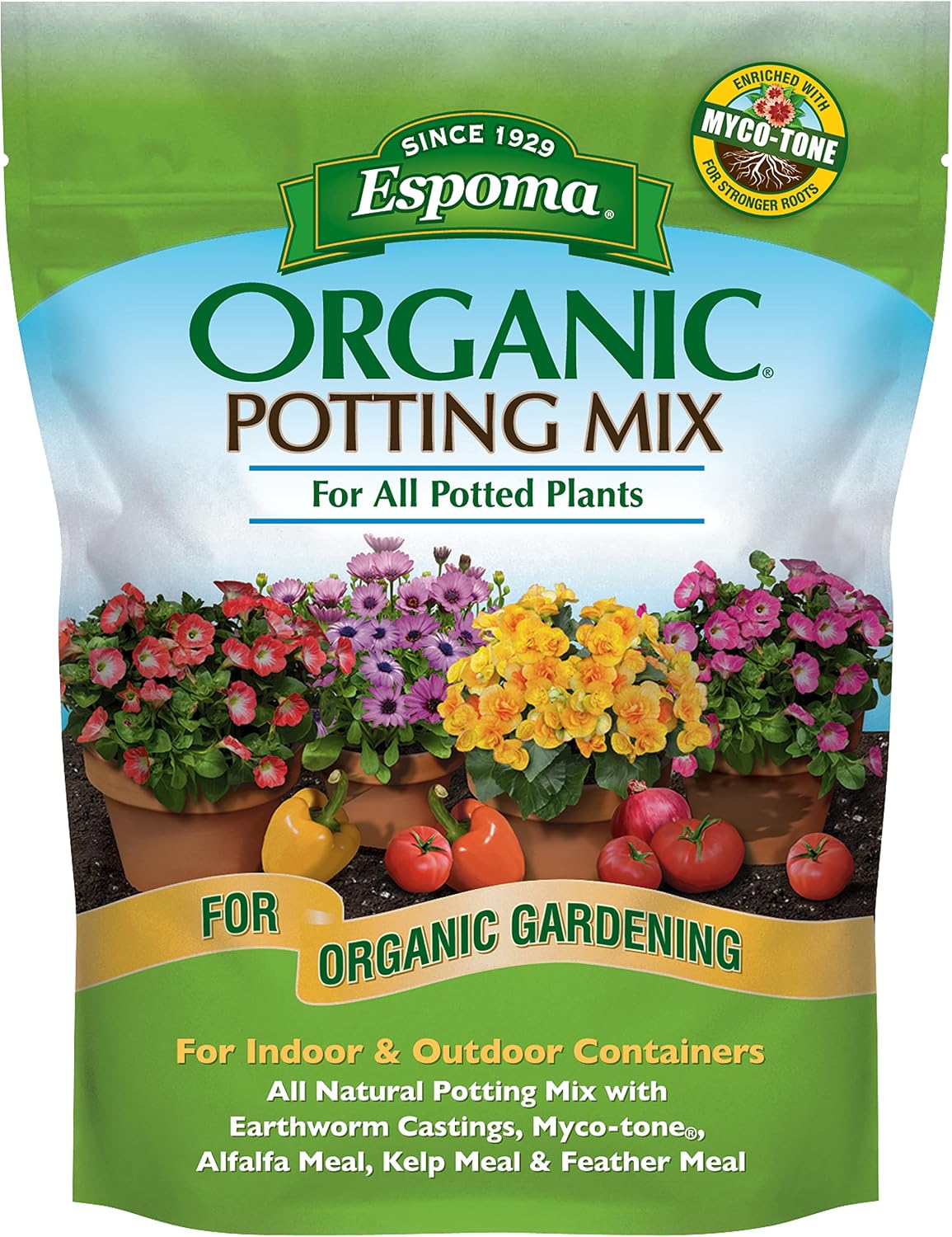
Espoma Organic Potting Mix
A practical potting-mix option for container-grown culinary herbs. Choose a container with a drainage hole and adjust watering to the plant.
View on Amazon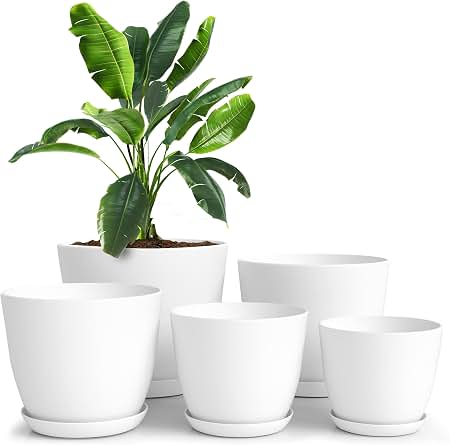
Plant Pots with Drainage — 5-Pack
A set of individual containers can help you give each herb its own watering routine.
View on AmazonPots, growing medium and drainage: the essentials
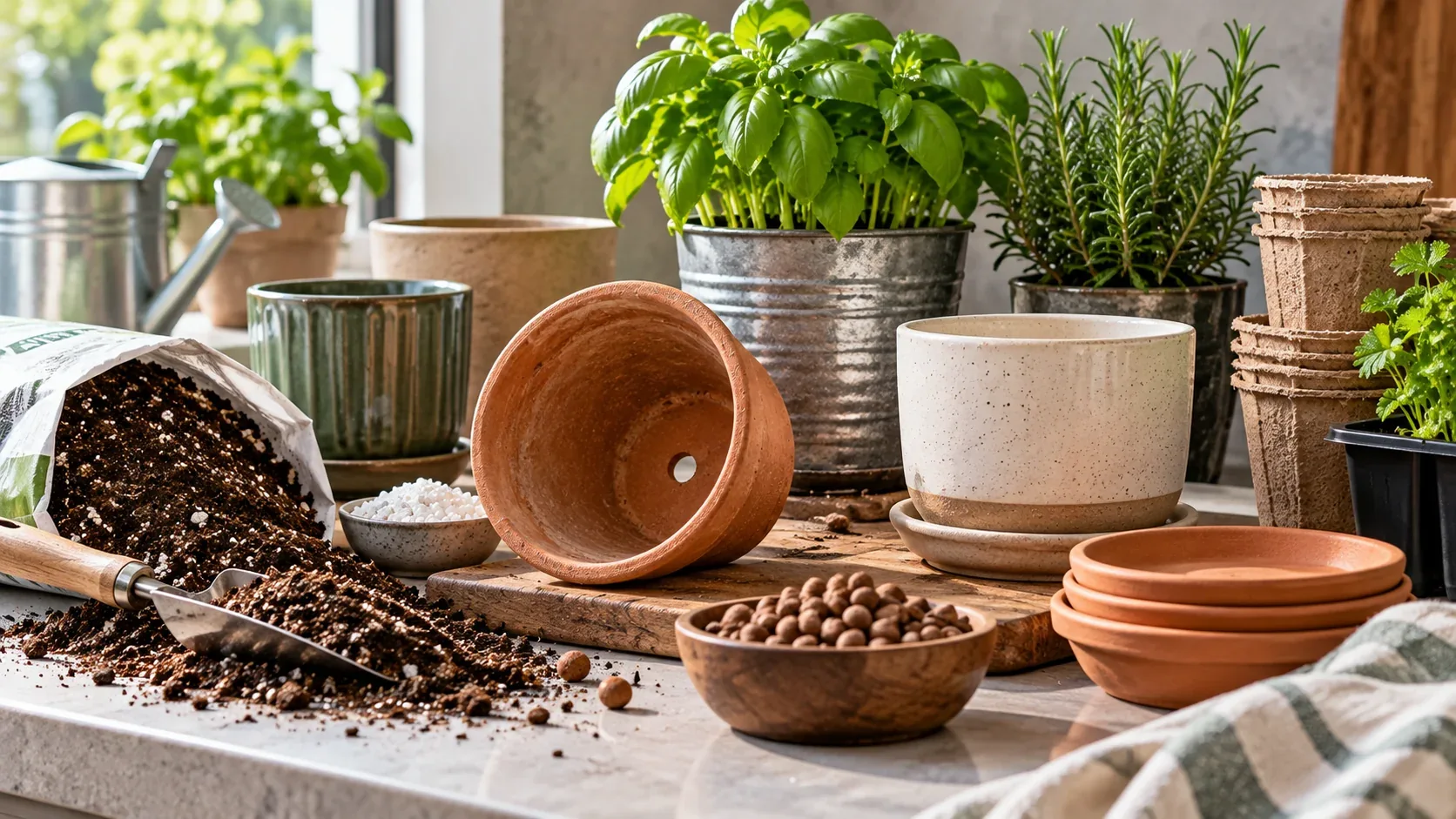
Choose a pot with drainage holes and enough root space to support the plant without overwhelming the windowsill. A decorative container with no holes can conceal a smaller functional nursery pot, provided you remove standing drainage water. Use a clean, appropriate container potting mix rather than dense soil dug from outdoors. Garden soil can compact in pots, which reduces the air available around the roots and makes watering harder to judge.
Terracotta can dry faster than plastic or glazed ceramic, particularly in a sunny heated kitchen. That is not automatically good or bad; it changes how often you need to check the compost. A large pot holds moisture for longer, but a small seedling planted into an oversized container may sit in wet medium. Match pot scale to the plant, and repot only when roots or watering behaviour show that an adjustment is needed.
Protect the window ledge with a sturdy tray or saucers and check them after watering. Wooden sills and painted surfaces can be damaged by persistent moisture. Keep ventilation openings free and do not pile pots so high that they make the window difficult or unsafe to open. If the windowsill is too narrow, a stable stand just beside it can be preferable to balancing a container against the glass.
Useful tools for this step
As an Amazon Associate I earn from qualifying purchases. Links below may earn us a commission at no additional cost to you.
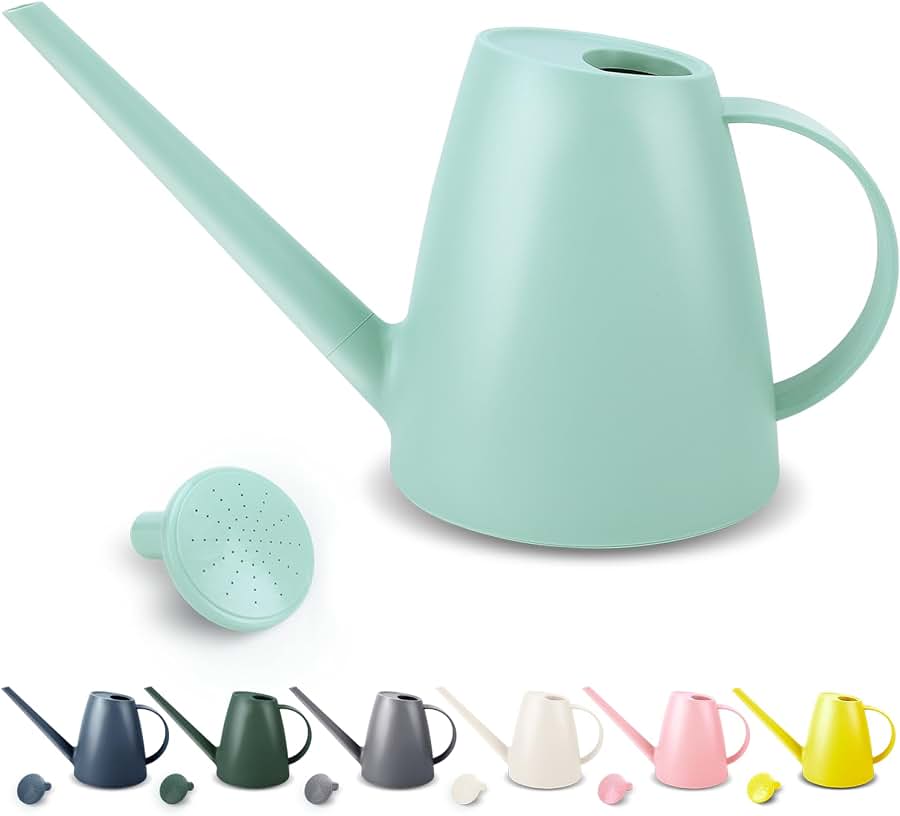
Indoor Watering Can, 1.8L
A small watering can helps direct water to the potting mix rather than the leaves.
View on Amazon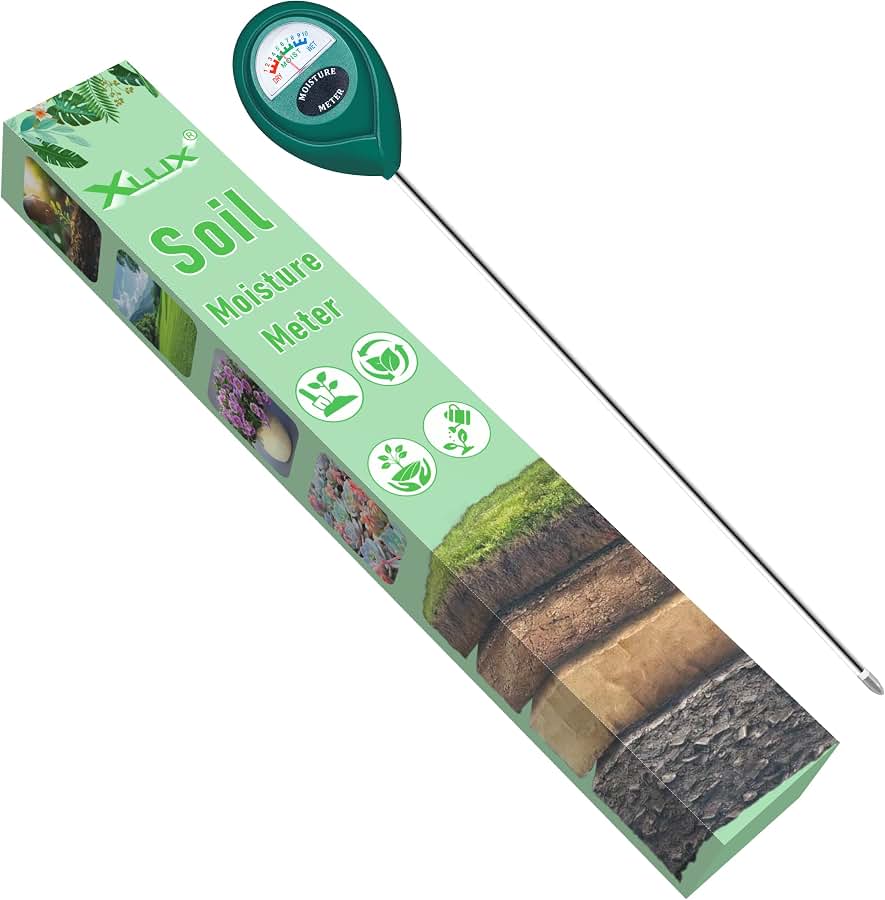
XLUX Soil Moisture Meter
Optional tool to supplement, not replace, observing the potting mix and checking moisture by hand.
View on AmazonHow to Water Indoor Herbs Without Overwatering
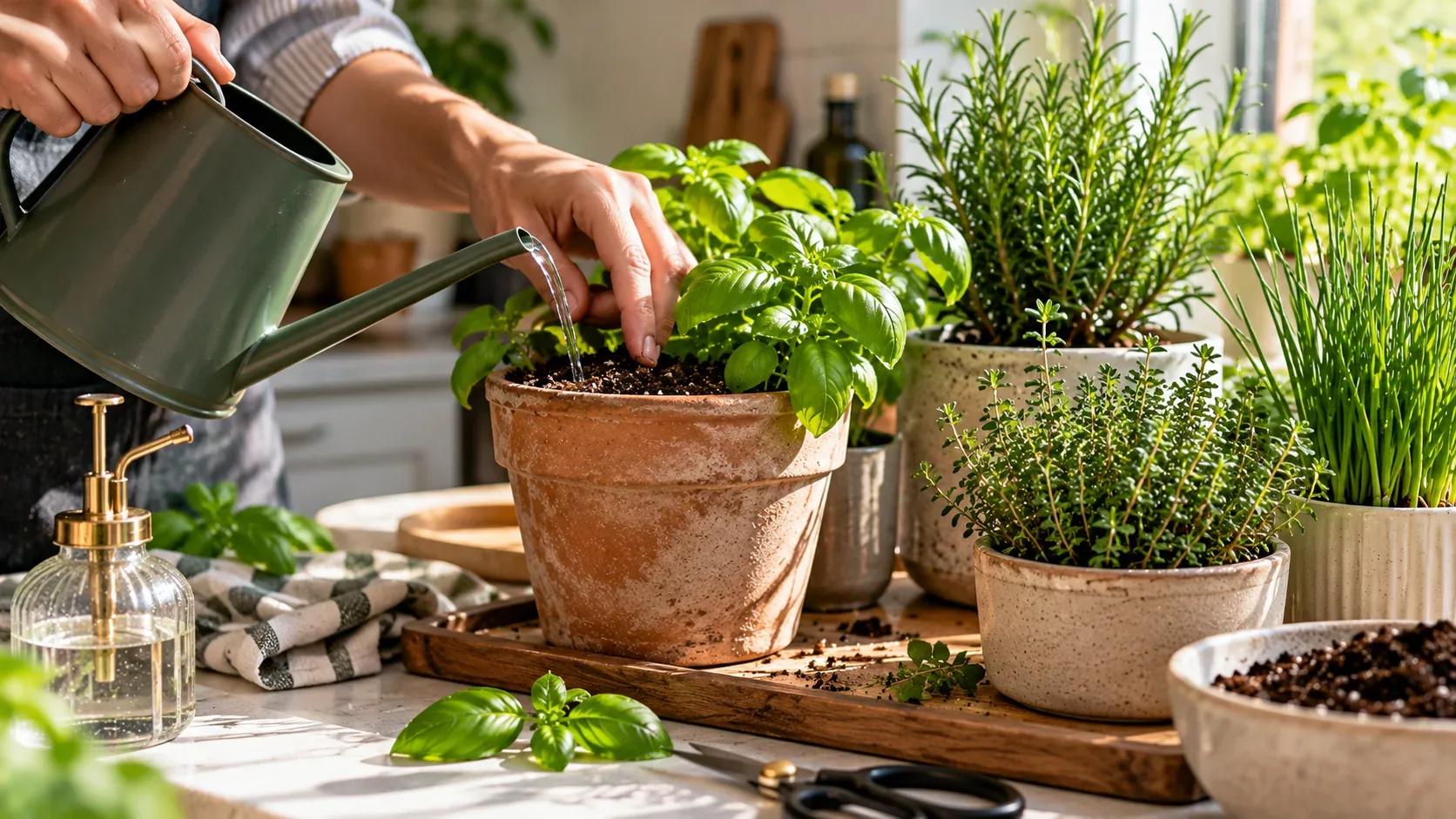
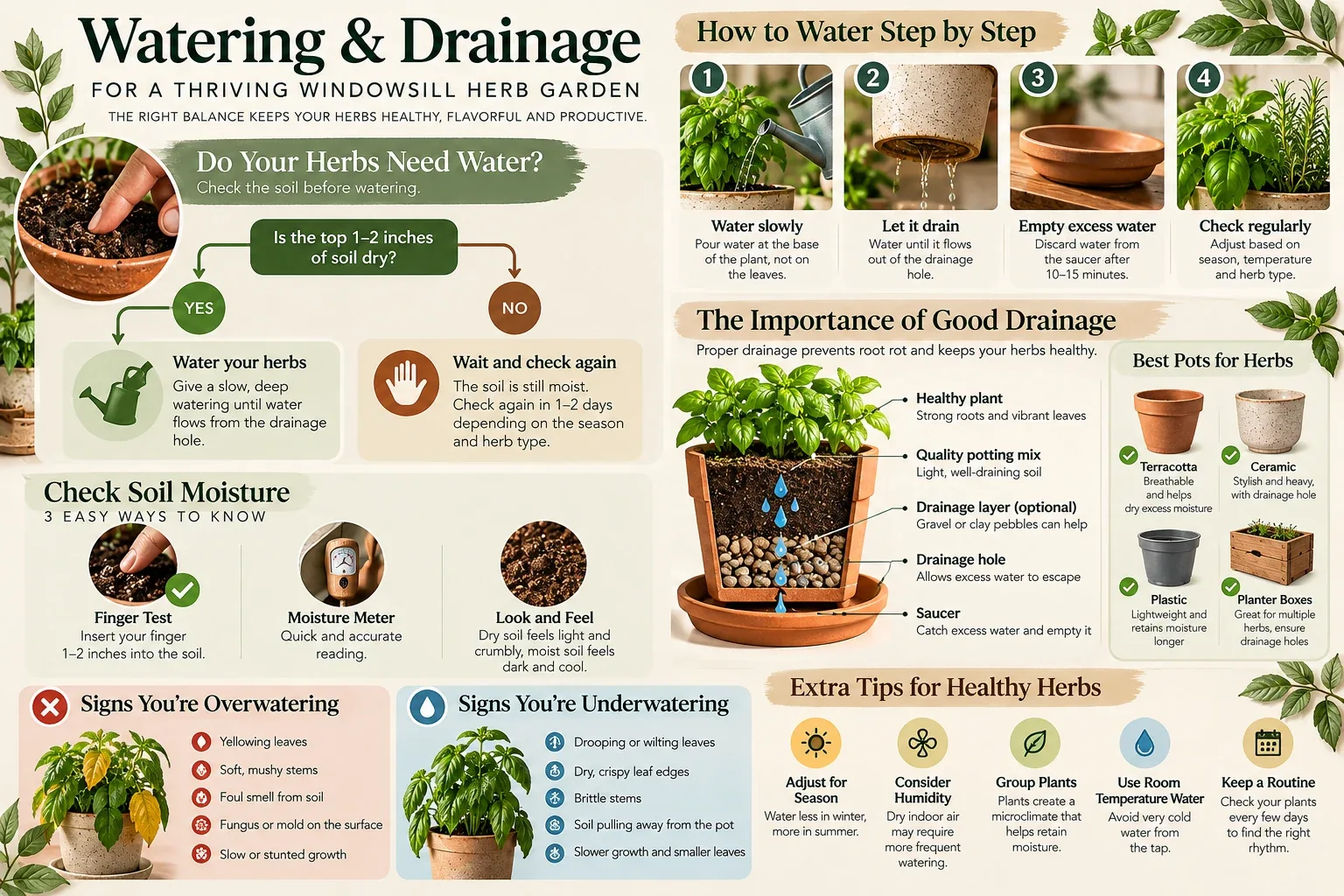
Use touch and observation to guide watering. Insert a finger into the potting medium at a depth appropriate for the container, or learn to compare the weight of the pot when freshly watered and after it has dried. If the surface looks dry while the medium lower down remains wet, wait and recheck. Water sufficiently when required, allowing excess water to pass through the bottom, then empty the saucer.
Plants vary. Basil often struggles if it repeatedly becomes extremely dry, while rosemary and thyme dislike chronically saturated roots. Indoor heating, the size of the plant, air movement and pot material all influence water use. A fixed instruction to water every three days is therefore unreliable. During winter, many herbs grow more slowly and use less water, but a radiator directly below the window can complicate that pattern.
Brown tips, yellowing leaves and wilting are ambiguous symptoms. A wilting plant may be thirsty, but one with root damage in saturated soil can also droop. Check the moisture before responding. When in doubt, inspect drainage and the roots’ environment instead of automatically adding more water or fertiliser. Consistency comes from learning the needs of each pot.
Feeding, airflow and kitchen temperature
Herbs grown in containers eventually draw down the nutrients in their potting mix. If your herbs are growing actively and the product label allows it, a suitable diluted fertiliser may help, but more is not always better. Too much fertiliser can damage roots and encourage weak growth. Follow the manufacturer’s directions and avoid feeding heavily when light levels are insufficient for active growth.
Give foliage enough air circulation that crowded leaves do not stay damp unnecessarily. At the same time, protect tender plants from freezing drafts and intense heat from ovens, radiators or direct contact with a hot window pane. A kitchen can be humid during cooking, then very dry after ventilation or heating. Move vulnerable plants away from extremes rather than trying to hold the entire room at one ideal number.
Keep leaves reasonably clean so you can examine their condition. Wash the edible parts appropriately before use, especially if a plant has been handled frequently. Never apply an unknown pest treatment to edible herbs; use products authorised for that plant and follow all label instructions, including any harvest interval.
Useful tools for this step
As an Amazon Associate I earn from qualifying purchases. Links below may earn us a commission at no additional cost to you.
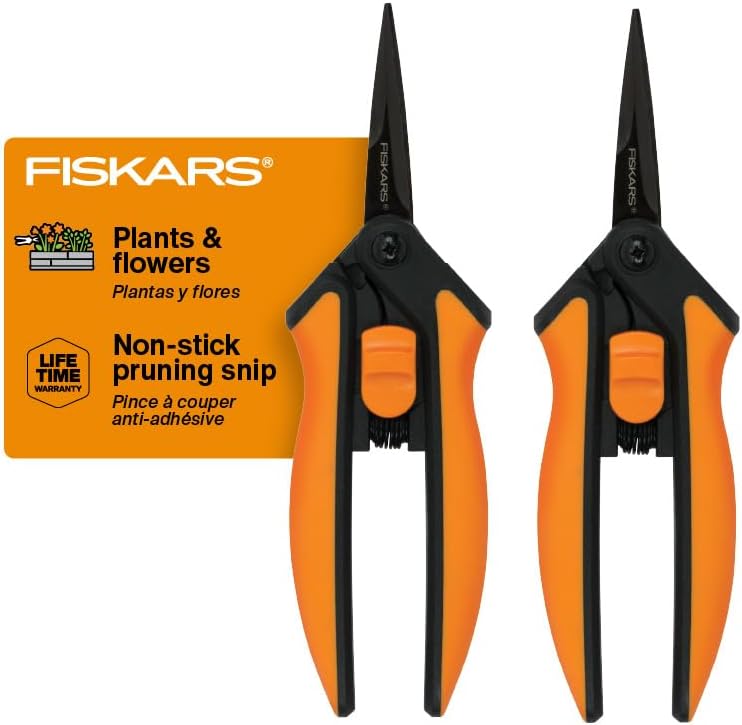
Fiskars Non-Stick Pruning Snips
Small pruning snips for careful harvesting of tender culinary herb stems.
View on AmazonHow to Harvest Windowsill Herbs Without Damaging Them
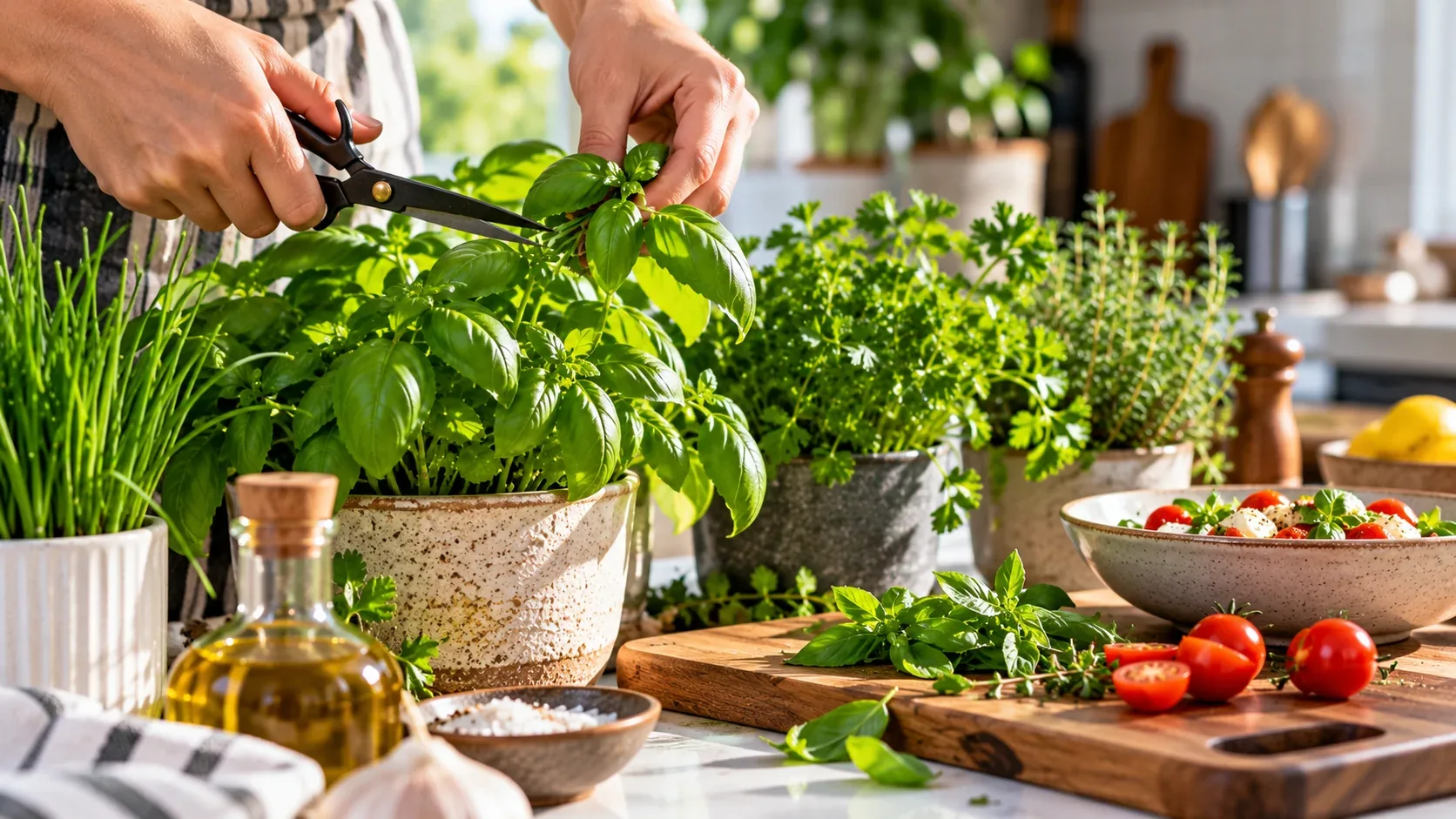
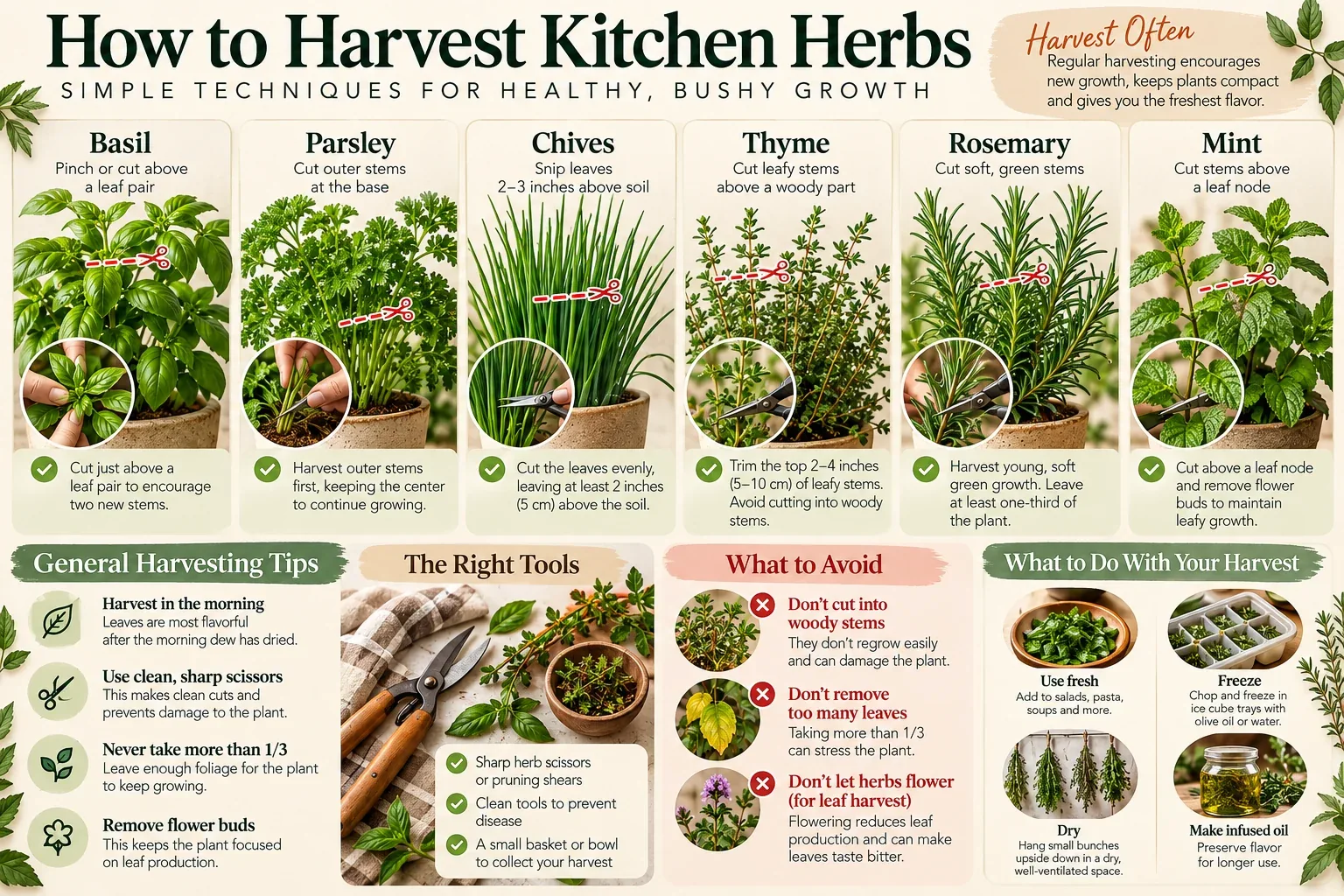
The first harvest should be modest. Allow a young plant to establish and produce healthy new growth before removing large amounts. On basil, cut a growing shoot just above a suitable leaf pair; this can promote side branches and a bushier habit. Repeatedly removing only the largest lower leaves will not shape the plant in the same way. Avoid taking most of the foliage in one session.
For parsley, harvest mature outer stems close to their base while preserving the younger central growth. Snip chives with clean scissors, leaving enough green material for recovery. Mint tolerates regular cutting when actively growing, but its rapid growth is another reason to give it a dedicated pot. With woody herbs, take small amounts of fresh growth and avoid severe cuts into old leafless stems.
Plan harvesting around dinner instead of treating the herbs as permanent decoration. A small pinch added at the end of cooking can contribute considerable flavour. Basil is particularly fragrant in dishes where it is added shortly before serving; rosemary and thyme often withstand longer cooking. The cooking habit makes the plants useful, while regular observation during harvest helps you notice problems early.
Troubleshooting common windowsill herb problems
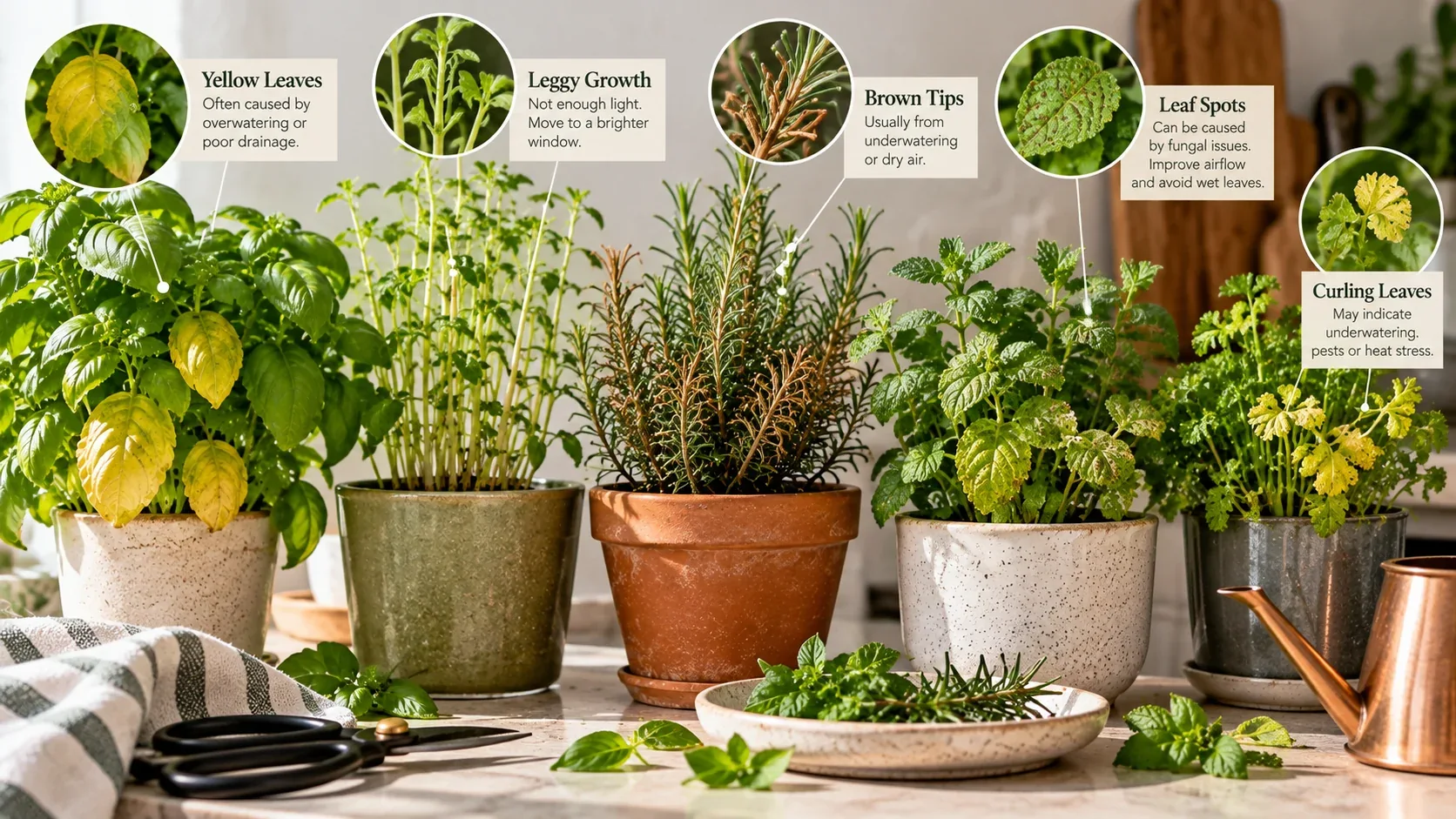
If stems are long, thin and reaching sharply toward the window, inadequate light may be involved. Move the pot gradually into a better position or consider an appropriate plant light. If the leaves are scorched or bleached on the glass-facing side, watch for excessive direct sun and temperature. Sudden relocation can itself stress foliage, so make adjustments progressively.
Yellow leaves require context. One ageing leaf at the base can be normal, but numerous yellow leaves combined with permanently wet compost point toward possible moisture or root issues. Check for blocked holes or standing water in an outer pot. Crispy edges can have several causes, including watering inconsistency, hot air or salt build-up from excessive feeding.
Inspect young tips and undersides of leaves for pests such as aphids or spider mites, particularly on plants that came from outdoors. Isolate affected containers where possible to reduce spread. Identify the issue before treating it and choose only food-crop-safe methods. A note with the date, symptom, moisture condition and response helps you make better decisions than a sequence of random remedies.
Useful tools for this step
As an Amazon Associate I earn from qualifying purchases. Links below may earn us a commission at no additional cost to you.
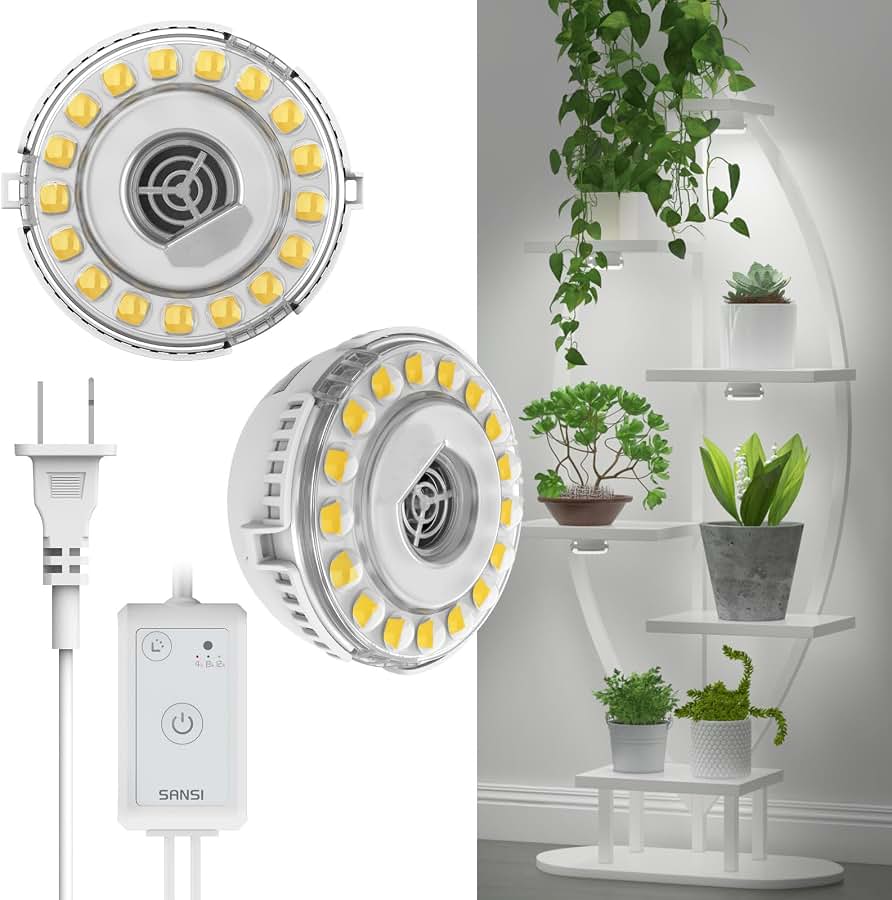
SANSI Puck Grow Light
Supplemental lighting to consider when winter daylight is limited. Match placement and duration to the plant and manufacturer’s instructions.
View on AmazonGrowing through autumn and winter
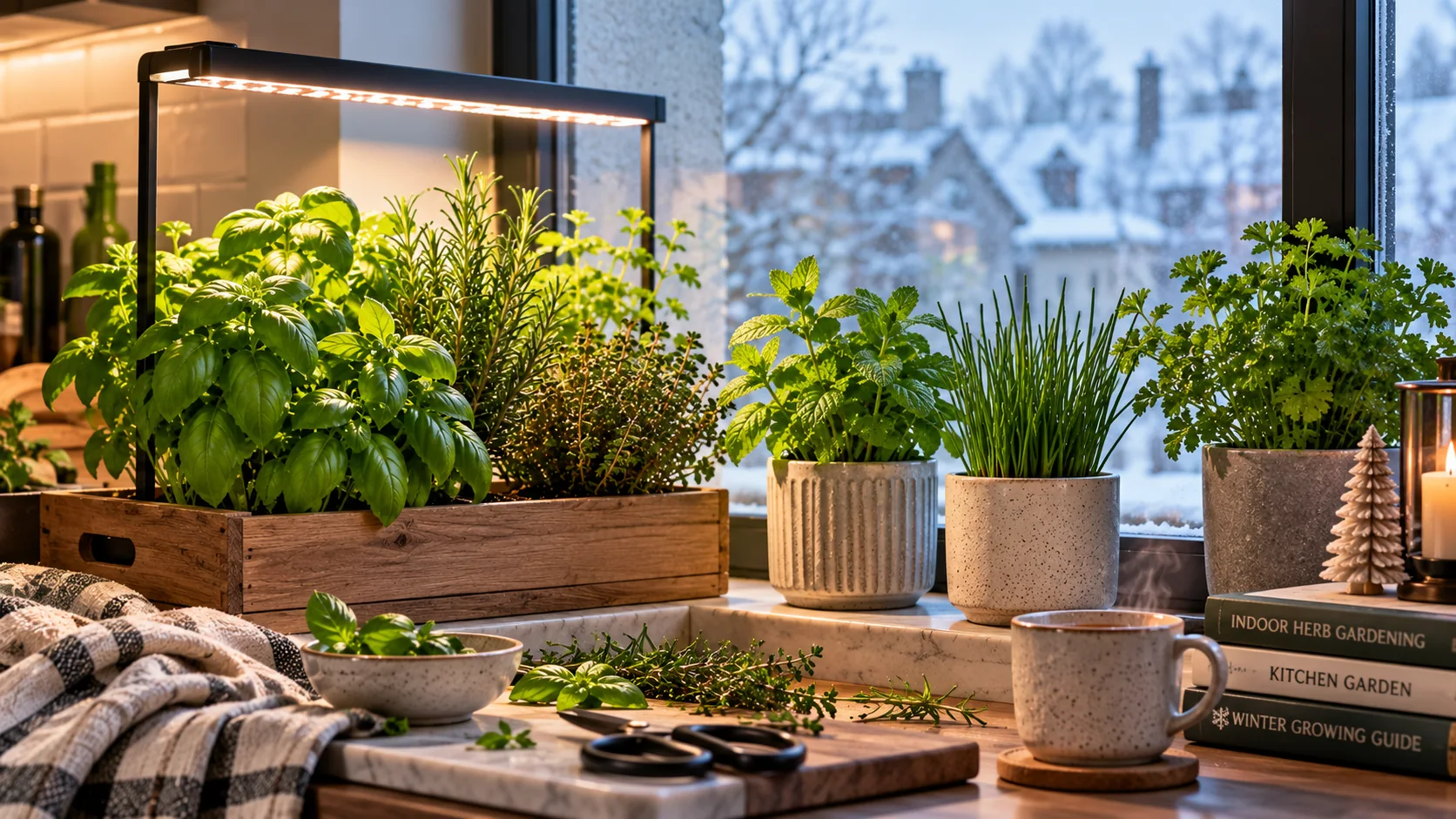
A productive summer herb window may be substantially less useful in November. Short daylight hours and low sun angles can slow growth even when the room is warm. Consider smaller harvests in the darker months and avoid trying to compensate for weak light with extra water or fertiliser. A suitable grow light can be an option, but it must be positioned and timed according to its instructions.
Watch for cold glass and overnight drafts. Tender basil may struggle in a position that feels acceptable during the day but becomes cold after sunset. Some herbs are better grown as seasonal plants and replaced when conditions improve; this is not a failure. Planning around real seasons often produces healthier plants with less effort.
If you use a grow light, keep electrical components away from watering spills, follow safety requirements and choose equipment appropriate for use near plants. An improvised household bulb may not supply the needed light and can create excessive heat. Begin with a few healthy plants rather than building an elaborate lighting setup before you have a reliable watering routine.
Useful tools for this step
As an Amazon Associate I earn from qualifying purchases. Links below may earn us a commission at no additional cost to you.
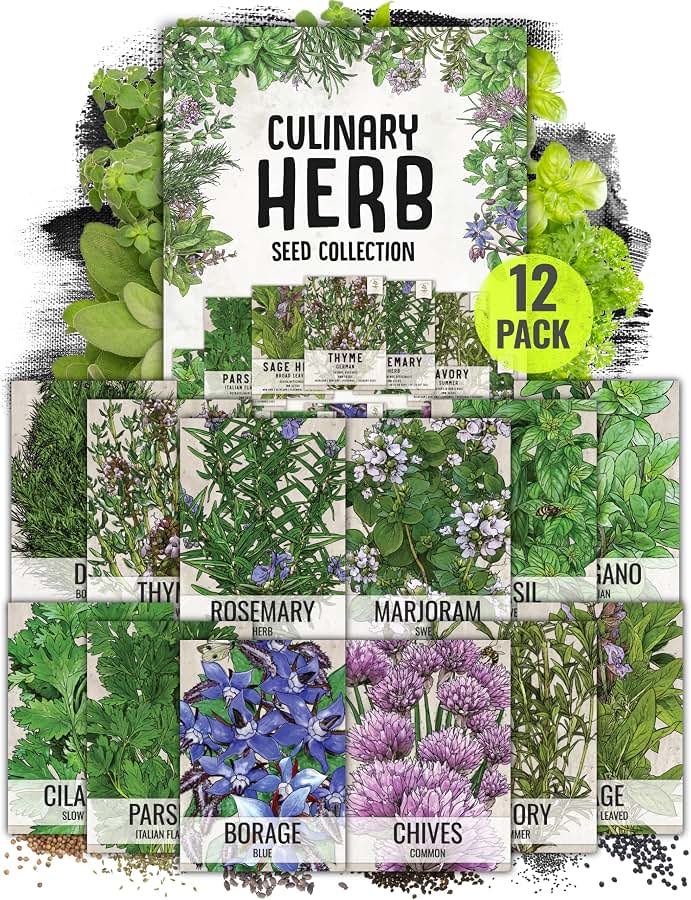
Seed Needs Culinary Herb Seeds
A culinary herb seed assortment for starting a windowsill garden; germination and readiness to harvest vary by species.
View on Amazon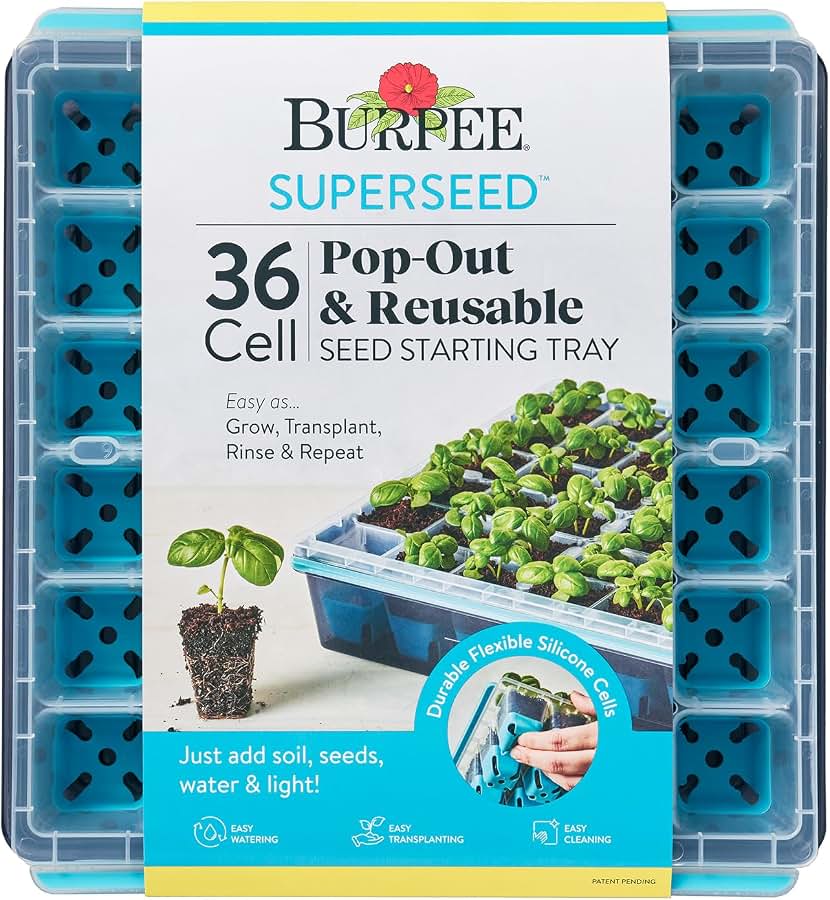
Burpee SuperSeed 36-Cell Starter Tray
A reusable seed-starting tray for growing herb seedlings before transferring them to individual pots. Check the tray dimensions against the space available on your windowsill.
View on AmazonA four-week starter schedule for beginners
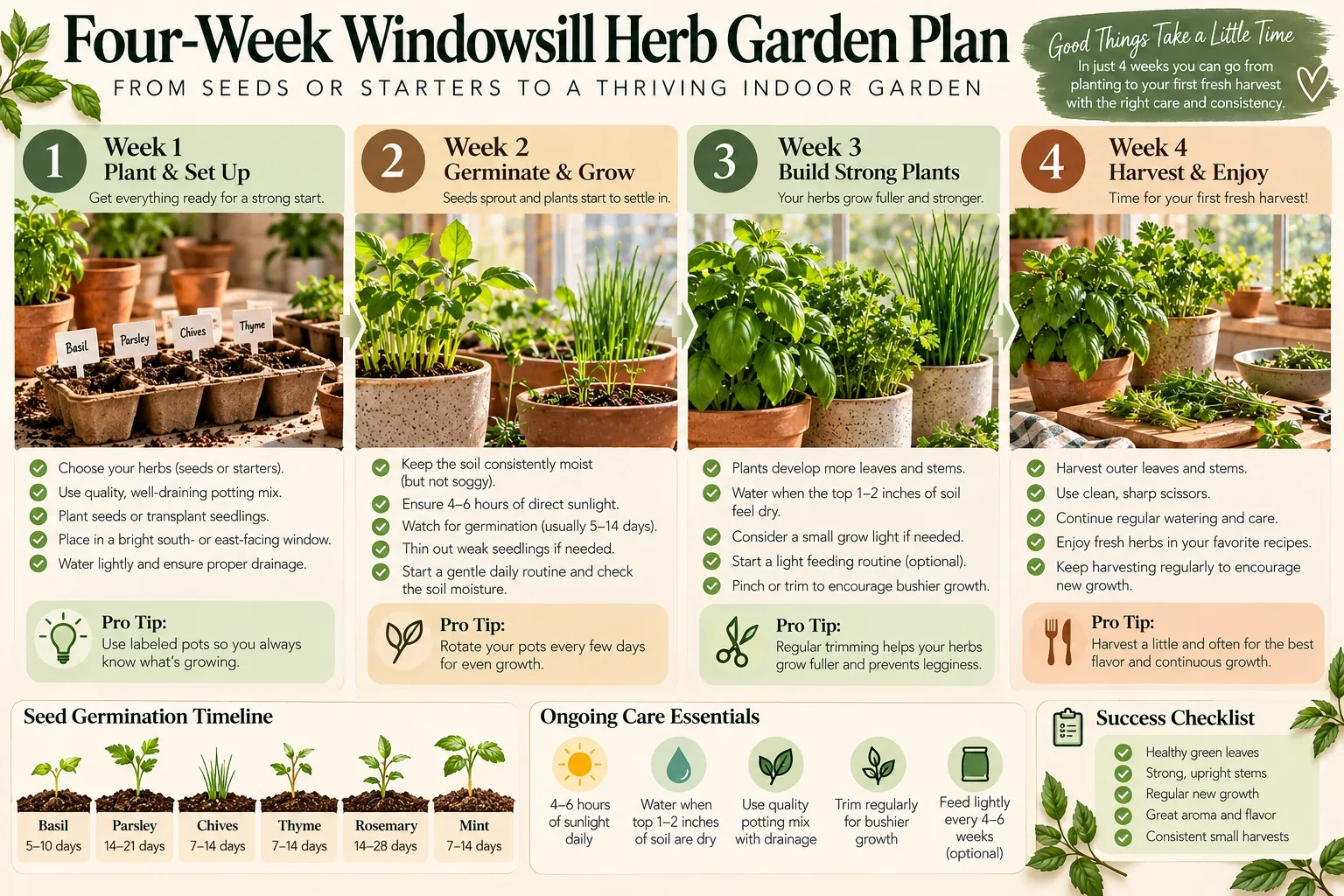
THE FOUR-WEEK GROWING JOURNAL
Choose your brightest suitable window, draining pots and two or three herbs.
Track soil moisture, light direction and new growth.
Inspect leaves, adjust placement gradually and harvest only established growth.
Review plant health, harvest results and what to grow next.
Week one: identify the brightest practical position, choose two or three appropriate herbs and check that every pot drains. Photograph the plants on day one. Water only when their particular medium requires it, then empty the tray. Avoid repeatedly moving the pots around the kitchen; they need time to settle.
Week two: observe how quickly each container dries. Rotate a pot slightly if it leans strongly toward the window and record the direction of new growth. Check the undersides of leaves while the plants are still small. If you discover that your chosen window is dimmer than expected, adjust the light rather than adding more feed.
Week three: if the plants are actively growing, begin taking tiny harvests from established shoots, respecting each species’ growth habit. Check whether the pots are becoming crowded and whether the leaves show signs of stress. Week four: evaluate what survived, what produced flavourful harvests and what required too much work. Add a new herb only if the current system is manageable.
Quick-reference windowsill herb care matrix
| Herb | Light and conditions | Harvesting approach | Common issue |
|---|---|---|---|
| Basil | Strong light, warmth | Pinch shoots above leaf pairs | Cold or insufficient light |
| Parsley | Good light, moderate temperatures | Remove mature outer stems | Slow growth in deep shade |
| Chives | Bright location | Snip leaves, allow recovery | Overharvesting small plants |
| Mint | Bright to some partial shade | Trim established shoots | Overcrowding shared pots |
| Thyme | Bright, well-drained | Take modest fresh tips | Constantly wet roots |
| Rosemary | Bright, free-draining | Trim tender growth lightly | Weak light and overwatering |
Windowsill Herb Garden FAQs
The right windowsill matters more than the number of pots. Start small and adjust care to each herb.
How many hours of sunlight do culinary herbs need?
Needs vary by species and season. Many Mediterranean herbs and basil are most productive with abundant direct or very bright light, while some leafy herbs tolerate less. Observe plant growth and consider appropriate supplemental lighting when daylight is inadequate.
Is a kitchen windowsill too warm for herbs?
Not necessarily. The problem is excessive or fluctuating heat, especially close to radiators, ovens or hot glass. Choose a stable location compatible with the species.
Do herbs grow better in one long planter?
A shared planter may look tidy, but it combines plants with different watering needs and can produce root competition. Individual pots are often easier for beginners.
How long will a windowsill herb plant last?
It depends on species, plant age and conditions. Some herbs are annual or short-lived as kitchen crops, while others are perennial in suitable environments.
Can I grow fresh herbs without soil?
Hydroponic systems exist, but require attention to light, nutrient solution, sanitation and equipment. Simple draining containers with suitable potting mix are a practical beginner option.
For complementary planning advice, explore our complete small-kitchen herb guide, space-saving kitchen cooking habits and our beginner container-gardening guide.
Growing herbs beside the kitchen window is a practical way to add fresh flavour to everyday meals. The biggest challenge is not finding a matching collection of pots: it is finding enough useful light and building a routine that allows different plants to grow well in a small space.
Can herbs grow at a north-facing window?
A bright north-facing windowsill may sustain some leafy herbs, but winter growth and harvests are often limited. Choose herbs to match the actual available light; a suitable grow light may help when natural light is insufficient.
Can supermarket herb pots keep growing?
Sometimes. Supermarket herbs are often densely planted for quick harvesting. Give the plant good light, check drainage, allow it to acclimate and consider carefully dividing or repotting crowded seedlings when appropriate.