
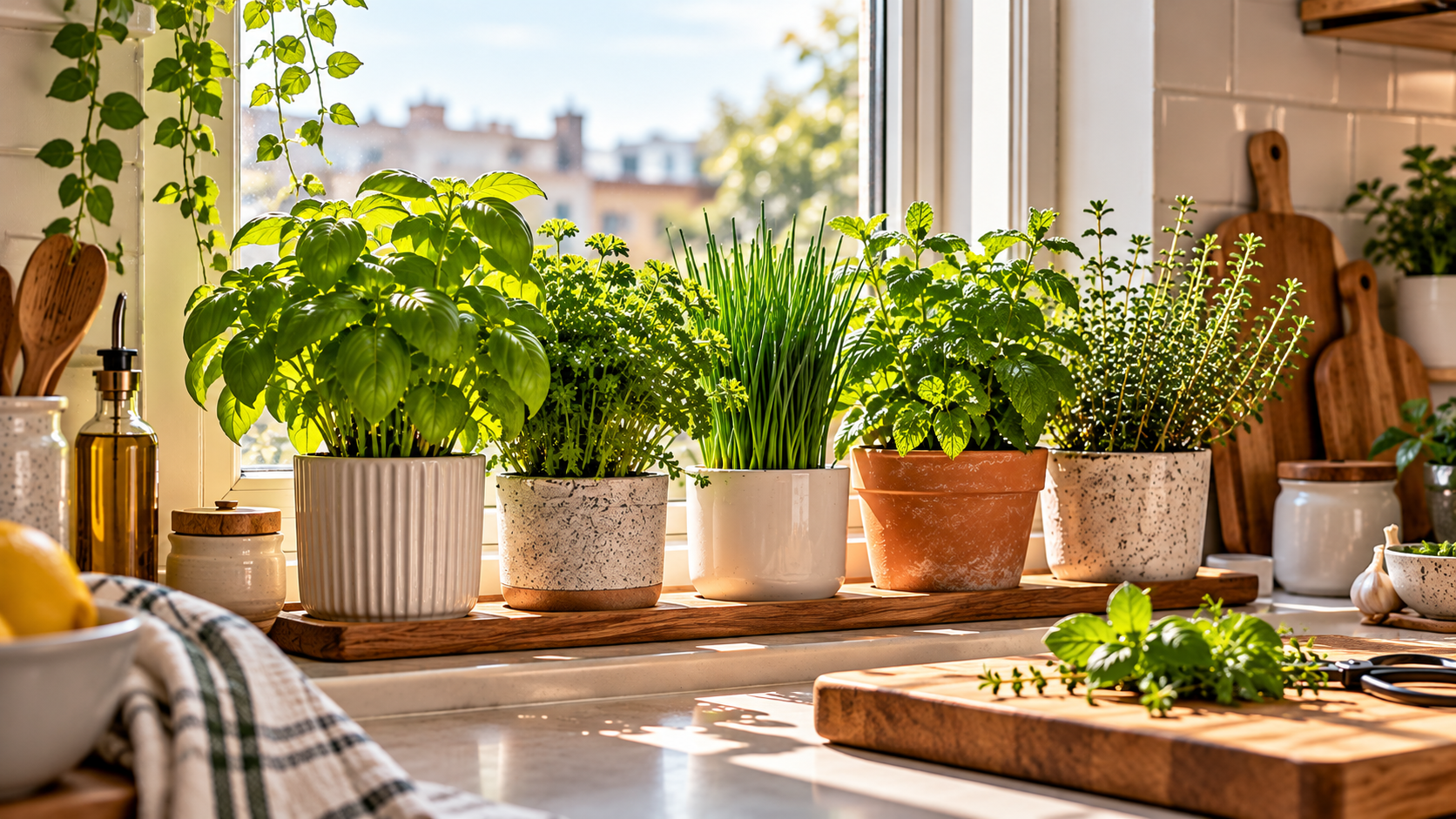
Learn how to grow basil, parsley, chives, mint and thyme in a tiny kitchen with practical advice on light, pots, watering and harvesting.
Your Tiny Kitchen Herb Garden, at a Glance
Choose kitchen herbs from your everyday recipes
An indoor herb garden is most useful when the plant choices reflect what you actually cook. Basil is helpful for tomato sauces and fresh salads, parsley adds freshness to grains and soups, and chives work with eggs and yoghurt dips. Mint provides a fragrant addition to drinks and dressings, but its roots grow vigorously and it is better kept in a separate pot. Rosemary and thyme suit Mediterranean dishes yet commonly require brighter and freer-draining conditions than leafy herbs.
Instead of collecting six varieties immediately, start with two that suit your window and routine. Look for healthy new growth and check each plant’s light and watering requirements. A supermarket herb pot can be crowded with young seedlings, so it may need careful acclimatisation or division where appropriate. Keeping plants alive long enough for repeated harvests is more useful than a beautiful but short-lived display.
Assess the growing space beyond the window direction
Observe the actual window. Nearby buildings and seasonal daylight matter more than the compass direction alone. If stems stretch and new growth becomes weak, reassess the light before fertilizing.
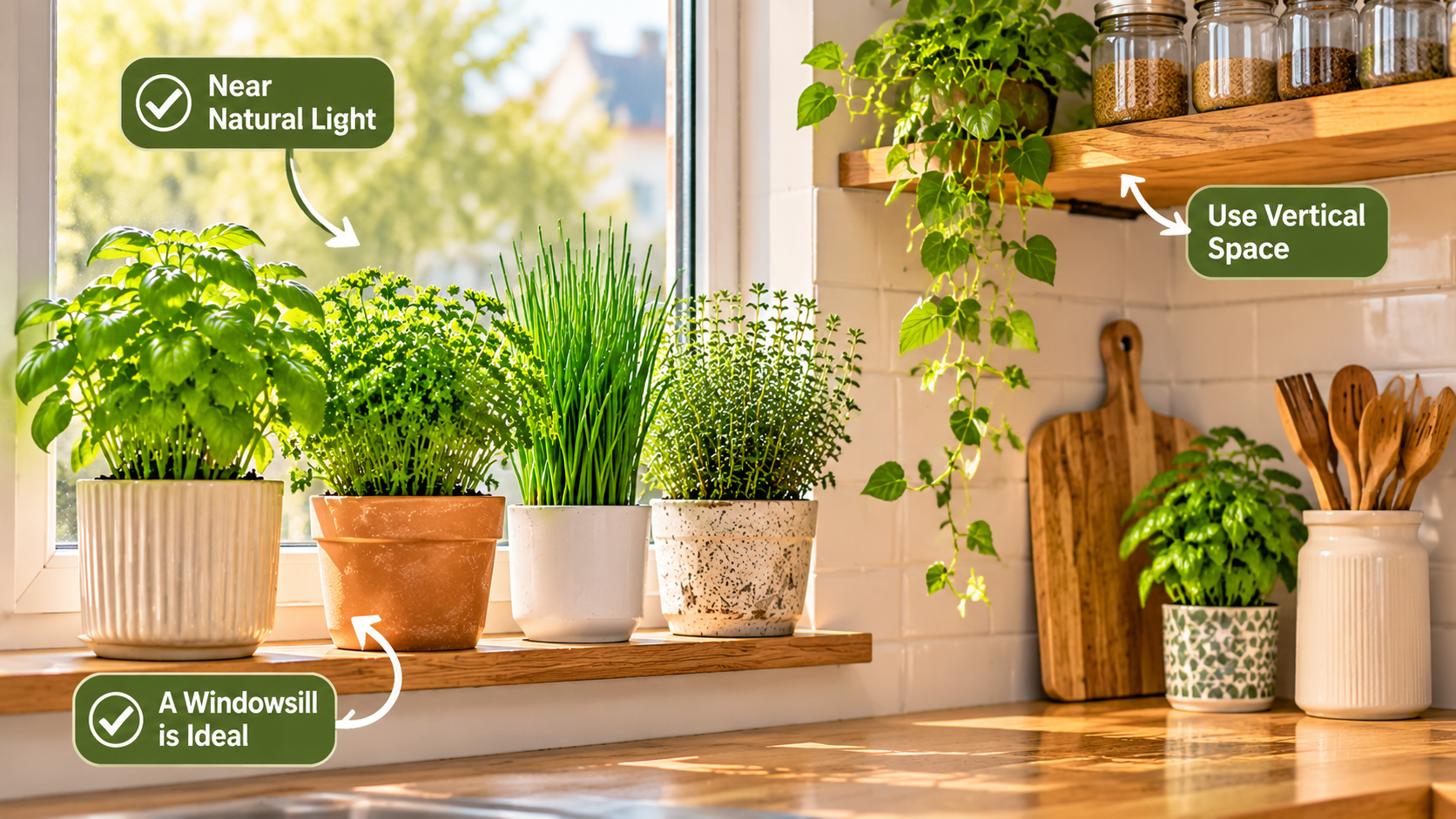
A south-facing window in the Northern Hemisphere can offer strong light, but nearby buildings, roof overhangs and the depth of the windowsill affect how much actually reaches leaves. A bright east-facing window may work for some herbs, while an enclosed north-facing kitchen could need supplemental light. Observe several days of conditions and record when sunlight reaches the plants.
The window area also needs practical clearance. Avoid blocking window operation, ventilation or access to curtains. Keep pots away from a hot oven, radiator and cold glass in winter. A stable stand near a window may be better than a narrow ledge where containers can tip. Protect painted and wooden surfaces with trays, and empty water that collects beneath nursery pots.
Understand the value of individual containers
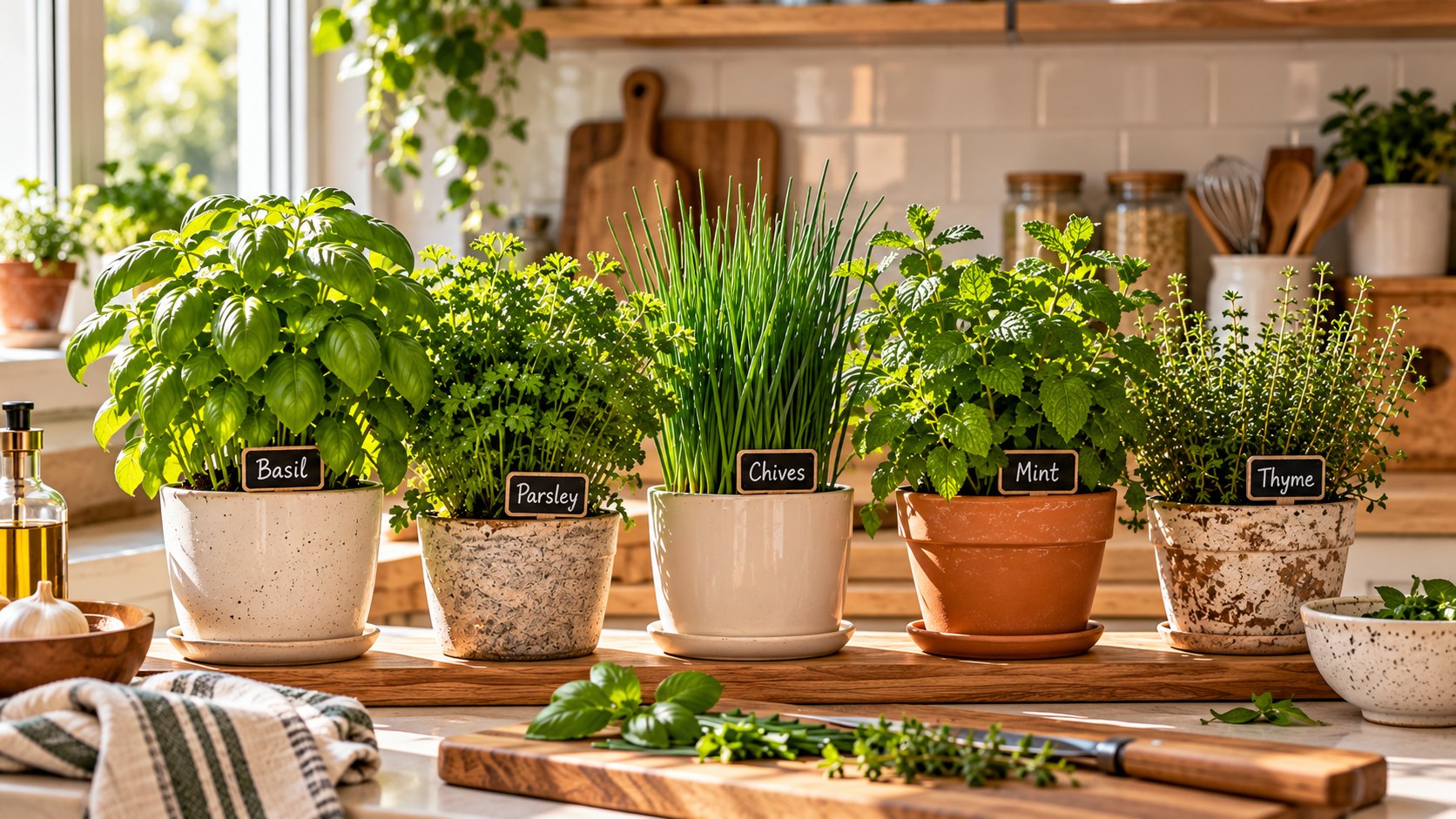
A shared trough looks tidy but complicates watering when species have different needs. Basil may need more frequent moisture checks than rosemary, while vigorous mint can crowd other roots. Individual pots allow you to adjust position, soil and watering without disturbing the whole collection. Choose containers with drainage holes and enough room for healthy root development.
Pot material influences drying. Terracotta often loses water faster than glazed or plastic containers, and a small pot dries more quickly than a larger one under similar conditions. Neither is always better. Match the material and size to the herb, the available light and the amount of attention you can give the plant. A suitable clean growing medium should drain well and provide air around roots.
Keep watering flexible and evidence-based
Check first, water second. Feel below the potting mix surface, lift the pot to gauge its weight and empty any standing saucer water. Drooping can indicate either dry or saturated roots.
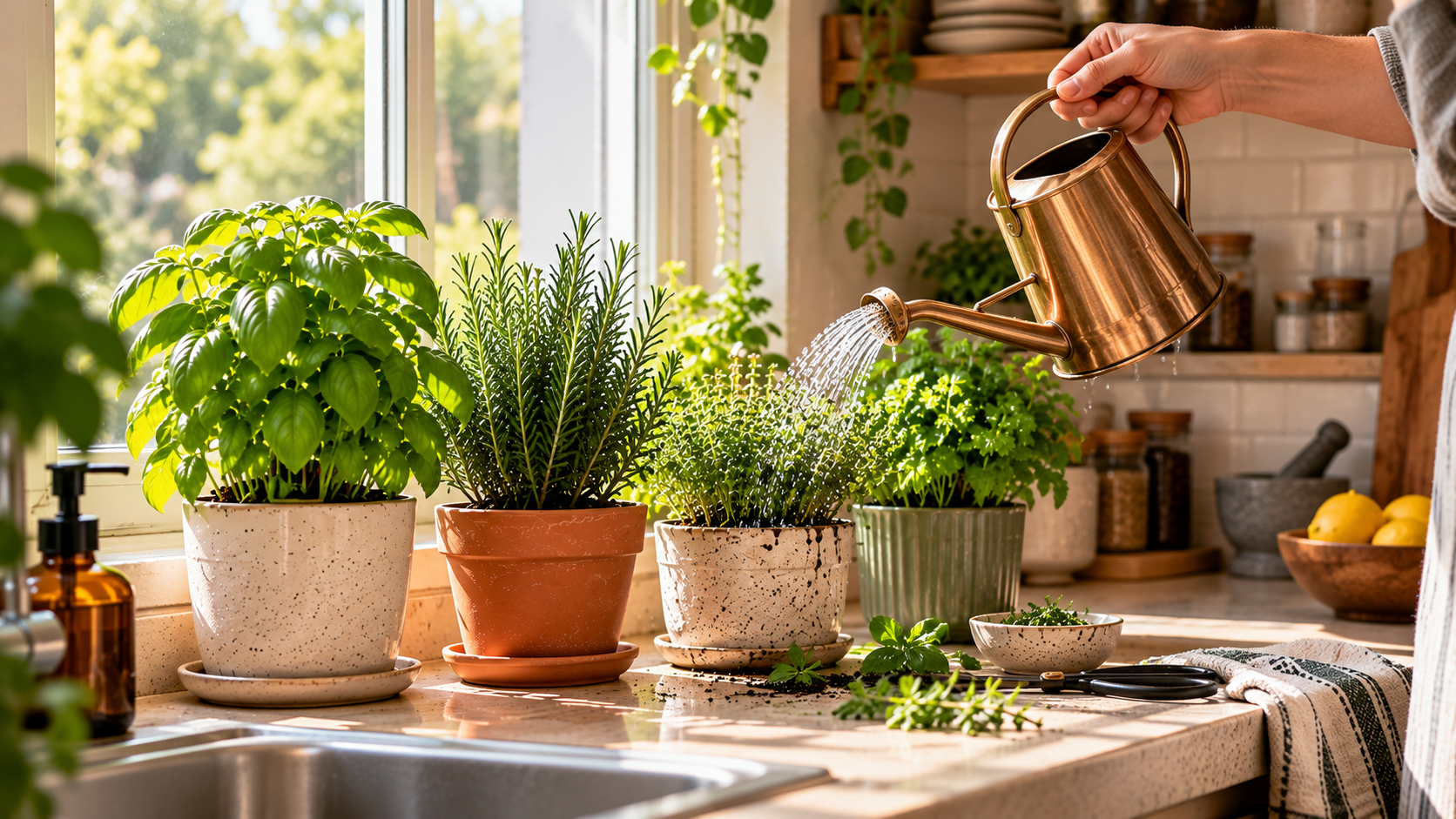
A weekly calendar is not an adequate watering rule. In summer, strong light may encourage active growth and faster water use. In winter, a plant may remain moist much longer unless indoor heating changes the situation. Feel the growing medium below the surface, compare pot weight and check the specific species. Water thoroughly when required and let excess escape through drainage holes.
Wilting has more than one cause. Very dry compost can deprive a plant of water, while persistently saturated soil may compromise root function and also cause leaves to droop. Check before adding more. Remove standing water from decorative covers and watch for repeated yellowing combined with wet compost. A short record of watering dates and plant condition can help establish a reliable routine.
Harvest herbs to encourage useful growth
Small harvests help plants recover. On healthy basil, trim above a pair of leaves; take mature outer parsley stems and snip chives without removing all their foliage.
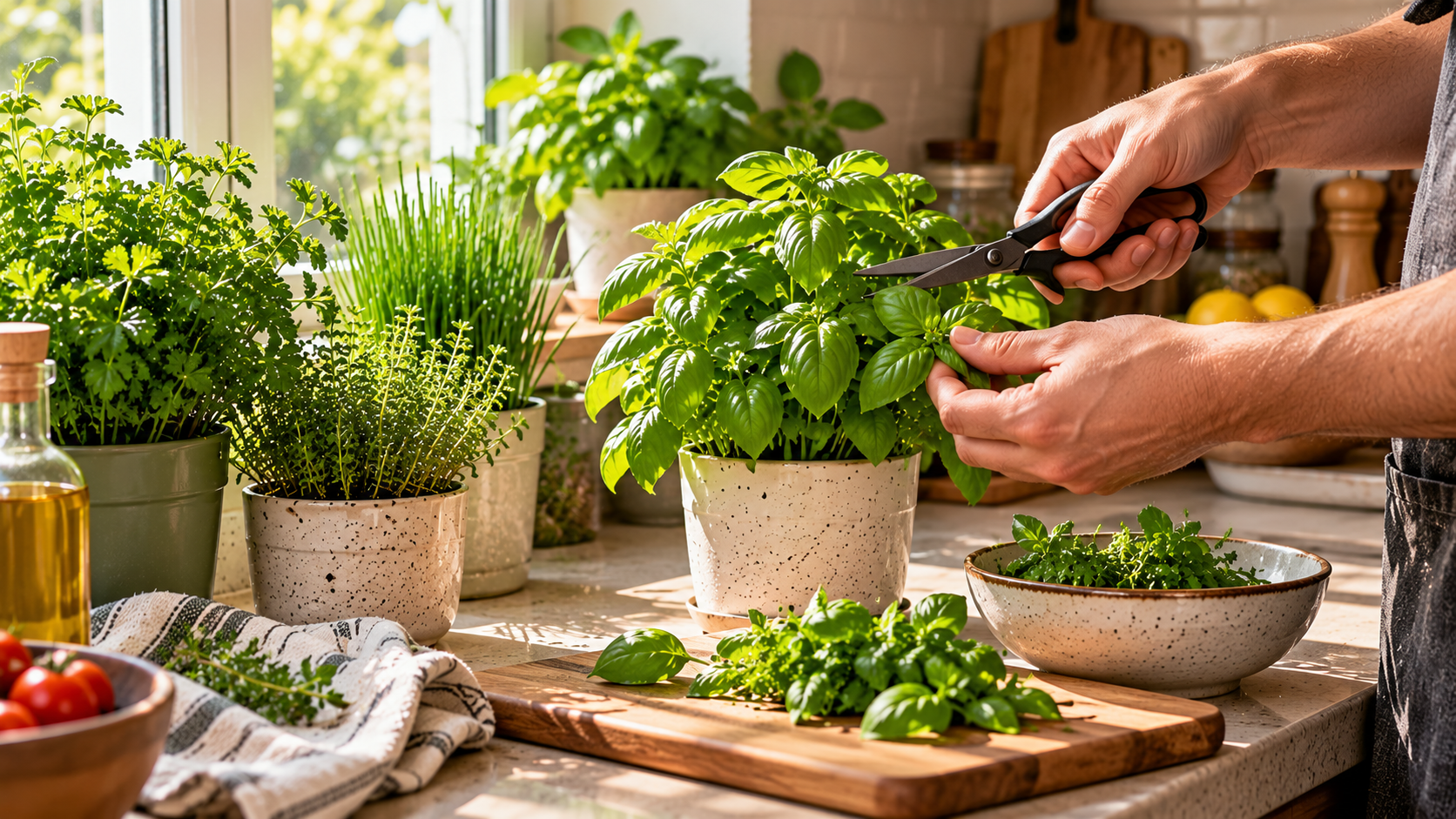
Harvesting is part of plant care rather than simply taking leaves when needed. On healthy basil, trimming a shoot above a suitable pair of leaves can encourage side growth. With parsley, take mature outer stems while protecting young central foliage. Chives can be snipped in modest amounts, leaving enough material for the plant to recover.
Do not harvest heavily immediately after repotting or from a small stressed plant. Use clean scissors where appropriate and wash herbs before serving. Woody herbs such as rosemary require different techniques from soft leafy basil; avoid cutting deep into old leafless growth without species-specific guidance. Regular small harvests are usually easier for a compact plant to sustain than stripping nearly all foliage at once.
THE SMALL-SPACE GROWING PLAN
Start with a sunny spot, three pots and herbs you actually cook with
You do not need a countertop greenhouse to grow useful culinary herbs. Measure your brightest safe growing spot, select individual containers with drainage, and begin with parsley, chives and basil if the light is suitable. If the kitchen is dim, improve your lighting before adding more plants.
Before buying anything: check window clearance, hours of bright sunlight, nearby heating vents and where excess water will drain. A healthy two-pot arrangement beats a crowded shelf of stressed plants.
At-a-glance herb comparison
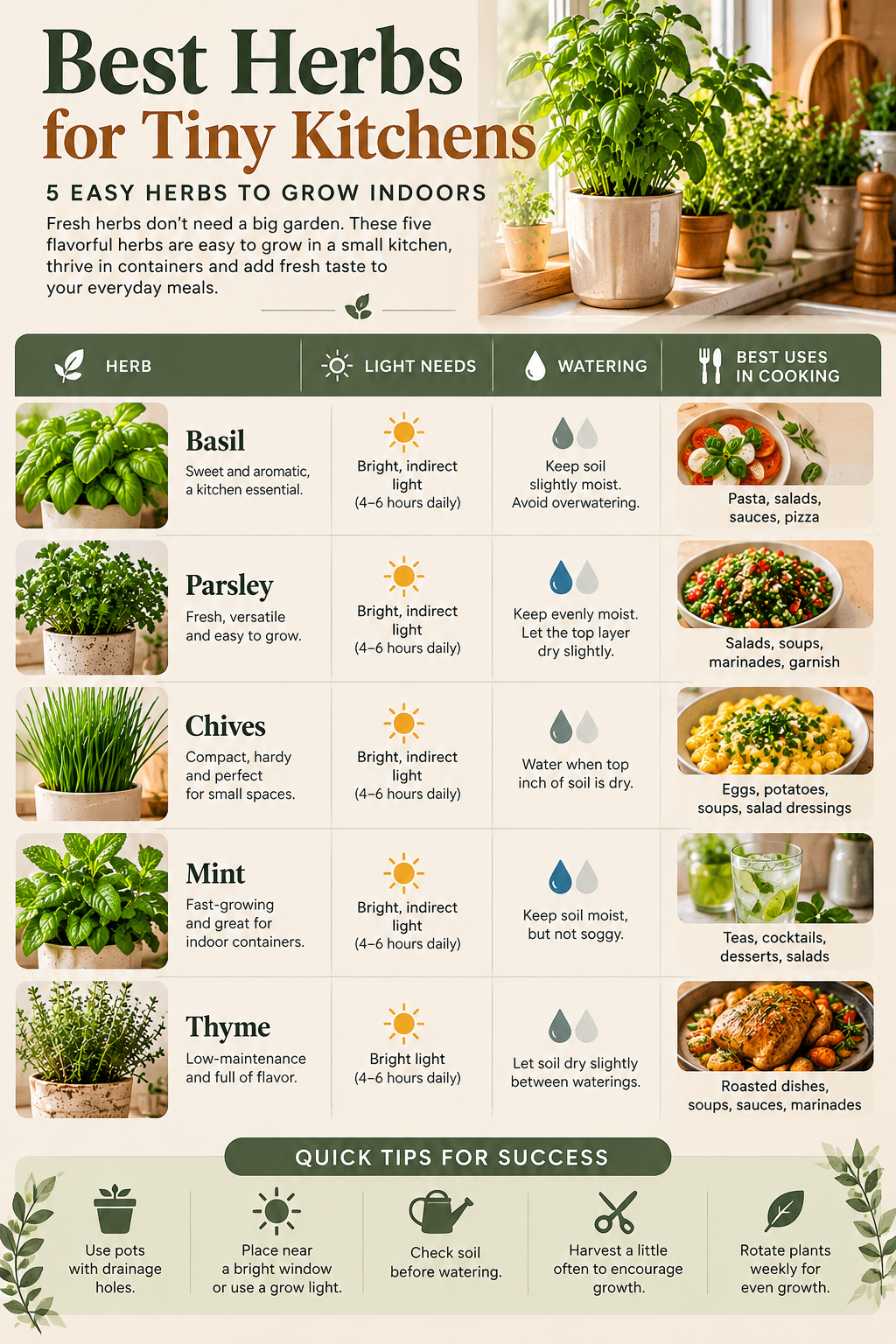
Use this practical table alongside the species-specific guidance above to match plant care with the dishes you cook most often.
| Herb | Best for | Growing priority | Common mistake |
|---|---|---|---|
| Parsley | Soups, grain bowls, sauces | Bright location, even but not waterlogged moisture | Removing young central growth |
| Chives | Eggs, baked potatoes, dips | Good light, moderate watering | Harvesting the whole plant at once |
| Basil | Tomatoes, pasta, pesto | Warmth, strong light, careful moisture checks | Leaving it against cold glass |
| Mint | Tea, salads, yogurt dressings | Separate pot and regular monitoring | Mixing it into a crowded shared trough |
| Thyme | Beans, roast vegetables, chicken | Very bright light and free drainage | Keeping potting mix constantly wet |
Three layouts that protect your counter space
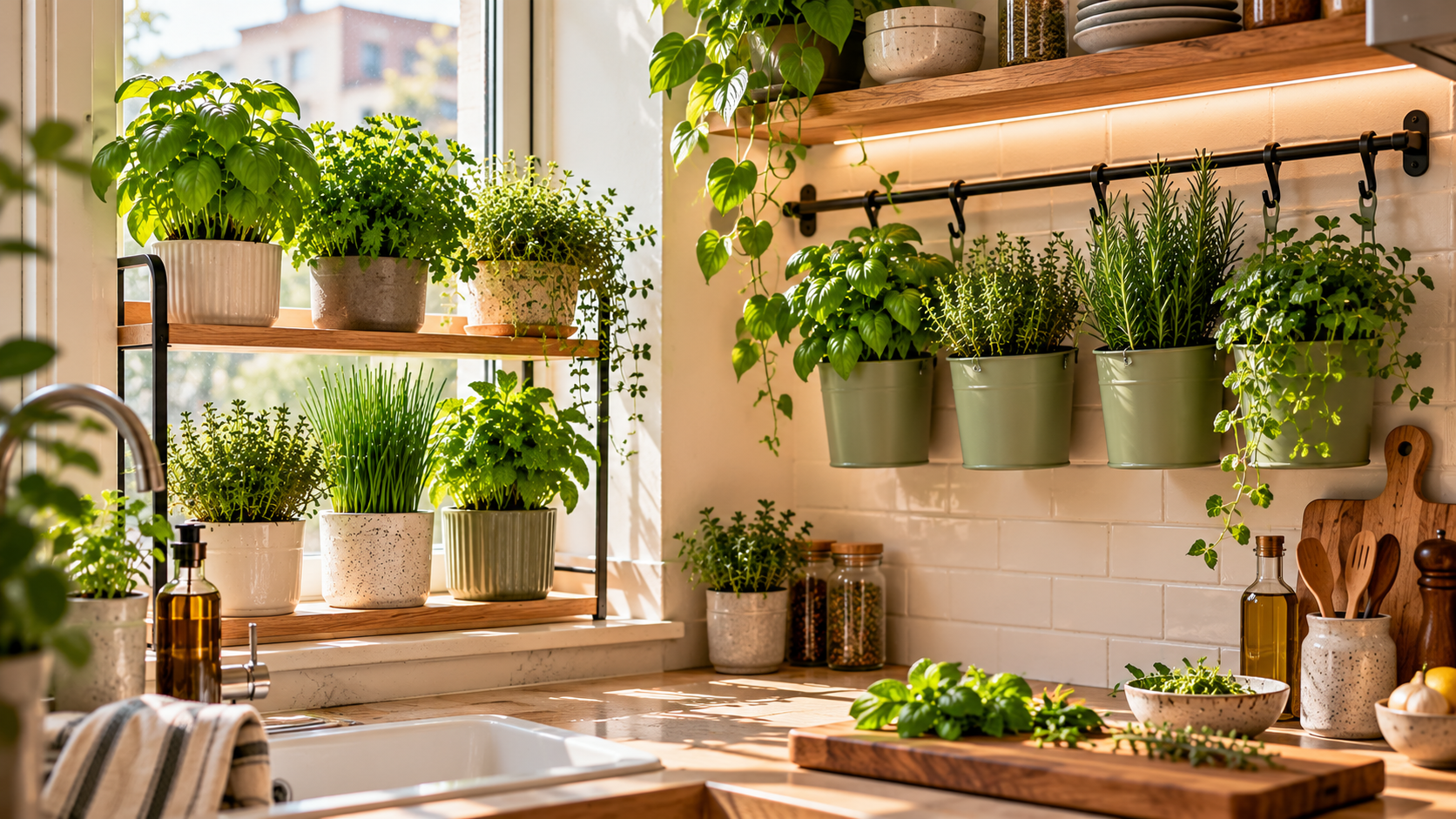
1. A removable windowsill tray
Arrange two or three individual pots in a shallow waterproof tray that can be lifted away when you open or clean the window. Keep the full setup within the sill depth and away from cold glass.
2. A slim stand beside a bright window
Choose a stable, properly rated stand that does not block passageways. Put herbs where light actually reaches the foliage, rather than assuming every tier receives the same exposure.
3. A dedicated grow-light shelf
For kitchens with little direct sun, a purpose-made plant light may be more useful than extra pots. Follow the manufacturer’s placement and operating instructions, keep plugs clear of splashes and use a safe timer. Many indoor herbs require a substantial daily light period when relying on supplemental lighting.
What you need—and what you can skip
Your Five-Point Setup Checklist
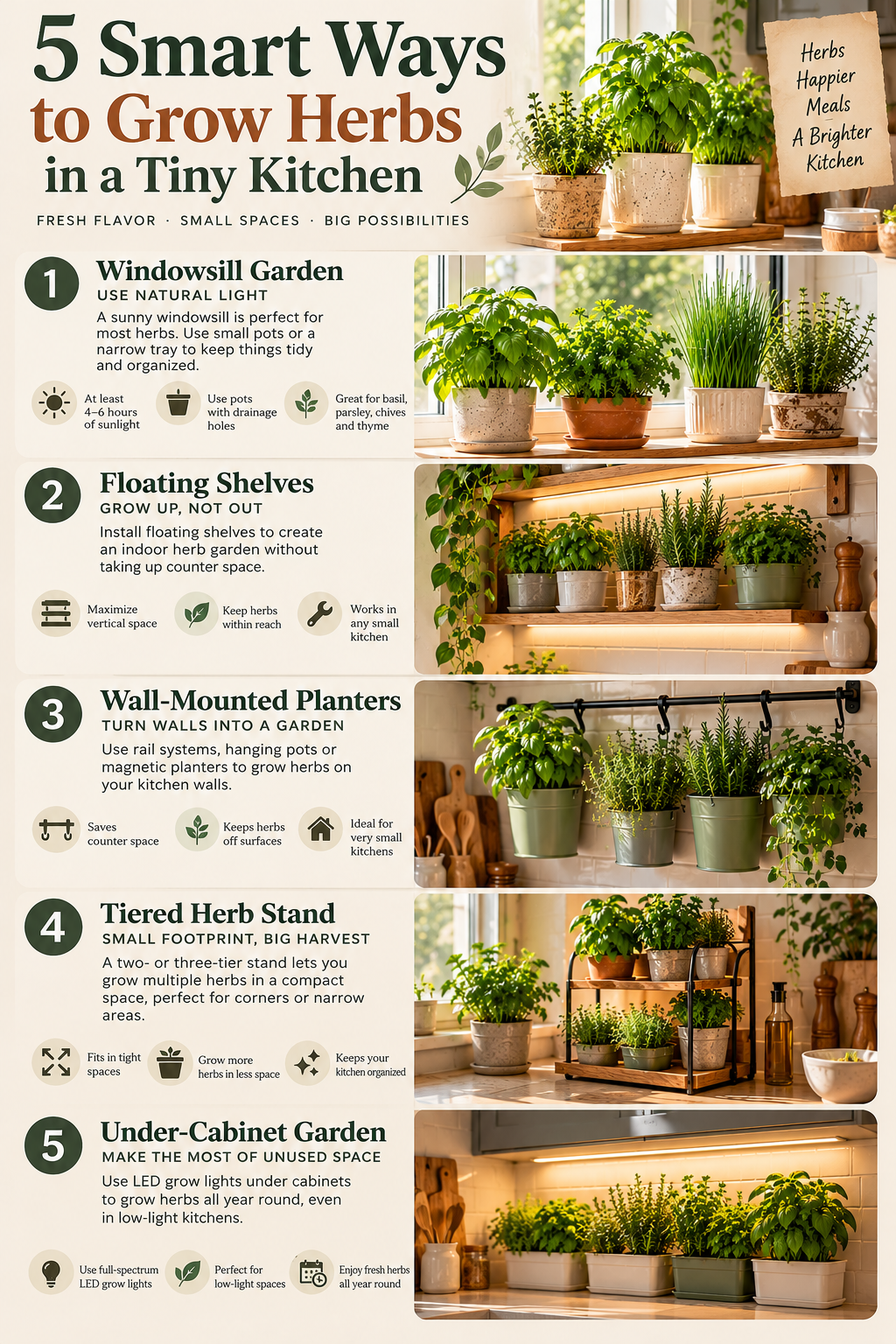
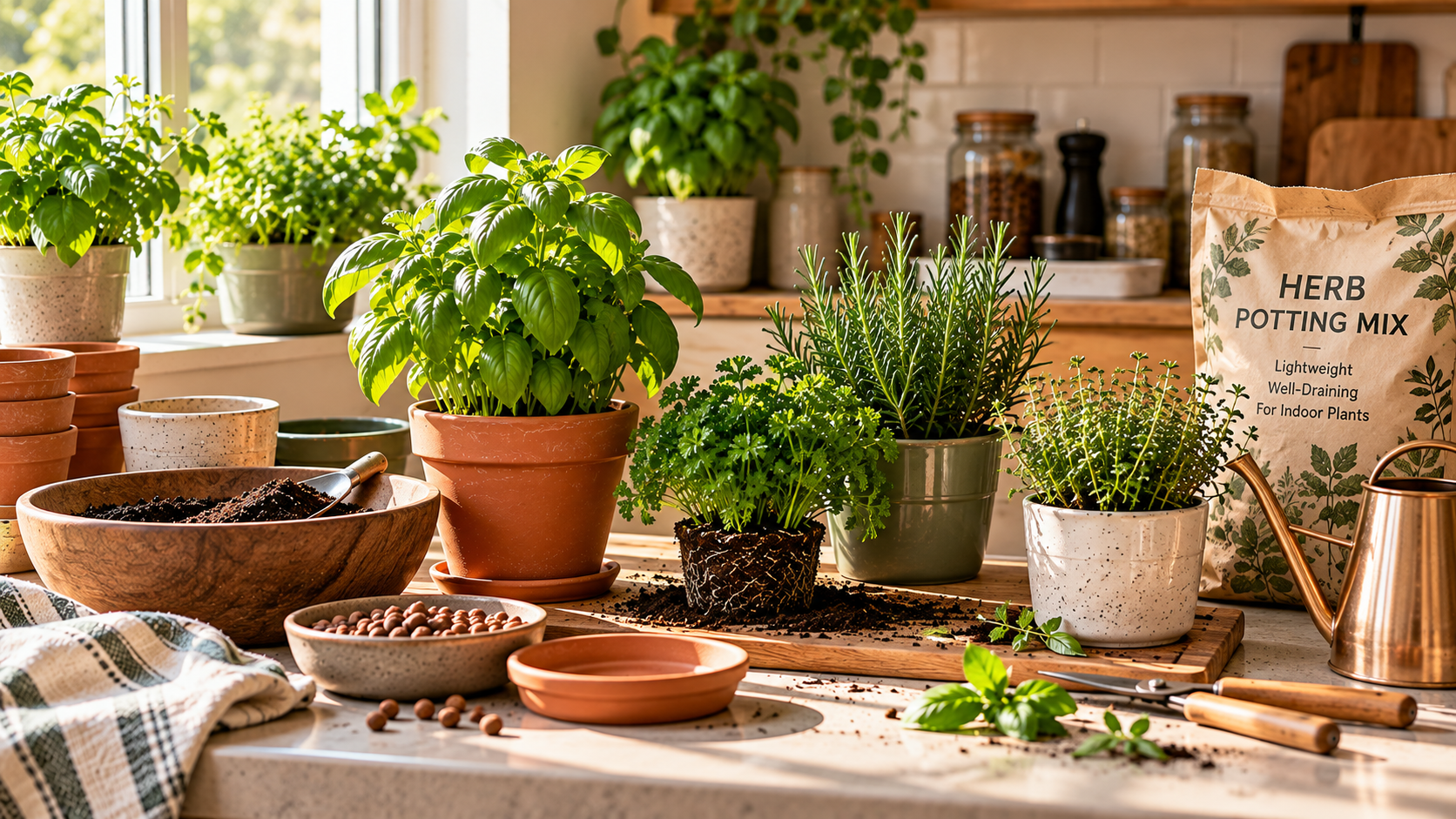
Essentials: healthy herbs or seeds, individual pots with drainage, saucers, clean well-draining potting medium and a spot with adequate light. Optional: a compact plant light and timer, a narrow stand, plant labels and a small watering can. Skip for now: elaborate indoor hydroponic systems, decorative planters without drainage and large multi-herb boxes that mix incompatible watering needs.
Growing tip: Check the potting mix with your finger and compare the pot’s weight before watering. Overwatering and underwatering can both cause drooping leaves; the condition of the medium helps distinguish them.
Horticultural references: Iowa State University Extension and Penn State Extension.
Respond to yellow leaves and weak growth thoughtfully
Yellow leaves can reflect age, water stress, inadequate light, pests or a combination of conditions. If stems are pale and stretching toward the window, useful light may be insufficient. If soil stays wet and the plant is wilting, examine drainage and possible root problems before watering again. A single brown leaf tip does not establish a diagnosis.
Inspect leaves and growing tips for insects, especially after bringing outdoor plants inside. Identify a pest before using treatments and choose only products approved for edible plants, following harvest instructions. Change one environmental factor at a time when possible, so you can tell whether the response improved new growth. Take photographs at regular intervals.
Adjust the garden through the colder months
Kitchen windows offer shorter days and less light during autumn and winter. Many herbs slow down, meaning water use and harvesting potential can decrease. Do not force growth with excessive feed. Consider a proper plant grow light where needed and follow its distance, timing and electrical safety instructions. Avoid leaving electrical equipment where watering can splash it.
Some herbs are easiest to treat as seasonal kitchen crops and replace when conditions improve. Basil in particular may struggle in cold, dim windows. Check whether leaves touch cold glass or experience a draft after dark. A realistic winter plan is better than expecting every summer plant to remain equally productive through January.
Keep the arrangement attractive and usable
A small herb display can complement the kitchen’s design when it is organised rather than crowded. Repeat a limited range of practical pots, keep labels readable and leave counter space for cooking. A shallow washable tray helps manage irrigation and makes cleaning easier. Avoid placing foliage above food preparation in a way that makes soil or runoff fall onto ingredients.
Clean the surrounding ledge regularly, rotate pots gently if they lean and remove dead leaves where appropriate. Keep the windowsill accessible for household maintenance. The best visual effect comes from healthy leaves and tidy surroundings, not elaborate accessories. If a plant grows beyond the available space, prune appropriately or move it to a larger suitable location.
A repeatable four-week practice routine
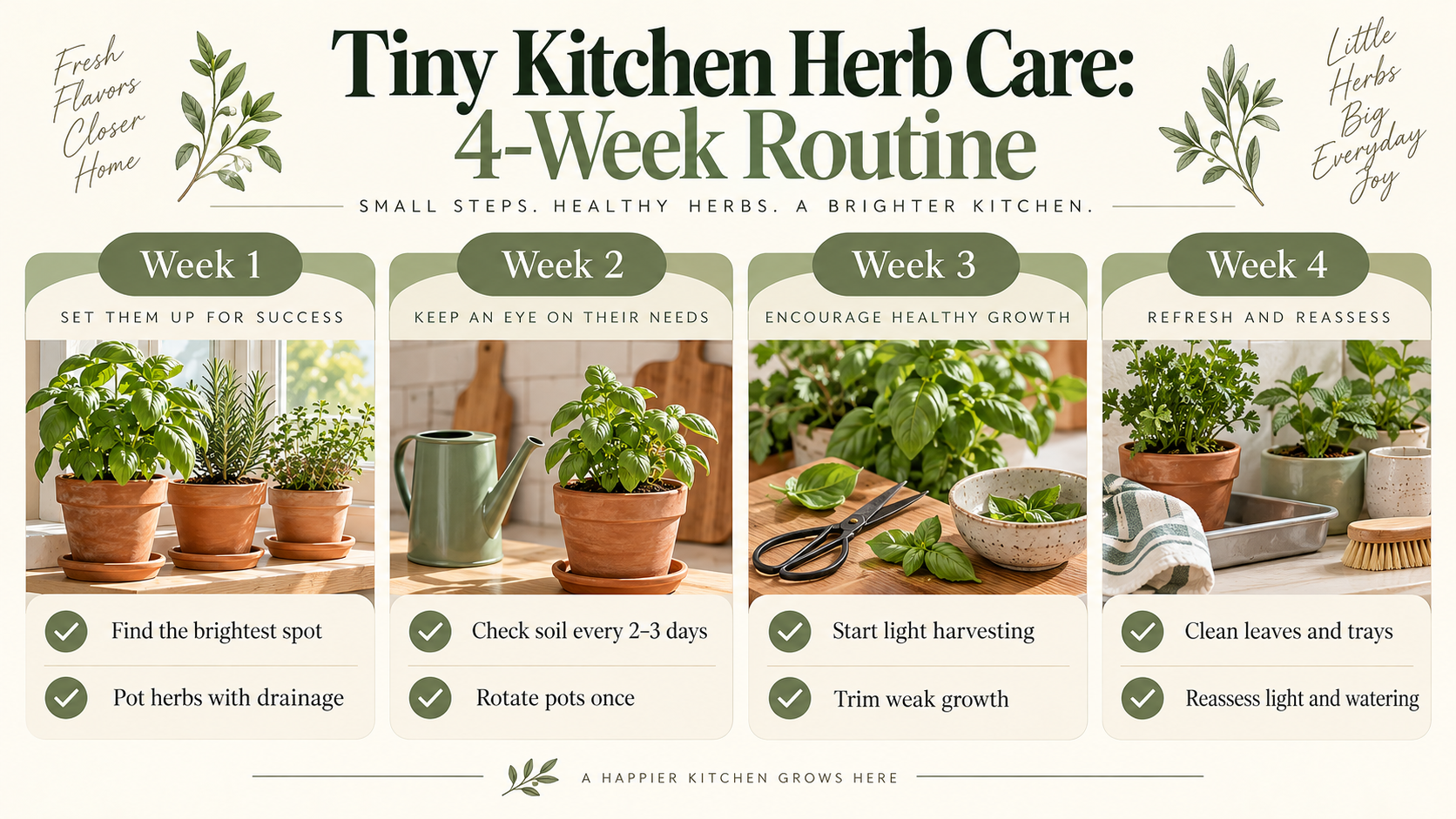
In the first week, measure light and prepare two or three separate pots. Label the varieties and take a starting photograph. In the second, track how quickly each growing medium dries and check drainage after watering. During the third, watch new shoots and inspect for pests, adjusting placement if evidence suggests insufficient light.
In the fourth week, make a small harvest from established growing plants and evaluate which herbs are actually useful in your cooking. Keep what works and add a new variety only if the available light and space allow. This approach produces a practical mini garden while teaching the observations needed for larger growing projects.
Growing culinary herbs in a tiny kitchen can change both how the room feels and how you cook. A few healthy pots offer fresh flavours for sauces, eggs, salads and soups, yet take up very little space. The key is to choose plants that suit your window, understand their different watering needs and harvest them in a way that encourages regrowth.
You do not need expensive equipment or a large windowsill. This practical guide covers five useful herbs, the best places to grow them, the mistakes that cause plants to fail, and a simple setup you can maintain even during busy weeks.
Common Herb Problems and Quick Fixes
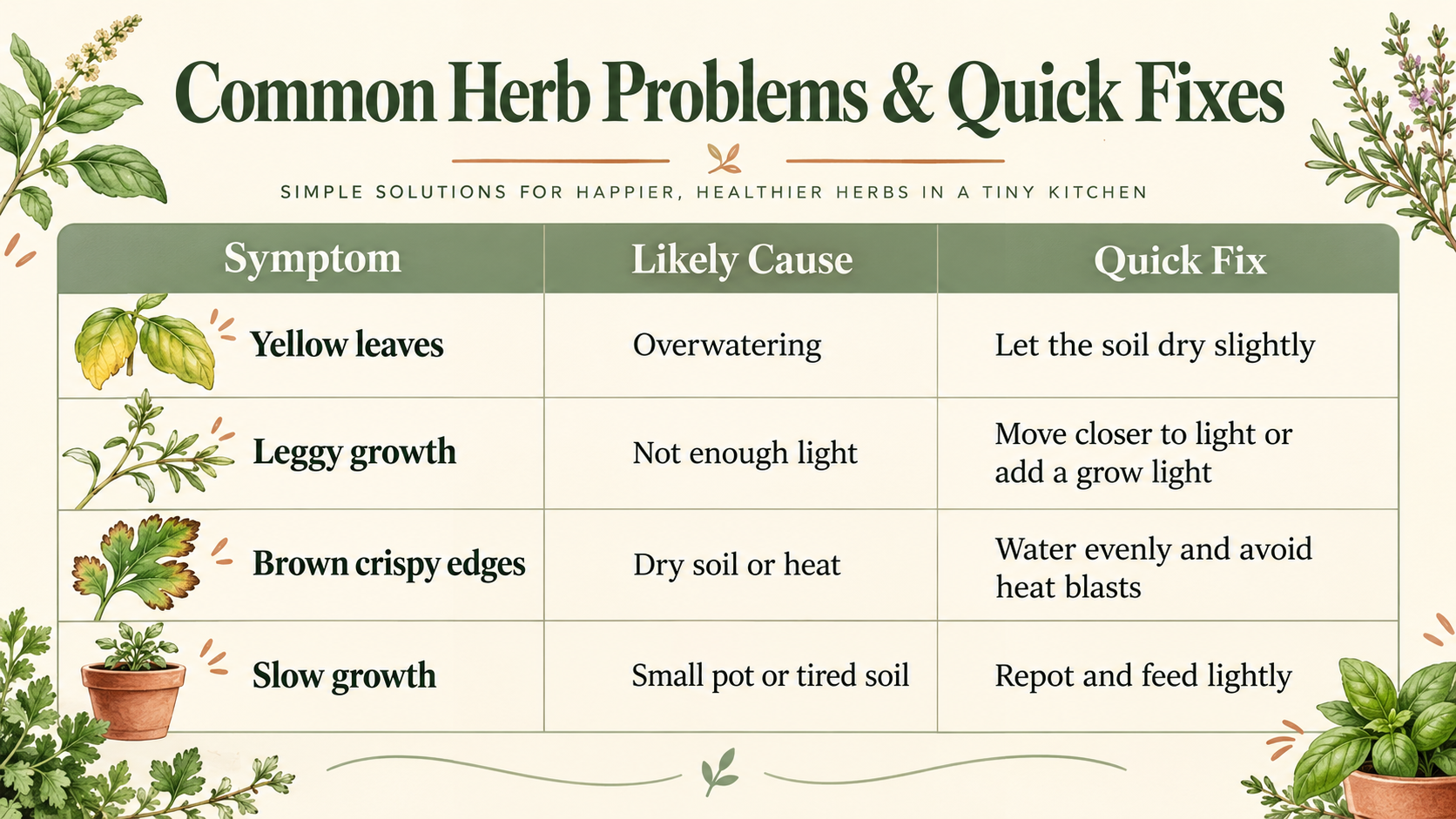
| What you notice | Possible cause | What to check first |
|---|---|---|
| Long, thin stems | Insufficient light | Window exposure or grow-light placement |
| Yellow leaves and wet mix | Excess moisture | Drainage and standing saucer water |
| Dry, crisp leaves | Water or heat stress | Soil moisture and radiator exposure |
| Weak growth after cutting | Overharvesting or low light | Allow more foliage and recovery time |
| Spots or sticky leaves | Possible pests or stress | Leaf undersides and overall plant care |
The Beginner’s Three-Pot Herb Garden Plan
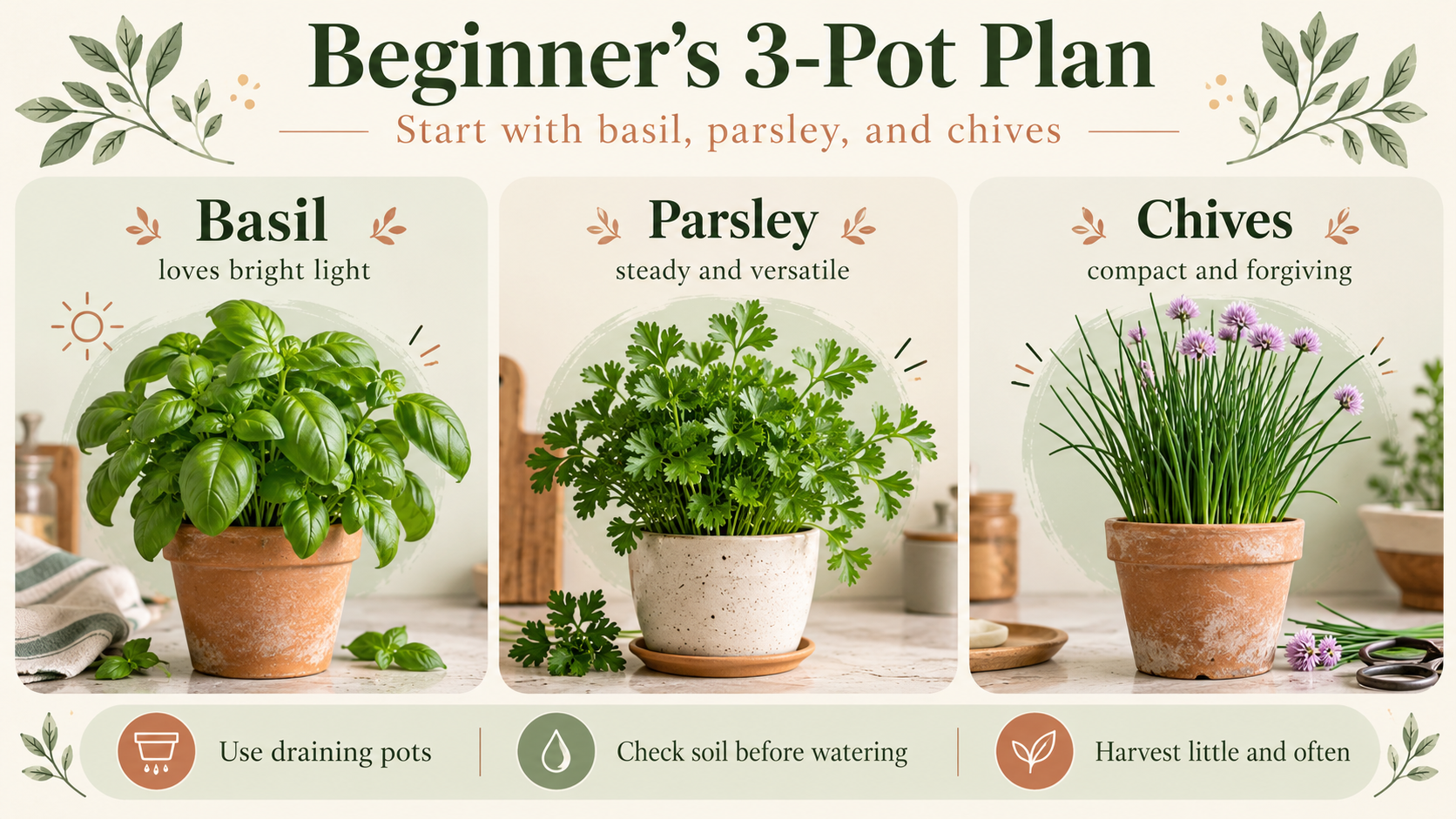
Week 1: Find the brightest practical location, choose three draining pots and start with basil, parsley and chives. Week 2: Observe the soil and adjust the position if plants stretch toward light. Week 3: Begin modest harvesting only if plants are establishing healthy new growth. Week 4: Review what you actually used in cooking, and expand only if space and light permit.
From Windowsill to Dinner
A kitchen garden is most satisfying when it becomes part of the menu. Finish tomato pasta with basil, add parsley to chickpea salad, fold chives into an omelette or stir mint into yogurt. Use your harvest at the last moment where possible, and wash fresh herbs appropriately before serving.
The takeaway
Start with two or three herbs, give them suitable light, use draining pots and water according to actual conditions. A compact herb garden should make cooking easier, not turn the windowsill into another chore. For more kitchen ideas, explore our cooking and meal-prep stories and windowsill herb guide.
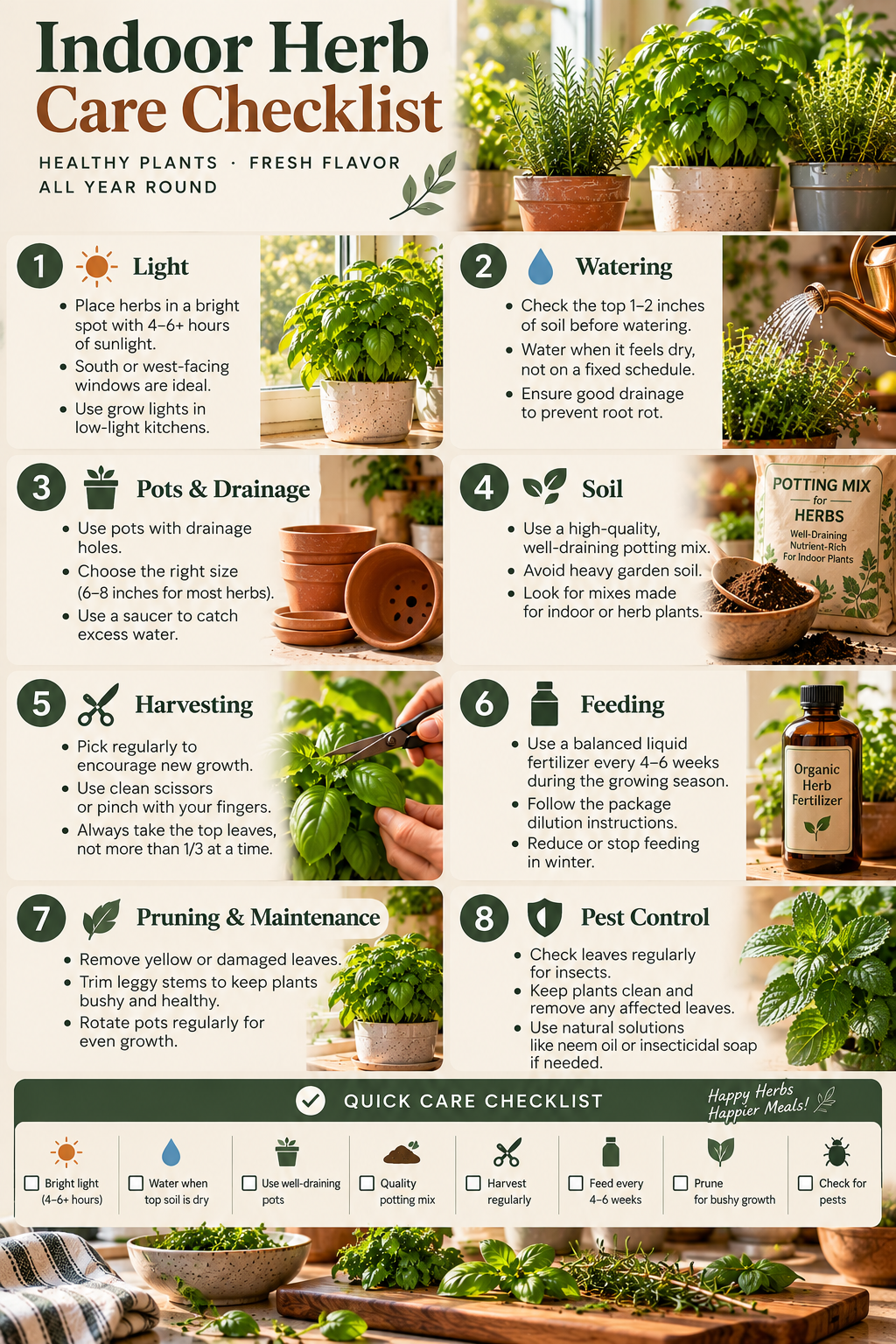
Frequently Asked Questions
Can herbs grow in a kitchen with no direct sunlight?
Some herbs tolerate less direct sun than others, but they still need useful light. In a dim room, a properly positioned plant grow light is often necessary for sustained growth.
Do indoor herbs need pots with drainage holes?
Yes. Drainage holes and removable saucers let excess water escape and make root conditions easier to monitor. Do not leave pots sitting in water.
Should I put basil, mint and thyme in the same planter?
Separate pots are usually easier to manage. These herbs differ in their watering and light preferences, and mint can spread vigorously.
How often should I harvest basil?
Harvest modest amounts when the plant is healthy and actively growing. Cut suitable stems above leaf pairs and leave enough foliage for recovery; avoid heavy harvesting when light is poor.
What is the easiest herb garden for a rental apartment?
Two or three removable nursery pots with drainage and a waterproof tray on a stable, bright surface. You can move everything without drilling or permanent alterations.
Tools for a Tiny Kitchen Herb Garden
Choose only what fits your available light, counter space and growing routine. These product links lead to specific Amazon listings; product photography will be added separately once approved images are available.
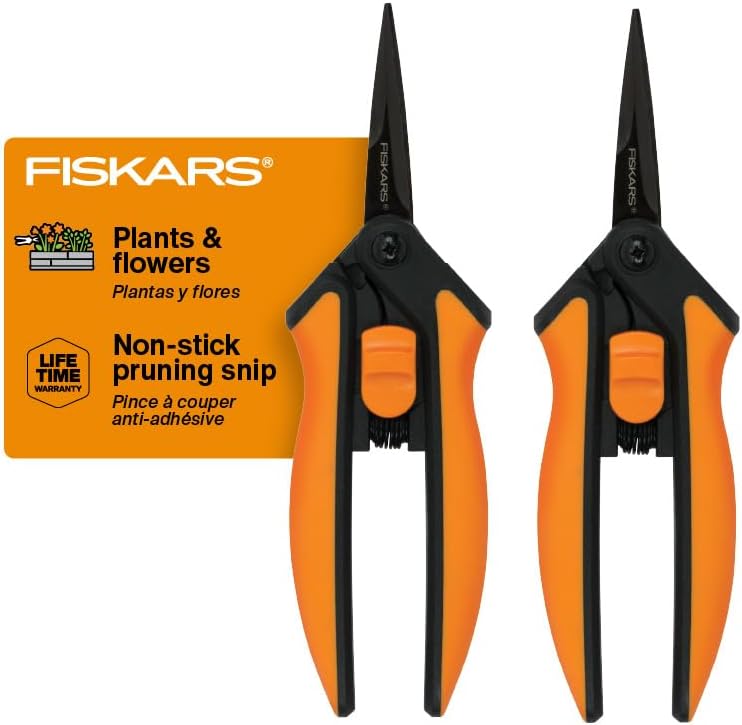
Fiskars Micro-Tip Pruning Snips
A compact choice for trimming tender herbs with better precision.
ASIN: B07KCZSMLJ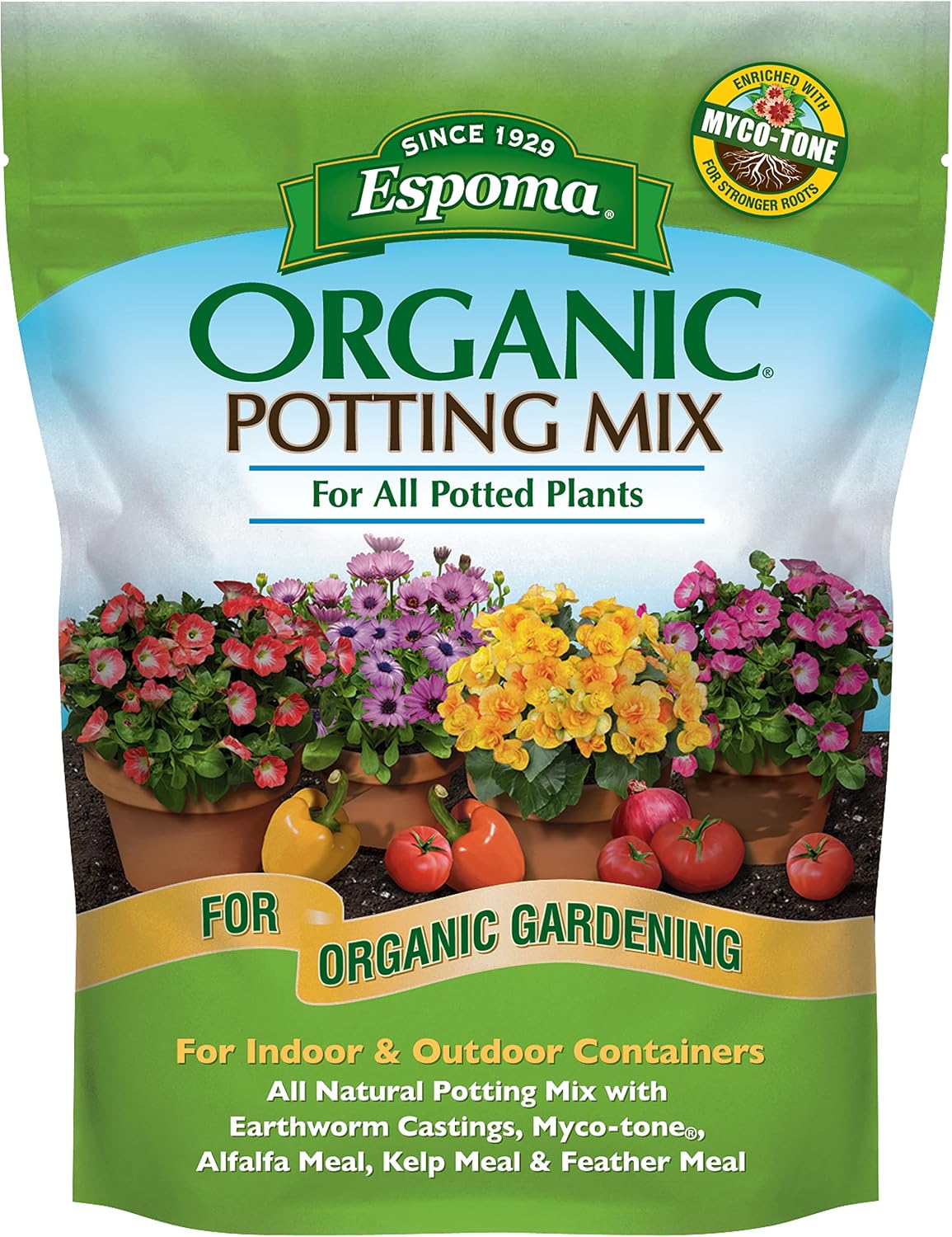
Espoma Organic Potting Mix
A bagged potting mix for container setups; confirm suitability for your chosen herbs.
ASIN: B002Y04TK6
Barrina T5 Grow Lights — 4 Pack
Useful for a dedicated growing shelf; check measurements before purchasing.
ASIN: B0CHRW8JKM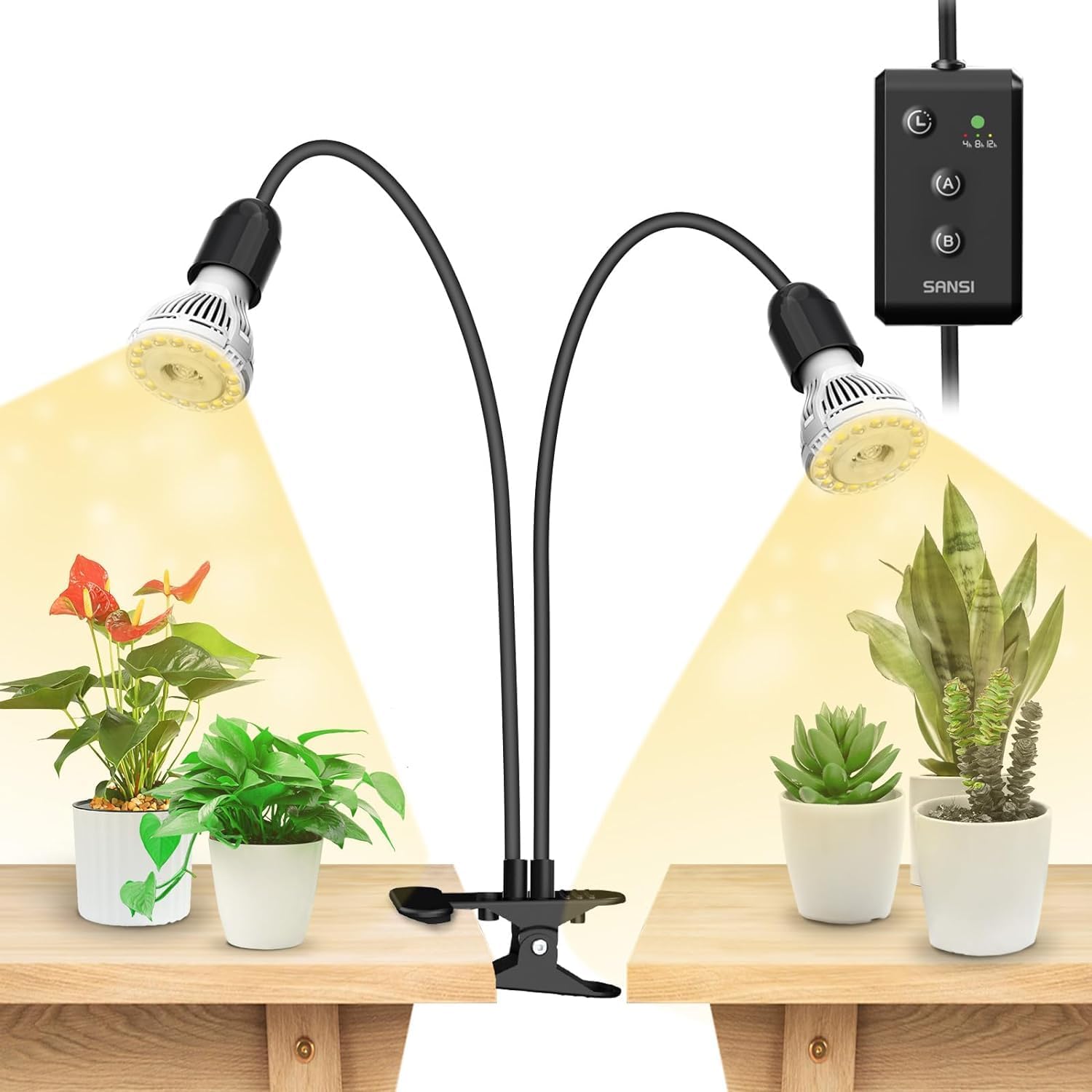
SANSI Dual-Head Clip Grow Light
A flexible supplemental grow-light option for limited counter space.
ASIN: B0C3CW36YR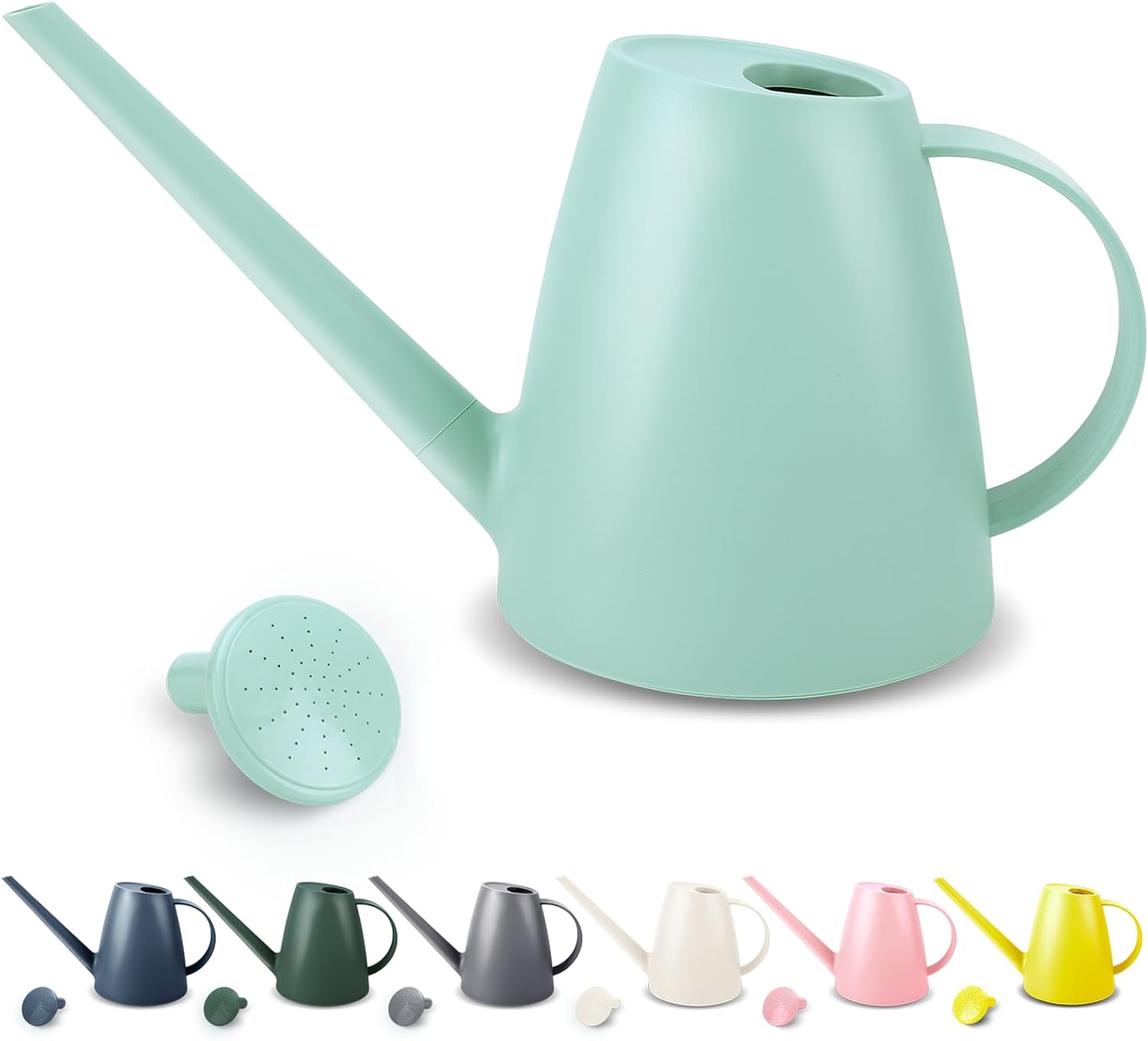
Qilebi Indoor Watering Can
A small indoor watering can for controlling the water stream.
ASIN: B08L3TXWZP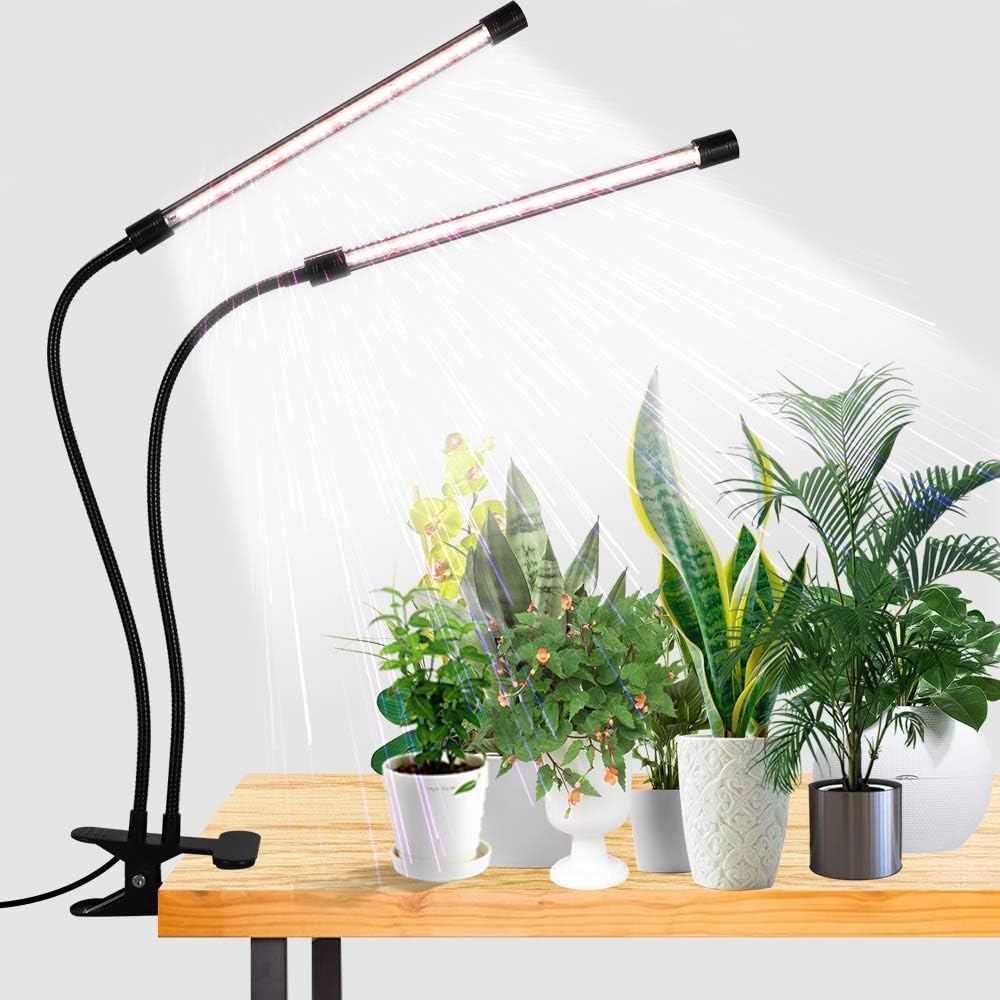
GooingTop Clip-On Grow Light with Timer
Combines adjustable lighting and an automatic timer in one product.
ASIN: B085CDPSMR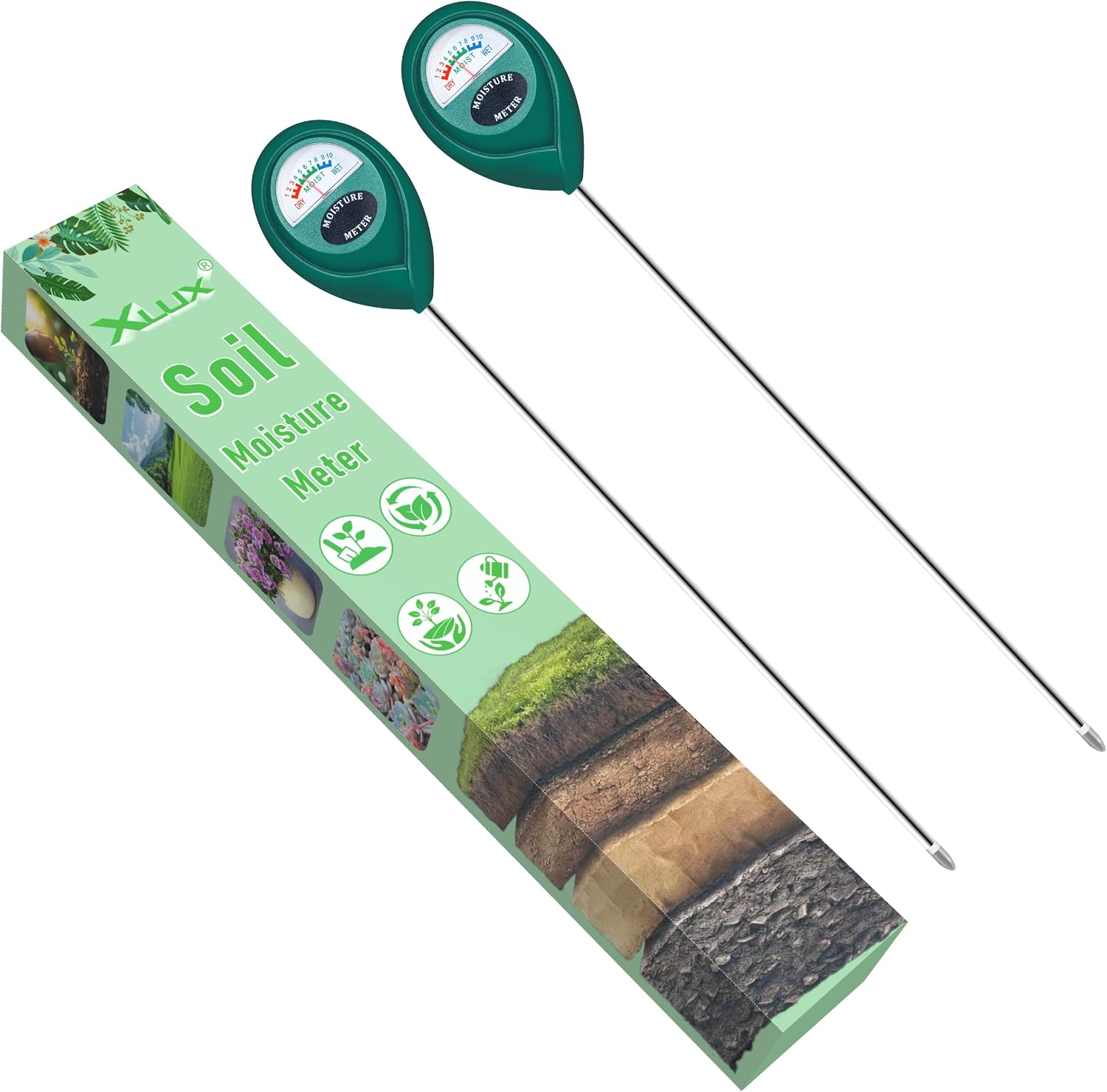
XLUX Soil Moisture Meter
A supplemental tool for checking soil moisture; use alongside direct inspection.
ASIN: B09PBGLM3N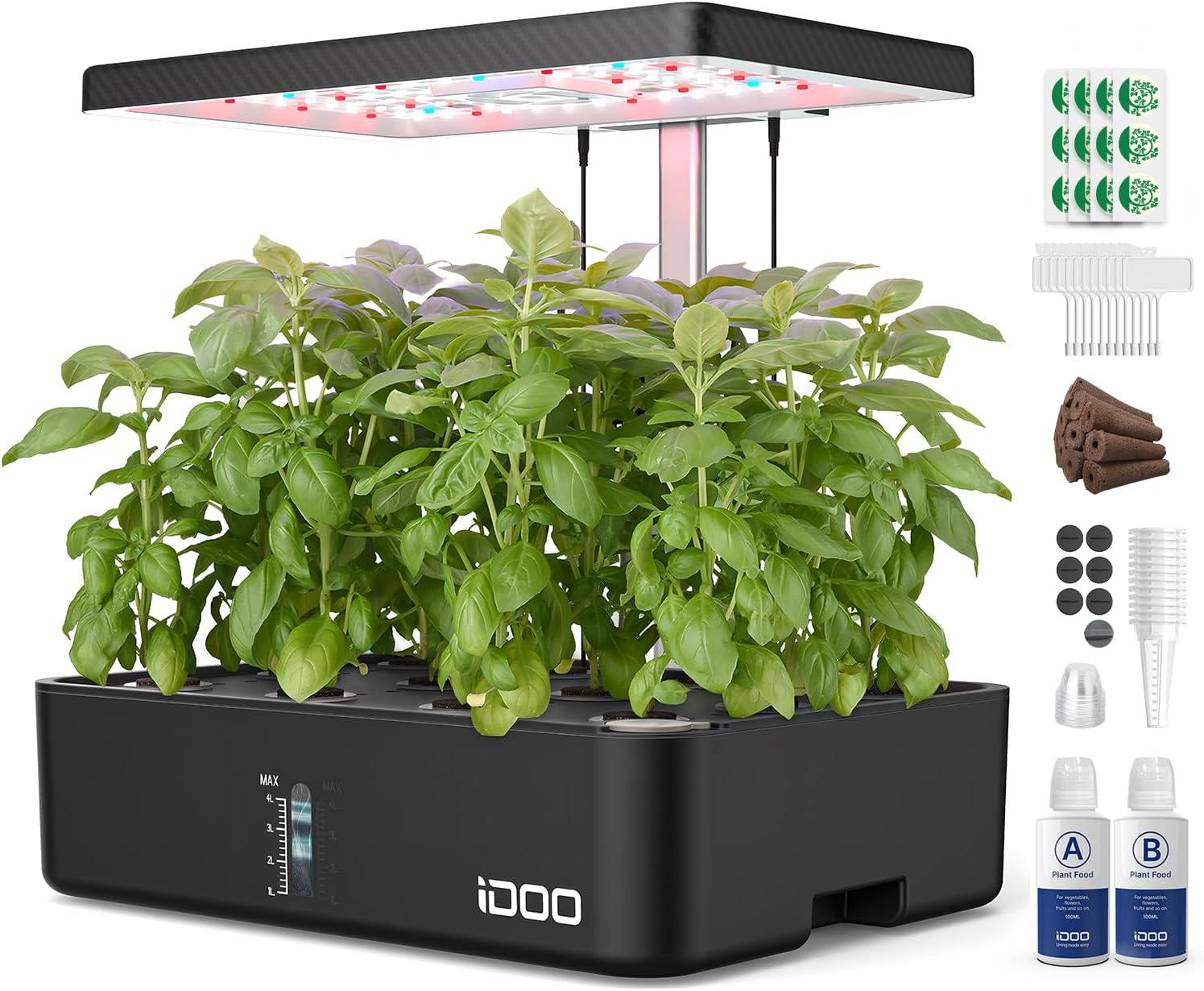
iDOO Compact Hydroponic Growing System
A countertop hydroponic option for readers who prefer a self-contained growing system.
ASIN: B08DLMRKHMProduct availability, prices and variants may change. Check each listing before purchase.