
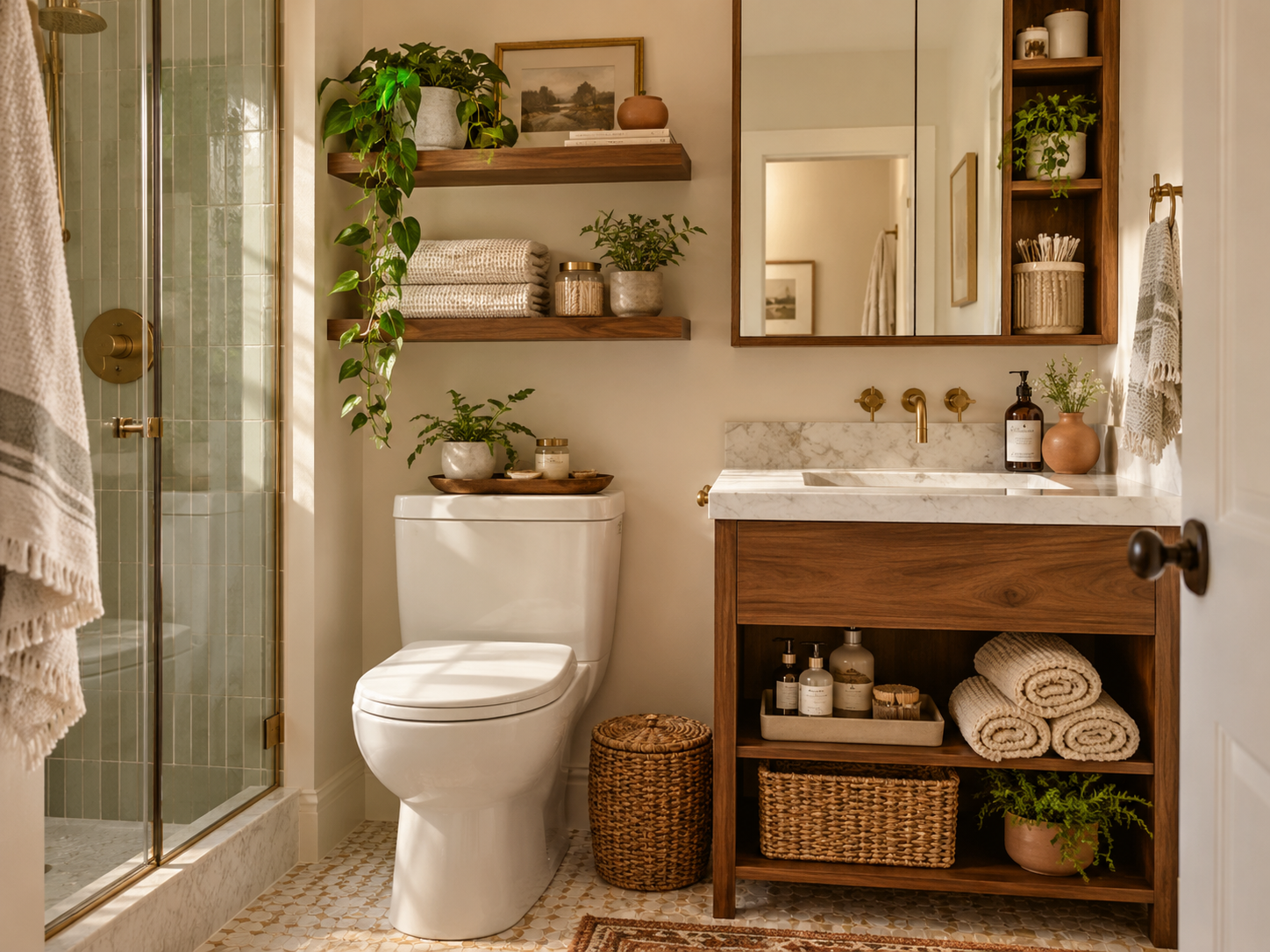
When every inch counts, the best bathroom storage ideas for tiny spaces make everyday essentials easier to reach without turning the room into an obstacle course. You do not need a full renovation to create a calmer bathroom: think over-toilet shelving, under-sink organizers, slim rolling carts, wall baskets, better shower storage, mirrored cabinets and a few thoughtfully chosen containers.
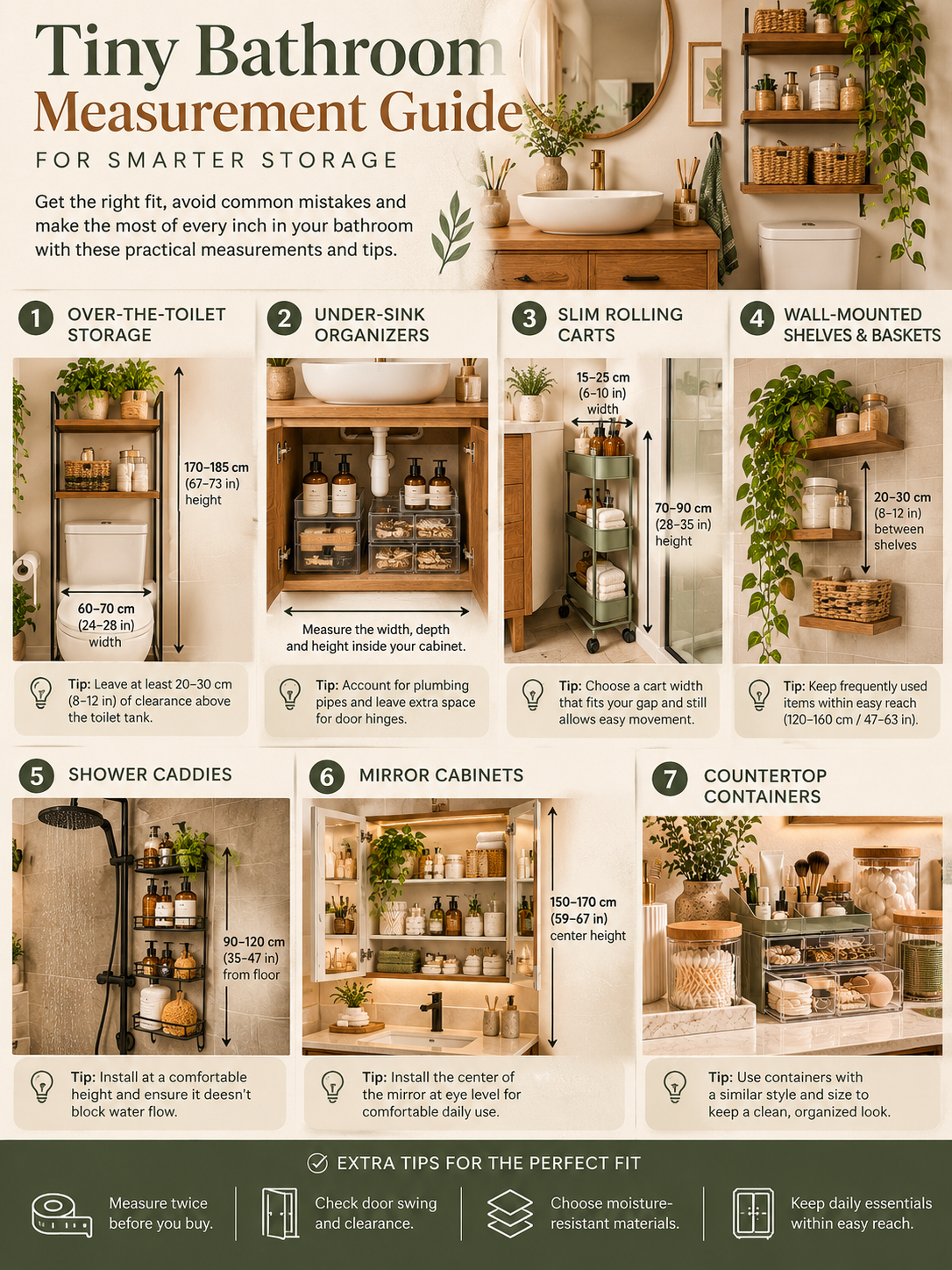
Start with what you use daily, measure the available space, and choose materials that tolerate bathroom humidity. Below are seven realistic storage solutions—plus renter-friendly alternatives and practical tips for keeping the space clean, safe and visually uncluttered.
Affiliate disclosure: As an Amazon Associate, we earn from qualifying purchases. If you buy through links in this article, we may earn a commission at no additional cost to you.
Bathroom Storage Ideas Start With Clear Zones
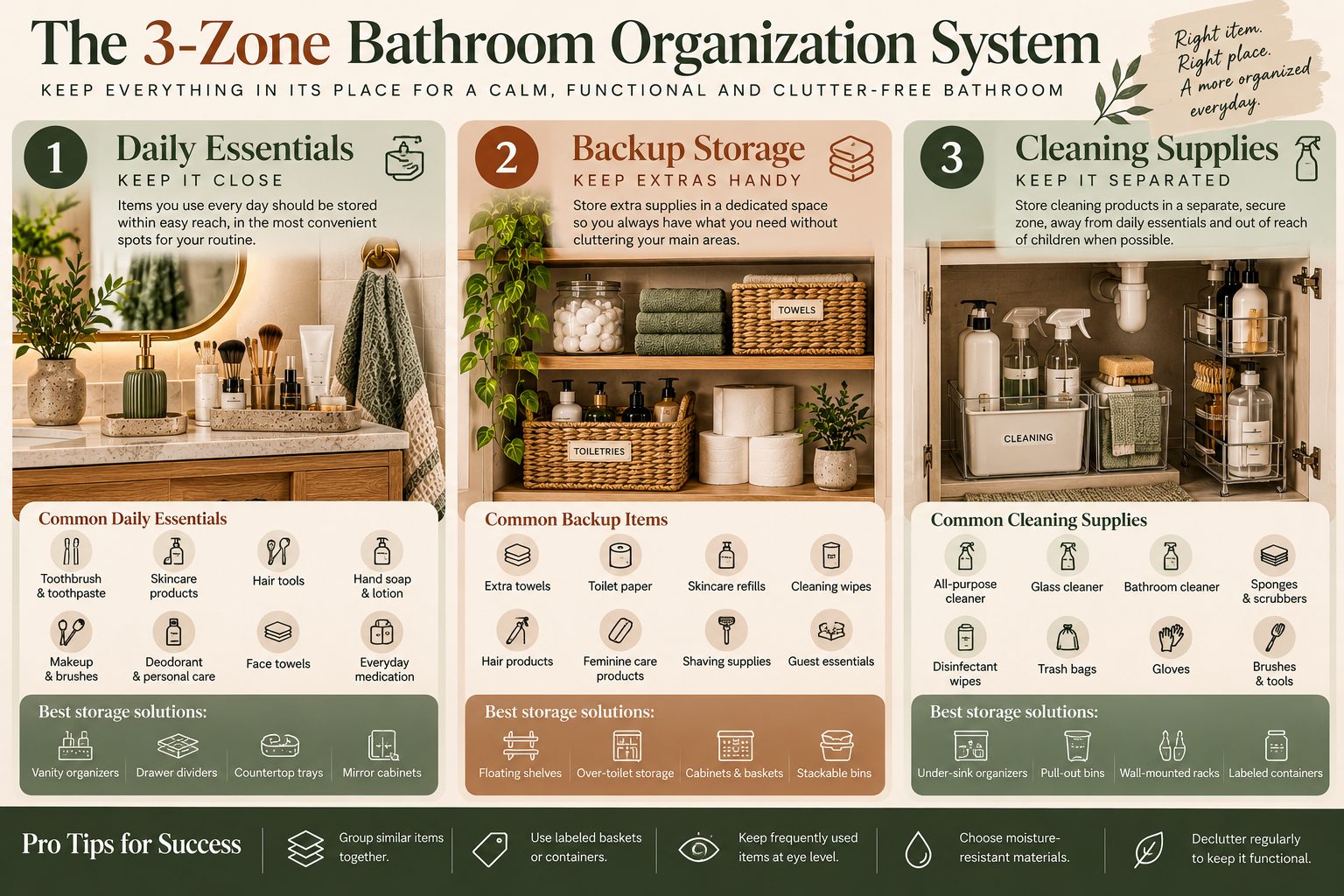
Separate bathroom items into daily essentials, towels, cleaning products and backups. Daily products deserve the easiest access. Backups can go higher, lower or outside the bathroom if space is limited.
THE SMALL-SPACE EDIT
Which Bathroom Storage Idea Fits Your Space?
Choose based on the space you actually have—not simply what looks good in a photograph.
| Available space | Start here | Check before buying |
|---|---|---|
| Empty wall above toilet | Over-toilet shelving | Height, stability, flush access |
| Space inside vanity | Under-sink organizers | Pipes, shutoff valves, leaks |
| Narrow floor gap | Slim rolling cart | Cart width, wheel clearance |
| Unused vertical wall | Wall baskets | Wall fixings, humidity |
| Cluttered shower | Shower caddy | Drainage, safe placement |
| Above-sink space | Mirror cabinet | Door swing, installation |
| Messy countertop | Matching containers | Splash exposure, cleaning |
1. Use the wall above the toilet
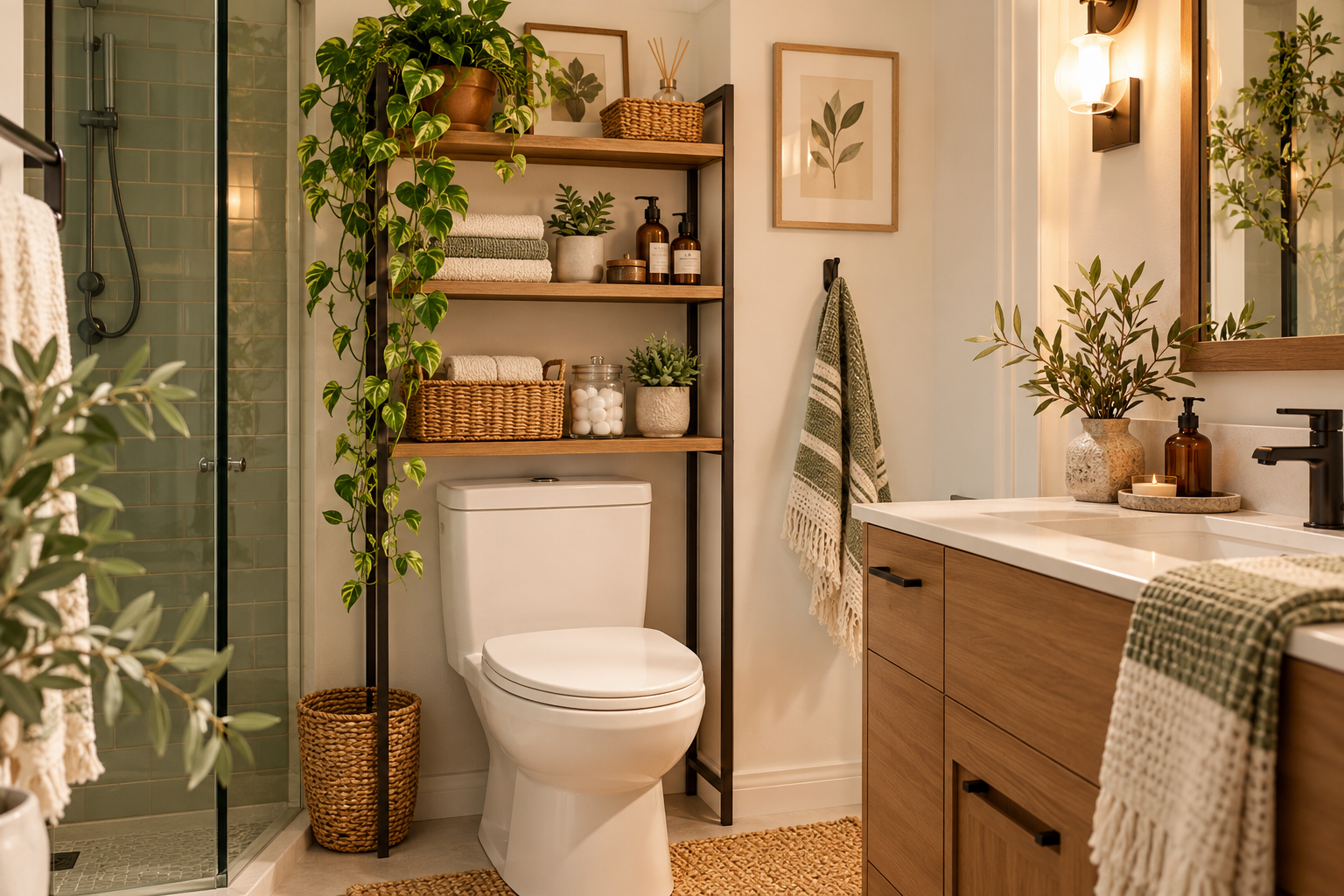
Use the wall above the toilet for light, everyday bathroom essentials instead of crowding the vanity. A slim over-toilet shelving unit suits rooms where drilling is not possible; wall-mounted shelves can work where the wall, fittings and permissions allow. Keep the lowest shelf high enough that nobody bumps into it when standing up, and avoid placing heavy or breakable objects overhead.
Measure the toilet’s full width, flush-button access and the depth from the wall before shopping. Check that any freestanding frame is stable and appropriately secured against tipping according to the manufacturer’s instructions. Place frequently used but lightweight supplies in washable baskets, rather than stacking loose bottles above the toilet.
2. Add storage under the sink
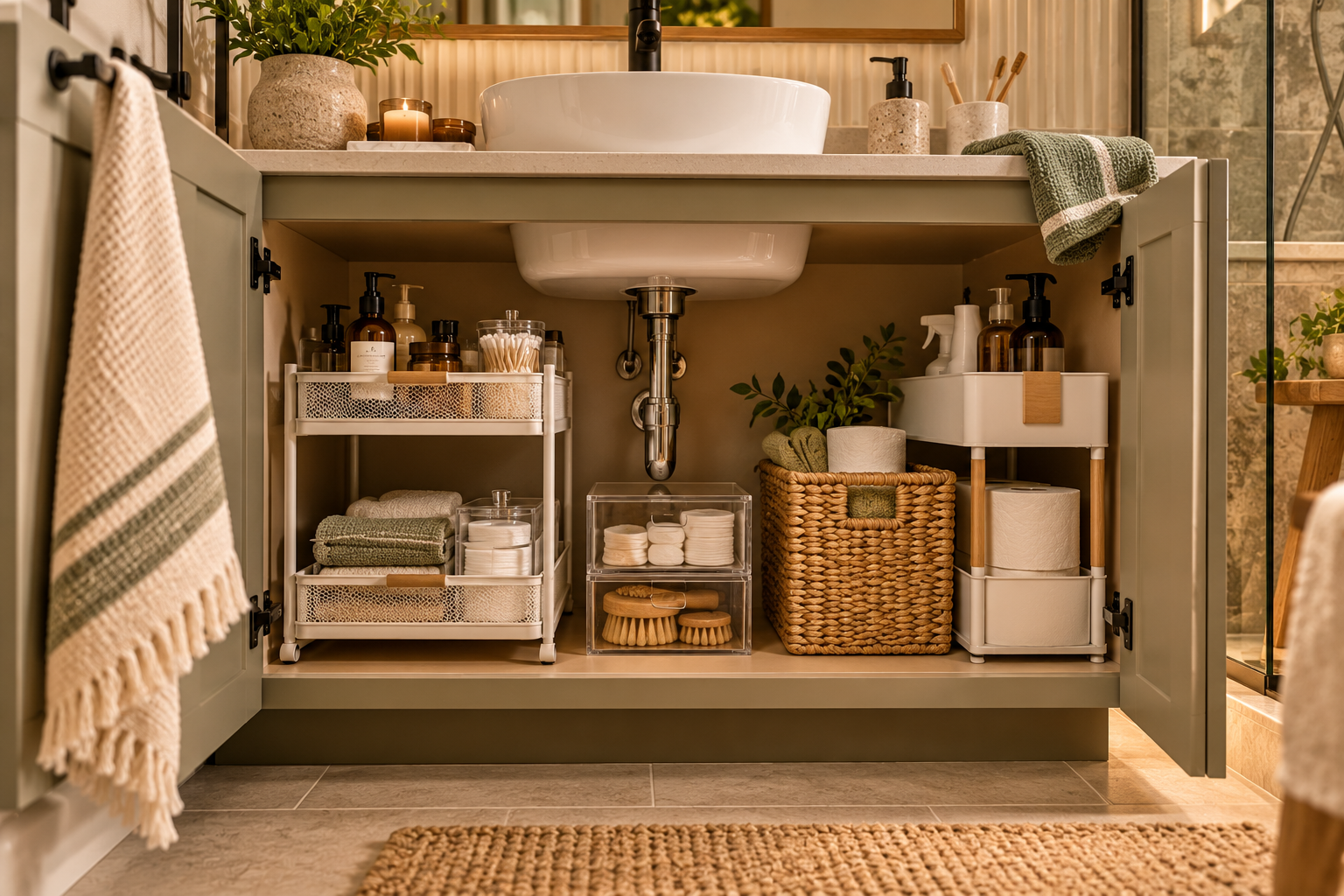
The cabinet beneath a tiny sink often looks roomy until you account for the drain trap, water pipes and shutoff valves. Before ordering an under-sink organizer, sketch the available footprint and the plumbing obstacles. Choose two lift-out bins or adjustable shelves rather than squeezing in a rigid drawer system that blocks maintenance access.
Keep everyday supplies near the front and backup toiletries in the deeper sections. A washable, removable tray helps reveal small drips rather than concealing them; inspect it regularly. Do not store cleaning chemicals next to cosmetics or in unlabelled decorative bottles, and secure hazardous products away from children and pets.
3. Choose a slim rolling cart
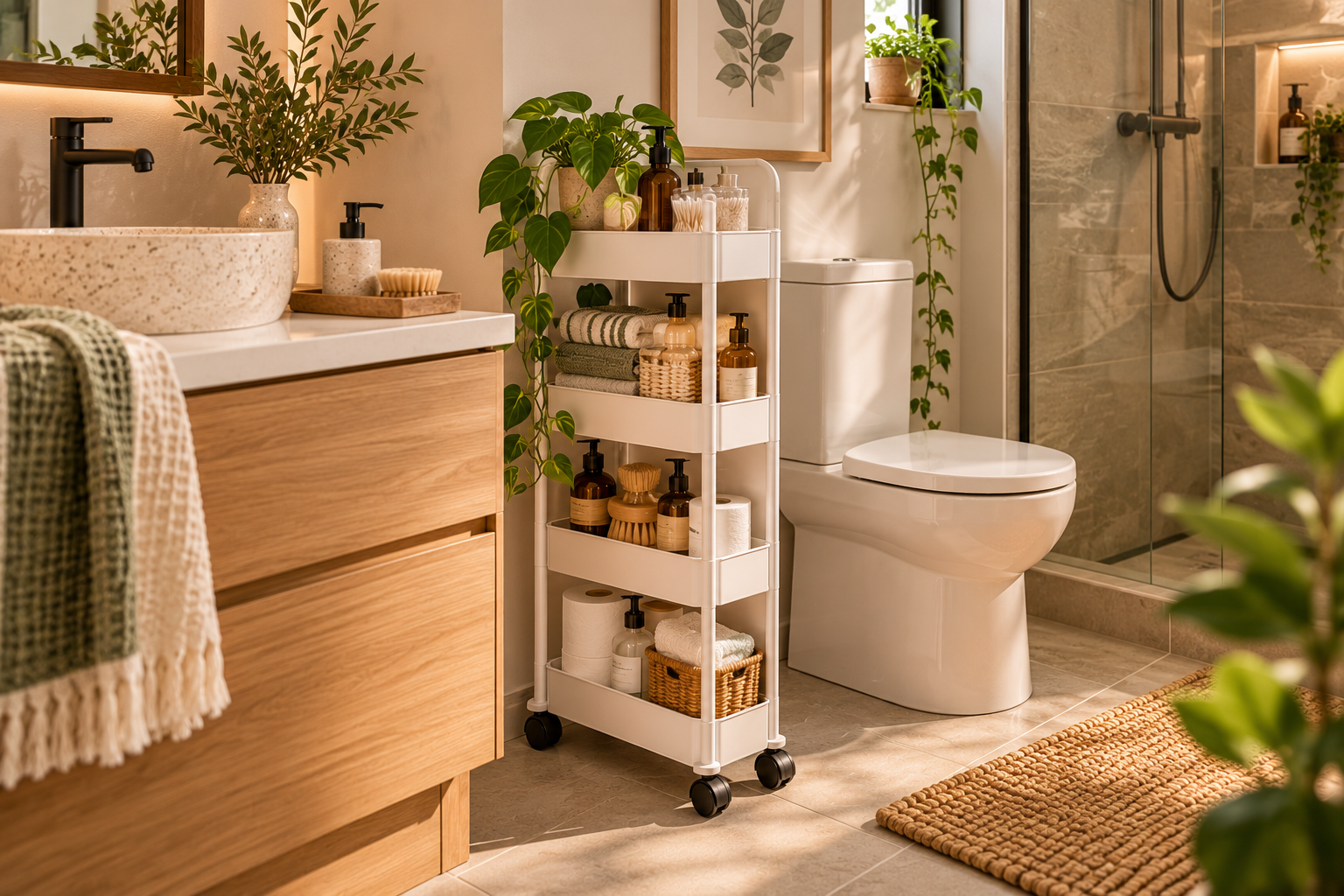
A slim rolling cart can turn a forgotten gap beside the vanity into accessible storage, especially in rented bathrooms. Measure the narrowest point of the gap, including baseboards, handles and any raised floor trim. Leave enough clearance to roll the cart out without scraping furniture or blocking the bathroom door.
Assign a purpose to each level: daily skincare near the top, folded washcloths in the middle and sealed spare items below. Look for materials suited to humidity, smooth surfaces that wipe clean and wheels that stay steady on the bathroom floor. Avoid overloading the top or parking a cart where it obstructs exits.
4. Install wall-mounted baskets
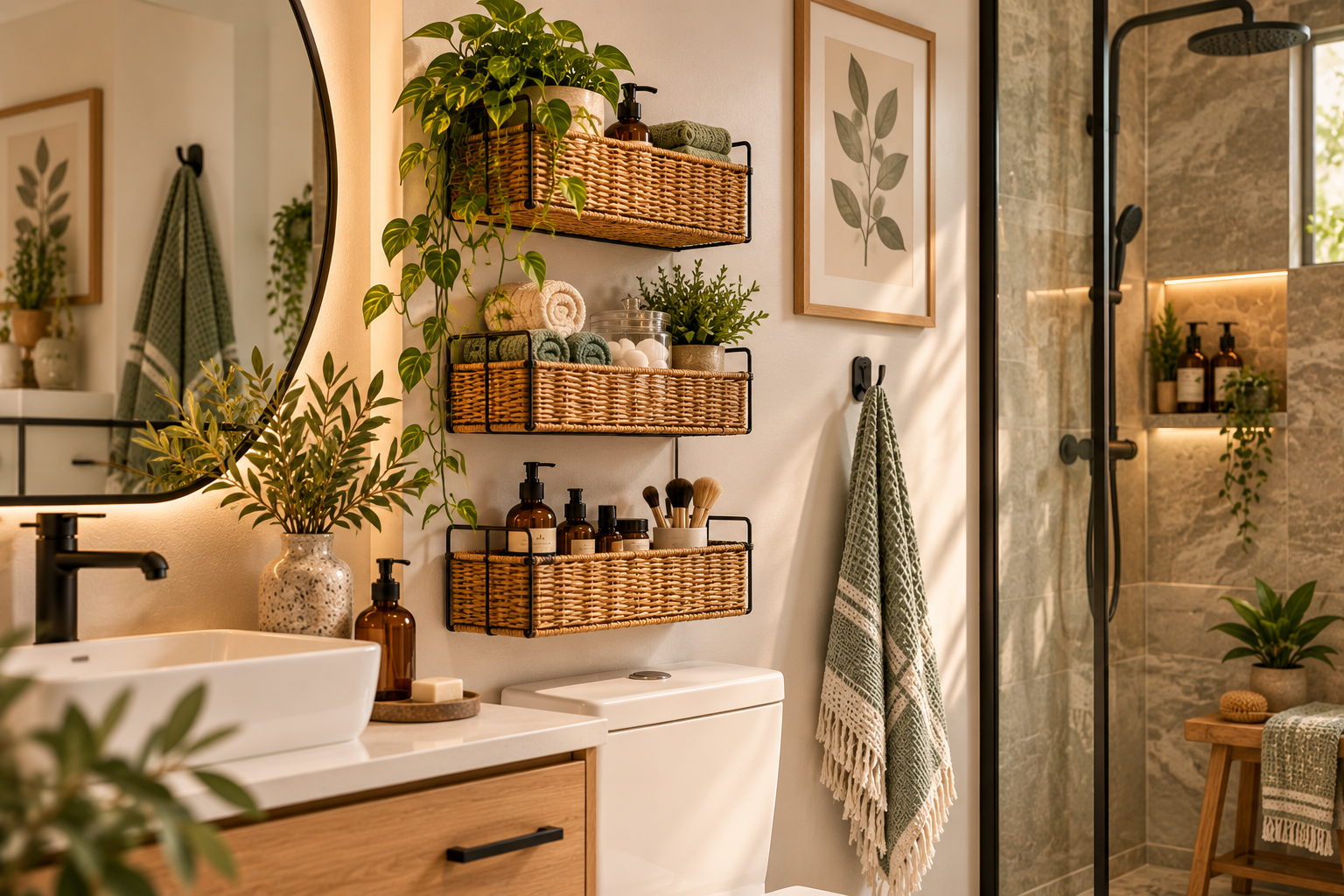
Shallow wall baskets keep essentials visible while preserving floor area. They are particularly useful beside a vanity for rolled hand towels, spare tissues or small toiletries that you reach for every day. Group items by function, not by package size, and leave some breathing room so the display feels intentional rather than crowded.
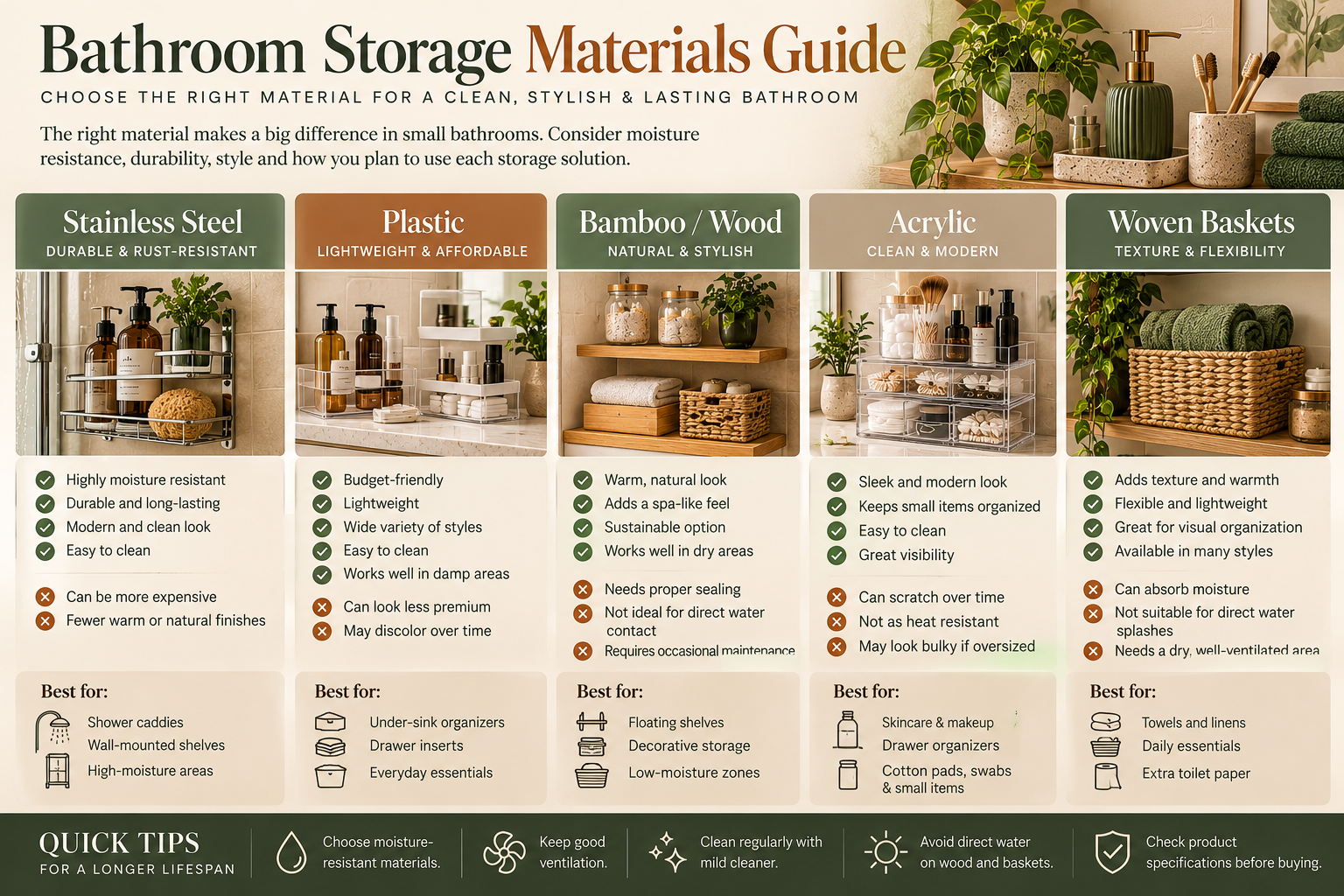
Choose corrosion-resistant finishes or bathroom-compatible plastics. Mount baskets only with fixings rated for the wall type and expected load; investigate hidden plumbing and electrical cables before drilling. Adhesive-mounted options can suit light items on appropriate clean surfaces, but follow the stated load and humidity limits rather than treating them as permanent heavy-duty shelves.
5. Use a shower caddy that matches your routine
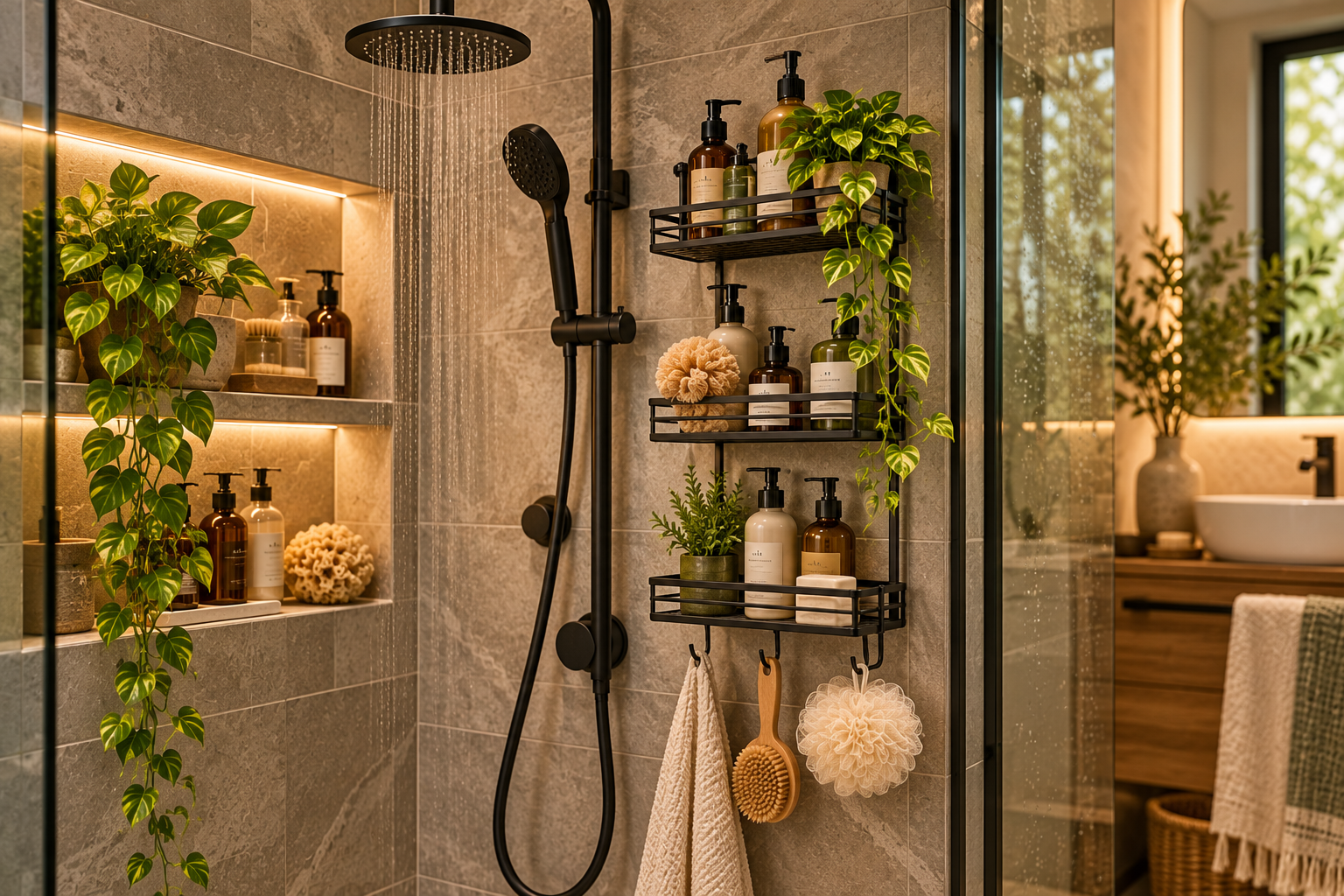
In a compact shower, the best storage keeps bottles off the floor without putting them directly in the spray path or restricting movement. Inventory the products actually used during a normal week, then choose a hanging, corner or wall-mounted shower caddy with enough room for that smaller group. An oversized organizer only invites clutter.
Prioritize drainage, wipe-clean surfaces and a secure fit with your shower hardware. Check whether a hanging caddy interferes with a showerhead, glass door or temperature controls; ensure no sharp edge sits at shoulder height. Rinse away residue, let bottles dry when possible and regularly inspect suction or adhesive connections for loosening.
6. Turn the mirror into hidden storage
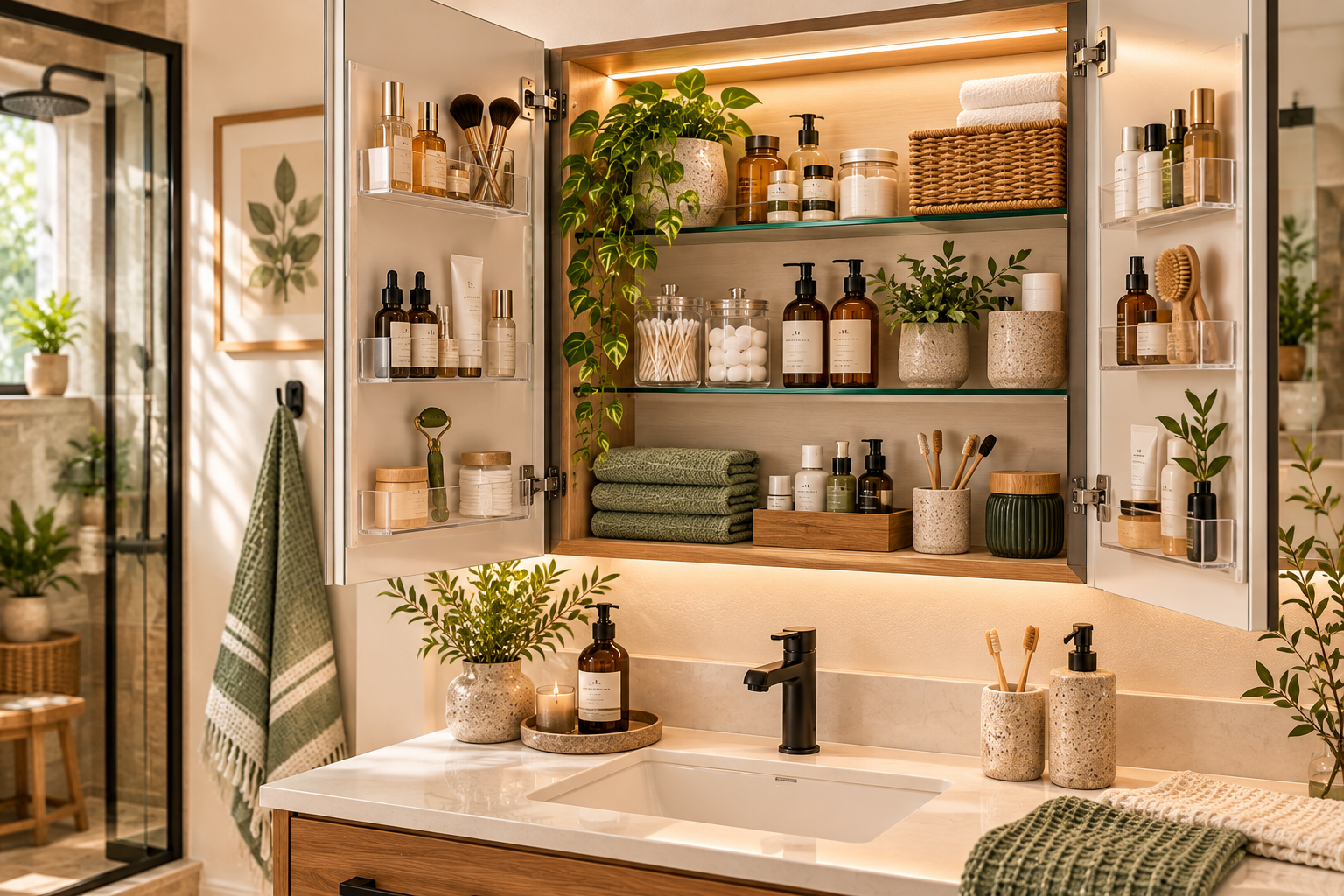
A mirror-front cabinet adds practical storage above the basin without requiring a wider vanity. Shallow internal shelves can hold toothbrush supplies, grooming tools and a small number of regularly used toiletries while keeping the sink visually calm. When choosing a model, check the door swing, mirror height, outlet clearance and whether a surface-mounted or recessed design suits the wall.
Humidity and temperature fluctuations make many bathrooms unsuitable for storing medicines, even when the cabinet is called a medicine cabinet. Follow each medication’s label and pharmacist guidance; often a cool, dry space outside the bathroom is better. If recessed installation is considered, a qualified installer should check the wall cavity for pipes, cables and structural limitations.
7. Use matching containers for small items
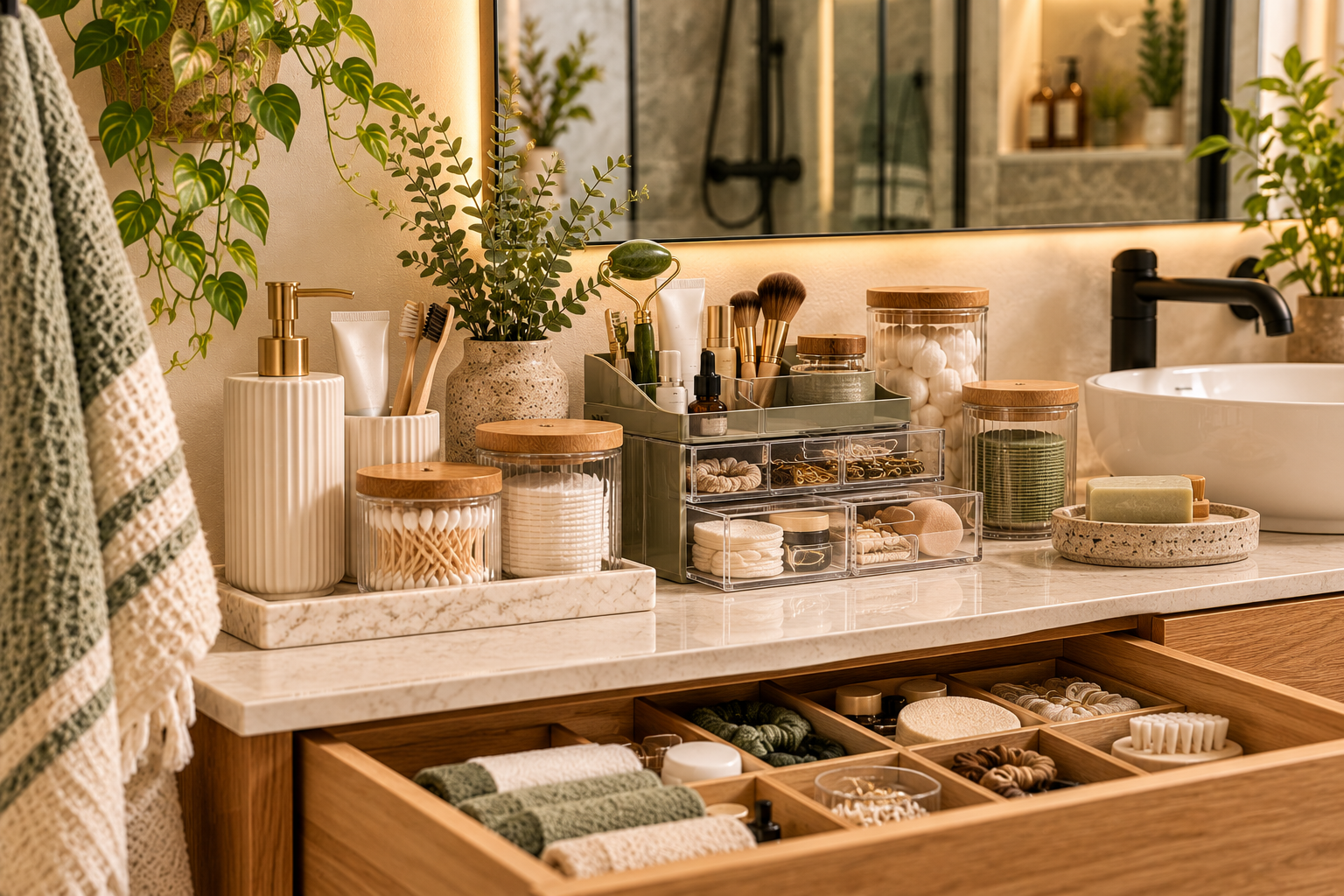
Small loose items can overwhelm a tiny bathroom faster than large towels. Group cotton pads, hair ties, makeup brushes and spare grooming supplies into a few washable containers based on how often they are used. Repeating one or two materials—such as warm white resin and clear acrylic—creates an orderly look without buying an elaborate matching set.
Keep frequently handled items in easy-to-open containers, and choose covered containers for contents that need protection from splashes or dust. Avoid trapping damp cotton or textiles in airtight jars. Label the back or underside of less-used bins if that helps household members return items to the same place.
Make These Bathroom Storage Ideas Work in Real Life
For renters: choose removable before built-in
If your rental agreement limits drilling, start with movable storage: narrow freestanding carts, lift-out vanity bins and small countertop trays. Some over-door organizers and shower tension systems are practical, but only if they fit the door or ceiling and respect the maker’s installation limits. Adhesive shelves can fail in steamy conditions, so check compatible surfaces and weight ratings and avoid mounting heavy or breakable containers above sinks or toilets. Even freestanding tall organizers may need anti-tip anchoring; consider this before purchase.
For shared bathrooms: give each person a defined zone
Shared bathrooms need a little more structure than a matching basket set. Assign each person a labelled bin or shelf, then keep a small common-use area for hand soap, toilet tissue and cleaning cloths. Put seldom-used backups outside the room if space allows. Make the system easy for everyone to maintain: wide-access bins work better than overpacked organizers, and a simple weekly reset prevents products from collecting around the sink.
For damp bathrooms: prioritize airflow and inspection
Store clean towels where they can stay dry, and allow wet towels to air out rather than stuffing them into a closed cabinet. Use wipe-clean trays for toiletry bottles, lift organizers periodically to inspect for leaks, and check metal finishes for corrosion. If a bathroom regularly stays damp or develops mold, storage accessories are not a substitute for addressing the moisture problem and ventilation. Avoid trapping moisture behind baskets, cabinets or thick textiles.
For everyday upkeep: keep the routine simple
Every evening, clear the basin and return toiletries to their designated locations. Once a week, wipe shelf surfaces, check shower caddy drainage and remove empty bottles. Once a month, review unopened products, inspect under-sink plumbing and remove duplicate or expired toiletries according to product guidance. Keep hazardous cleaners secured in original labelled packaging; never decant them into decorative containers. The aim is not to fill every available inch, but to make the bathroom consistently easy to use and clean.
Where to store backups
The most practical bathroom storage ideas do not force every spare product into a very small room. Toilet paper multipacks, extra towels and unopened toiletries can live in a nearby closet or utility area.
Bathroom Storage Ideas: Mistakes to Avoid
- Using deep shelves in narrow walkways.
- Keeping every product visible.
- Buying large countertop organizers.
- Storing too many backups in the bathroom.
- Ignoring moisture when choosing baskets or materials.
Frequently Asked Questions About Tiny Bathroom Storage
How do I add storage to a tiny bathroom without drilling?
Start with a slim freestanding cart, lift-out under-sink bins or a countertop organizer. An over-door rack can work if it does not prevent the door from closing; tension-pole or adhesive accessories must be compatible with the surface and humidity and used within the manufacturer’s weight limit. Tall freestanding pieces may still require anti-tip securing.
What should stay on a small bathroom counter?
Keep only daily-use hand soap, toothbrush supplies and a small skincare selection within reach. Use a washable tray to protect the surface and group related products. Store backups and less-used grooming items in drawers or baskets, leaving space around the sink for cleaning.
How can I make open bathroom storage look less cluttered?
Use two or three matching basket styles, group items by purpose and leave some shelf space visible. Move spare products into closed storage; keep towels dry and avoid storing moisture-sensitive items directly in splash zones.
The most useful bathroom storage ideas create access without making the room feel crowded, especially when vertical and hidden storage are used first.
More small-space ideas: 7 Small Space Storage Ideas for Tiny Homes & Apartments.