
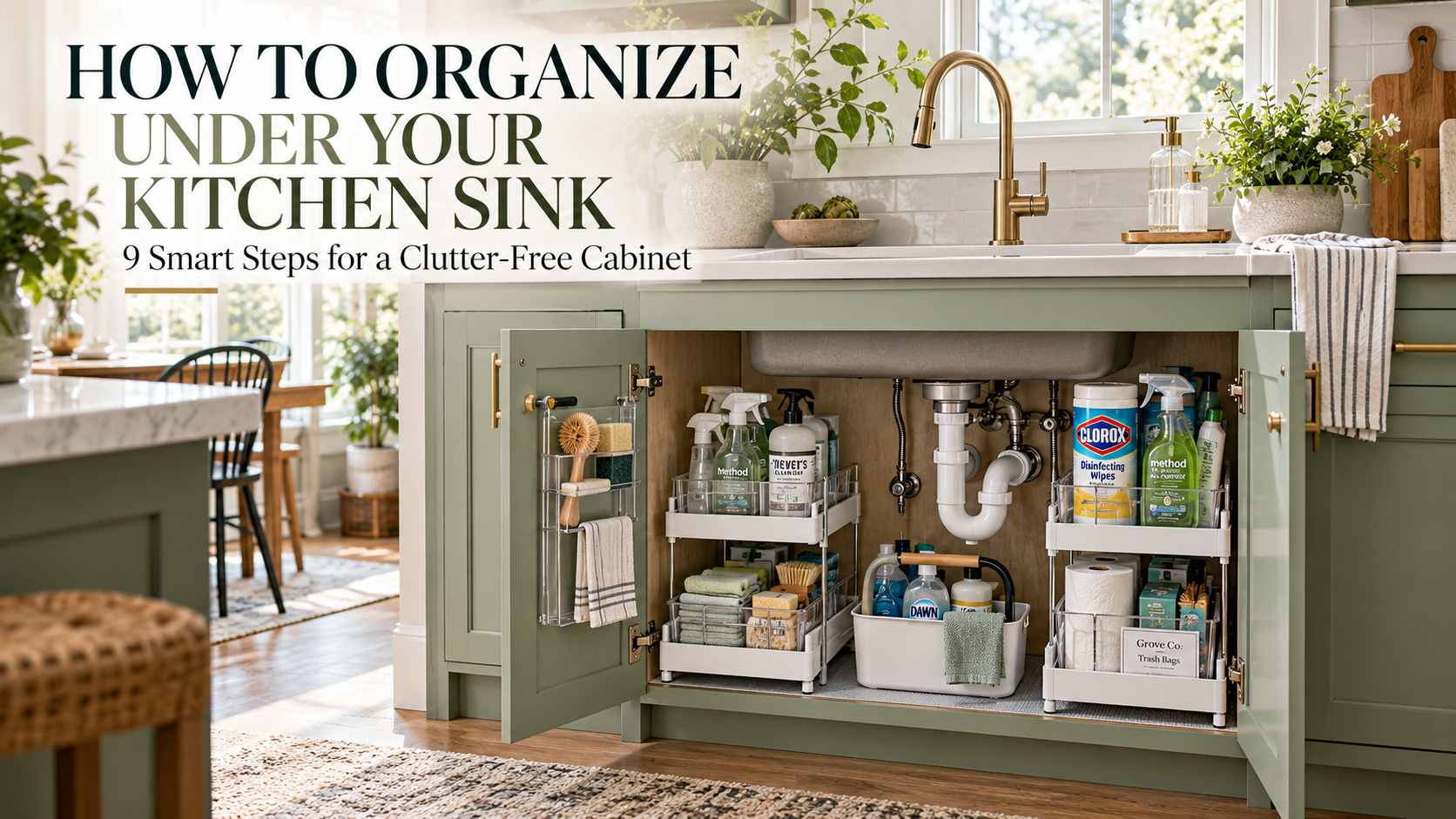
9 practical ways to organize the awkward cabinet under your kitchen sink using bins, pull-outs, door storage and simple zoning.
Start with these three steps
Remove supplies and check the cabinet for moisture or leaks.
Check usable width, height, hinges and valve access.
Use removable baskets and keep essentials easy to reach.
Effective under sink organization starts by working with the awkward shape of the cabinet: plumbing takes up the middle, the back is difficult to reach and bottles easily fall into one another. A simple system can turn this problem area into useful storage without wasting space.
Affiliate disclosure: As an Amazon Associate, Smart Space Finds earns from qualifying purchases. If you buy through the product links in this guide, we may earn a commission at no additional cost to you.
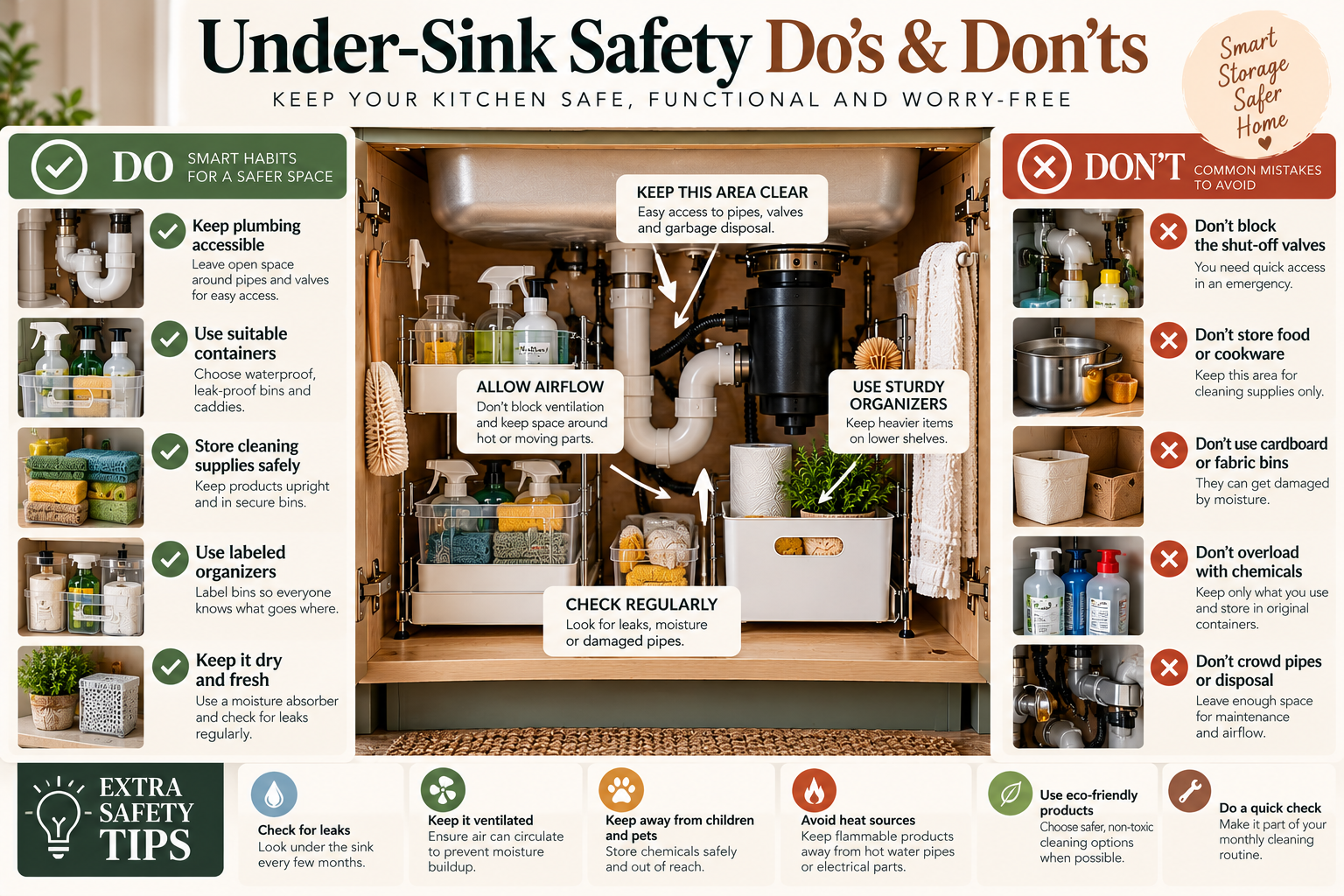
Organize Under Kitchen Sink Storage Safely First
Measure the space you can actually use
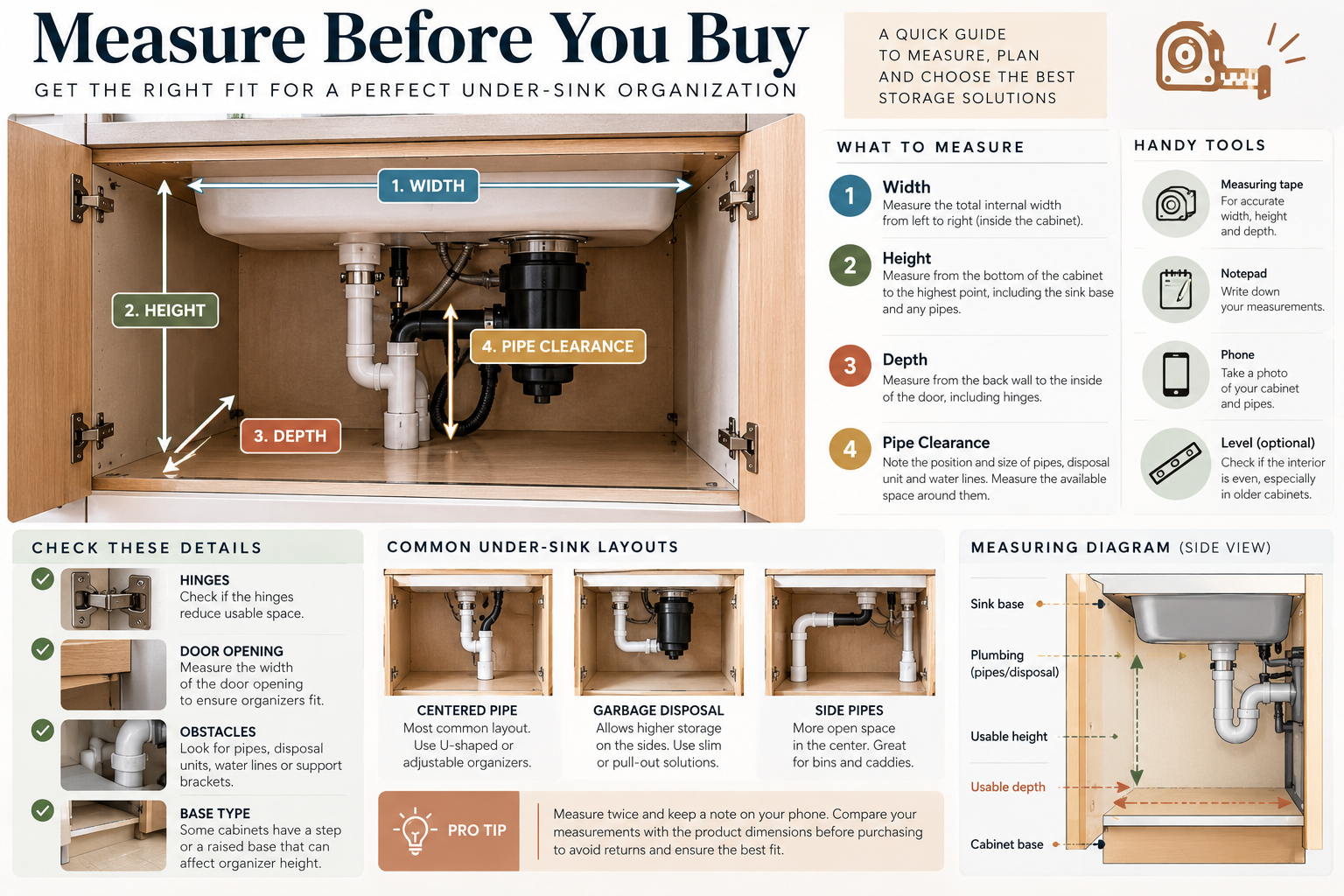
Measure the cabinet’s internal width, depth and height, not just the outside dimensions. Then measure the clearances on either side of the drainpipe, around any disposal unit, near the hinges and along the path a drawer would travel when fully extended. Sketch a rough top-down map and mark shutoff valves as no-blocking zones. For pull-out organizers, check both the basket footprint and the space needed for rails and door opening. Compare these numbers with the exact manufacturer’s dimensions before ordering.
| Measure | Why it matters |
|---|---|
| Usable width and depth | Determines which bins and trays will fit without crowding pipes |
| Clear height beside plumbing | Helps you choose single-tier versus two-tier storage |
| Door and hinge clearance | Prevents pull-outs or door racks from colliding |
| Valve and connection access | Keeps maintenance and leak inspection possible |
Empty the cabinet and inspect pipes, seals and the cabinet base. If there is any active moisture, fix the source before adding bins or liners. Storage should never hide a plumbing problem.
1. Empty everything and edit the category
Remove every product, wipe the cabinet and discard empty bottles or items you no longer use. Combine duplicates where appropriate and move unrelated products elsewhere.
2. Use pull-out bins
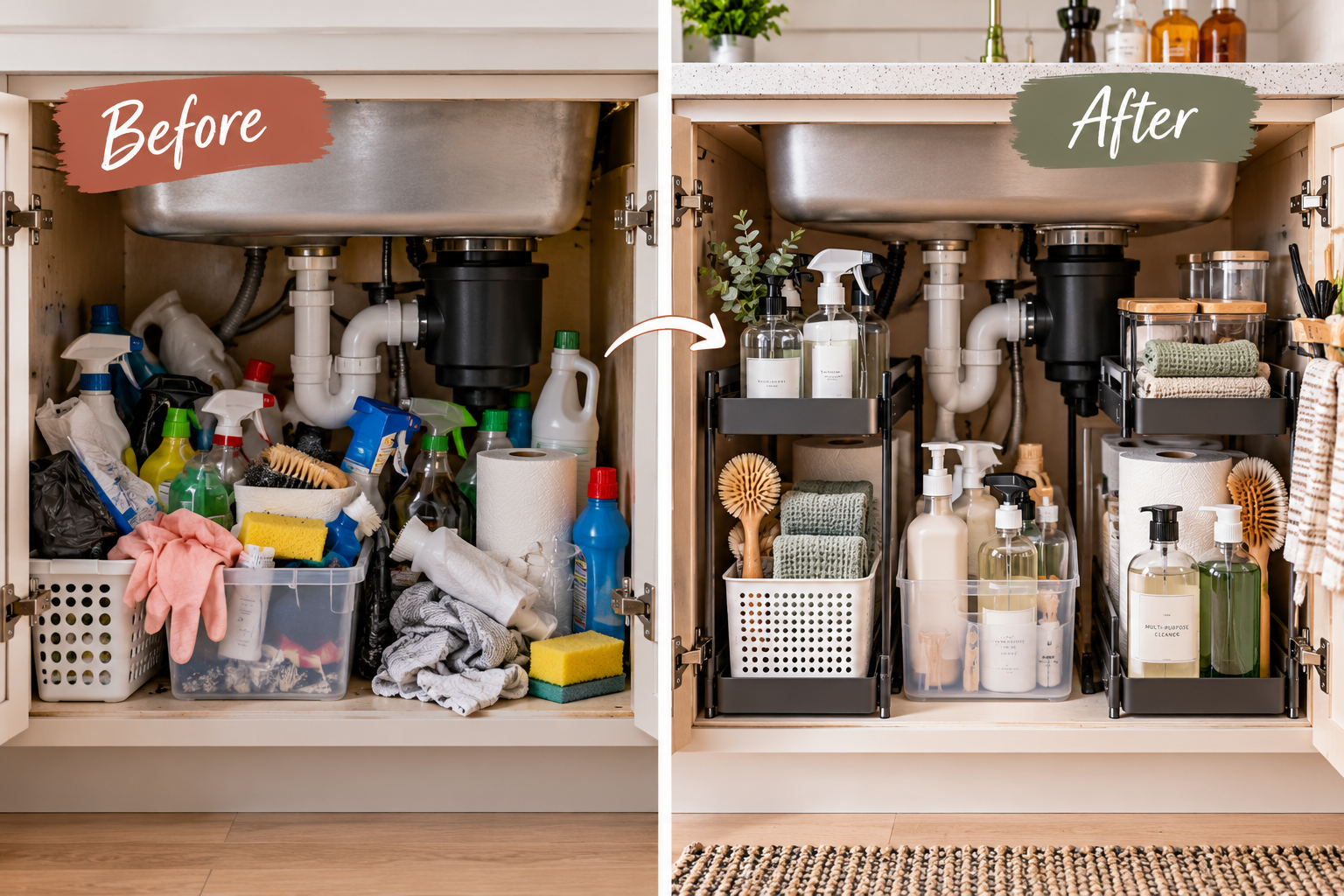
Pull-out bins make the back of the cabinet accessible without unloading the front. Assign categories such as cleaning sprays, dishwasher supplies and sponges so the system is easy to maintain.
3. Work around the plumbing
Instead of forcing one large shelf into the cabinet, use modular pieces that fit around the pipes. Narrow bins and split-level organizers usually adapt better to irregular spaces.
4. Use the cabinet doors
Adhesive baskets or shallow door racks can hold gloves, cloths and lightweight tools. Measure the clearance before installation so the door still closes without hitting internal storage.
5. Add a tension rod for spray bottles
A short tension rod can lift spray bottles off the cabinet floor and create a second storage level. Keep heavier bottles below if the rod does not feel completely secure.
Before you buy: measure the cabinet
Measure the cabinet’s inside width, depth and usable height, then measure the position of the drainpipe, hoses and shutoff valves. For a pull-out drawer, check its full travel path before buying. Choose washable organizers that can be removed quickly to inspect plumbing or address leaks. Keep chemicals in their original labeled containers and follow label instructions for child-safe storage; never combine cleaning chemicals.
6. Keep everyday products at the front
Dishwasher tablets, bin liners and your most-used cleaner should be easy to grab. Backstock and refills can sit farther back or in another storage area.
7. Use a portable cleaning caddy
A handled caddy is useful if you carry cleaning products between rooms. It also prevents small bottles from spreading around the cabinet.
8. Protect the cabinet base
A washable liner or shallow waterproof tray can catch small spills and make cleaning easier. Choose a liner that can be removed quickly if you need access to the plumbing.
9. Do not overfill the cabinet
When you organize under kitchen sink storage, leave enough room to see and reach the pipes. Bulk refills, large packages and rarely used cleaners can usually live somewhere else.
Under Sink Organization: A Practical Zoning Layout
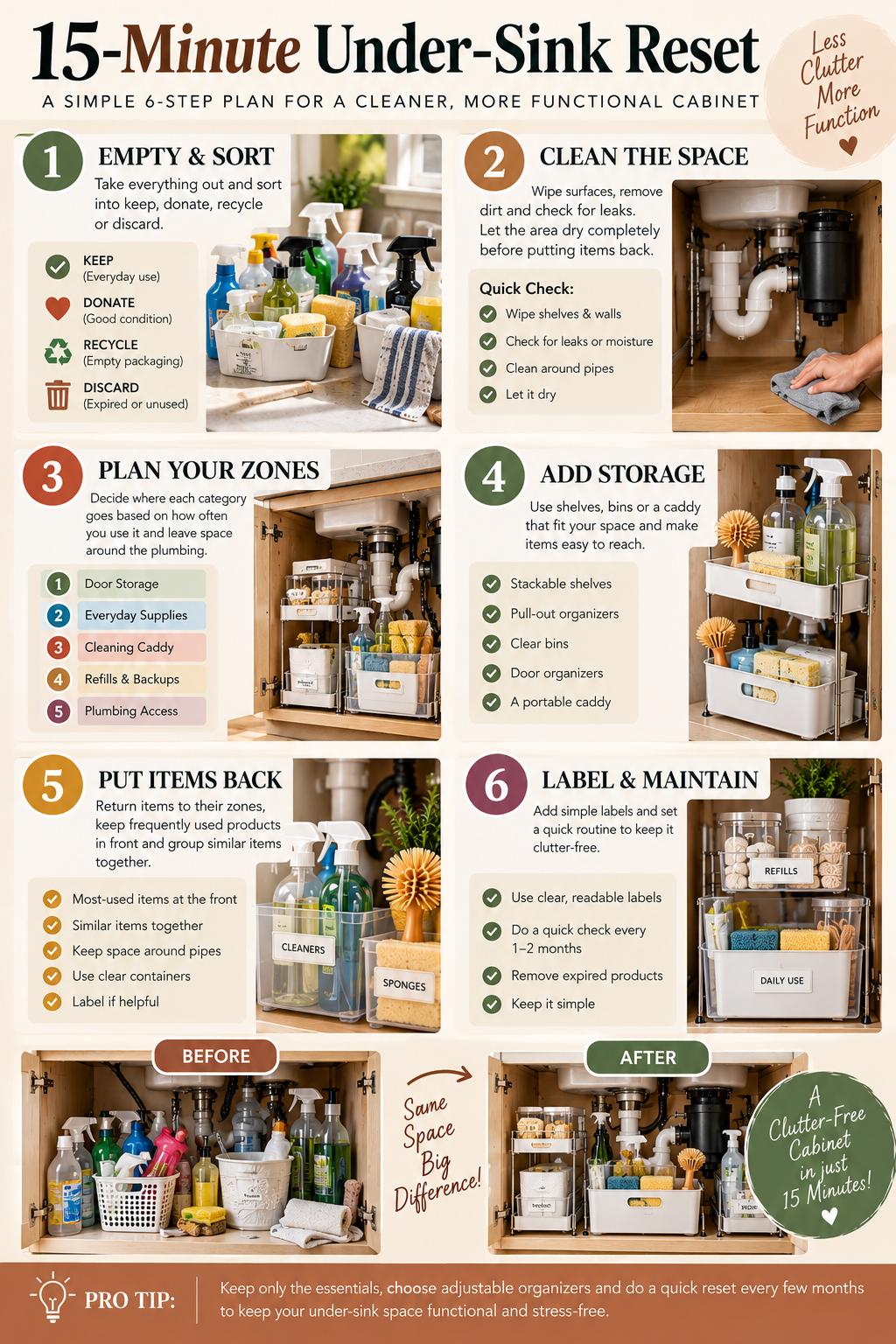
Your 15-minute cabinet reset
- Empty: remove everything and group similar items.
- Inspect: check for leaks, dampness and damaged surfaces before covering the base.
- Measure: map the usable footprint and keep plumbing access clear.
- Zone: place daily-use items forward and refills behind, subject to household safety needs.
- Test: open doors and pull-outs fully; remove any rack that catches or blocks valves.
- Maintain: schedule a brief monthly check for leaks, expired supplies and clutter.
Small-space rule: a little empty space is functional. Prioritize safe access and easy cleaning over maximum capacity.
Three layouts for different cabinet shapes
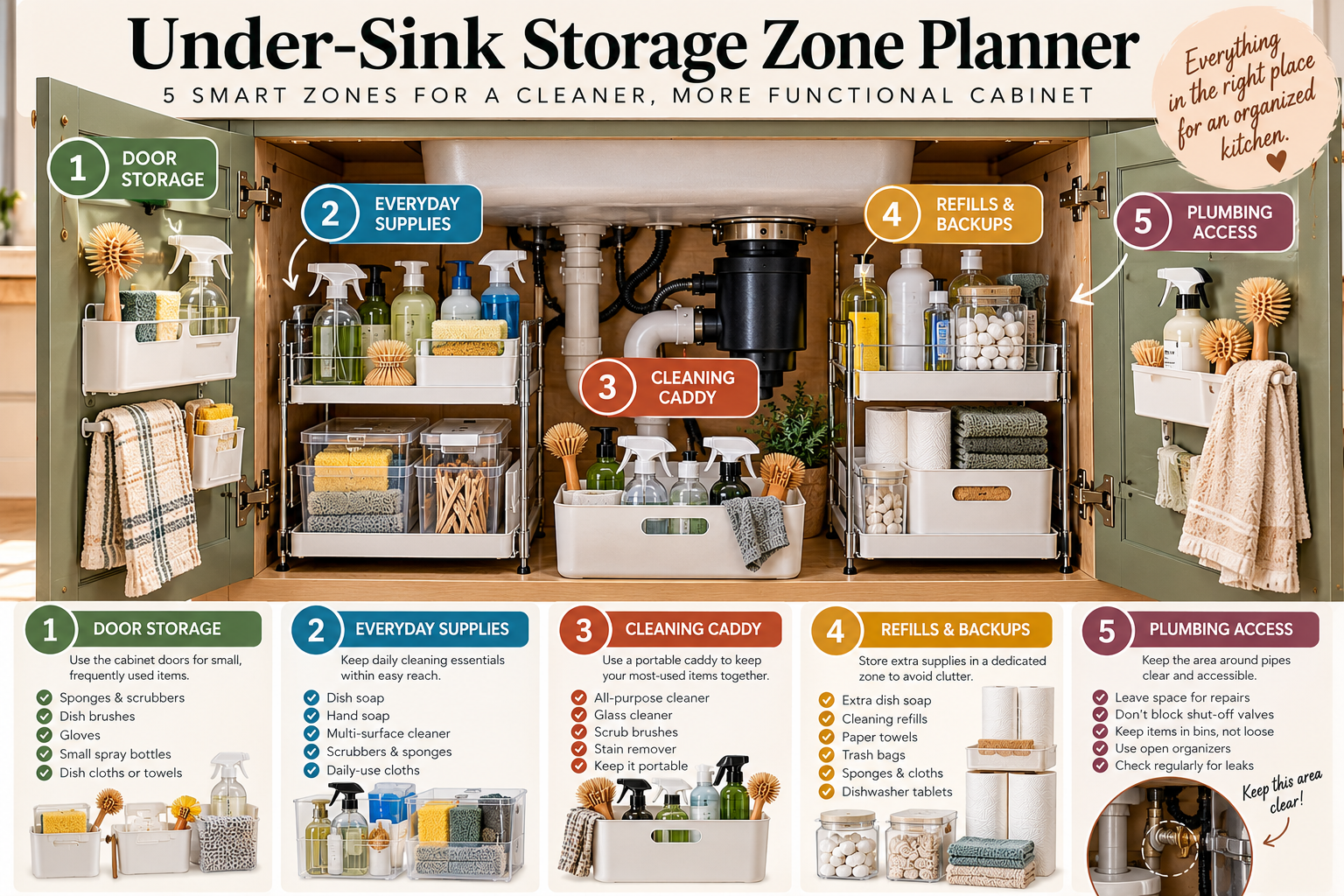
Narrow cabinet: use one removable slim bin and a compact caddy rather than forcing a multi-tier frame. Centered P-trap: use independent left and right baskets, leaving a visible access corridor around the plumbing. Cabinet with garbage disposal: prioritize low-profile bins on the unobstructed side and check full door clearance before trying any slide-out accessory. These are adaptable examples, not fixed installation plans.
- Front left: everyday cleaning products.
- Front right: dishwasher products and sponges.
- Door: cloths, gloves and light items.
- Back: unopened refills.
- Portable caddy: products used throughout the home.
Under-sink products that can help
For this step-by-step organization tutorial, choose storage by measured fit and daily use rather than by a product’s styling alone. Useful categories include removable slim bins, a stable handled caddy, a wipe-clean cabinet mat and a pull-out tray only where door and pipe clearance permits. There is no need to buy every accessory.
For a product-by-product comparison, see our separate under-sink storage solutions and organizer buying guide. This page focuses on the organizing method; that companion guide focuses on choosing storage products.
Future recommendations will focus on adjustable pull-out organizers, narrow bins, cleaning caddies, door-mounted baskets and waterproof liners that work around plumbing.
Frequently asked questions
How do I organize a cabinet with a garbage disposal?
Measure the remaining clear floor area and start with a low, removable basket on the unobstructed side. Do not cover access panels, valves or pipe connections; avoid any rack that presses against electrical connections or hoses.
Can I put a tension rod under the sink?
Only when its manufacturer permits the intended load and installation surface, it stays stable during normal use and it does not obstruct pipe access. Do not suspend heavy or hazardous bottles from an improvised or unstable rod; a freestanding caddy is often a simpler choice.
What is the best solution for renters?
Freestanding baskets, removable bins and a washable mat usually need no permanent cabinet modification. Confirm that any adhesive hook or door accessory is compatible with the surface and will not interfere with hinges or closing.
How do I stop the cabinet from smelling musty?
Find and resolve moisture at the source, inspect plumbing and dry the cabinet completely. Do not mask persistent odors with fragrance or hide damp flooring under a waterproof mat. Seek appropriate maintenance help for recurring leaks or water damage.
What should not be stored under a kitchen sink?
Avoid storing items that could be damaged by moisture, important papers, food or anything that would be unsafe if a leak occurred.
Are stackable drawers useful under the sink?
Yes, when they fit around the plumbing and still leave access to pipes. Measure carefully before buying.
How often should I reorganize this cabinet?
A quick check every few months is usually enough. Remove empty products and wipe spills before they turn into a larger mess.
Good under sink organization keeps everyday supplies easy to reach while preserving clear access to plumbing and making spills easy to spot.
Related guide: 8 Small Kitchen Organization Ideas That Save Space.
Recommended Under-Sink Storage Solution
A two-tier pull-out organizer can help maximize cabinet space while keeping cleaning supplies and everyday essentials easy to access.
Check out this 2-Pack Under-Sink Organizer at Walmart