
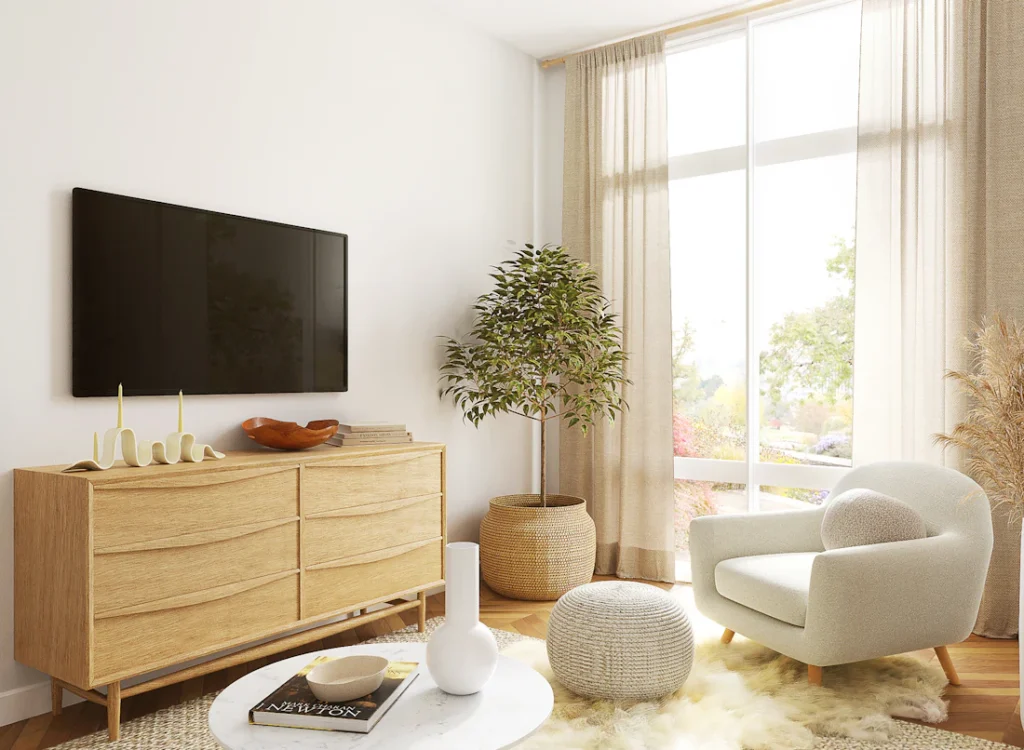
A small living room does not need a wall of cabinetry to hide the TV gear. The most effective media storage combines a correctly sized console, concealed everyday accessories, safe airflow for electronics, and cable routing that stays accessible. Start with the equipment you actually own, then choose storage around it—not the other way around.
1. Measure Your Media Wall Before Buying Anything
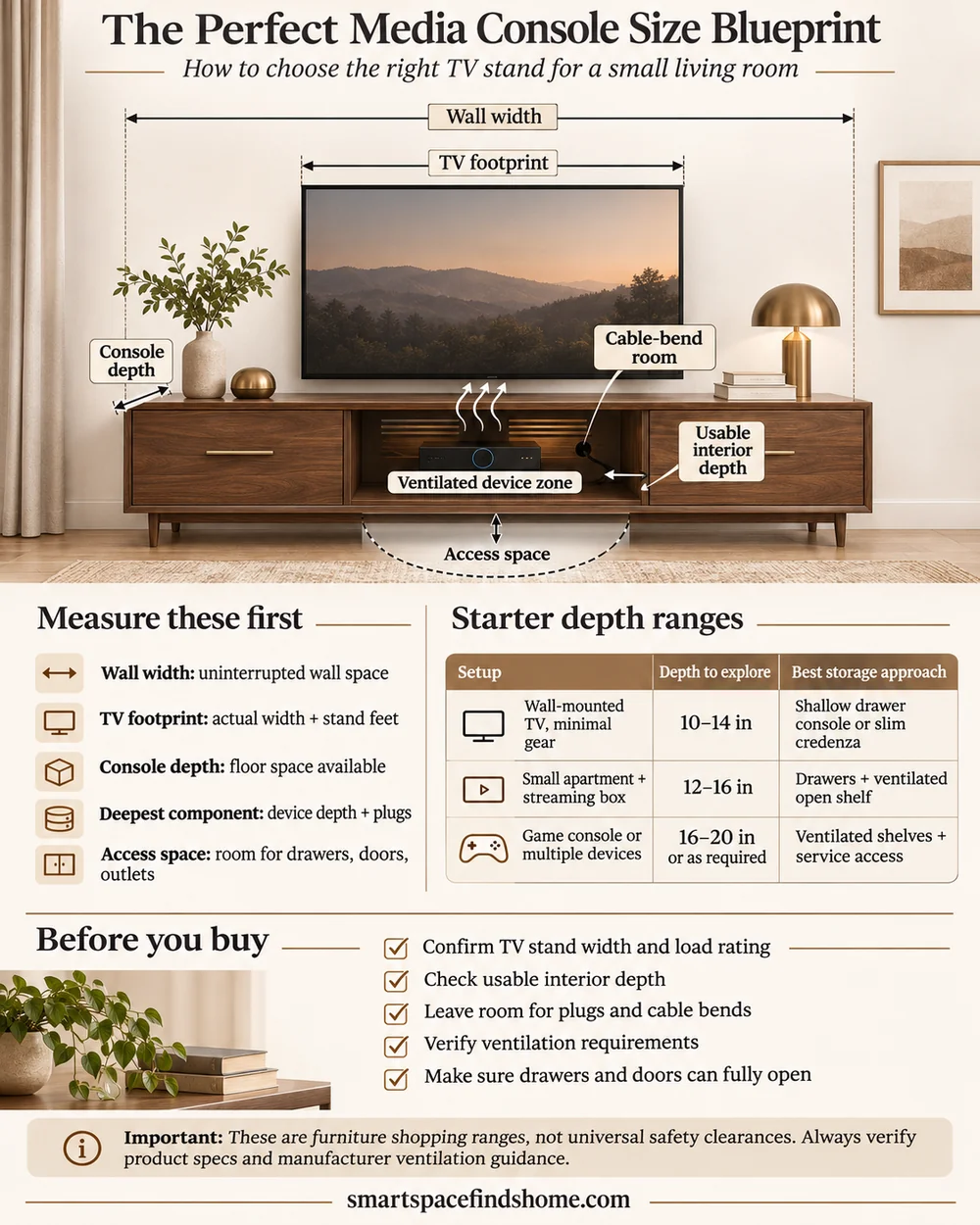
Measure the usable wall—not just the empty span behind the TV. Record the TV’s actual width, distance between its feet, console location relative to door swings, and the clearance you need to walk comfortably past it. If your TV rests on a stand, follow its stated minimum stand width and load rating. Never assume a narrow cabinet can support a larger screen.
Five measurements to write down
- Wall width: the uninterrupted space between doors, windows, radiators, and circulation routes.
- TV footprint: actual width and the distance between the stand feet, not only the advertised diagonal screen size.
- Console depth: front-to-back floor space available without squeezing the walkway.
- Deepest component: device depth plus plugs, cable-bend space, and required air clearance.
- Access space: enough room to fully open doors, pull drawers, reach outlets, and clean around cords.
| Living room setup | Depth to explore | Best storage approach |
|---|---|---|
| Wall-mounted TV, minimal gear | 10–14 in | Shallow drawer console or slim credenza |
| Small apartment with streaming box | 12–16 in | Drawers plus ventilated open shelf |
| Game console or multiple devices | 16–20 in or as required | Ventilated shelves with service access |
Those ranges describe furniture sizes, not universal device ventilation clearances. Check the installation manual for every powered device before enclosing it.
2. Eight Small Living Room Media Storage Ideas That Actually Work
Shop Smart: Compact Media Consoles
Choose based on actual TV stand width, weight capacity and device ventilation. Compare these four examples by available floor space, stand capacity, cabinet organization and device ventilation.
Affiliate disclosure: As an Amazon Associate, we earn from qualifying purchases. Product availability and prices may change. Please confirm fit, dimensions and manufacturer safety instructions before ordering.
Furologee TV Stand for Up to 55-Inch TVs
Rustic Brown · open shelving and soundbar shelf · ASIN B0CHDKQFJ8
Open storage for compact TVs and accessible media devices
JUMMICO TV Stand for 65-Inch TVs
Bright White · sliding barn doors · ASIN B09SHDW2KT
Conceals accessories in enclosed cabinets
Xixini Farmhouse TV Stand
Brown · sliding barn doors · for TVs up to 65 in · ASIN B0HHRTVQ3S
Closed cabinet storage with cord access for a farmhouse-style TV wall.
WAMPAT 68-Inch TV Console
Oak-B · glass doors and drawers · for TVs up to 75 in · ASIN B0H98TYRWS
A larger option with drawers and cabinets; measure wall space and TV support requirements.
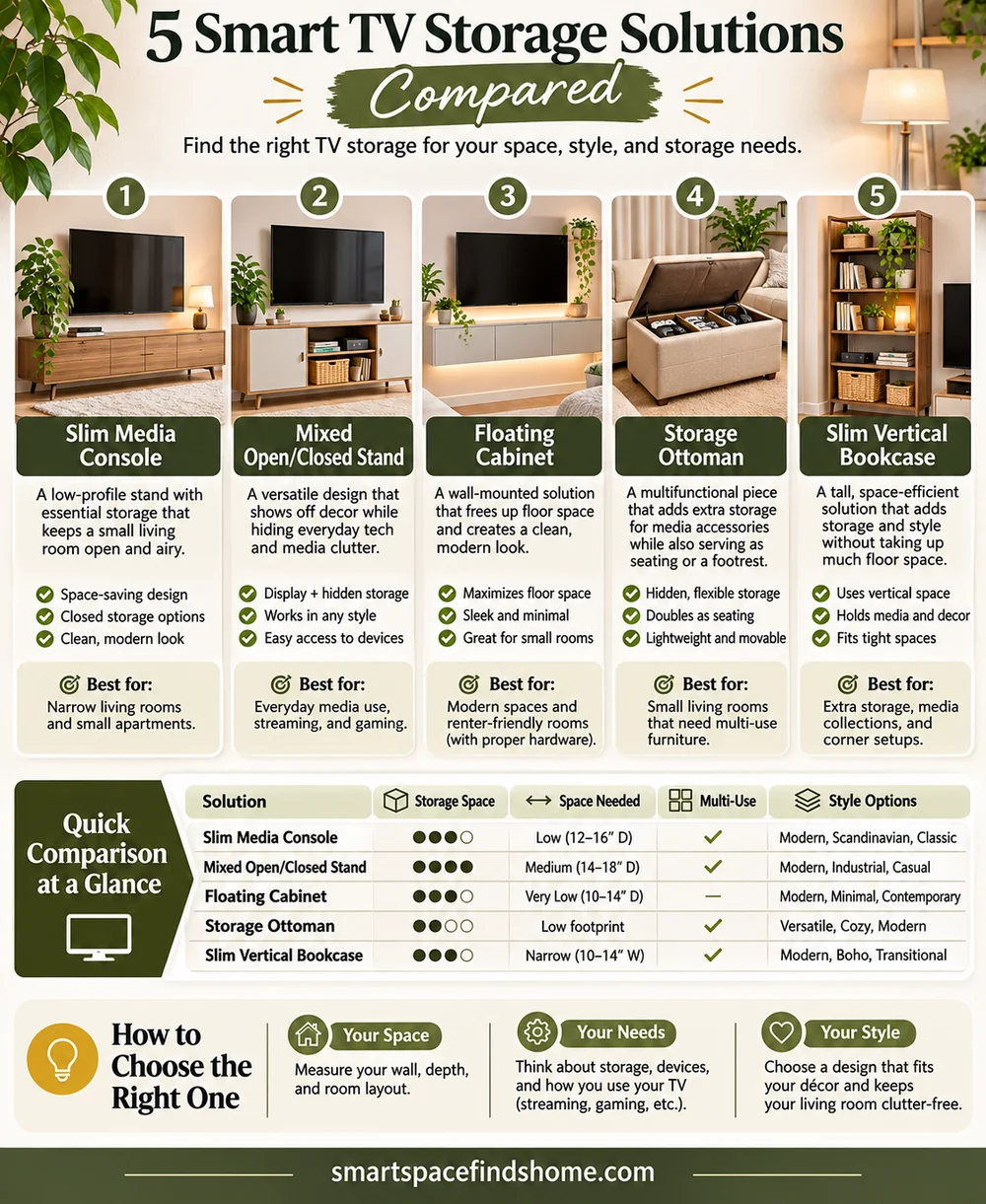
Choose a shallow console with closed drawers
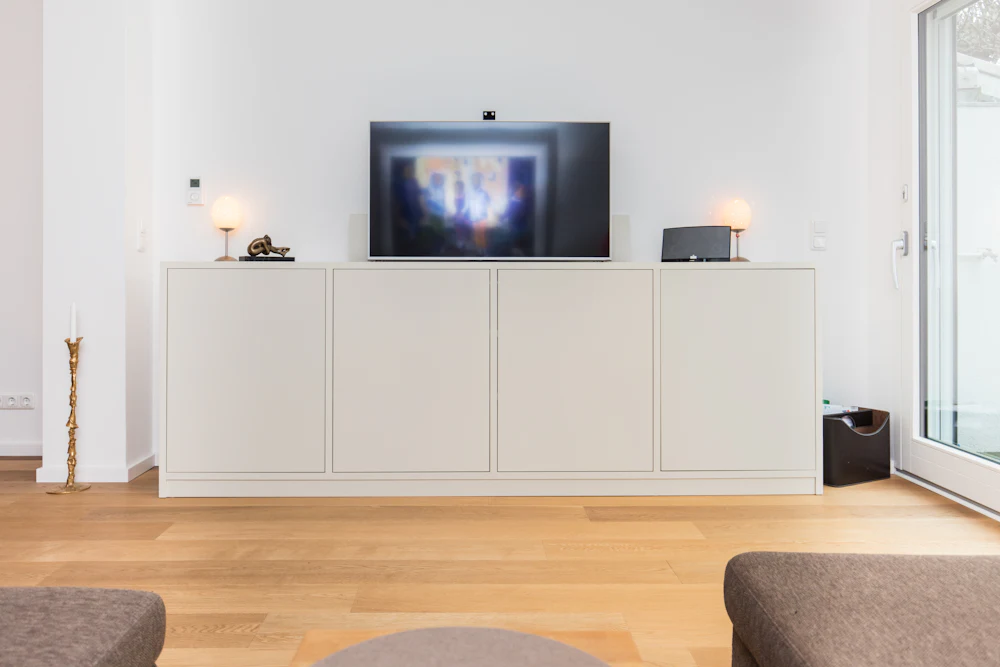
A shallow console saves visible floor space and gives the TV wall one clean horizontal line. Closed drawers hide remotes, spare HDMI leads, controller grips, and discs; active equipment belongs in a compartment designed for its airflow and cable needs. Choose smooth fronts and a finish that repeats existing wood tones for a calmer look.
Use a mixed open-and-closed cabinet
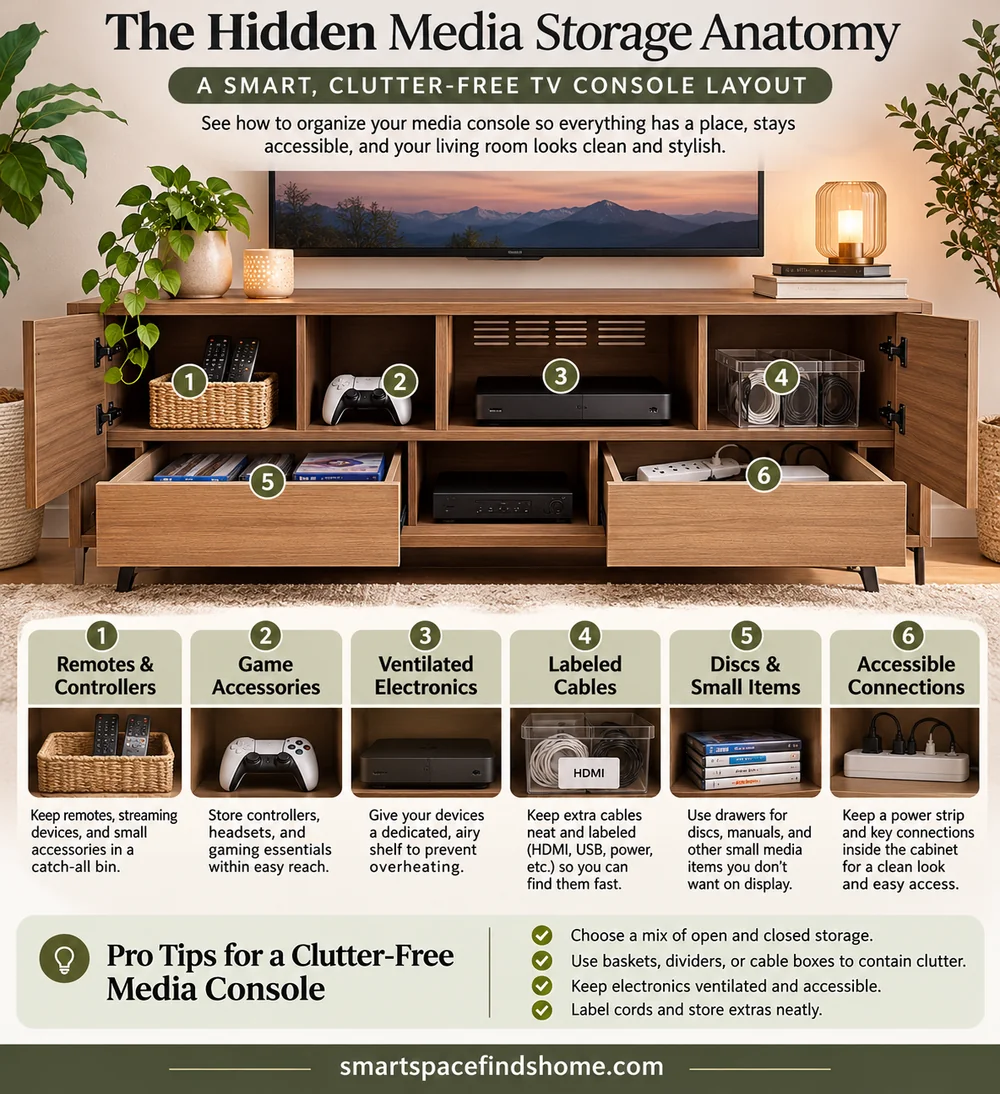
A console with one open equipment bay and two closed drawers is often more practical than an entirely sealed credenza. Place a streaming box or compatible device on the open shelf, keeping its vents clear; place visually messy accessories in the drawers. Check that the shelf is tall and deep enough and that its weight capacity is adequate.
Go vertical beside the TV, not directly above it
A slim bookcase beside the TV can store books, games, and decorative objects without crowding the screen. Keep heavier items low and secure tall furniture as the manufacturer directs. Limit open display to a few intentionally grouped pieces; baskets should hold lightweight clutter, not enclosed hot electronics.
Hide occasional-use gear in a storage ottoman
A lidded ottoman can hold spare controllers, board games, and folded throws while doubling as a footrest. This works especially well when a TV console has only one drawer. Never use an ottoman to operate or charge powered electronics inside a closed compartment.
Put cable accessories behind the console
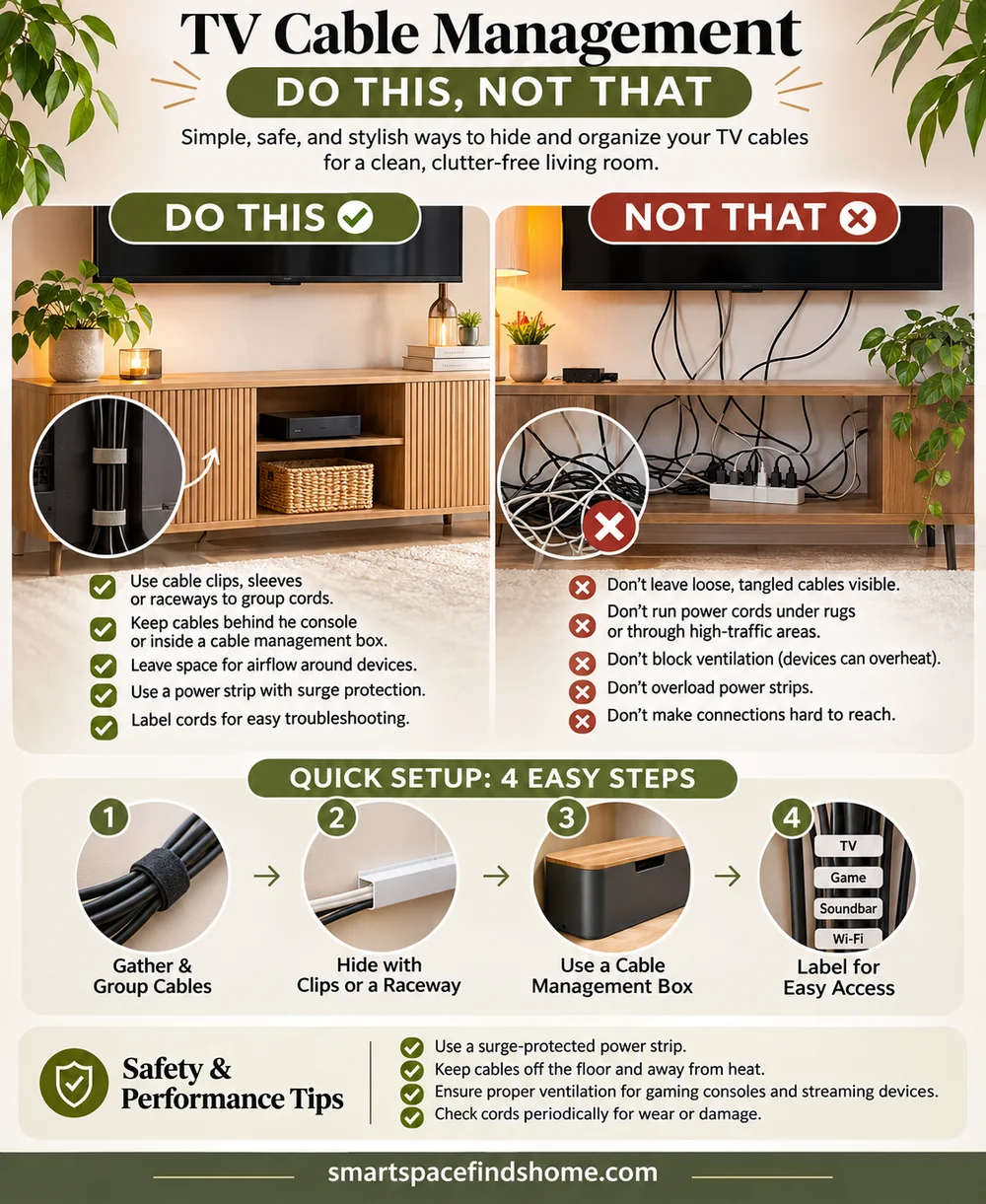
A removable cable tray, appropriately mounted raceway, and reusable hook-and-loop ties can make loose adapters far less visible. Keep plugs and switches accessible; follow product ratings and electrical safety instructions. Avoid overloaded power strips and concealed power cords under carpeting.
Give every remote and controller one home
Use a divided drawer insert or small labeled tray instead of an assortment of decorative boxes. The goal is to grab and return an accessory with one movement. Put rarely used discs or legacy cables in a separate, labeled container outside the prime TV zone.
Build a tidy soundbar zone
Measure the soundbar before deciding on a shelf. Do not block the TV’s infrared receiver, the speaker’s recommended sound path, or cooling vents. For wall-mounted audio, use the manufacturer’s approved bracket and the correct wall fixings.
Leave some wall space empty
Too many shelves can turn a small media wall into the room’s visual focal point even when everything is organized. One console, one restrained display zone, and clear negative space are often more effective than a full gallery of cabinets.
3. Which Media Storage Type Is Right for Your Room?
| Storage type | Main advantage | Watch out for | Best fit |
|---|---|---|---|
| Shallow freestanding console | Preserves floor space; portable | Device depth and anti-tip requirements | Renters and narrow rooms |
| Open-and-closed TV stand | Hides accessories while ventilating gear | Exposed items can look busy | Streaming and gaming households |
| Wall-mounted floating console | Open floor appearance | Wall load, wiring, and rental permission | Approved permanent installations |
| Storage ottoman | Extra hidden space without another cabinet | Not suitable for active electronics | Controllers, games, blankets |
| Slim side bookcase | Uses vertical space | Tip-over prevention; display clutter | Mixed book and media storage |
4. Three Media Wall Layouts for Real Small Apartments
The right TV storage layout depends on how the room is used. These are three simple starting plans you can adapt before shopping.
LAYOUT A · NARROW ROOM
The shallow wall
Place a low, shallow console on the longest usable wall. Use drawers for accessories and keep the opposite walkway clear.
LAYOUT B · STUDIO APARTMENT
The dual-purpose console
Choose a cabinet with closed drawers and one equipment bay so the same piece supports entertainment and general storage.
LAYOUT C · CORNER TV
The corner test
Try a compact corner-rated stand or carefully plan a diagonal position. Check the TV footprint, viewing angle, and door clearance first.
Designer tip: Keep large items low and repeat one material—such as oak or walnut—rather than mixing several cabinet finishes around the screen.
5. How to Hide TV Cables Without Creating a Safety Problem
Shop Smart: Cable Management Essentials
Start with reusable ties and clips; add a surface raceway or clamp-on tray only if the product fits your installation. Keep power connections accessible and follow applicable electrical safety guidance.
Affiliate disclosure: As an Amazon Associate, we earn from qualifying purchases. Product availability and prices may change. Please confirm fit, dimensions and manufacturer safety instructions before ordering.
Delamu Cord Hider Raceway Kit
White · 157 in · 0.95 × 0.55 in channel · ASIN B07GPFDL1K
Surface-mounted cable route for a cleaner TV wall
D-Line Paintable Cord Cover Kit
White · 157 in · 10 sections · ASIN B08563XMS5
Paintable cable raceway for matching wall finishes
Command Clear Cord Clips
Clear · 13 clips + 16 strips · ASIN B076ZT3FVN
Organizes lightweight accessory cords without drilling
VELCRO ONE-WRAP Reusable Cable Ties
Black · 25-pack · 8 × 0.5 in · ASIN B0006BB9MG
Flexible reusable ties for neat cable bundles
NODOCA Clamp-On Cable Management Tray
Black · 14-inch metal tray · clamp-on · ASIN B0B82MZVFG
Stores compatible cable accessories below suitable furniture surfaces
D-Line Floor Cord Cover
Black · 6-foot floor protector · ASIN B0078NU4C6
For suitable, permitted low-profile floor cable routes
D-Line Half-Round Cord Cover 2-Pack
Black · 2 × 39 in · paintable · ASIN B09CH9PGSH
Dark surface raceways for media-wall cord routing
- Photograph every connection. This makes setup easier after moving the console.
- Unplug before reorganizing. Remove redundant adapters and outdated leads.
- Choose a route. Run appropriate cable organizers along the rear edge of the furniture, where cleaning and servicing remain possible.
- Keep cables gently bundled. Use reusable ties without crushing insulation or forcing tight bends.
- Protect access and airflow. Do not cover outlets, fans, vents, or equipment disconnects.
- Test everything. Open drawers, move the cabinet only as intended, check wireless performance, and confirm electronics operate within manufacturer guidance.
Electrical safety: Do not run ordinary power or extension cords under rugs, through walls, or through openings they are not rated for. Use listed accessories for their intended purpose. If you want a concealed in-wall power solution, consult a qualified electrician and applicable local code rather than improvising.
6. Conceal the Router Without Sacrificing Wi-Fi
A router is not just clutter: it also needs ventilation, suitable placement, and reliable radio coverage. A metal cabinet, dense closed cabinet, or stack of equipment may harm performance. Start with a low-visibility, open, stable shelf near the appropriate connection; test coverage throughout your apartment before changing its position. Keep service access easy.
7. Renter-Friendly Media Storage That Doesn’t Depend on Drilling
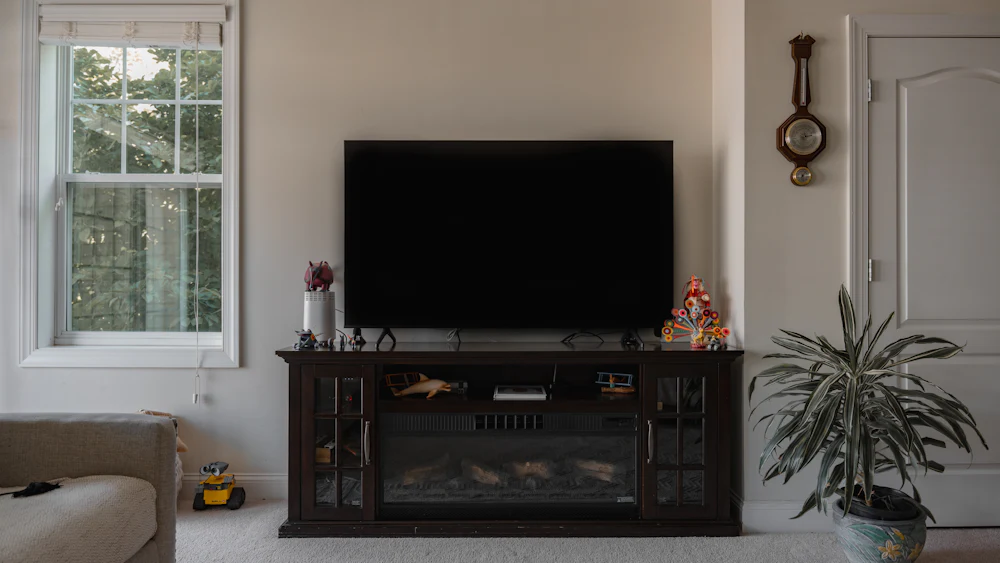
A freestanding TV stand is usually the simplest reversible choice. Adhesive cord clips and removable surface raceways may help with low-load cable organization when the product and surface permit it, but adhesive strips are not a substitute for approved TV brackets or furniture anti-tip hardware. Obtain landlord permission before drilling or installing a wall mount. If the furniture manufacturer requires anchoring, follow those safety instructions rather than skipping them.
For other compact-room ideas, see our small living room storage guide, renter-friendly shelf styling ideas, and multifunctional studio furniture guide.
Shop Smart: Hidden Storage Beyond the TV Stand
Consider an appropriately sized ottoman or a lift-top coffee table for remotes, controllers, board games and blankets. Do not operate or charge electronics in enclosed storage.
Affiliate disclosure: As an Amazon Associate, we earn from qualifying purchases. Product availability and prices may change. Please confirm fit, dimensions and manufacturer safety instructions before ordering.
SONGMICS Folding Storage Ottoman Bench
Approx. 43 in · Slate Gray / Ink Black · ASIN B07JNFKYC3
Large hidden space for games and spare accessories
SONGMICS Small Folding Storage Ottoman
Coffee Brown · 12.2 × 16.1 × 12.2 in · ASIN B0C8SGDTBQ
Compact storage for small apartments and living rooms
WLIVE Lift-Top Coffee Table
Brown · 39-in variant · drawer and hidden storage · ASIN B0DT4CYCP2
Keeps remotes, controllers and occasional-use items out of sight without another TV cabinet.
8. Before You Buy: Media Console Checklist
- Does the actual TV base fit safely on the stand, and is the rated capacity sufficient?
- Does the usable shelf depth fit your largest component, connectors, and required clearances?
- Are there adequate vents and rear cable access points for the devices you use?
- Can drawers and cabinet doors fully open in your real furniture layout?
- Is the finish easy to clean, and does the scale suit the room?
- Does the furniture require anti-tip protection, and can you install it correctly?
- Can you reach plugs and equipment without removing the whole setup?
- Do you actually need another storage unit, or would a drawer divider and cable tray solve the problem?
Where to spend: Prioritize sturdy construction, appropriate load rating, useful interior dimensions, and real ventilation over extra decorative features. A well-fitted basic console is usually a better purchase than an oversized statement piece.
9. A 15-Minute Media Storage Reset
Spend five minutes removing unused devices, five minutes grouping remotes and accessories, and five minutes tidying accessible cable runs and cleaning exposed surfaces. Keep the console top mostly clear and review the setup whenever you add a new device. The goal is an easy-to-maintain everyday room—not a staged photograph.
Frequently Asked Questions
What is the best TV stand for a small living room?
A shallow, stable freestanding console with closed accessory drawers and an appropriately ventilated device shelf is a strong all-around option. Choose its dimensions from your TV footprint, devices, and walking clearance.
How deep should a small media console be?
Approximately 12–16 inches is a useful starting point for minimal setups, but larger receivers and gaming systems may need a deeper unit. Measure usable interior depth and account for cable connections and the manufacturer’s ventilation instructions.
Can you put a game console inside a closed cabinet?
Only if the device manufacturer permits that placement and all ventilation requirements are met. A closed, unventilated compartment can cause overheating; a purpose-designed ventilated compartment is usually safer.
How can renters hide TV cords without drilling?
Consider appropriately rated removable surface cable organizers attached to the furniture or permitted surfaces. Keep power cords accessible and do not conceal standard cables inside walls or beneath rugs.
Should the router live inside the TV cabinet?
Not by default. Enclosed or metallic furniture can affect Wi-Fi and heat dissipation. Follow router guidance and test coverage before settling on a location.
What should be hidden and what should stay accessible?
Hide low-use accessories in drawers and boxes; keep active electronics, vents, power disconnects, and frequently used equipment accessible and safe to operate.
Editorial note: Measurements are planning ranges, not substitutes for individual product specifications, building requirements, or electrical safety instructions.