
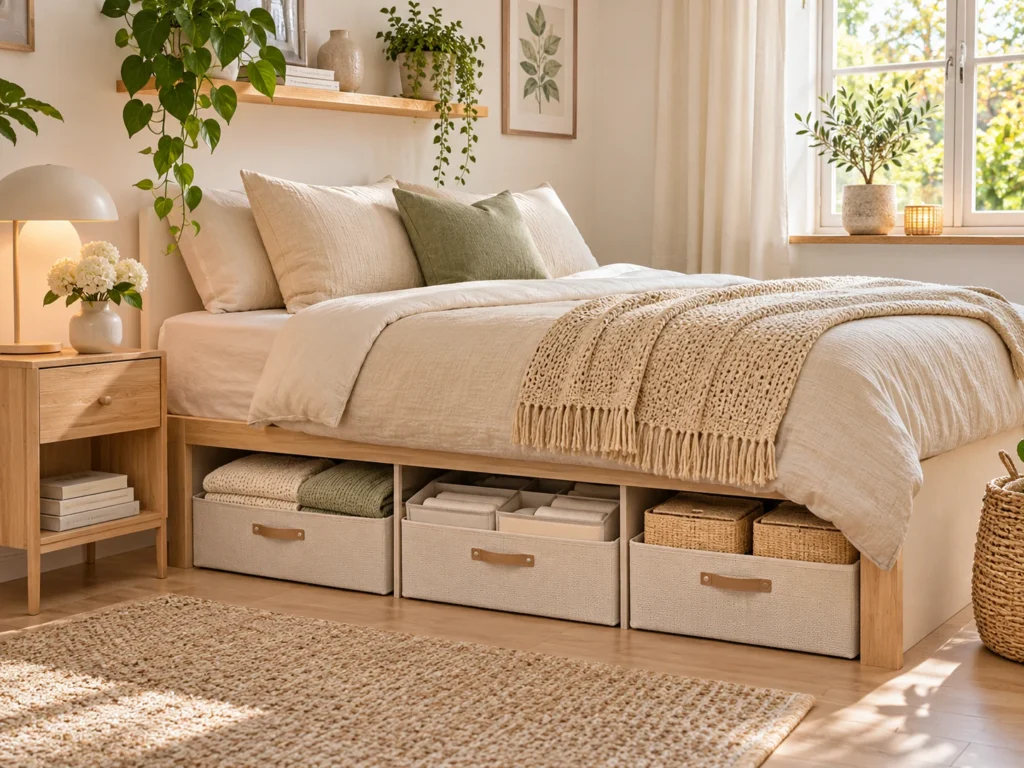
In a small bedroom, the space under your bed can become useful hidden storage rather than a dusty collection of forgotten objects. The best setup is measured, easy to clean and organized around items you genuinely need to keep. Here are realistic under-bed storage ideas that preserve a calm bedroom while making the most of limited floor area.
START HERE / THE QUICK VERDICT
Which under-bed organizer should you choose?
Measure the gap under your bed first. Then match the container to your floor, what you need to store, and how often you need access.
Look for low-profile bags or shallow shoe organizers; check external height.
Try a rolling organizer on a smooth floor with clear pull-out space.
Choose a lidded, wipe-clean bin that fits beneath the bed frame.
Use labeled fabric bags with easy-grip handles and appropriate closures.
Measure Your Clearance Before Buying Storage
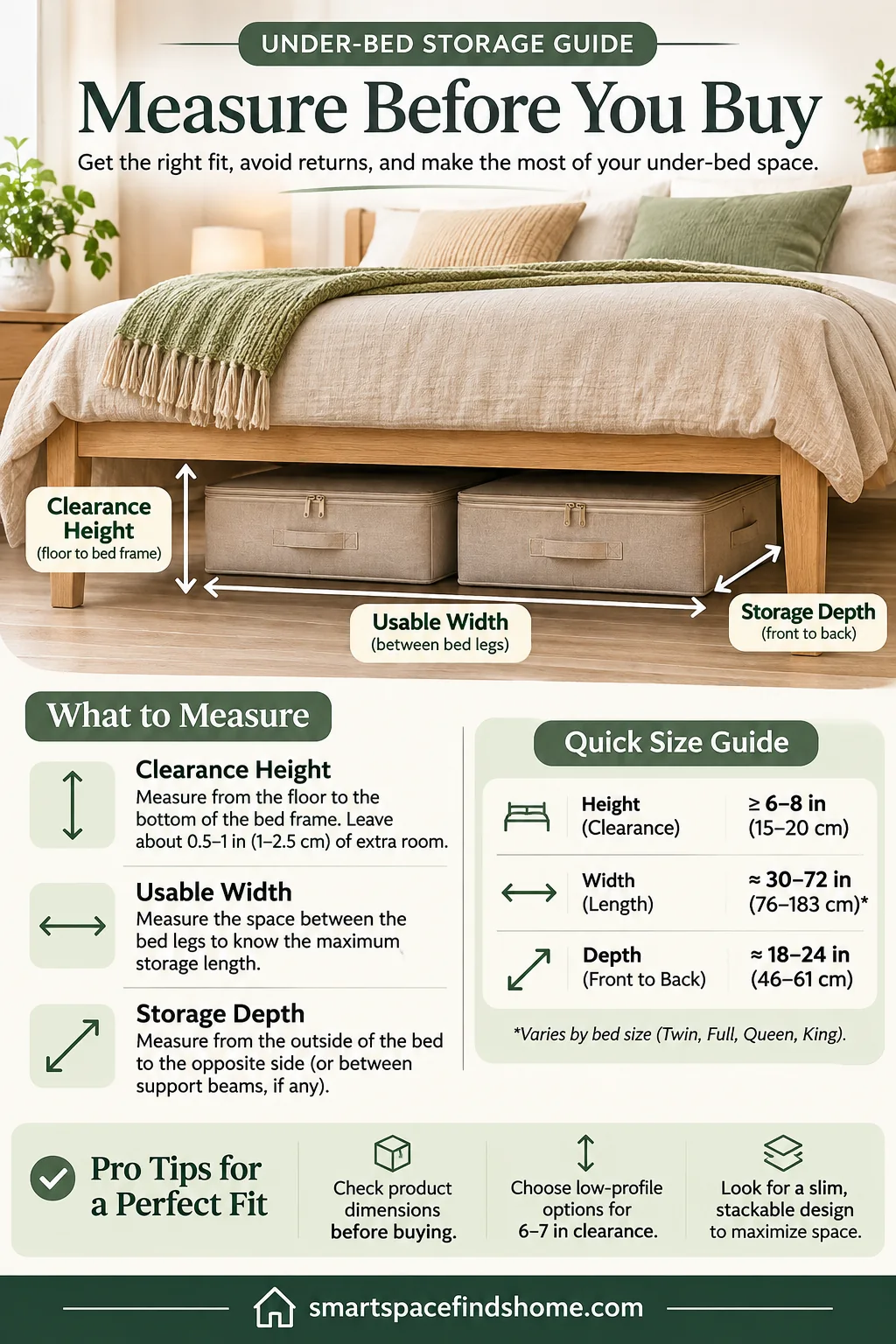
Start by measuring the distance from the floor to the lowest point of your bed frame, including any center bars, legs and supports. Subtract enough room to slide a box out without scraping the fabric or flooring. Then measure the width between bed legs and the accessible depth from the side of the bed. A container that technically fits underneath may be useless if a wall, bedside table or wardrobe door blocks its removal. Place painter’s tape on the floor to represent the dimensions of the planned box and test the pull-out route. Check the location of heating vents and electrical cables. Avoid blocking necessary ventilation around your mattress and frame, especially in damp apartments. These five minutes of measuring help you buy fewer unsuitable organizers.
Decide What Actually Belongs Under the Bed
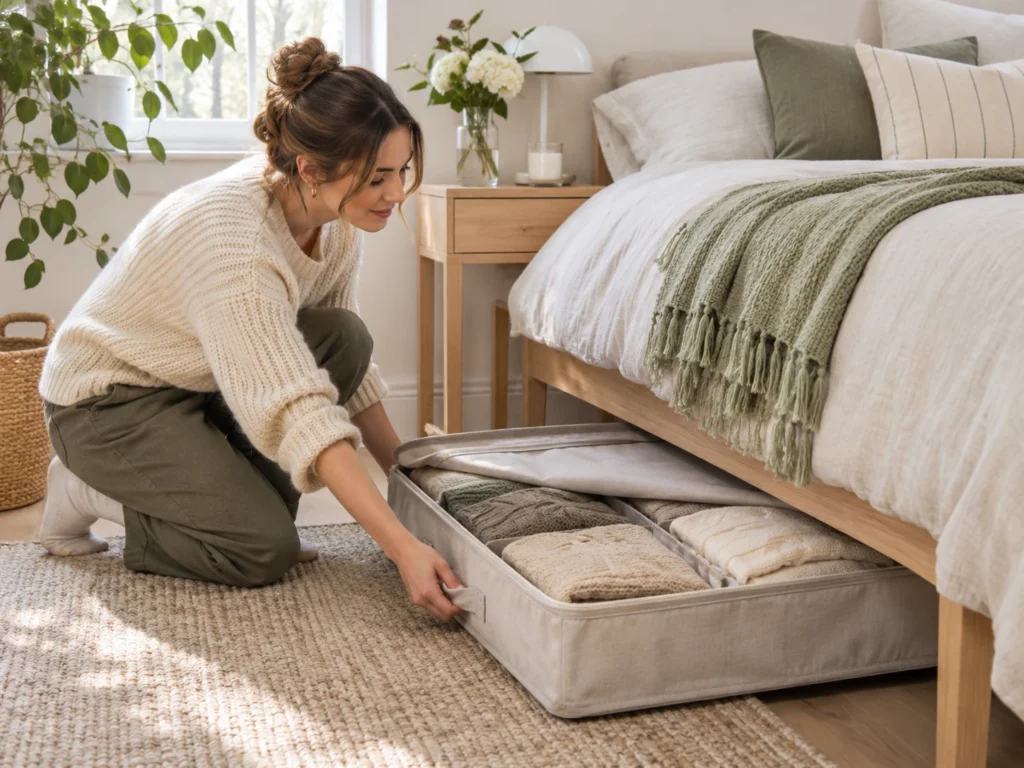
Under-bed space is valuable for low-frequency items, not the objects you need every morning. Ideal candidates include off-season clothing, guest linens, spare blankets and a modest set of keepsakes. Everyday socks, frequently worn shoes and documents requiring quick access often work better in a closet or dresser. Before putting anything away, sort it into keep, donate, repair and discard piles. Launder fabrics and make sure everything is fully dry. Do not store food, hazardous products, damp footwear or heavy items that are difficult to lift. Think about how often you will open each box; something accessed weekly belongs near an easy-to-reach side, while annual items can go deeper under the bed.
Choose Between Soft Bags and Rigid Boxes
Start with the storage type, not the brand. Fabric bags are often useful for lightweight textiles, structured organizers help keep a coordinated look, and rigid bins are easier to wipe clean. The options below cover different needs; compare dimensions and access before deciding.
Fabric and Structured Under-Bed Storage
UNDER-BED STORAGE PICK
Amazon Basics Under Bed Storage Bags — 2-Pack
Everyday-value fabric bags for storing folded garments and bedding; check outside height before buying.
UNDER-BED STORAGE PICK
StorageWorks Under Bed Storage Containers
A structured storage option for bedrooms where a neat, coordinated appearance matters.
UNDER-BED STORAGE PICK
Sterilite 56-Quart Wheeled Latching Boxes — 4-Pack
Rigid, wipe-clean storage for those who prefer bins over collapsible fabric.
Soft zippered bags adapt well to irregular spaces and can hold folded bedding, but they may sag when pulled over carpet. Rigid low-profile boxes maintain their shape and often stack neatly on a shelf when empty, though the handles and lids can add surprising height. Transparent bins make contents visible, while fabric containers are visually quieter if they are partly exposed beneath the bed. Select a closure that keeps dust away without trapping moisture inside poorly dried textiles. Pay attention to the real outside dimensions listed by the manufacturer, not only storage volume. Avoid overfilling containers until zippers strain; the contents should be easy to remove for laundering and inspection.
Use Wheels Only When Your Floor Suits Them
Rolling under-bed storage can be convenient if you have hard flooring and enough space beside the bed. Check both the wheel height and the total external dimensions, and remember that small casters may struggle on deep carpet.
Rolling Under-Bed Storage Options
UNDER-BED STORAGE PICK
Yecaye Under Bed Storage with Wheels — 2-Pack
Wheeled access for bedrooms with a smooth floor and enough space to pull the unit out.
UNDER-BED STORAGE PICK
Yecaye Rolling Under Bed Storage with Dividers — 2-Pack
A divided rolling-storage option for separating smaller item categories.
UNDER-BED STORAGE PICK
Budding Joy Adjustable Rolling Under Bed Storage — 2-Pack
Another wheeled option for comparing capacity, dimensions and ease of access.
Rolling drawers can be convenient on smooth, level floors where you pull them out frequently. On thick carpet, small casters may sink or drag, making the drawer harder to use than a simple sliding bag. Test how much room you need beside the bed to extend the drawer fully. If the bed is close to a wall or dresser, a shorter wheeled unit may be a better fit. Check wheel quality, load rating and whether the container can be safely moved when full. Felt pads may protect some hard floors, but choose protection appropriate to your floor finish. Heavy drawers should not be accessible to small children without suitable safeguards.
Organize Clothes by Season and Category
For footwear, choose compartmented organizers that keep pairs together. If clearance is tight, a lower-profile shoe organizer may be more practical than a tall general-purpose box.
Shoe Organizers and Low-Clearance Options
UNDER-BED STORAGE PICK
Onlyeasy Under Bed Shoe Organizer — 2-Pack
Dedicated shoe storage that keeps pairs together and easier to locate.
UNDER-BED STORAGE PICK
Lifewit Low-Profile Shoe Organizer — 2-Pack
A lower-profile shoe-storage candidate for shallow spaces; verify exact outside dimensions.
Group winter knitwear, summer clothes and special-occasion pieces separately. Fold clothing to suit the container height instead of forcing garments into tight stacks. Label each box on the short edge facing outward, and include a brief inventory inside the lid. Small fabric dividers keep scarves, swimwear and accessories from becoming a tangled layer. Avoid vacuum compression for delicate fibers that could suffer from prolonged pressure, and follow garment care instructions. Rotate the boxes twice a year, inspecting for odors and moisture before returning items to storage. For broader organization ideas, see our small closet reset guide.
Keep Bedding Fresh and Accessible
For guest bedding and seasonal clothes, multipacks can make category separation easier. Measure before buying: storage capacity alone does not tell you whether a container will slide under the bed.
Storage for Seasonal Clothes and Bedding
UNDER-BED STORAGE PICK
Lifewit 95L Under Bed Containers — 4-Pack
A multi-container option for separating seasonal clothing and spare bedding.
UNDER-BED STORAGE PICK
Budding Joy Under Bed Storage — 4-Pack
Extra fabric storage for sorting less frequently used bedding and garments.
Extra duvet covers and pillowcases can be grouped into a single labeled bag. Wash and thoroughly dry them before storage, and avoid perfumes or strongly scented sachets that might bother sensitive household members. Fold sets together, perhaps tucking smaller pieces into a pillowcase to prevent missing components. Choose a breathable storage solution when your home’s humidity makes airtight containers problematic, while still protecting fabrics from ordinary dust. Inspect the underside of the bed periodically for condensation or damp spots, especially against exterior walls. If guests stay regularly, reserve the easiest-to-reach container for their bedding so you do not need to move everything else.
Make the Setup Look Intentional
Even useful under-bed storage can look untidy when mismatched boxes project beyond the frame. Choose a small number of containers in a consistent height and color, and position them fully beneath the bed where possible. If you use a bed skirt, make sure it does not drag on the floor or catch in the storage lids. Keep the bedroom palette calm and avoid stacking bags visibly beside the bed. A warm neutral frame, simple bedding and an uncluttered bedside table help the room feel open. Storage should support your daily comfort rather than become the first thing visitors notice. For additional ideas, explore light, layout and comfort in small bedrooms.
Think About Dust, Airflow and Cleaning
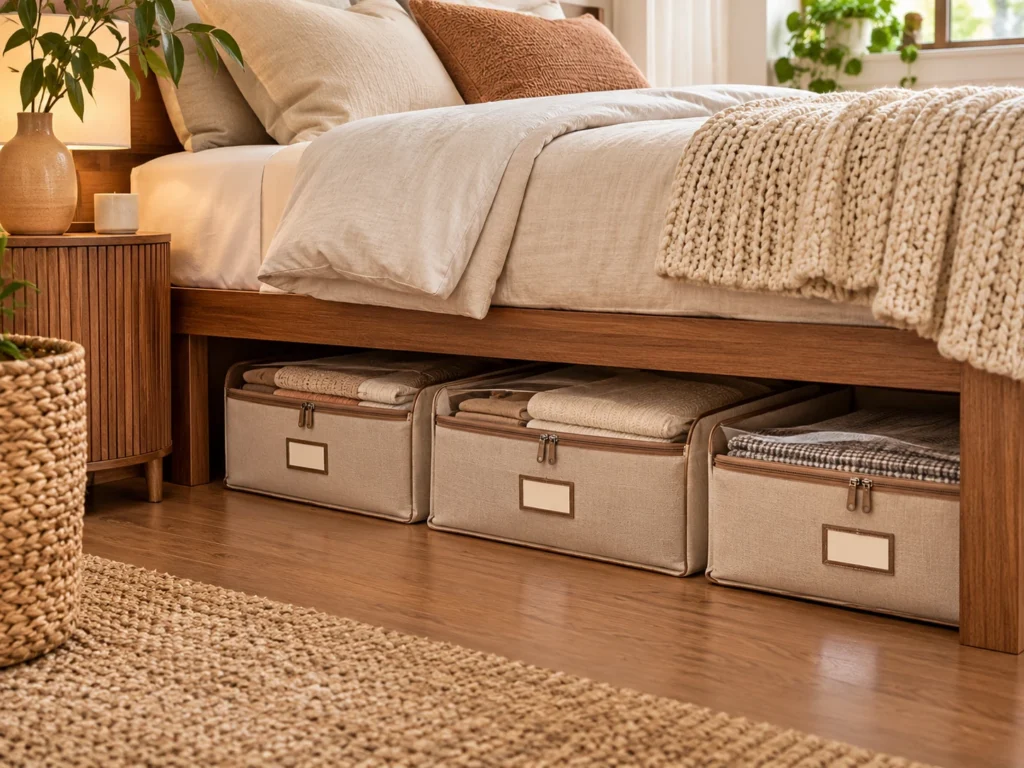
The area beneath a bed gathers dust even in tidy homes. Keep containers slightly away from walls and follow the bed manufacturer’s ventilation guidance. A low-clearance platform bed may require a different storage strategy, especially if its design relies on airflow underneath. Use boxes with smooth wipeable surfaces when dust is a frequent issue. Once every few weeks, slide out the nearest containers, vacuum or mop underneath and inspect for moisture. Do not push belongings against heaters, plugs or cords. In shared bedrooms, leave enough floor access for cleaning and avoid creating a hidden collection of unused items that never gets reviewed.
Use an Inventory So Nothing Disappears
A simple note on your phone is enough to track what is stored under the bed. Give each container a short name such as Winter Clothes A or Guest Linens, then write the main contents. Update the note whenever you move something. For children sharing a room, pictures or large printed labels may work better than detailed lists. Keep labels readable on the side facing the room so you do not need to drag out every box. Inventory saves money because you can check what you already have before buying replacement bedding or seasonal clothing. It also makes decluttering easier when the time comes to reduce the contents.
Compare Three Realistic Budget Setups
For a low budget, reuse clean, sturdy boxes that already fit the clearance, add simple labels and prioritize protection from dust. For a moderate budget, buy a matching pair of low-profile containers with good handles and lids designed for repeated access. For a higher budget, consider an integrated storage bed if you are already replacing furniture, but compare its full cost, internal dimensions and durability before committing. More expensive hardware does not always produce more usable storage. The best solution depends on what you need to hold, how easily you can reach it and whether you will use the storage consistently over time.
A Thirty-Minute Under-Bed Reset
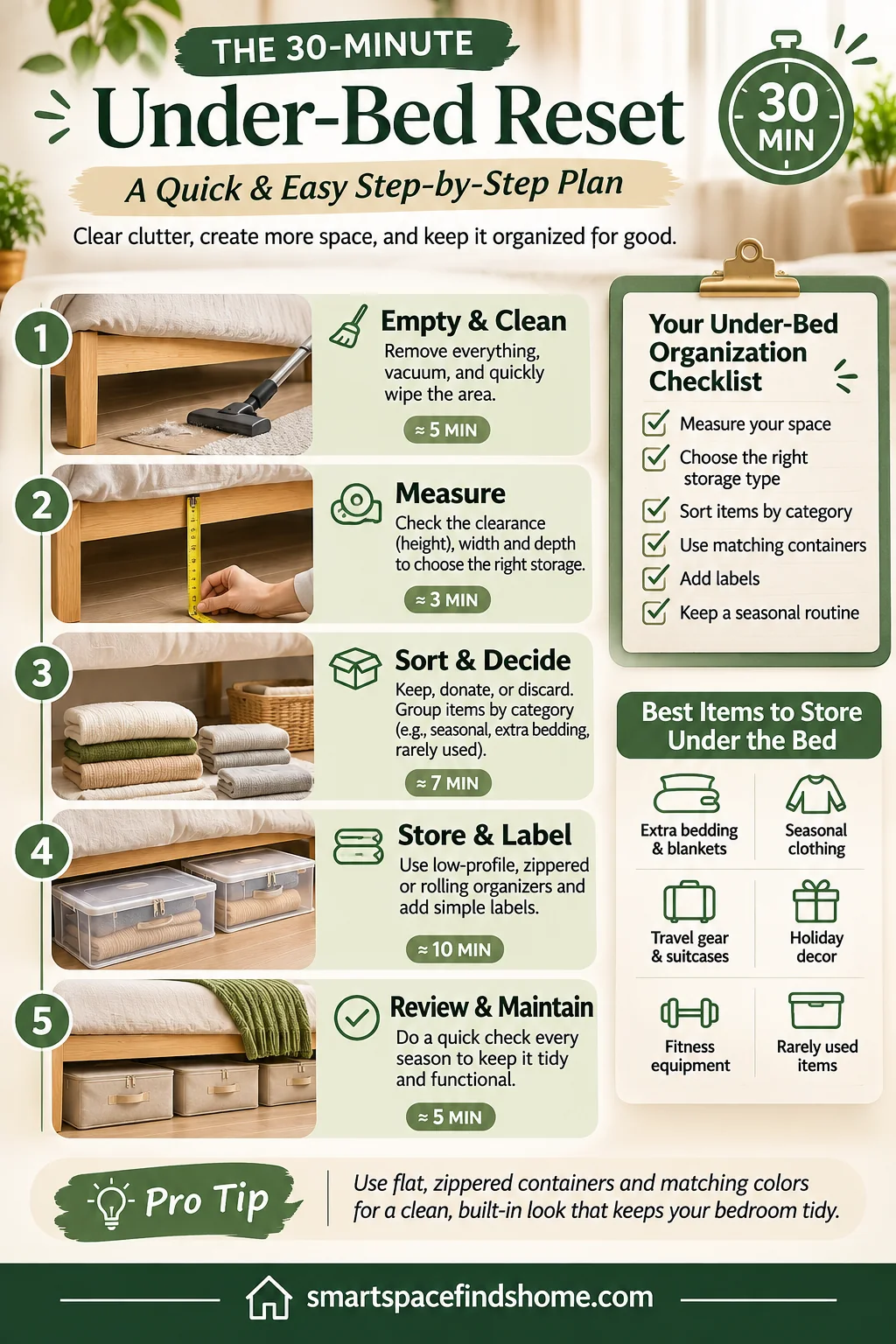
Clear everything currently beneath the bed and vacuum the floor. Measure the open space, group the items you intend to keep and discard or relocate anything unsuitable. Allocate one container to each logical category and label the front. Slide the heaviest or least frequently used boxes into places that do not require awkward lifting. Test that drawers open, lids close and walking routes remain clear. Write down a basic inventory and photograph the arrangement for reference. Set a reminder to review the boxes at your next seasonal wardrobe switch. This short routine is often more effective than buying a large organizer without first examining what you own.
Compare Under-Bed Storage Types Before You Buy
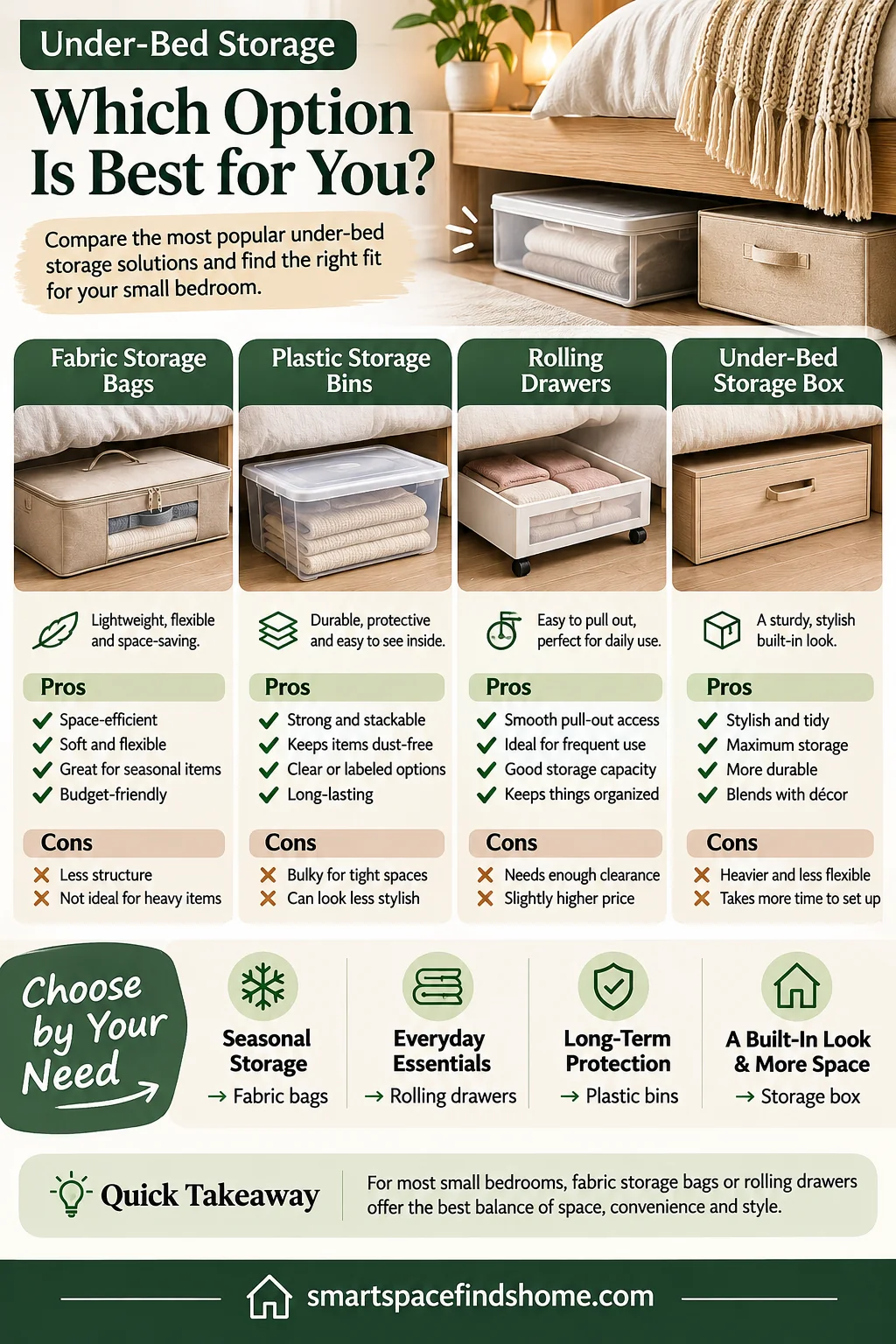
For very low beds: look for flat, soft-sided zippered organizers after measuring the lowest frame support. For regular access on hardwood: consider a rigid rolling drawer with a comfortable handle. For dusty spaces: a lidded, wipe-clean bin is practical. For bulky blankets: a roomy fabric bag may be simpler than a shallow plastic box. There is no single best organizer for every bed.
| Storage type | Best for | Watch out for |
|---|---|---|
| Soft zippered bag | Seasonal bedding and clothing | Can drag on carpet or slump when partly filled |
| Low-profile lidded bin | Dust protection and clearly labeled categories | Lid and handles increase outside height |
| Rolling drawer | Frequent access on smooth, level floors | Caster clearance and side pull-out space |
| Open basket or tray | Items reached often in a dry, clean room | More dust exposure |
| Built-in storage bed | Bedrooms with minimal usable floor area | Higher cost, weight and drawer-opening clearance |
How to Calculate the Size That Will Actually Fit
Measure clearance height from the floor to the lowest obstruction, not just the outer rail; measure the usable width between legs and supports; then measure accessible depth from the side you can actually reach. Check the manufacturer’s external dimensions, including handles, wheels and lid. Leave a small movement allowance rather than selecting a box that exactly equals the measured gap. For example, if the lowest clearance is 7 inches, an organizer listed at exactly 7 inches high is a risky fit; a shorter unit allows easier movement. Your exact margin depends on uneven flooring, carpet pile and the bed’s construction.
Helpful buying checklist: external height, width and depth; handle location; dust-resistant closure; wheels versus carpet; maximum load; easy cleaning; and return policy. Measure twice before choosing a multipack.
Best Storage Ideas by Bedroom Situation
Low-clearance platform beds
Start with a tape measure. If the gap is very shallow, do not force organizers against the mattress support or block designed airflow. Flat fabric pouches may work; in some cases the better answer is an over-door organizer or higher closet shelf.
Carpeted bedrooms
Choose smooth-bottom soft bags or carefully sized bins that you can lift safely. Very small wheels frequently struggle on plush carpet. Avoid oversized units that become too heavy to pull out.
Rental apartments and dorm rooms
Use removable, lightweight, labeled containers instead of modifying the bed frame. If contemplating bed risers, check the bed manufacturer’s guidance, stability and the rules of your rental or dorm first; risers are not compatible with every bed.
Shared bedrooms and children’s rooms
Give each person a color-coded label or separate zone. Keep heavy or hazardous items inaccessible to children, preserve walking clearance and secure any moving storage unit according to its instructions.
Common Under-Bed Storage Mistakes
Buying boxes before measuring, confusing internal volume with external height, packing damp textiles, stacking too many mismatched containers, and choosing rolling bins for thick carpet are all avoidable mistakes. A second mistake is forgetting the room needed beside the bed to pull the box completely out. A successful system makes it easy to retrieve, inspect and return everything.
Our Selection Method
We assess under-bed storage by practical fit, access, materials, cleanability and suitability for different floors. We do not claim to have independently tested specific products unless a hands-on test is explicitly documented. Product dimensions and availability should always be confirmed on the retailer’s current listing before purchase.
DESIGN NOTES / PRACTICAL DETAILS
Make Hidden Storage Feel Designed, Not Packed In
Choose a storage profile, not just a color
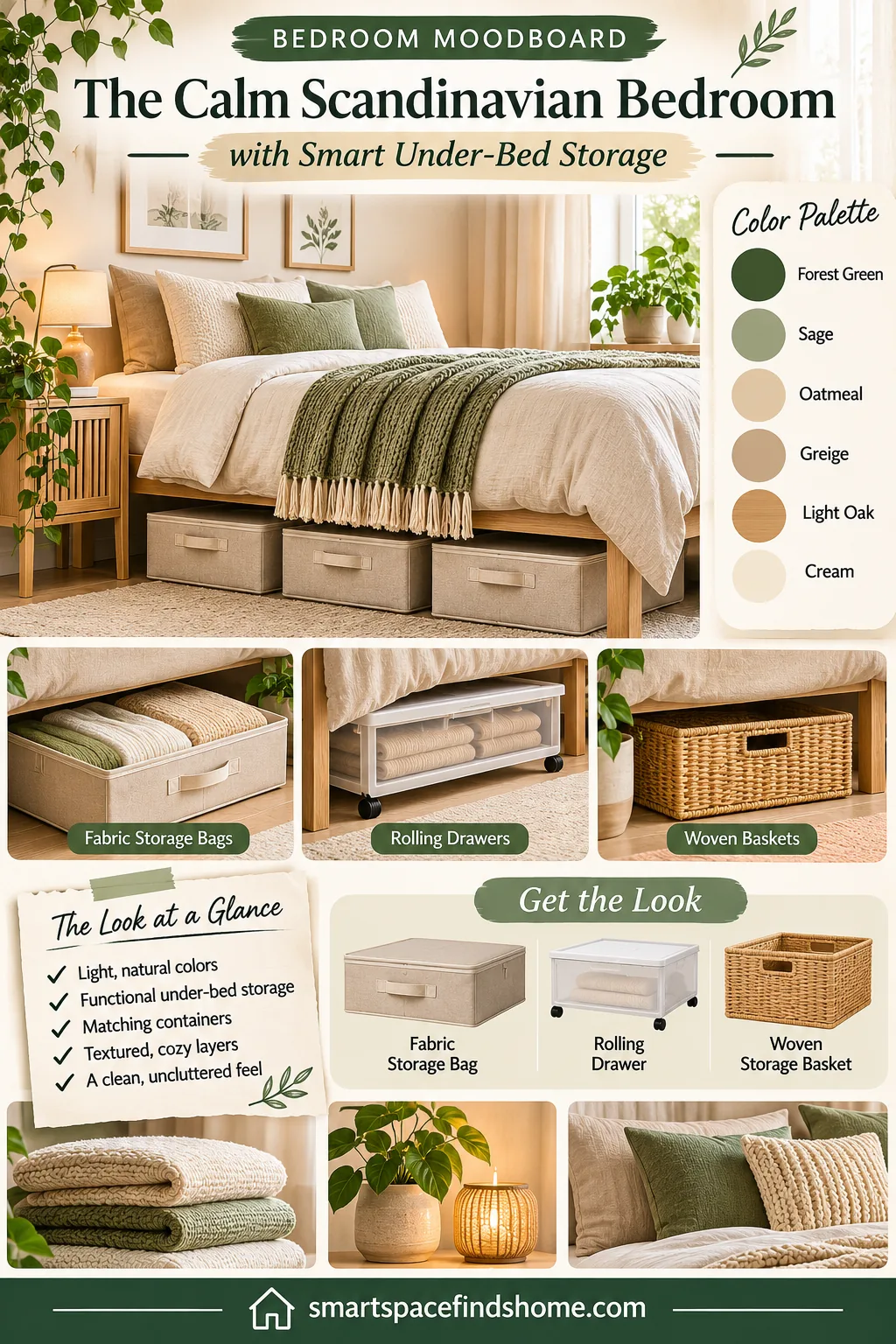
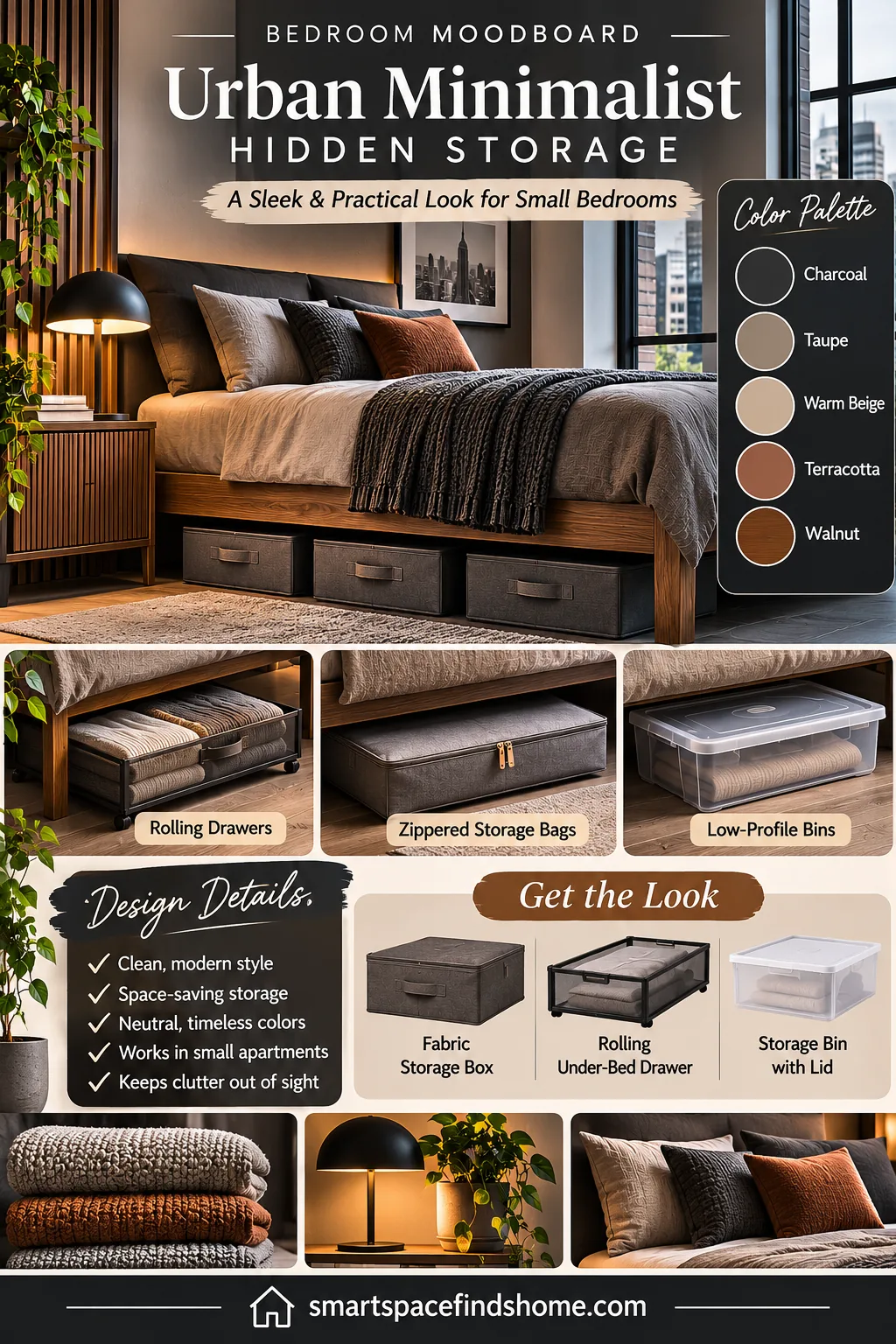
Matching neutrals look considered when the boxes’ handles, lids and proportions are consistent. For a bed frame with an open view underneath, two identical low-profile containers often look calmer than several different organizers. On beds with enclosed bases, prioritize function and accessible pull tabs over appearance.
Build a two-zone system
Keep frequently retrieved items close to the open side and rarely used seasonal pieces farther back. Label the short face of each container so it remains readable while stored. Leave room for vacuuming and avoid covering heating outlets or ventilation paths.
Know when under-bed storage is the wrong choice
Skip it if there is visible moisture, insufficient airflow, too little clearance to pull bins out safely, or a bed design that explicitly prohibits under-frame storage. Instead, make space elsewhere with space-saving closet organization or explore renter-friendly storage ideas.
Frequently Asked Questions About Under-Bed Storage
Is under-bed storage good for small bedrooms?
Yes, when it is accessible, clean and does not obstruct ventilation or normal movement. It is especially useful for seasonal bedding and clothing.
What should not be stored under a bed?
Avoid damp items, food, unsafe chemicals, heat-sensitive materials and objects that must be reached urgently. Follow your bed manufacturer’s instructions.
Are fabric bags or plastic bins better?
Fabric bags fit irregular spaces and store flat when empty. Rigid bins hold shape and may be easier to clean; the best choice depends on access and humidity.
Start with measurements and the contents you already own, not a shopping cart full of bins. A few well-chosen containers, straightforward labels and a regular cleaning routine are what make hidden storage work long-term.