
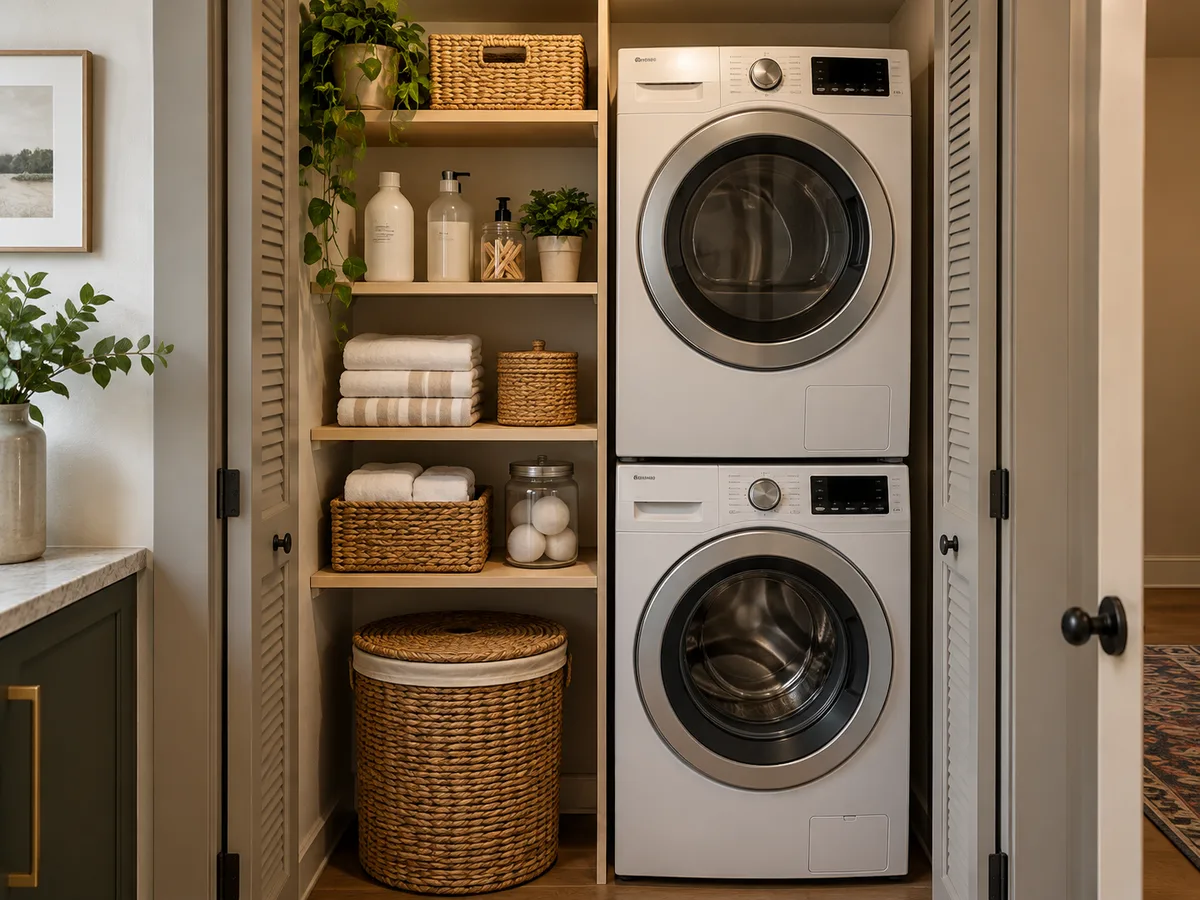
A tiny laundry closet can become an efficient part of apartment life without a costly remodel. By measuring carefully, using vertical storage appropriately and keeping daily supplies within easy reach, you can create a tidy laundry zone that works even behind narrow doors.
Measure the Closet and Appliance Clearances
Before fitting shelves or baskets, measure the width, height and depth of the laundry closet and map the actual appliance dimensions. Check how far the washing machine door, detergent drawer and any surrounding cupboard doors need to open. Note ventilation requirements, drain access, water connections and electrical outlets. Manufacturer installation specifications take priority over any decorative plan. A shelf that appears to fit perfectly can still cause overheating or make essential maintenance impossible. Keep adequate clearance for moving the appliance out for service. In a rental, do not alter plumbing, wiring or structural elements without permission. The first goal is a laundry area that functions safely, not one that merely looks tidy with the doors closed.
Start With the Right Laundry Closet Layout
Not every apartment laundry closet can fit a storage tower. Measure the exact usable width, depth and height, accounting for door hinges, trim, hoses, dryer ducts, appliance movement and the space required to service equipment. Check your appliance installation manuals before choosing shelving.
| Closet setup | Storage that usually works | Most important clearance |
|---|---|---|
| Stacked washer and dryer | Shallow side shelves or a stable slim cart where space allows | Door swing, exhaust, connections and controls |
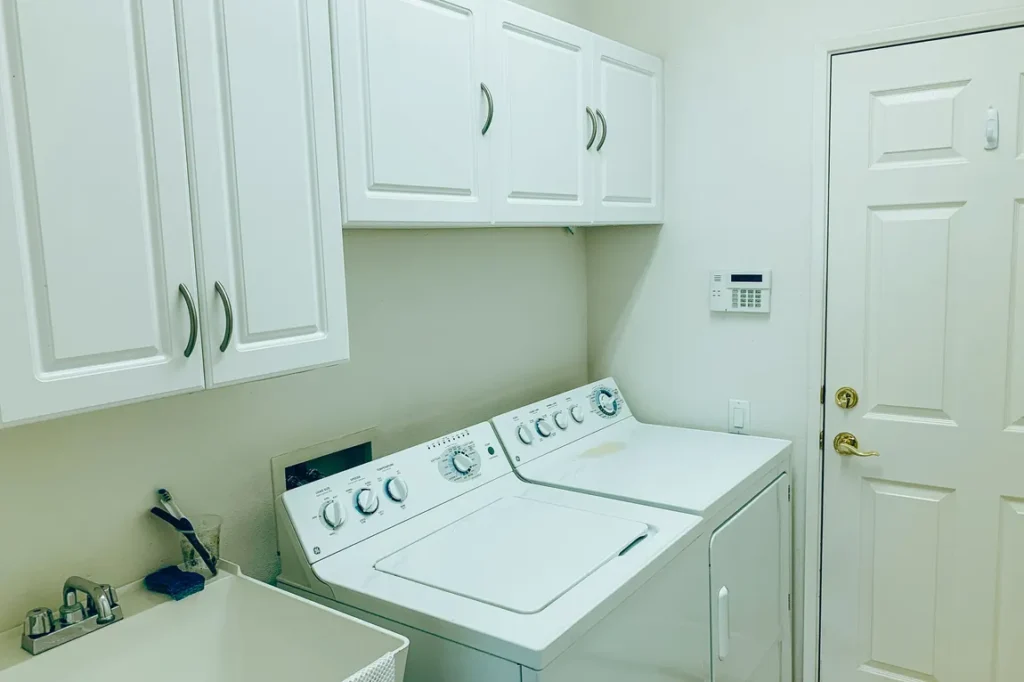
| Side-by-side front-load machines | Manufacturer-compatible overhead shelving or accessible wall storage | Door openings and service access |
| Top-loading washer | Sidewall shelving outside the lid’s opening path | Full upward lid clearance |
| Single washer in a hall closet | One compact essentials basket; backup supplies elsewhere | Hallway circulation and electrical access |
Space-planning tip: test a shelf or cart’s footprint with painter’s tape before ordering. Allow room to retrieve and clean it; a perfect dimensional fit is not necessarily functional.
Use the Wall Above the Washer Carefully
Wall space can hold detergent refills, spare cloths and washing accessories, provided shelving is securely installed and does not block ventilation or access to machine connections. Use fixings suitable for the wall and the weight of the items. Avoid placing heavy or breakable bottles where vibration might dislodge them. Closed cabinets provide a calm visual appearance, but open shelves are easier to inspect for drips. Leave enough height above a top-loading machine for its lid to open completely. An existing freestanding shelf may be preferable for a rental where drilling is restricted. Keep laundry chemicals in their original labelled containers and out of children’s reach.
How to Organize a Stacked Washer and Dryer in a Closet
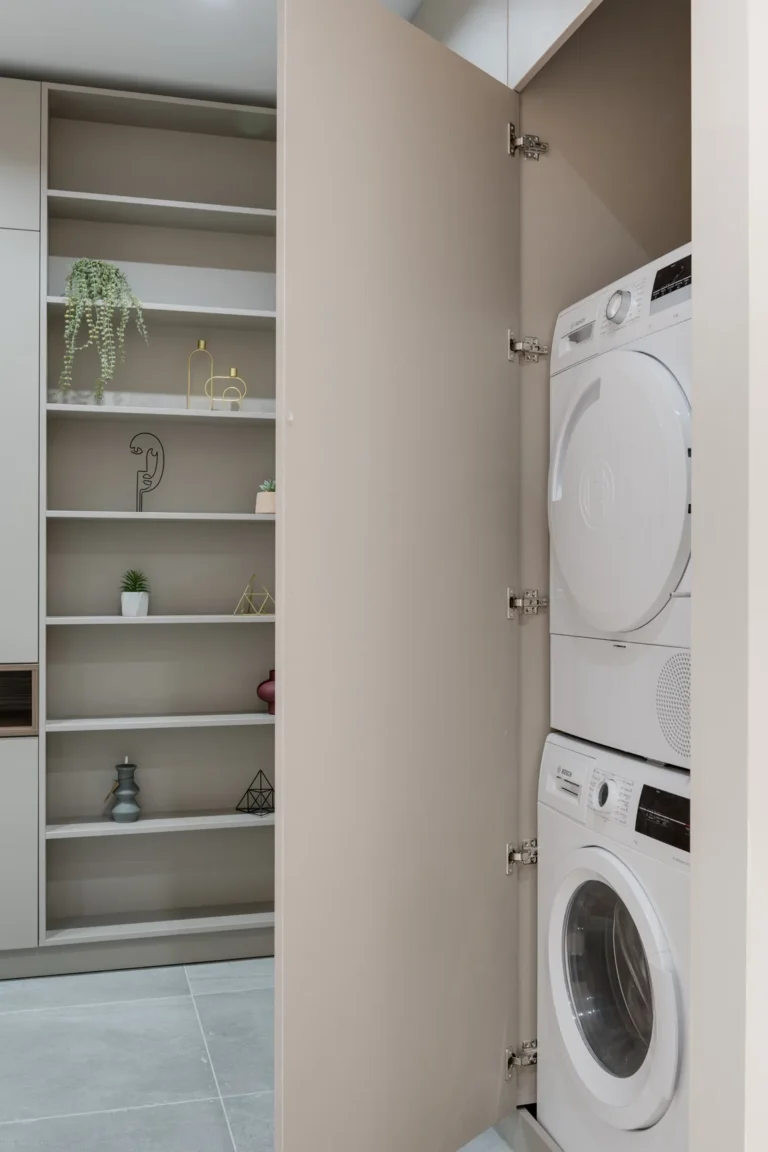
In a stacked laundry closet, the most useful storage is often beside the appliances, not above them. Use shallow, accessible shelves only where permitted by the installation instructions. Keep the shutoff valve, drain, power connection, exhaust and service panels unobstructed. Never use an unstable shelving unit as part of an appliance stacking system; a manufacturer-approved stacking kit is essential.
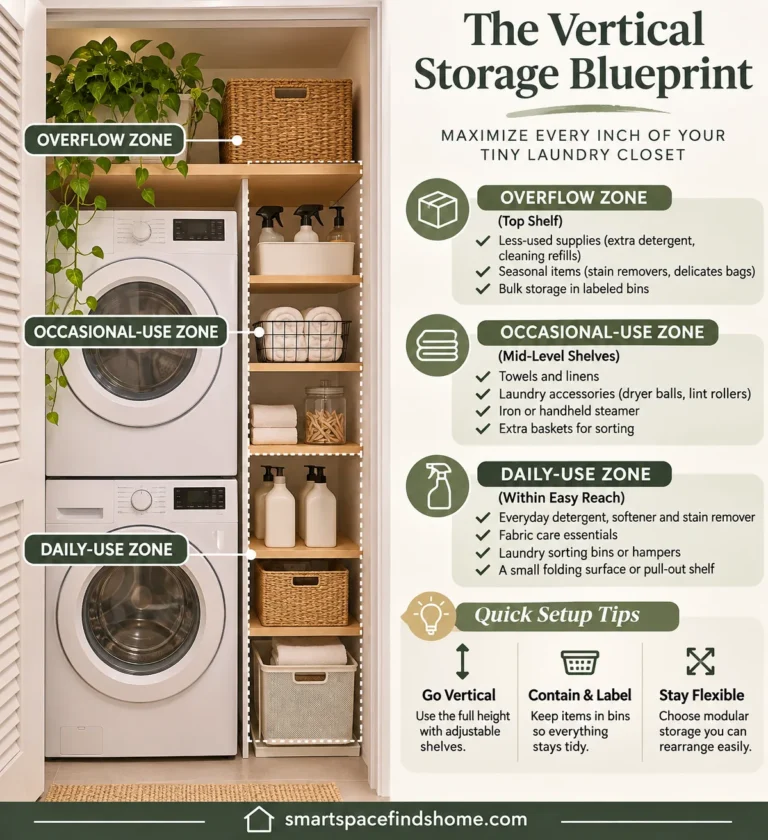
Create three reachable storage zones
- Daily-use zone: a small washable tray for detergent and stain remover, kept upright in their original labeled packaging.
- Occasional-use zone: mesh wash bags, lint rollers and clothespins in one removable bin.
- Overflow zone: extra paper towels, spare detergent and seasonal accessories in another dry cabinet, not packed behind the appliances.
If the closet is too narrow for a side cart, do not force one into the gap. A portable caddy stored on a nearby shelf can work better and leave essential appliance clearance intact.
Give Every Laundry Product a Defined Home
Sort supplies into daily detergent, stain treatment, fabric-care accessories, cleaning cloths and infrequently used backups. Store only the amount you reasonably need in the closet. Keep liquids upright on a washable tray that can contain minor drips, while checking that the tray does not block ventilation. Do not decant chemicals into unlabelled jars, and never mix cleaning products. Place the supplies you reach for most often at a comfortable height. If the laundry space is shared, give each person a labelled basket rather than piling products across the top of the machine. A simple layout reduces mistakes and shortens the time needed to start a wash.
Choose a Hamper That Fits the Available Floor
A laundry hamper should support your household’s habits without blocking the machine door or a nearby hallway. Measure the gap between appliances and any wall before choosing a slim basket. A removable washable liner can make cleaning easier. If the floor is too narrow, consider a foldable basket that can be stored elsewhere or a hamper positioned in the bedroom. Separate clean and dirty laundry, and do not stack baskets on top of moving appliances. A rolling basket is useful only when the wheels move easily over the floor and there is enough room to pull it out. A basket that constantly needs shifting is not truly a space-saving solution.
Choose Slim Shelving That Is Actually Accessible
For a narrow laundry closet, measure the available side strip at floor level and above the appliance handles; wall and baseboard profiles may reduce usable space. A rolling organizer should glide out without pulling at hoses or scraping the door. Use a stable, tip-resistant design and avoid piling heavy bottles on high shelves.
Open shelving versus closed cabinets
Open shelves make leaks and supplies easier to inspect, while closed cabinets visually reduce clutter but may conceal spills. In either case, keep airflow and service access clear. Choose wipeable bins and limit your visible daily-use collection to products needed for the next few loads.
A Fold-Down Sorting Surface Might Help
For a utility closet with sufficient clearance, a fold-down surface can provide temporary room to sort small loads and fold clothes. Verify that the wall and fixings can safely support the intended weight, and check whether building or rental rules permit installation. Keep any surface clear of appliance controls and avoid putting weight on a machine top unless permitted by its manufacturer. For most small apartments, a portable laundry basket carried to the dining table may be more practical than adding hardware. Design around how often you fold at the machine, rather than copying a large laundry room’s layout. A mobile approach often preserves more flexibility.
Use Labels That Make Sense in a Busy Home
Labels are useful when they reduce the need to open several containers. Identify baskets by function, such as delicates, cleaning cloths, spare detergent or dryer accessories. Use simple legible text and leave manufacturer labels visible on actual cleaning products. Avoid elaborate labeling systems that take longer to maintain than the laundry routine itself. If you share your apartment, explain the system once and keep the most frequently used products easiest to reach. Inspect storage periodically to prevent expired or damaged supplies from accumulating. The goal is quick recognition, safer handling and less duplication, not decorative perfection.
How to Organize Laundry Supplies in a Closet With Almost No Floor Space
When every inch matters, organize the essentials by frequency of use rather than by product category alone. A compact laundry caddy can contain detergent, stain treatment and a small mesh bag for delicates. Keeping these together means you can start a load without moving multiple bins.
Use one-bin, one-purpose storage
Give daily detergent one stable, easy-to-clean spot. Put small accessories in a separate shallow basket and place spare supplies outside the laundry closet when possible. Leave a visible open area so you can spot leaks and wipe splashes quickly.
Plan for doors and narrow walkways
Bi-fold doors, sliding panels and hinged closet doors all affect usable storage. Never install an organizer that prevents doors from opening completely or traps access to the water shutoff. If an over-the-door organizer is suitable for the door design and weight rating, reserve it for lightweight, nonchemical accessories rather than heavy bottles.
Build a Comfortable Laundry Routine
Even a tiny closet benefits from a clear sequence. Gather laundry from other rooms, sort it in a hamper or basket, start the cycle, and return supplies immediately to their marked locations. After washing, transfer garments promptly and allow the closet to dry out as appropriate. Follow appliance care instructions for cleaning seals, filters and detergent drawers. Wipe spilled liquid before it leaves a sticky residue. Keep a small cloth accessible for quick cleanup. If you often forget laundry in the machine, use a phone reminder tied to the cycle duration. These tiny habits matter more than additional organizers because they stop the closet from turning into a temporary storage pile.
Small Laundry Closet Organization Mistakes to Avoid
| Common mistake | Why it fails | Better alternative |
|---|---|---|
| Buying a cart before measuring | Wheels, handles or trim prevent it from sliding out | Measure the tightest clear opening first |
| Filling every high shelf | Everyday products become difficult to reach safely | Keep daily essentials between waist and shoulder height when possible |
| Blocking access panels | Maintenance and leak detection become difficult | Keep shutoffs, filters and connections accessible |
| Decorative detergent decanting | Original safety information can be lost | Retain original labeled packaging |
| Installing an oversized folding counter | It obstructs doors and circulation | Use a portable folding basket or nearby table |
Keep Ventilation and Moisture Under Control
Laundry closets can become humid, particularly where airflow is limited. Follow the appliance and building guidance for ventilation, leave vents unobstructed and watch for condensation or musty odors. Never run a vented dryer into a closed closet without its required exhaust arrangement. Do not stack appliances unless they are compatible and installed with a suitable manufacturer-approved stacking kit. Dry damp baskets and cleaning cloths before putting them away, and check for leaks around hoses. If you find recurring water or electrical issues, stop using affected equipment and seek qualified help. A beautiful storage makeover should never conceal maintenance or safety problems.
Make a Renter-Friendly Organization Upgrade
Renters can often improve a laundry space without permanent renovation. Try removable shelf dividers inside an existing cabinet, a freestanding narrow basket tower where it cannot tip, and wipeable trays for supplies. Avoid placing adhesive hooks on unsuitable damp surfaces or loading them beyond their rating. Use a neutral color palette to visually simplify the closet: cream baskets, light gray trays and consistent labels often look good against white appliances. A small warm-toned accessory is optional; functionality should dominate. Photograph the arrangement before adding storage and again after two weeks to judge whether the routine actually improved.
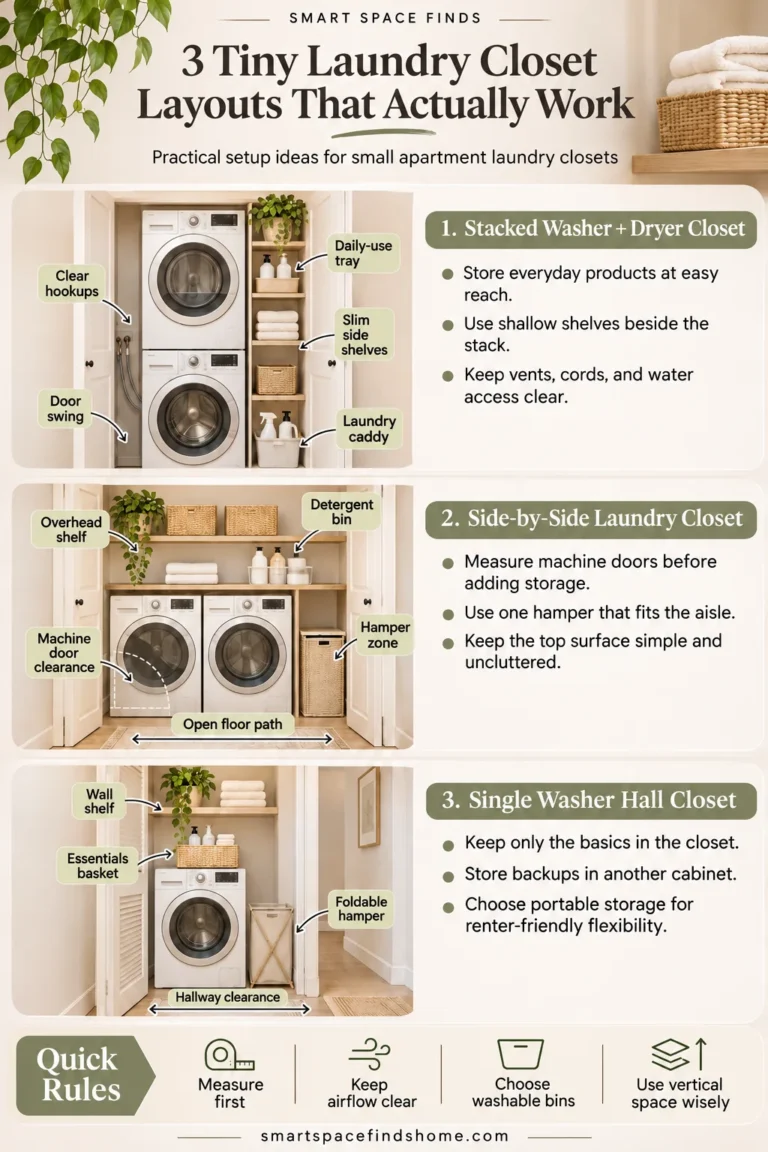
Three Small Closet Layouts to Compare
For side-by-side appliances, reserve a vertical storage zone on one wall and keep appliance doors free to open. For a stacked washer and dryer, use accessible shelves beside the stack rather than relying on very high cupboards that are hard to reach. For a single washer inside a hallway closet, limit supplies to a compact basket or shelf and relocate large spare detergents elsewhere. Test each arrangement with the real laundry basket and cupboard doors before buying. For general principles, see our small laundry room organization guide and small bathroom storage guide.
Renter-Friendly Laundry Closet Ideas Without Drilling
Make the most of existing shelves before adding hardware. Removable shelf dividers, portable supply caddies, nesting baskets and properly sized washable trays can improve organization without permanent alterations. A freestanding organizer must be stable and must not block doors, access panels or required ventilation. Adhesive hooks should carry only lightweight items and only where the surface and product rating permit.
What to keep out of a tiny laundry closet
Avoid overloaded extension cords, loose chemical containers, combustible clutter near heat-producing appliances, damp textiles and objects that conceal leaks. Never pour detergent into unlabeled decorative jars. Keep all laundry chemicals out of the reach of children and pets.

A Simple Buying Checklist for Tiny Laundry Closets
- Measure usable width, depth, height and the narrowest doorway.
- Check appliance manuals for installation clearances and ventilation.
- Open every door, drawer and lid fully before adding storage.
- Pick removable bins before permanent fixtures when renting.
- Choose organizers by external dimensions and load capacity, not the word “slim.”
- Keep cleaning supplies in their original labeled containers.
- Make sure water shutoffs, exhaust and electrical connections remain accessible.
- Test the arrangement for a full week before buying more products.

A Weekend Reset That Stays Organized
On Saturday, empty the nonessential items from your laundry closet, discard waste safely and wipe the reachable shelves. Measure the space and relocate objects that do not belong. Group the remaining supplies into practical categories, then decide whether you need any new containers. On Sunday, test a complete wash cycle with your new setup. Can you open every door, reach each product and move the basket without obstruction? Are ventilation and service access preserved? If not, edit the arrangement before buying more hardware. Take a reference photo and schedule a brief monthly check. An orderly closet should be easy to restore after an ordinary busy week.
Five-Minute Weekly Maintenance for a Tiny Laundry Closet
- Return detergents and accessories to their designated storage spots.
- Wipe spills from trays and shelves, using products according to their labels.
- Inspect the visible floor for moisture and unusual odors.
- Remove empty packaging and relocate unnecessary backups.
- Confirm the door still opens fully and air pathways are clear.
A monthly check can include inspecting visible hoses for wear or leaks and reviewing the maintenance instructions for your specific washer and dryer. For broader organization ideas, see our small-space laundry room guide.
How to Choose Laundry Closet Organizers That Actually Fit
Before shopping, identify the constraint that is costing you the most space: a narrow appliance gap, a missing shelf, an oversized hamper, or a sorting routine that blocks the doorway. The most expensive organizer is not necessarily the best choice. A measured, removable solution is usually more useful than adding storage everywhere.
| Storage need | What to compare | Best suited to |
|---|---|---|
| Side-gap utility cart | Exact external width, wheel height, pull-out depth and stability | Narrow spaces beside an appliance |
| Compact laundry hamper | Liters, narrowest width, removable bag and door clearance | Single residents or compact households |
| Divided laundry sorter | Total footprint, section capacity and carrying handles | Households separating different loads |
| Magnetic storage basket | Magnetic surface compatibility, load rating and appliance manual | Small lightweight accessories only |
| Wall-mounted shelf or drying rack | Wall material, fastening requirements and deployed depth | Spaces with permitted, secure installation |
| Portable folding or sorting surface | Folded dimensions, stability and usable working height | Renters needing a temporary work area |
Which organizers deserve a premium upgrade?
Spend more where construction, wheels, handles, washable liners or a stable folding mechanism materially improve everyday use. A beautifully finished basket that blocks the washer door is still the wrong product. For stacked laundry closets, prioritize appliance access and a cart that can be removed; for a rental, prioritize no-drill storage that does not interfere with ventilation.
When not to buy another product
If a closet has virtually no side clearance, store detergent and spare laundry supplies in a nearby secure cupboard instead. Never place heavy objects high above moving appliances or obstruct power, water, exhaust or service access. Avoid stacking a dryer without the manufacturer-approved installation method.
Frequently Asked Questions
How do I organize a laundry closet with no shelves?
Use a small portable basket or suitable freestanding unit where there is safe clearance, and store extra supplies in another dry cupboard.
Can I store detergent above a washer?
Yes, on suitable stable shelving with appropriate fixings, while keeping containers secured and all machine ventilation and access clear.
Is it safe to stack a washer and dryer?
Only when the models and installation support stacking under manufacturer guidance, including the correct approved kit.
What should I avoid keeping in a laundry closet?
Do not crowd electrical connections, block ventilation or leave leaking, unlabelled or incompatible chemicals near the appliances.
Keep the layout simple and protect access, ventilation and safe product storage. A system you can maintain after every wash will make the biggest difference in a compact apartment.