
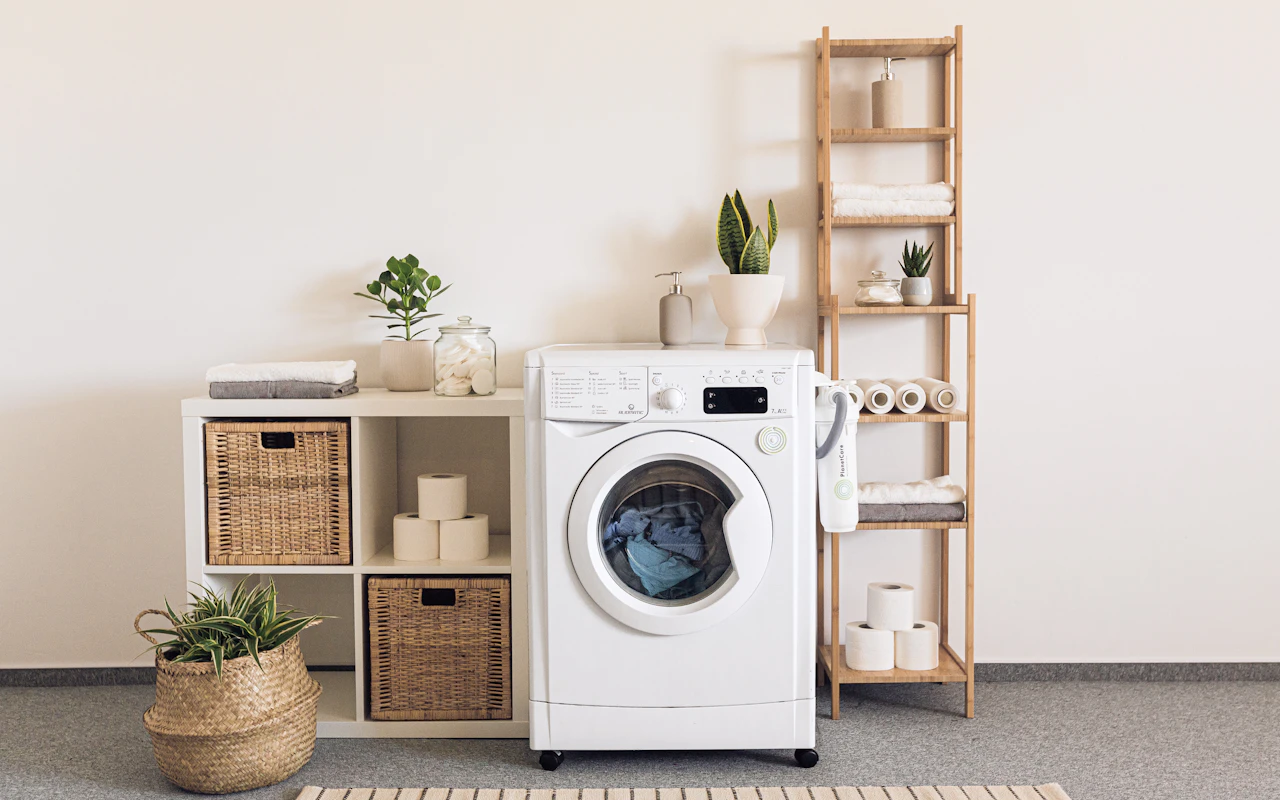
THE BETTER-EVERYDAY EDIT · HOME SYSTEMS / 05
Your home might not need another gadget. It might need a better way to use the things already in your drawer, laundry cabinet and kitchen sink.
Searching for household items you’re using the wrong way? The useful answer is rarely a hidden button or a viral hack. It is often a mismatch between the object, its instructions and the routine around it. You can fix that mismatch without buying an entirely new home system.
Some of the most frustrating household routines are not difficult because of the task itself. They’re difficult because a tiny detail has gone unexamined: a generous splash of detergent, the wrong scissors, an unidentified spray bottle, an undated freezer container or a sponge that never dries. These are small design problems hiding in plain sight.
Below, we turn five familiar household items into a practical home-efficiency guide. Each section explains the common mistake, the safer and easier reset, and when buying an upgrade is actually worth it.
The 30-second fix
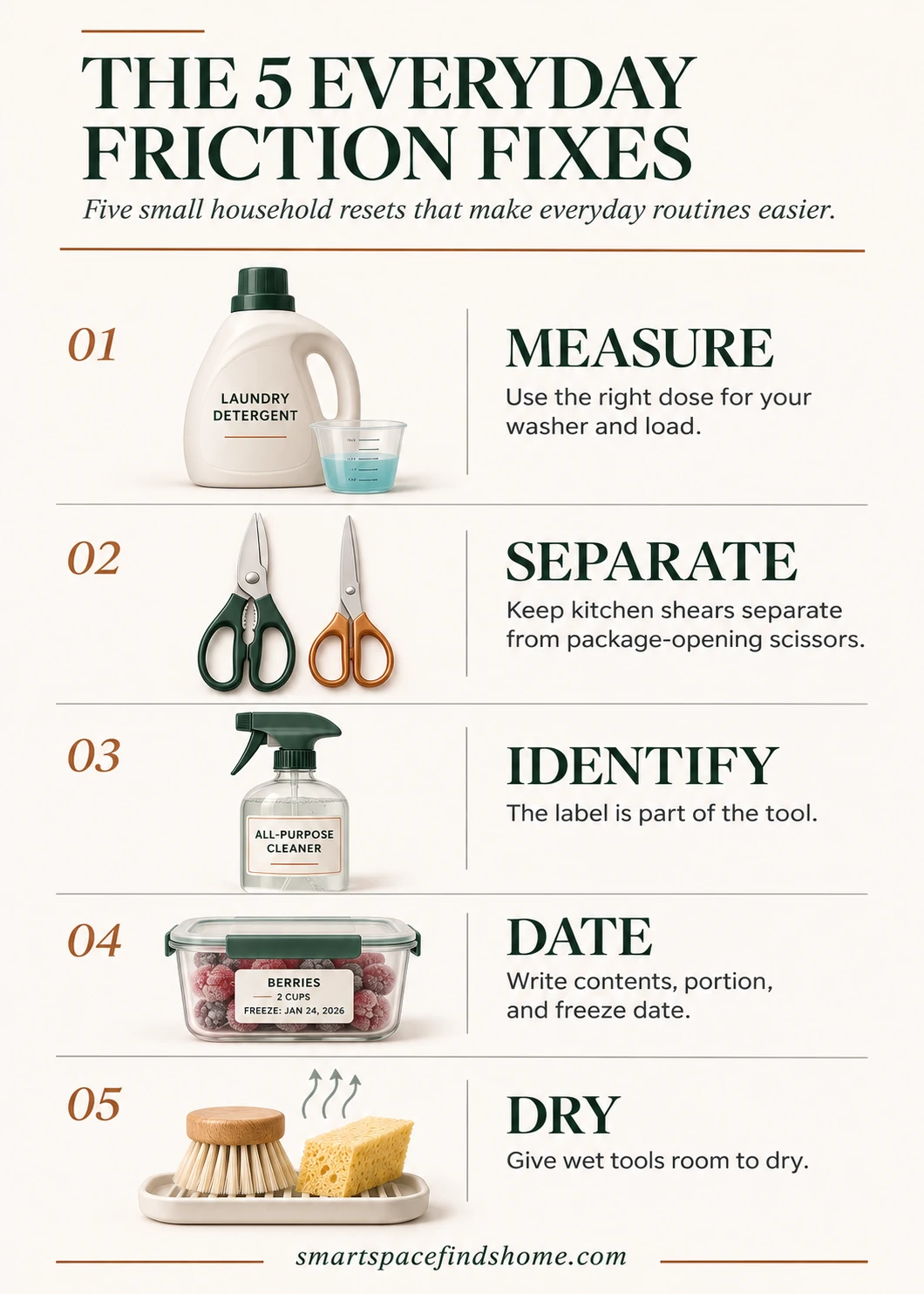
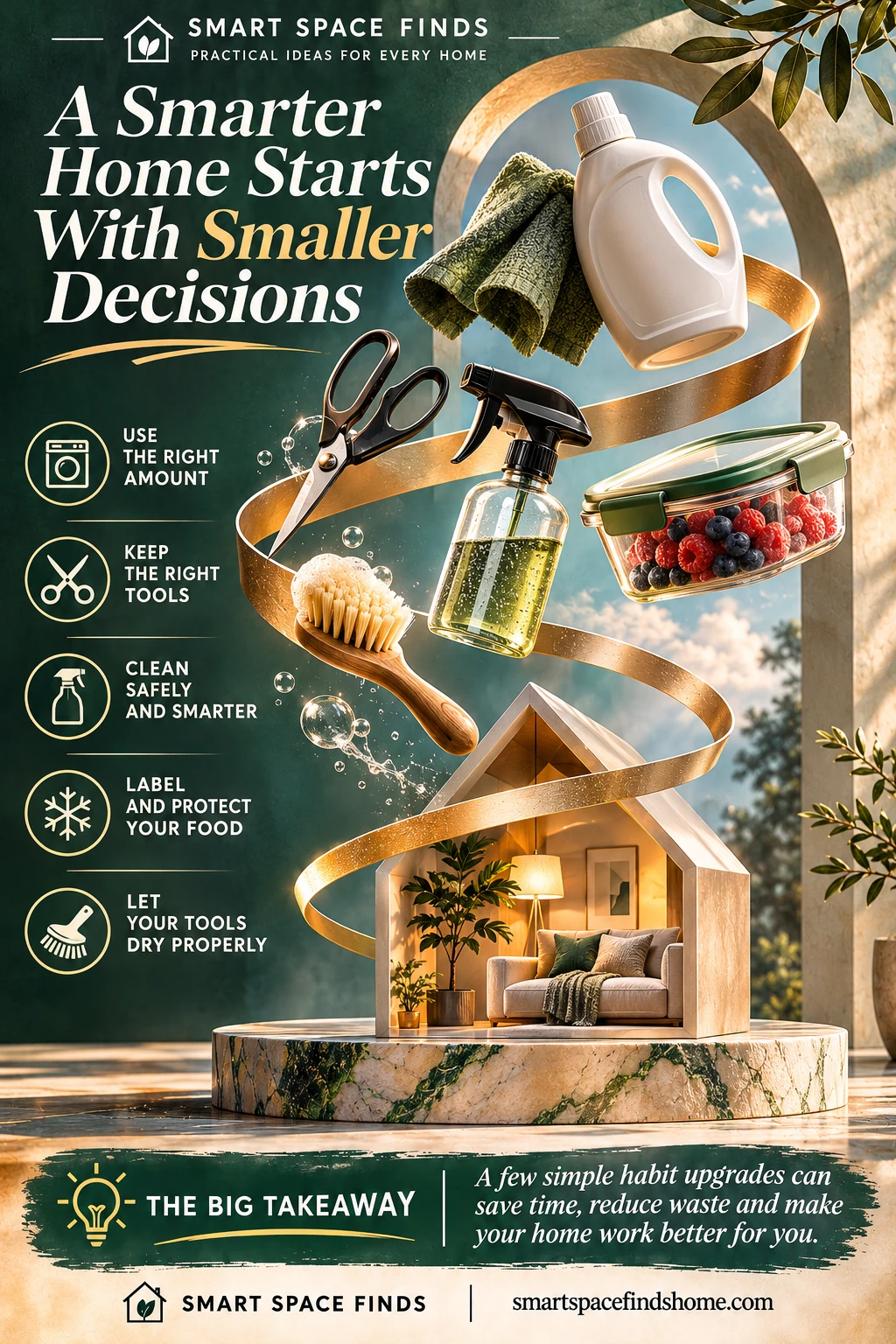
Measure, separate, identify, date, dry. Follow your washer and detergent instructions; dedicate scissors to food-prep tasks; keep cleaners correctly labeled and compatible; portion and label frozen food; and let cleaning tools air-dry. Start with the one problem you encounter every week.
This is a practical checklist—not a substitute for product labels, appliance manuals or food-safety instructions.
“The most useful home upgrades are often invisible. They’re the tiny decisions that make Monday’s laundry, Tuesday’s dinner and the evening cleanup run without friction.”
Laundry detergent: stop guessing the dose
The smarter way to do it
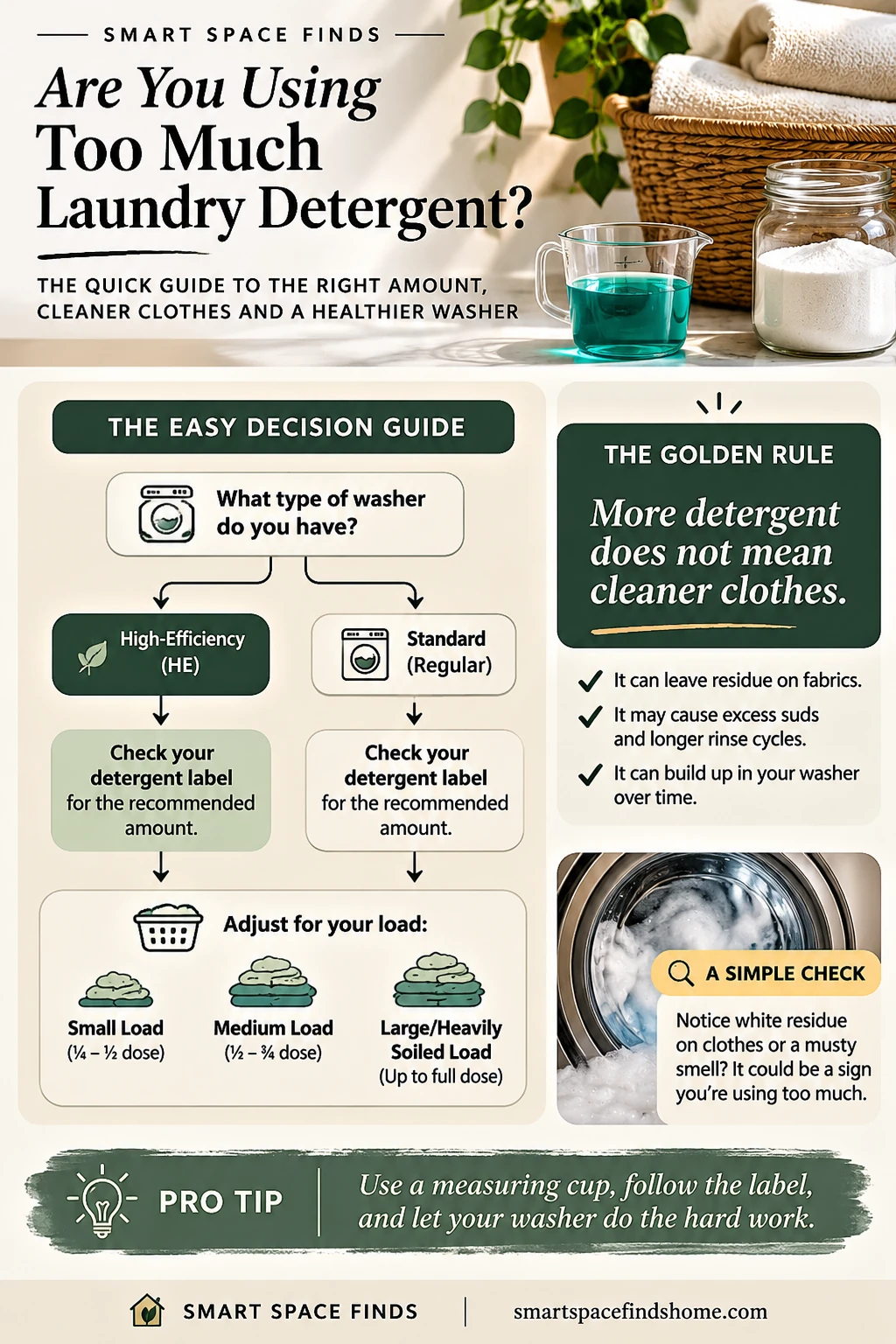
- Find your washer’s detergent type requirements (HE or standard).
- Read the detergent label for its concentration and the recommended load/soil dose.
- Use the marked measuring cap or a dedicated measuring tool; do not assume a capful is one dose.
- If clothes feel coated or come out poorly rinsed, check machine maintenance and load size as well as dosage.
Try this today: Small-load test: choose a normal load, use the label’s appropriate dose, and note whether fabrics rinse clean.

Still seeing detergent residue?
Avoid universal teaspoon rules: HE requirements, concentration, water conditions and soil level vary by product and machine.
Kitchen scissors: match the blades to the job
The smarter way to do it
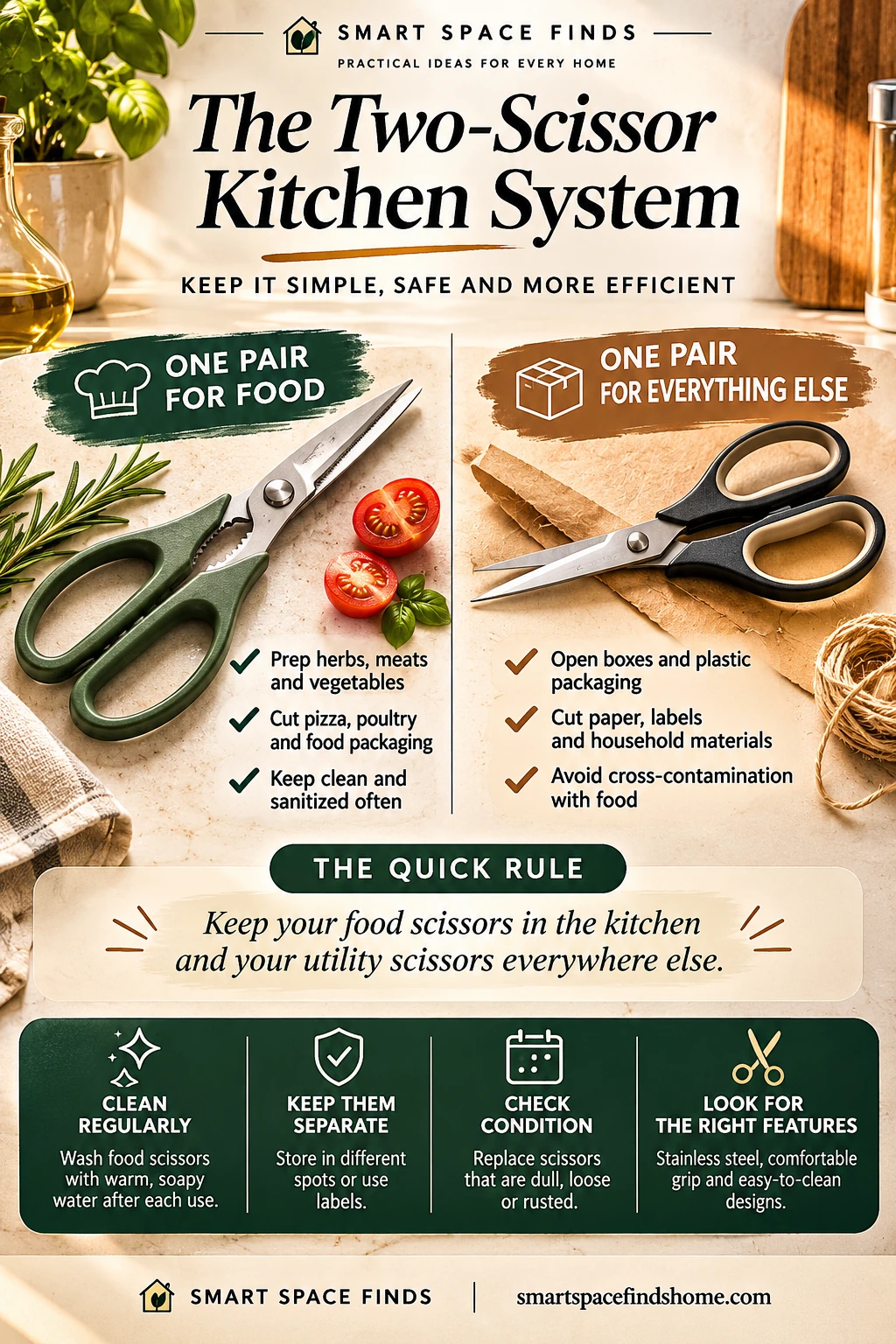
- Keep food-contact shears separate from package-opening scissors.
- Wash and sanitize food-contact tools as appropriate after raw meat or poultry; follow the manufacturer’s care directions.
- Choose take-apart shears only if you will actually disassemble and clean them safely.
- Keep blades dry and stored where edges cannot be damaged.
Try this today: Make the difference obvious: store kitchen shears with cooking tools and packaging scissors near deliveries.
Build a scissors system you’ll actually keep
Think of the cooking zone and the delivery-opening zone as two separate workstations. One clean, food-contact pair stays with utensils; a second pair lives with tape, boxes and packages. This small division removes the question of where the blades were used last.
When cutting raw meat or poultry, treat the shears as you would a knife or cutting board that touched raw ingredients: clean appropriately before they contact ready-to-eat foods. If a model comes apart, only disassemble it as its maker instructs.
Spray bottles: the label is part of the tool
The smarter way to do it
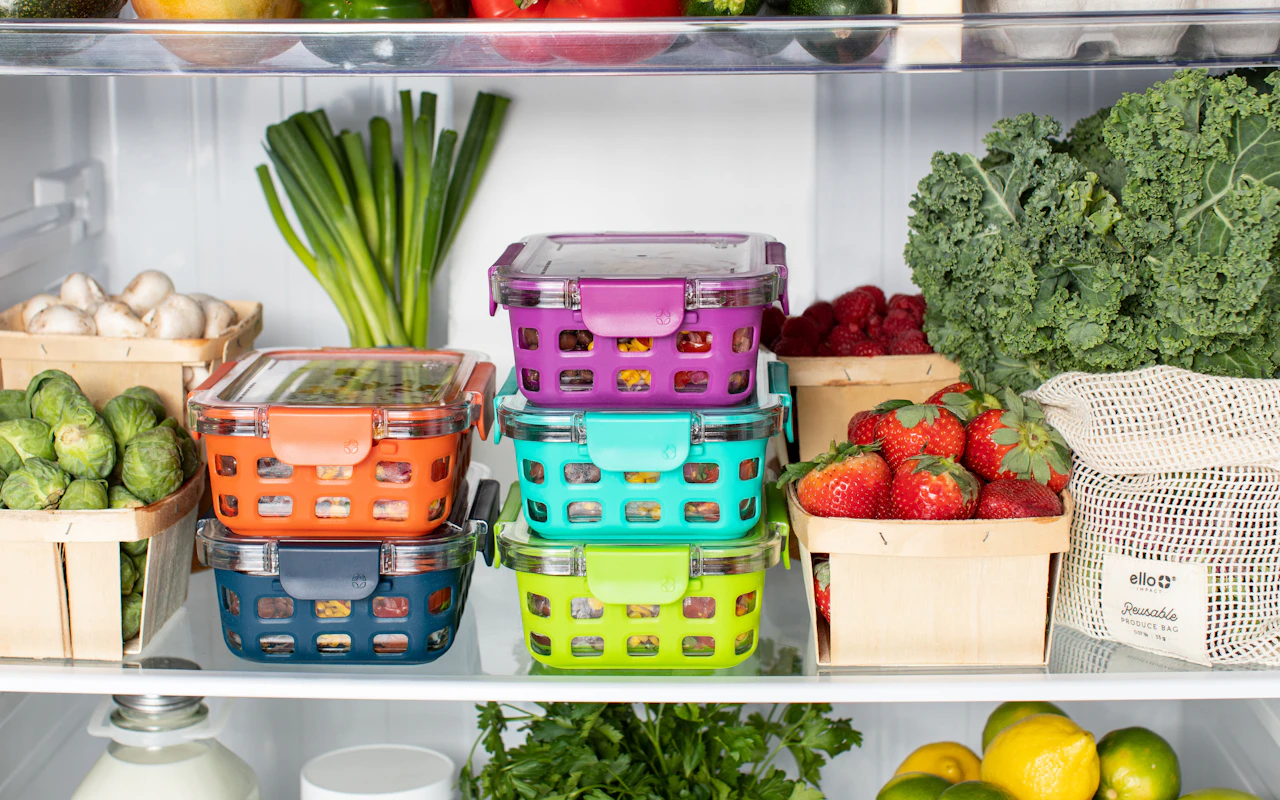
- Prefer the cleaner’s original labeled container.
- If the manufacturer permits a compatible secondary container, label it with the exact contents, instructions and date when required.
- Never mix household cleaning products, particularly bleach with other cleaners.
- Follow surface compatibility, ventilation, protective equipment and disinfectant contact-time directions.
Try this today: Safety test: could another adult identify the cleaner and follow its directions without asking you? If not, fix the labeling.
Cleaning is not the same as disinfecting.
Routine cleaning removes dirt and many germs with soap or detergent. When disinfection is needed, follow the product’s labeled surface directions and its required wet contact time. A pleasant-smelling spray is not proof that a surface was disinfected.
Never mix cleaners. In particular, household bleach must not be mixed with other cleaning agents. Store chemicals away from children and pets, and do not put cleaners into food or beverage containers.
Freezer containers: label for your future self
The smarter way to do it
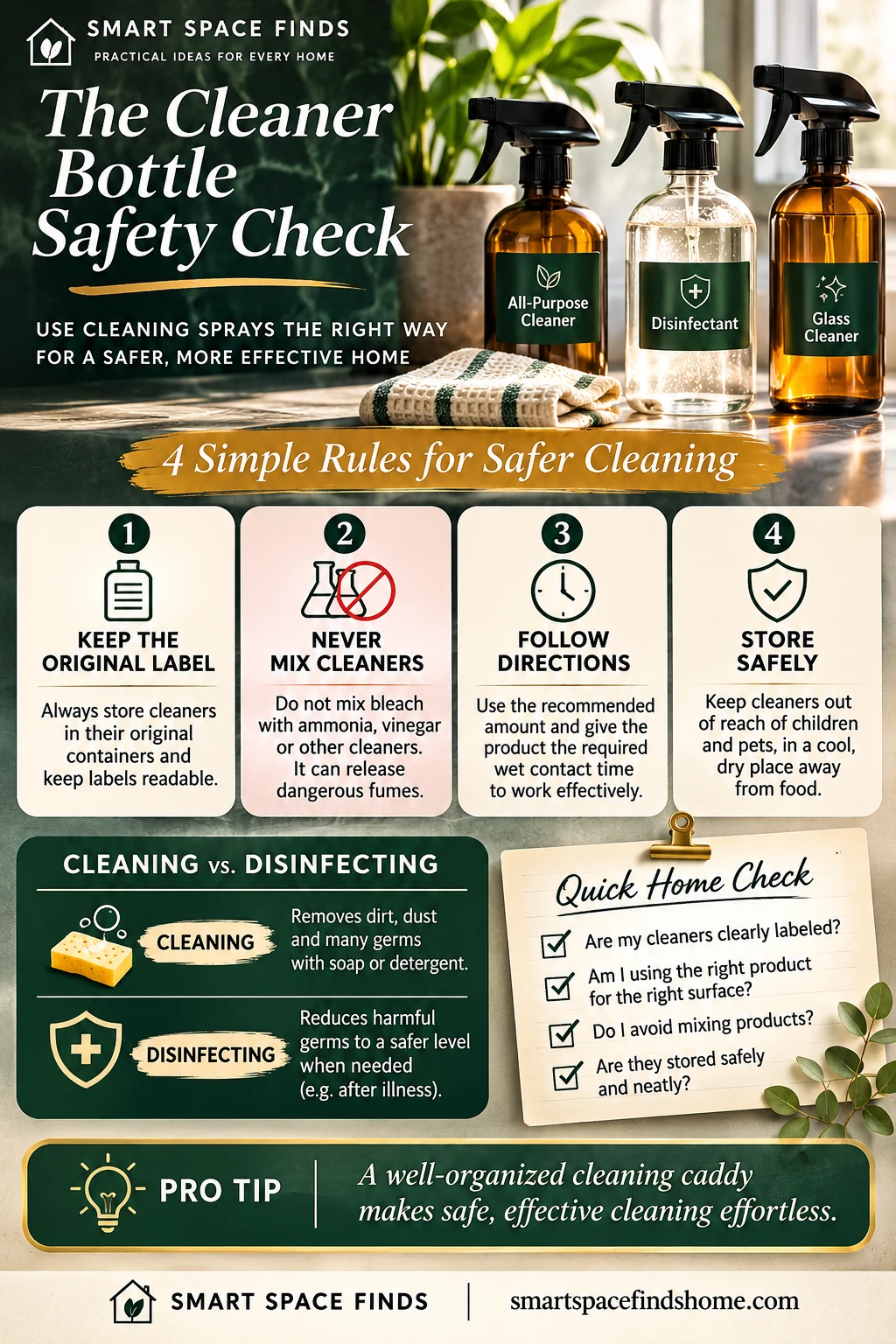
- Cool and refrigerate or freeze perishables promptly; divide leftovers into shallow containers.
- Use food-safe, freezer-appropriate materials and leave headspace when liquids need room to expand.
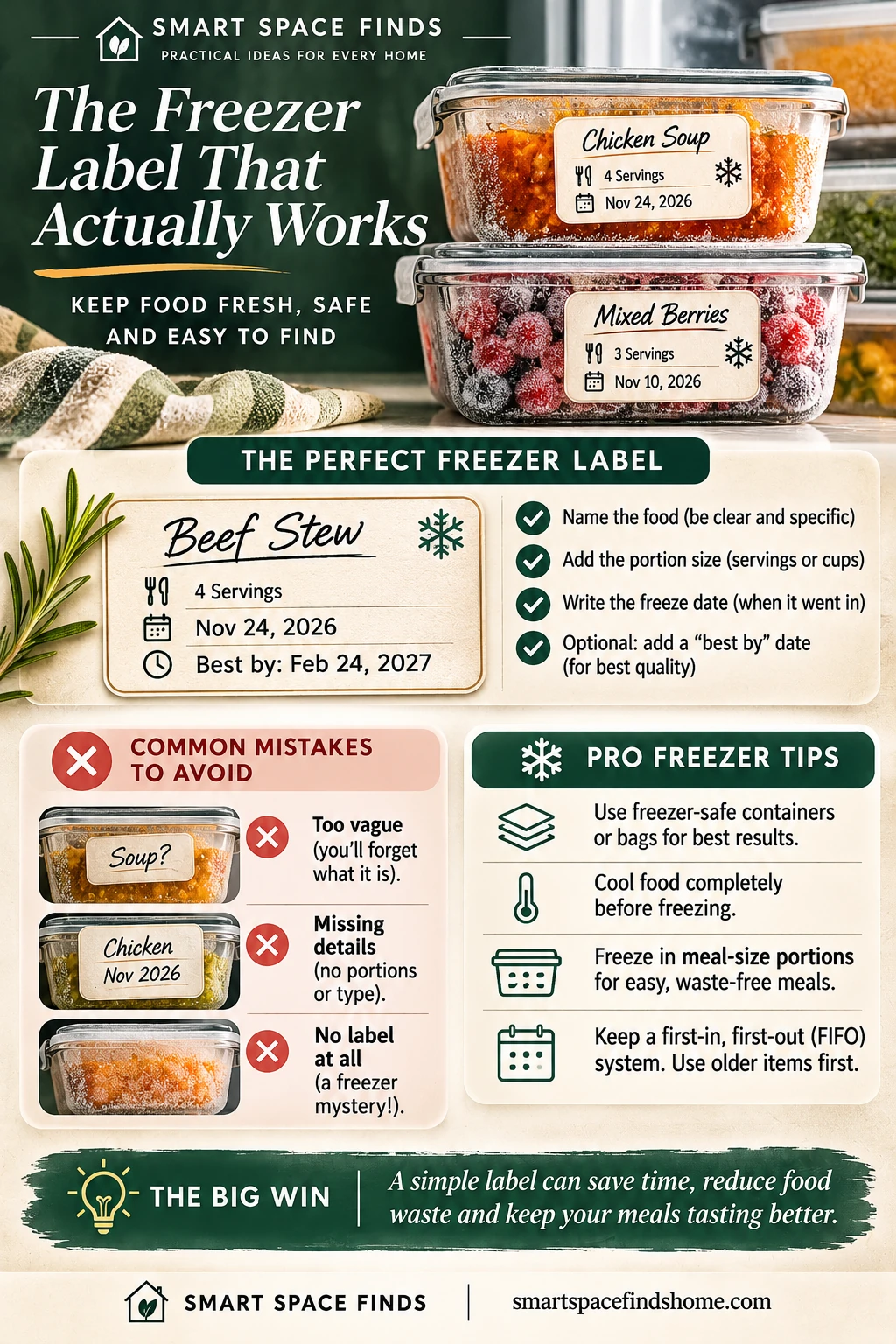
- Label contents, portion size, and the freezing date before the container disappears into the drawer.
- Keep the freezer around 0°F (-18°C); freeze food in quantities you expect to thaw and use.
Try this today: The two-second label: ‘Tomato soup · 2 servings · Nov 24.’ Put the writing on the visible edge.
A freezer label that answers three questions
What is it? How much is there? When did I freeze it? The entire goal is to make the container understandable without opening it.
2 servings
Frozen Nov 24
???
No date
For best quality, consult food-specific freezer storage recommendations; they are not identical for every ingredient. Foods kept continuously frozen at 0°F (-18°C) or below can remain safe indefinitely, but quality declines over time. Freezing does not make previously mishandled food safe.
Cleaning tools: give moisture a way out
The smarter way to do it
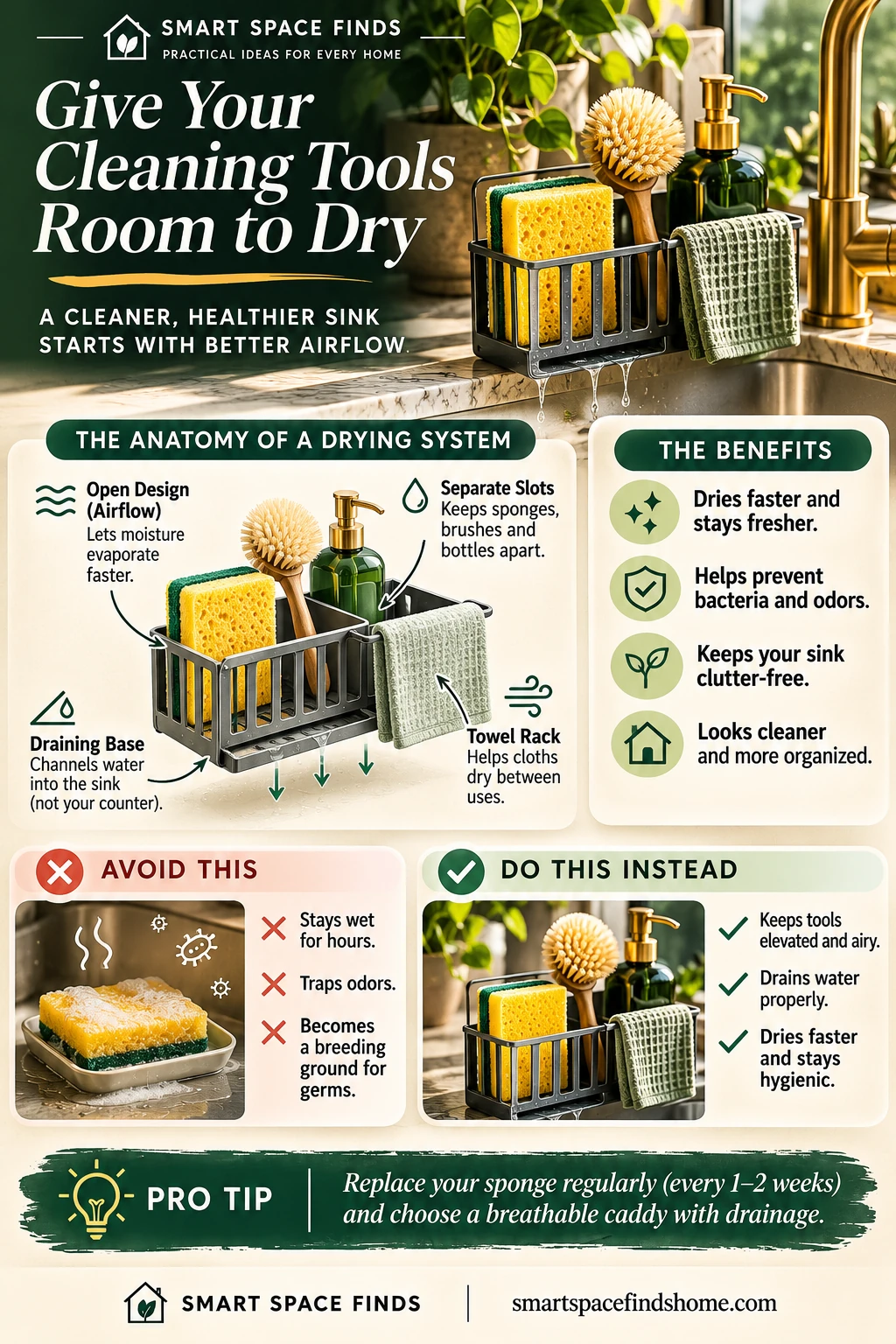
- Rinse tools after use and place them where air can circulate.
- Launder reusable cloths appropriately; separate bathroom and kitchen cleaning tools.
- Clean holders and drain trays so the storage solution does not become the dirty item.
- Replace worn, foul-smelling or difficult-to-clean sponges and brushes; do not depend on appearance alone.
Try this today: The overnight test: does the tool have a realistic chance to dry fully before tomorrow’s use?
Is your sink caddy helping—or trapping moisture?
A holder can look beautiful and still fail its most important job. Check the bottom: is water pooling? Do the sponge surfaces touch a solid wall? Can you remove residue from the tray without taking the whole setup apart?
Better setup: a washable holder with drainage and airflow, and a dedicated place for cloths to hang open. Dish brushes can be easier to rinse and dry than dense sponges. Whichever tool you prefer, follow cleaning guidance and replace it when worn or difficult to sanitize.
The no-buy decision guide
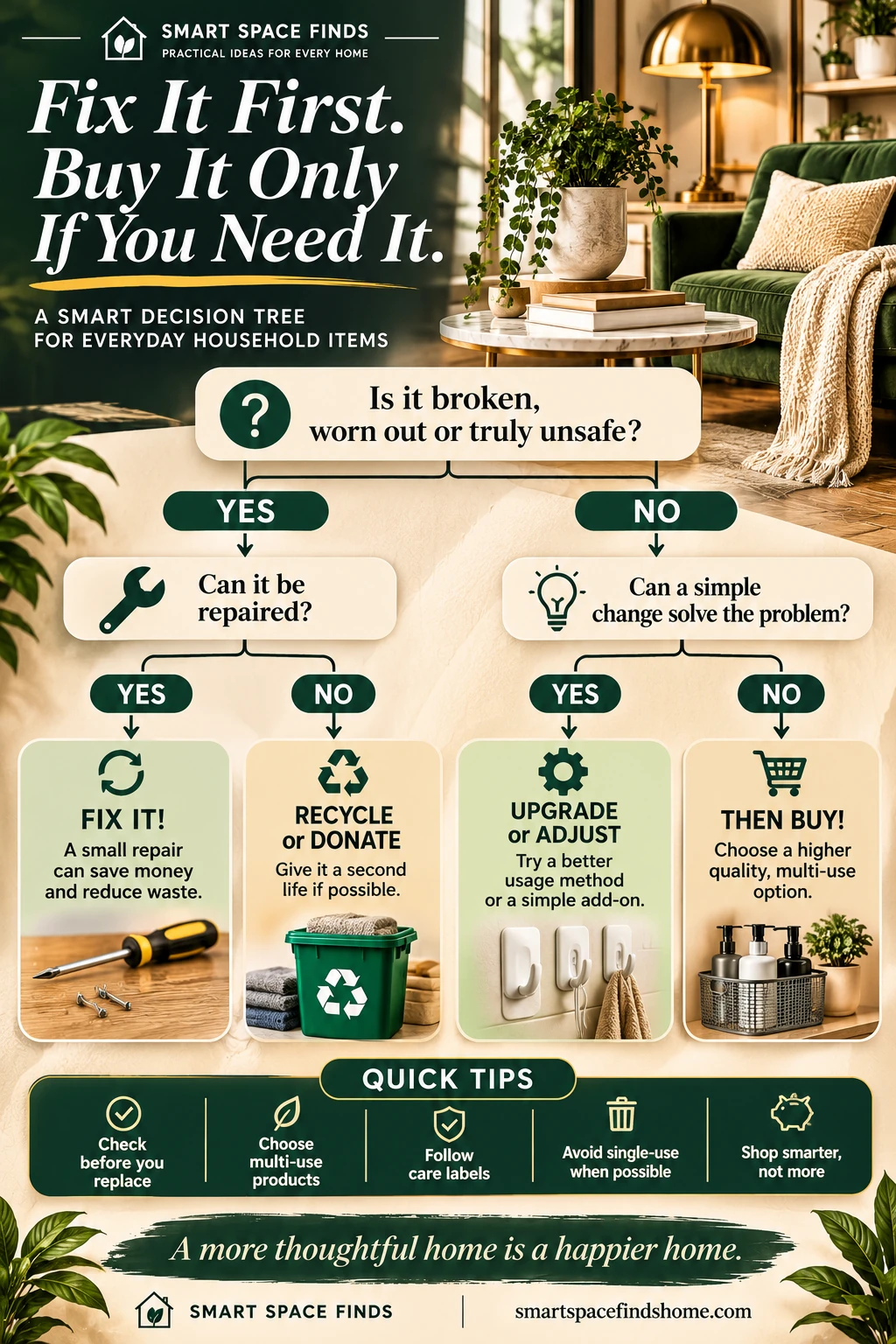
A premium home is not a home filled with new products. It is a home where the right tools have a clear purpose. Use this quick comparison before adding another organizer to your cart.
| Problem | Start free | Consider buying only if… |
|---|---|---|
| Laundry residue | Check dose and washer settings | You need a more accurate measuring tool |
| Mixed-use scissors | Separate and clean the tools you own | You lack food-safe shears |
| Unmarked cleaner | Keep the original labeled bottle | The manufacturer permits a labeled refill system |
| Freezer clutter | Label and portion existing food | Your containers are not freezer-safe or leak |
| Damp sink tools | Rinse and reposition for airflow | Nothing you own allows proper drying |
THE SMART SPACE FINDS RULE
Fix the routine before replacing the object. A new product earns its space when it solves an observable, repeated frustration. If it adds steps, storage demands or safety questions, it probably isn’t the upgrade you need.
“A product is worth its shelf space only when it earns its place in the routine—not because a viral tip promised a clever hack.”
Your 15-minute household reset
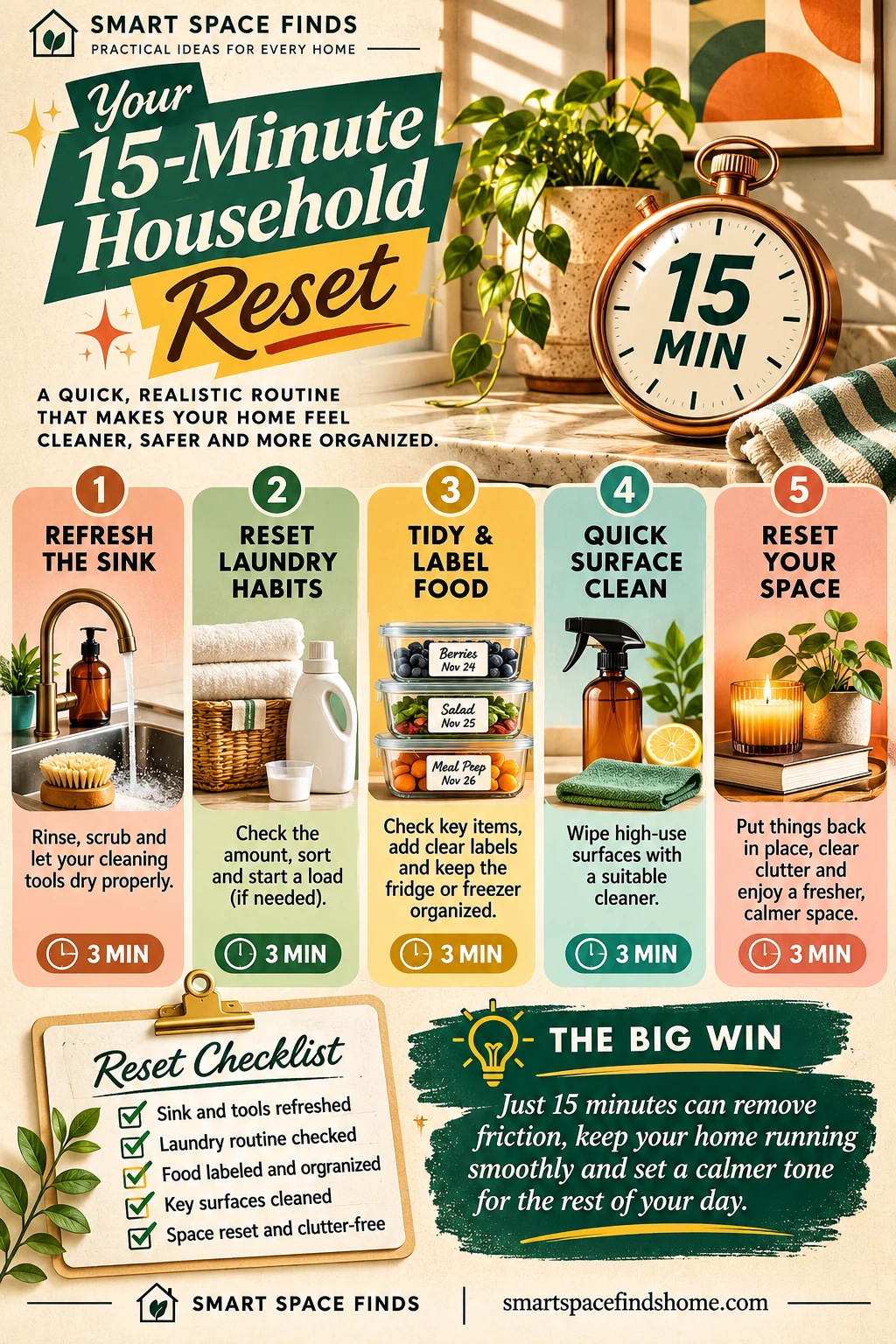
No shopping trip. No weekend overhaul. Set a timer and give five familiar objects a better system.
- Minutes 0–3: Check your washer and detergent labels; locate the correct dose.
- Minutes 3–6: Separate packaging scissors from clean food-prep shears.
- Minutes 6–9: Inspect spray bottles; put unidentified or improperly decanted chemicals aside for safe handling according to product guidance.
- Minutes 9–12: Date and reorganize three freezer items that are safe to keep.
- Minutes 12–15: Rinse your sink tools, clean the holder and create airflow for drying.
The real metric: can you complete each recurring task with less guessing next time?
Related reading from Smart Space Finds
For a broader small-space system, explore clever small-space solutions. If your freezer is the trouble spot, our small-fridge organization guide expands on food zones and storage. For a thoughtful purchase filter, read everyday essentials that are actually useful.
Which fix should you try first?
Start with the symptom that matches your home. These are simple, no-purchase actions, not a recommendation to replace every tool at once.
When you finish, ask yourself: Will this fix make the next use easier without creating another task? That’s the standard to keep.
Frequently asked questions
These are the questions worth answering before a clever-looking household shortcut becomes part of your daily routine.
What if I am not sure whether my spray bottle is safe for a cleaner?
Do not decant the product. Keep it in its original labeled container, review the manufacturer’s directions and contact the maker if the approved refill system is unclear. Never combine leftovers from different products.
Can freezing leftovers make improperly stored food safe again?
No. Freezing does not reverse unsafe handling. Refrigerate or freeze perishables promptly, divide large batches into shallow containers and follow time and temperature guidance before freezing.
How often should kitchen sponges be replaced?
There is no single interval for every material and use. Clean and sanitize as directed, allow thorough air drying and replace regularly; University of Minnesota Extension recommends replacing typical sponges every one to two weeks or sooner when worn.
Does more laundry detergent make clothes cleaner?
Not necessarily. Detergent concentrations, washer design, soil level and load size all affect the right amount. Excess detergent can reduce rinse performance, especially in high-efficiency washers. Always follow the relevant product and appliance instructions.
Can I put any cleaner in a reusable spray bottle?
No. Keep household cleaners in their original labeled containers unless the manufacturer specifically permits a compatible refill container. Do not mix cleaning chemicals; preserve all use and hazard directions.
What should I write on a freezer label?
At minimum: the contents and date frozen. Portion or serving count makes the package even more useful. Use packaging suitable for the freezer and follow food-safety guidance for cooling and storage.
Are kitchen shears better than ordinary scissors?
Purpose-built kitchen shears can be easier to maintain for food preparation, but clean, food-safe equipment and task separation matter more than a flashy feature. Follow cleaning instructions for the model you own.
Should I replace a sponge whenever it smells?
A foul smell is a reason to discard it, but appearance and odor are not reliable tests of safety. Clean or sanitize according to material guidance, allow airflow and replace sponges regularly.
What household upgrade is worth buying first?
Choose the item that solves a persistent, specific issue that a free reset cannot fix. A safe freezer container or a drying rack may be helpful; a complicated organizer with no clear purpose is not.
Less friction is the real luxury
The satisfying part of a well-designed home is not how much you own. It is how naturally it works. Measure the product, choose the right tool, keep safety information visible, label for tomorrow and give wet things room to dry. Five small habits can make the everyday feel more considered.