
Editorial note: This guide is based on published product specifications and practical lighting principles, not hands-on testing by Smart Space Finds. Product configurations, electrical ratings and availability can change; check the listing and manufacturer instructions before buying.
Affiliate disclosure: As an Amazon Associate, Smart Space Finds earns from qualifying purchases. If you buy through product links in this guide, we may earn a commission at no additional cost to you.
Apartment Smart Lighting Without Rewiring: The Quick Answer
You do not need to open walls, replace ceiling fixtures, or hire an electrician to make most apartment lighting smarter. Start with a compatible smart bulb in an existing lamp, a smart plug for a conventional plug-in lamp, or a purpose-built plug-in LED light strip. Add an optional wireless controller so the room stays easy to use without reaching for your phone.
For renters, the best upgrades are removable, easy to maintain, and useful in everyday life. Think warm bedside lighting that dims before sleep, a floor lamp that turns on when you get home, or subtle under-cabinet illumination that makes cooking more comfortable. A good smart-lighting setup should improve the room even when the app is closed.
One existing lamp + one compatible smart bulb or smart plug + one simple routine = a meaningful upgrade without changing fixed wiring.
Before buying: check your bulb base, fixture ratings, outlet access, app and hub requirements, and lease rules.
What Counts as Smart Lighting in an Apartment?
Smart lighting lets you control at least one aspect of a light through an app, schedule, automation, voice assistant, or compatible wireless control. Some devices simply turn a lamp on and off; others can adjust brightness, white-light warmth, or color. These capabilities are not interchangeable, so it is worth understanding the differences before shopping.
Smart bulbs: best when you want adjustable light
A smart bulb replaces a compatible conventional bulb and may offer dimming, tunable white light, or color effects. Choose the correct socket and physical size, and confirm that the bulb is suitable for your fixture. Many smart bulbs need continuous power to remain reachable: switching off the ordinary wall switch may also disable app and automation control.
Smart plugs: best for making an existing lamp switch on and off
A smart plug sits between a suitable wall outlet and a plug-in lamp. It is often the simplest way to schedule a favorite table lamp or floor lamp without replacing its bulb. Most ordinary smart plugs provide on/off control only, not dimming or color adjustment. Confirm the lamp resumes its intended state when power is restored and never exceed the plug’s electrical rating.
Plug-in LED strips: best for discreet accent lighting
Light strips can add soft illumination behind a headboard, under a suitable shelf, or behind a television. Choose a complete low-voltage kit with its intended power adapter and controller. Route cables neatly, protect them from pinching and moisture, and check whether adhesive mounting is permitted by your lease and suitable for the surface.
Wireless switches: best for everyday convenience
Compatible battery-powered or otherwise wire-free controllers can trigger scenes without modifying the apartment’s installed wiring. They are particularly useful for guests or anyone who prefers a physical button. Check that the controller works with your bulbs, hub, or smart-home platform before purchasing it.
Before You Buy: Five Compatibility Checks
- Bulb base and fixture: check whether you need E26, E27, B22, GU10, or another fitting; check voltage, dimensions, enclosure suitability, and the fixture’s maximum rating.
- Smart-home ecosystem: verify support for the platform you actually use, rather than assuming every smart product works with every voice assistant.
- Network and hub: a Wi-Fi model may connect directly to your router; some products require a manufacturer bridge, and Matter-over-Thread setups require a compatible Thread border router and controller.
- Manual usability: keep important lights controllable without relying exclusively on a phone or cloud service.
- Rental safety: prefer removable upgrades, follow electrical and manufacturer instructions, and do not modify fixed wiring without appropriate permission and qualified help.
12 Apartment Smart Lighting Ideas Without Rewiring
Each idea uses a reversible device rather than an alteration to fixed wiring. Test one room first and expand only when daily use feels easier.
1. Warm-Dimming Bedside Bulb
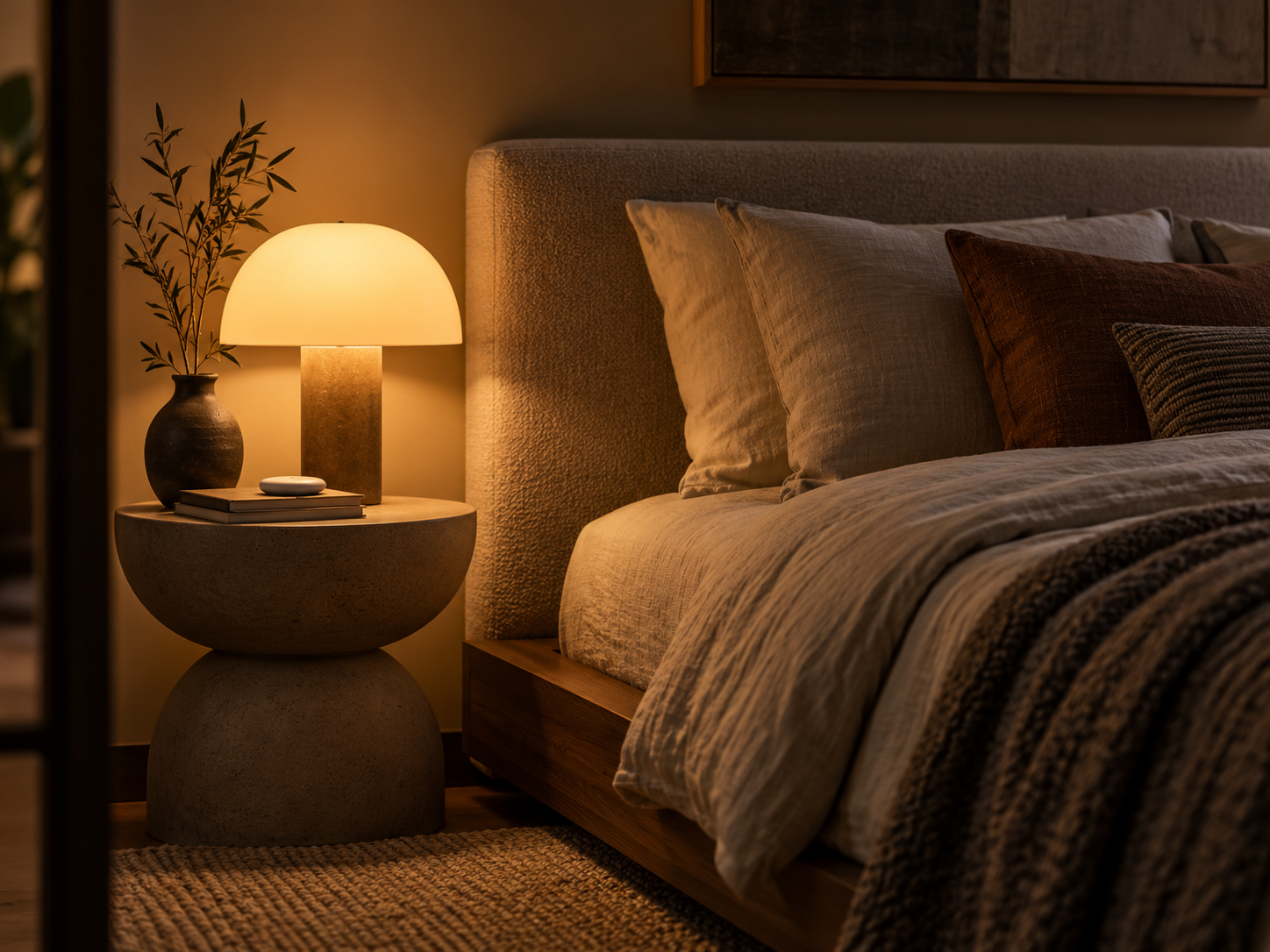
Replace a compatible bedside bulb and create bright morning and gentle evening settings. Check socket type, fixture voltage and enclosure restrictions. Keep wall power on if the bulb requires it for app control.
2. Smart-Plug Floor Lamp
Use a suitably rated smart plug with an existing plug-in floor lamp for on/off scheduling. Test whether its switch restores the on state after power returns. Ordinary smart plugs do not dim conventional lamps.
3. Television Bias Lighting
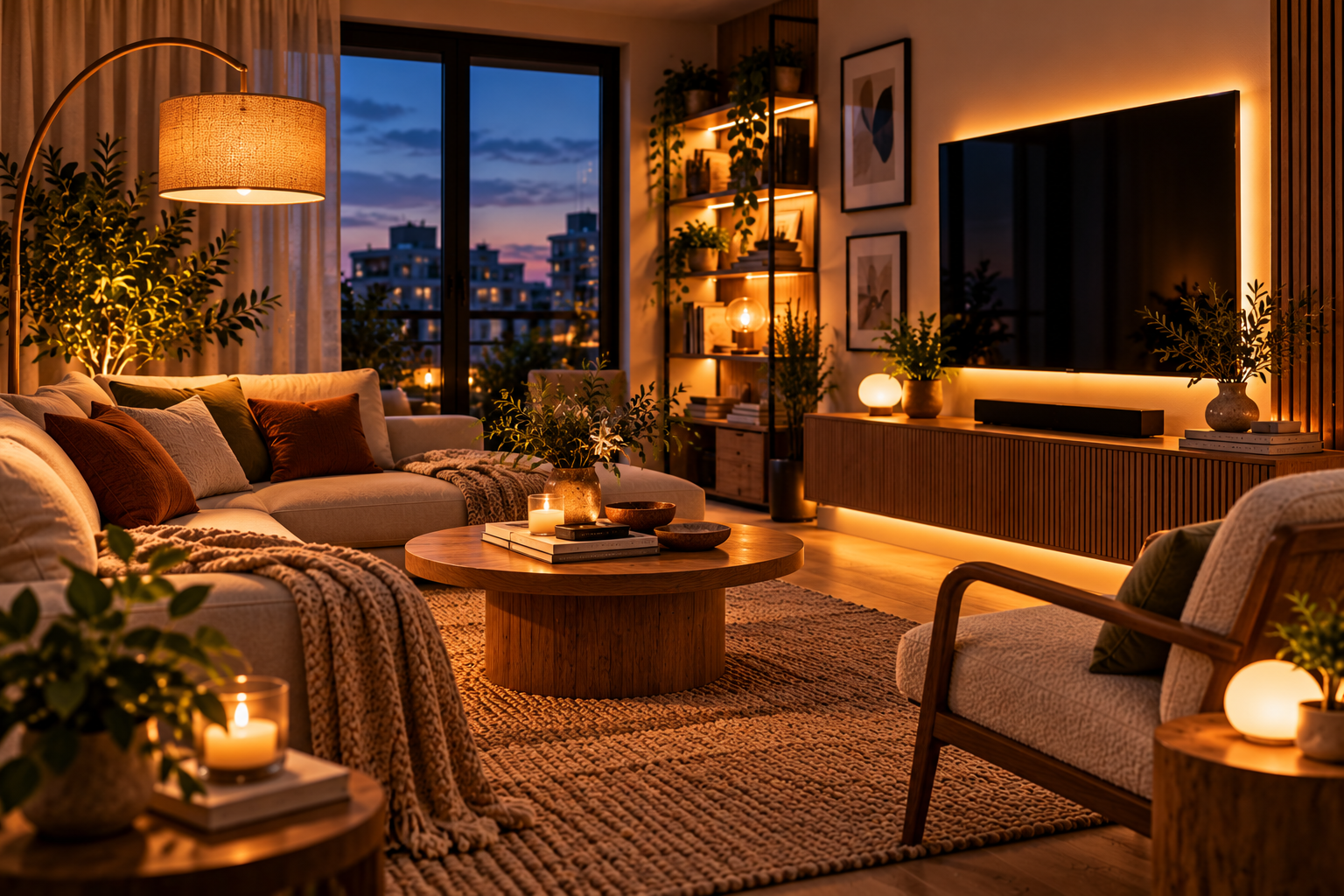
Install a purpose-built plug-in LED strip behind a television, away from vents. Use the supplied adapter, follow cut marks and choose restrained warm light rather than distracting saturated colors.
4. Under-Cabinet Kitchen Light
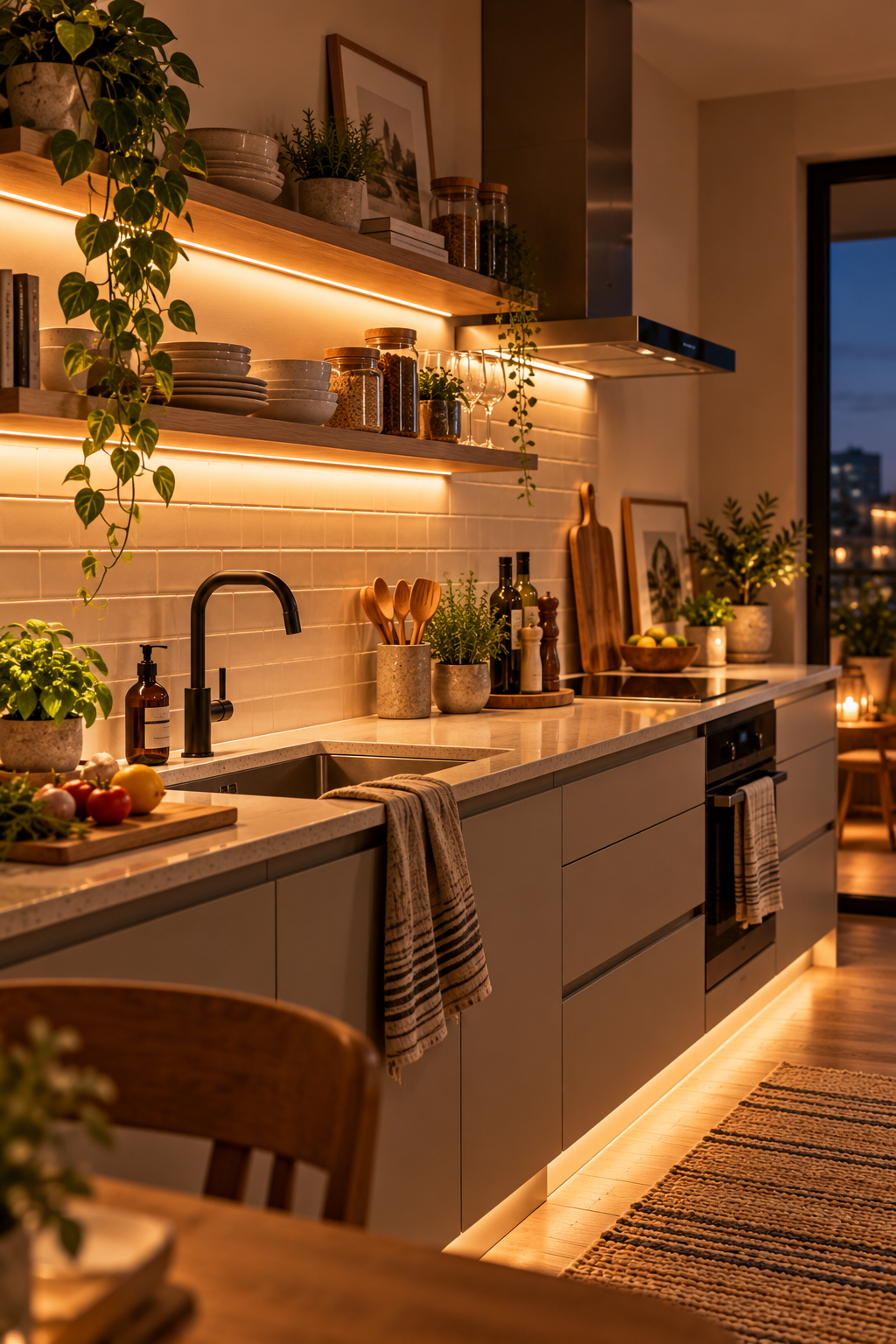
Place an appropriate plug-in LED bar or strip underneath a cabinet for practical worktop illumination. Keep it away from steam, splashes and cooking heat unless rated for those conditions.
5. Reading-Corner Scene
Set an adjustable lamp beside a reading chair. Choose stronger directional light for books and lower output for relaxing. Avoid combining smart bulbs with incompatible wall or lamp dimmers.
6. Motion-Sensor Hallway Glow
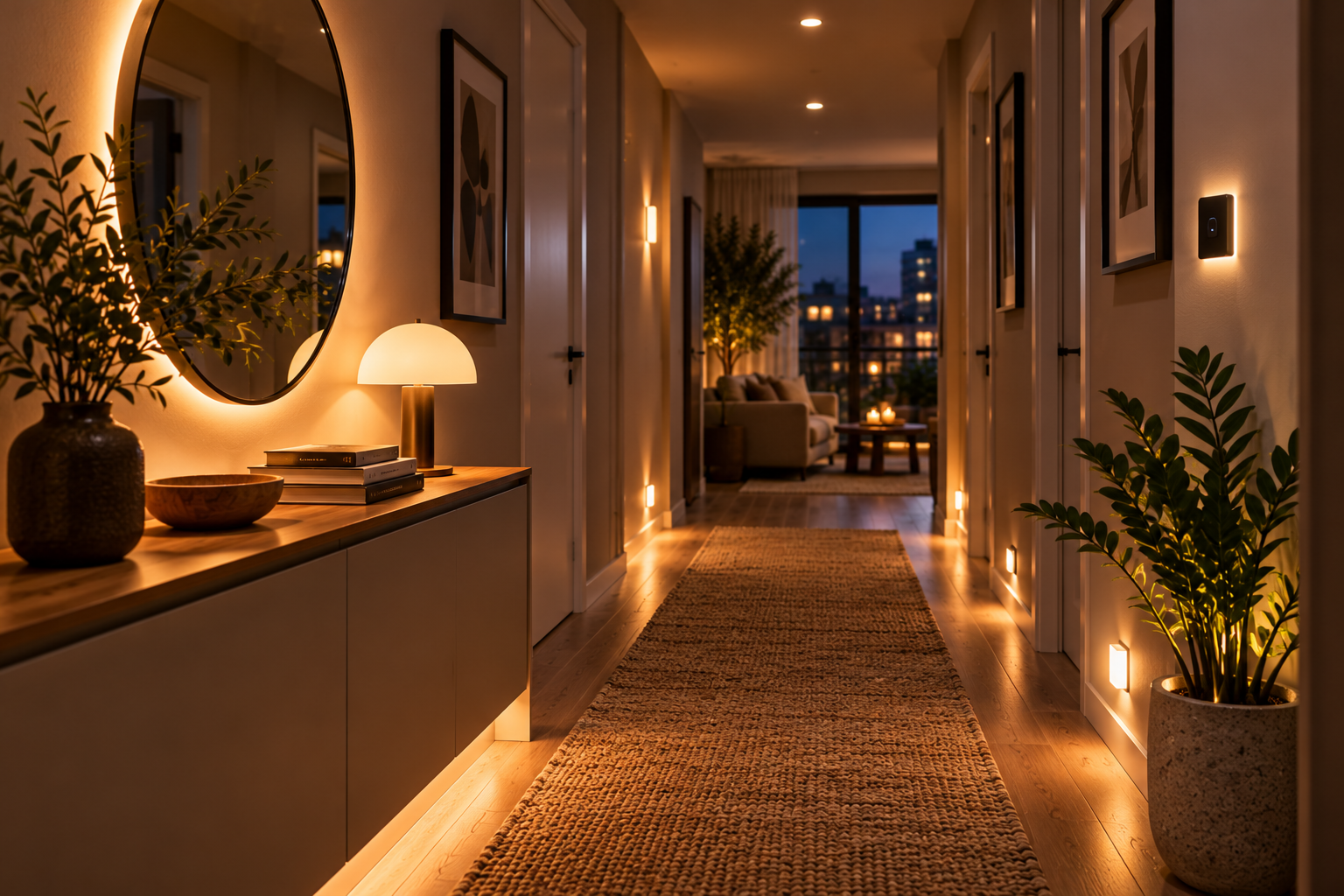
Use a suitable low-brightness plug-in or battery motion night light for nighttime navigation. Position it to avoid glare and trip hazards. Not every battery motion light is app-connected.
7. Gentle Wake-Up Routine
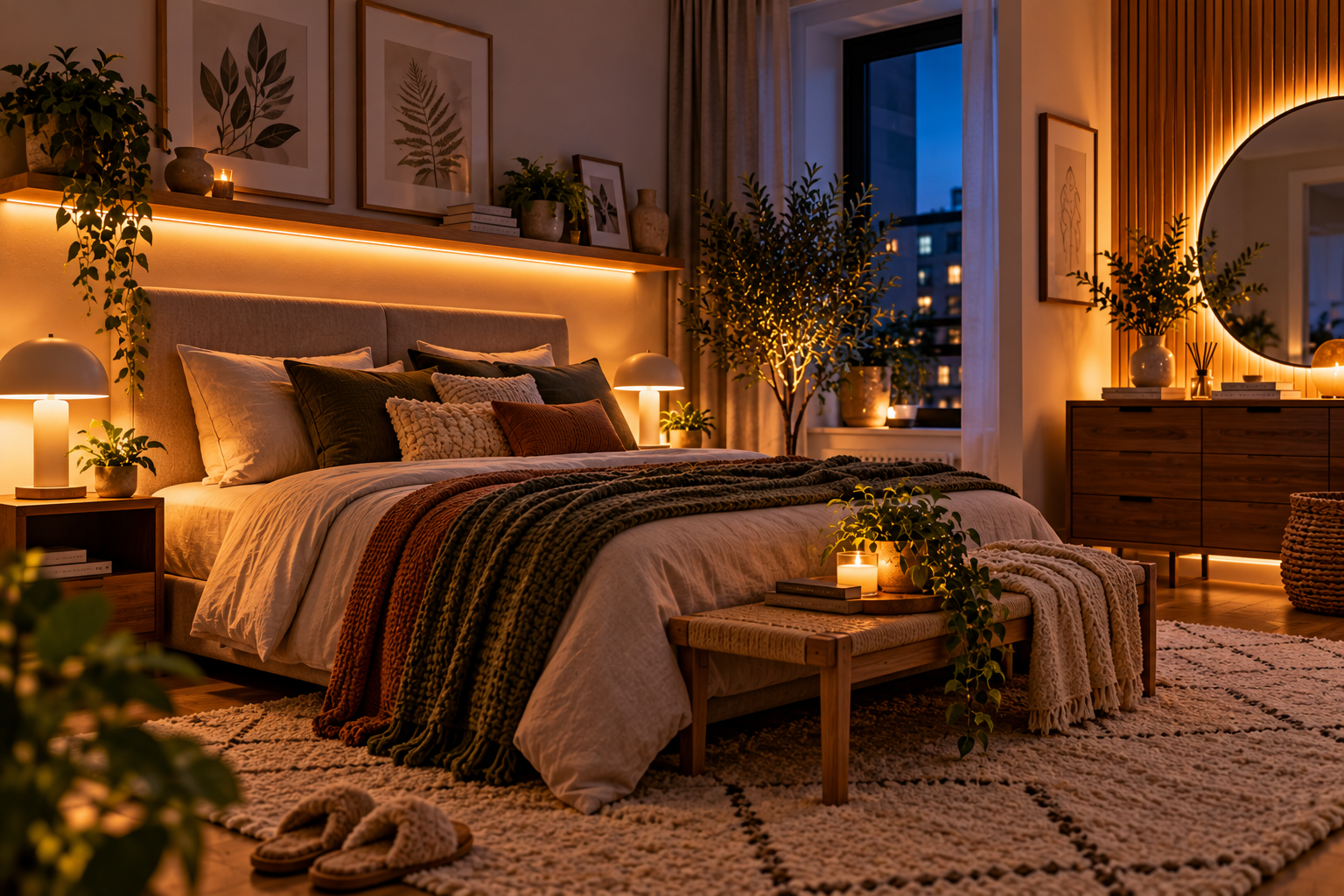
Select a smart bulb with a verified gradual-brightening schedule. Place it behind a diffuse shade and retain a separate reliable alarm rather than depending only on the lighting automation.
8. Home Office Task Lamp
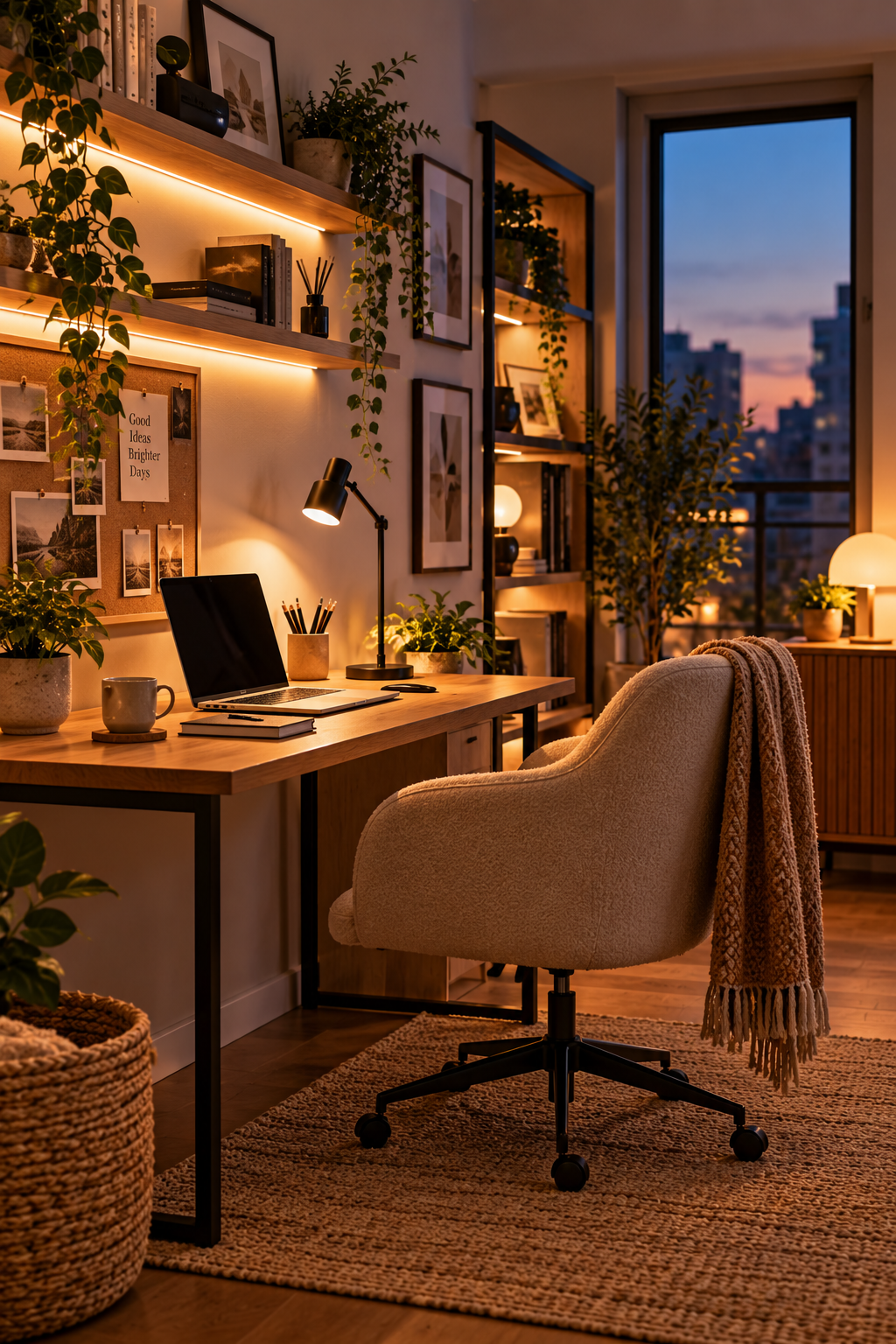
Aim an adjustable desk lamp at the work area while minimizing screen reflections. Use compatible smart controls for a bright work setting and a softer evening setting.
9. Subtle Bookshelf Light
A properly installed low-voltage strip or small plug-in accent lamp can illuminate shelving. Keep adapters accessible, cables unpinched and heat-sensitive items clear according to product instructions.
10. Rechargeable Wall Sconces
Mount lightweight rechargeable sconces using only manufacturer-approved hardware and lease-permitted methods. Check weight, charging needs and whether the product is genuinely smart or only remote-controlled.
11. Wireless Scene Button
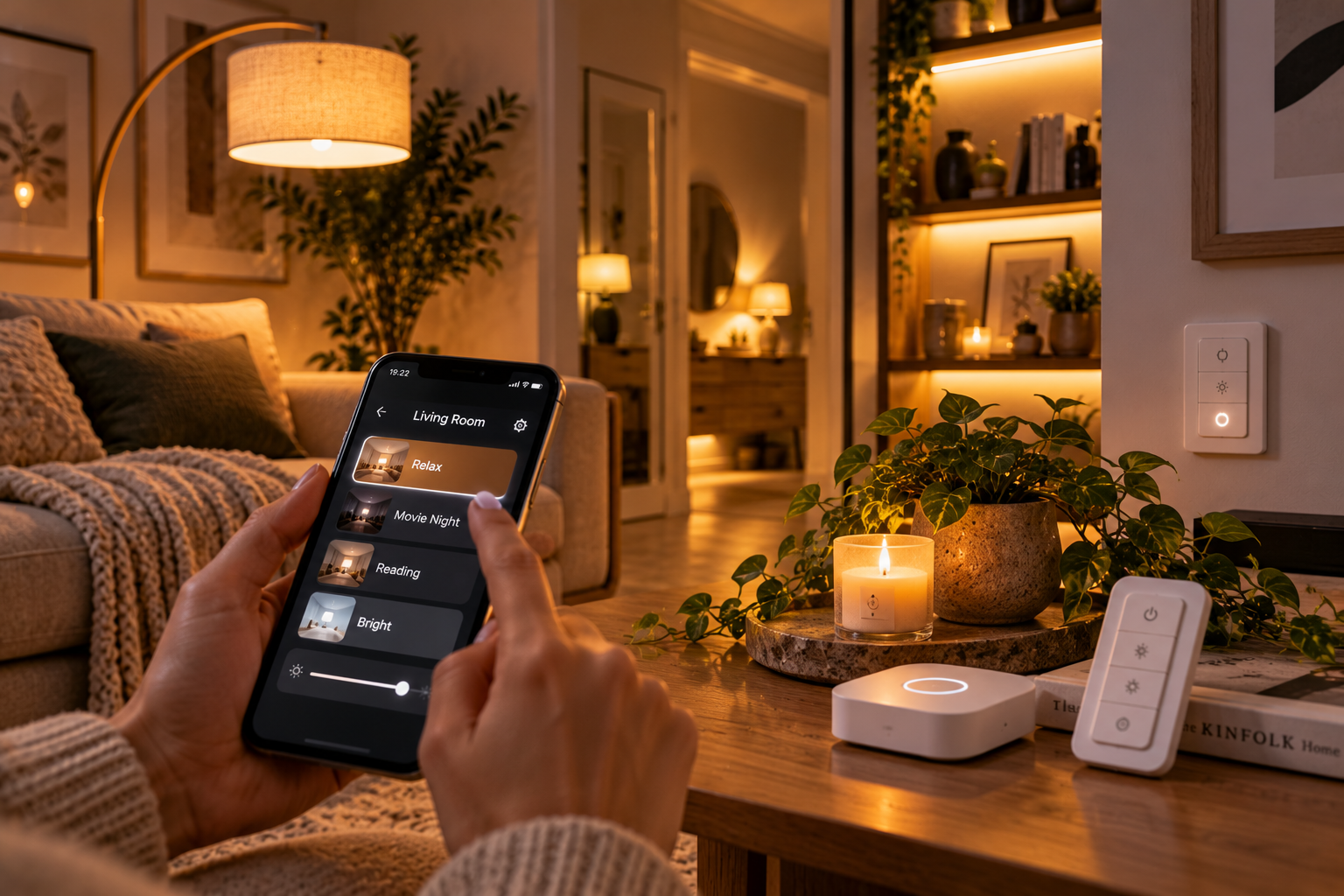
Use a controller explicitly compatible with the bulb, bridge or platform to activate reading, movie and off scenes. Preserve manual access for essential lighting.
12. Good-Night Lighting Routine
Group two or three compatible lamps into a bedtime routine. Dim ambient lights, switch off decor lights and preserve safe illumination along exits and walkways. Test manual override and network behavior.
Room-by-Room Smart Lighting Guide for Renters
Illustration note: The floor-plan diagram shows lighting layers and styling possibilities. Existing ceiling lights, wired sconces and bathroom built-ins may require professional electrical installation and are not suggested as renter-friendly no-rewiring upgrades. Follow the portable and plug-in options described below instead.
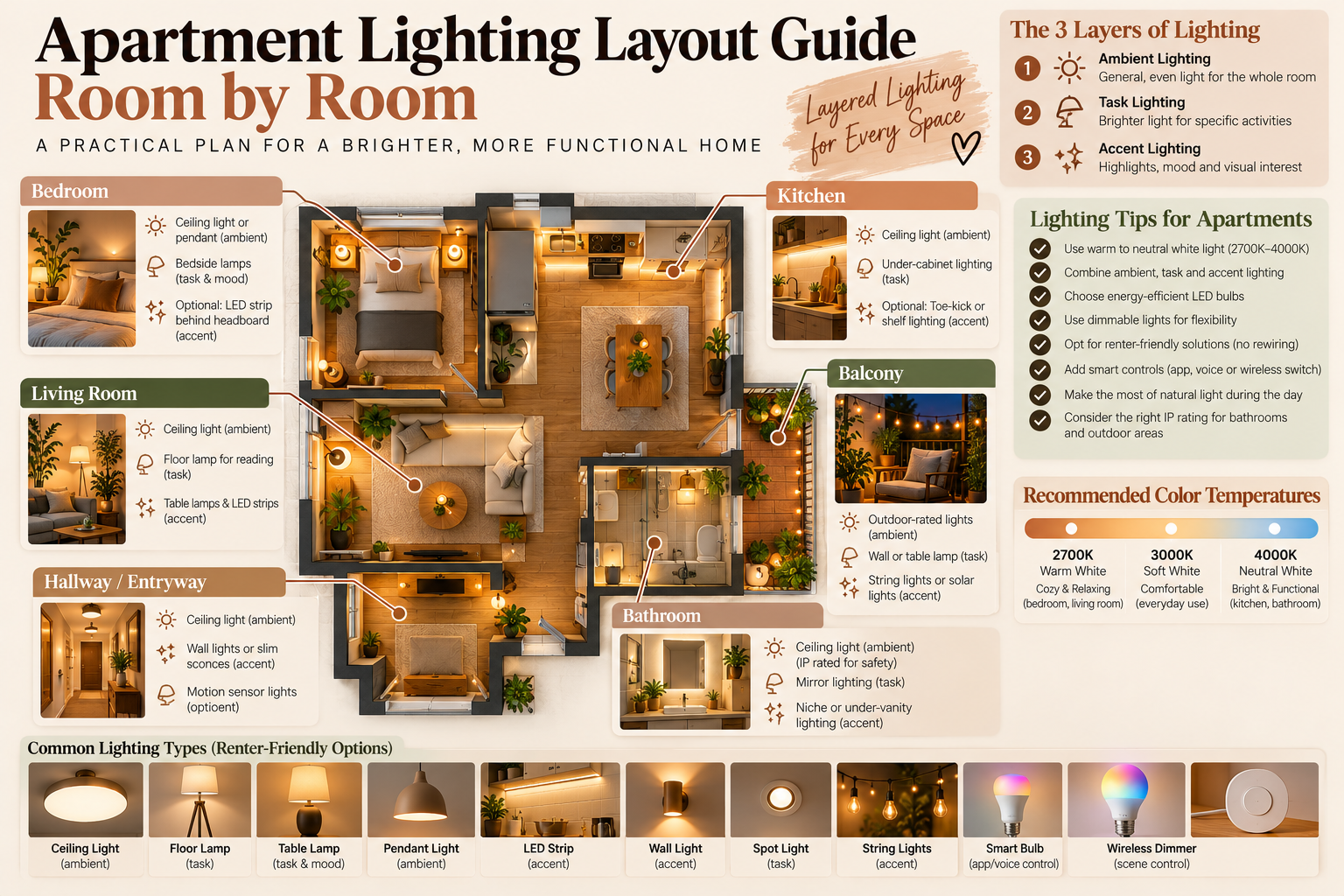
Start with the activity each space needs to support. A small apartment rarely benefits from one overly bright fixture in every room; portable task and accent lights create more useful layers without altering permanent wiring.
Living Room: Layer Ambient, Task, and Accent Lighting
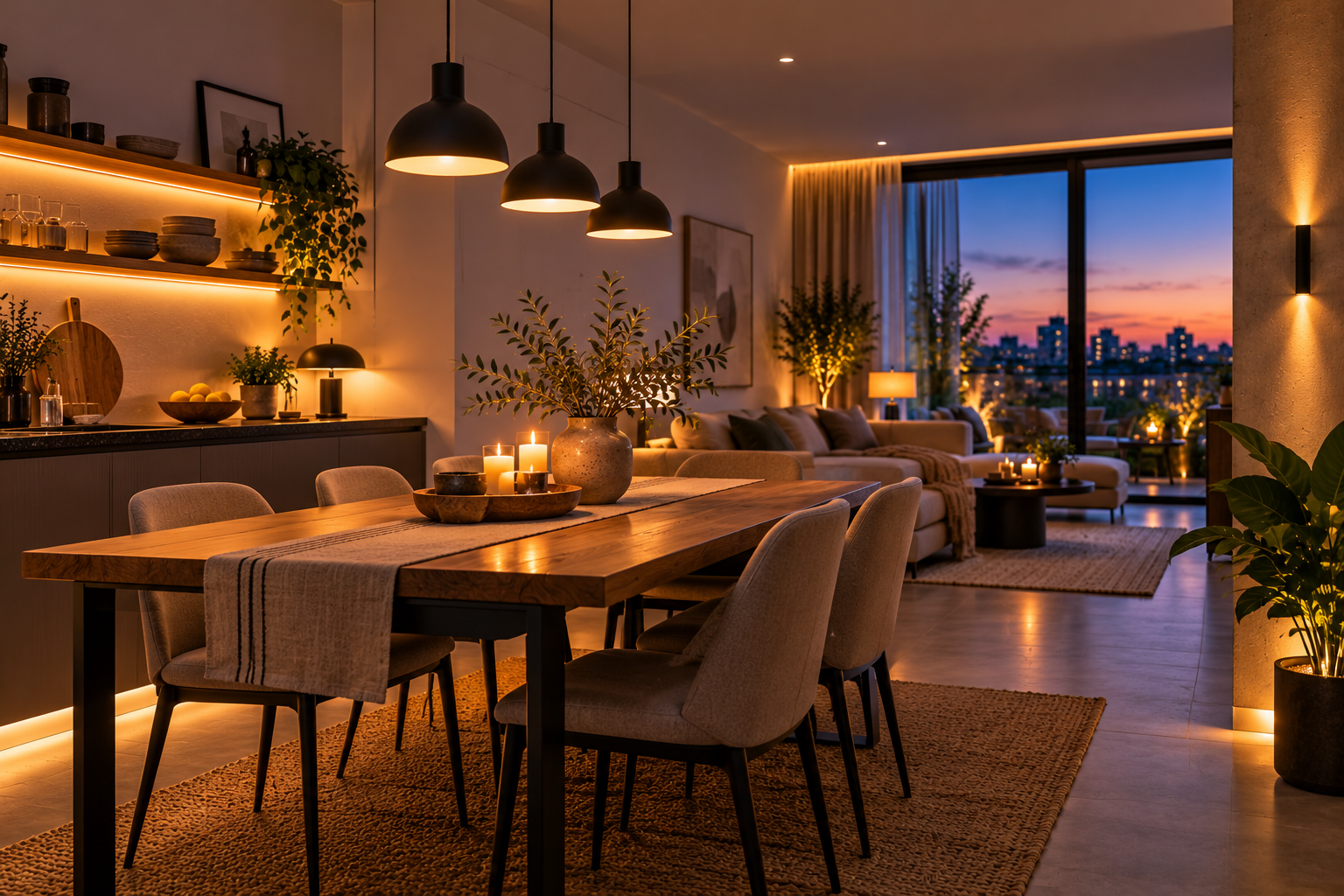
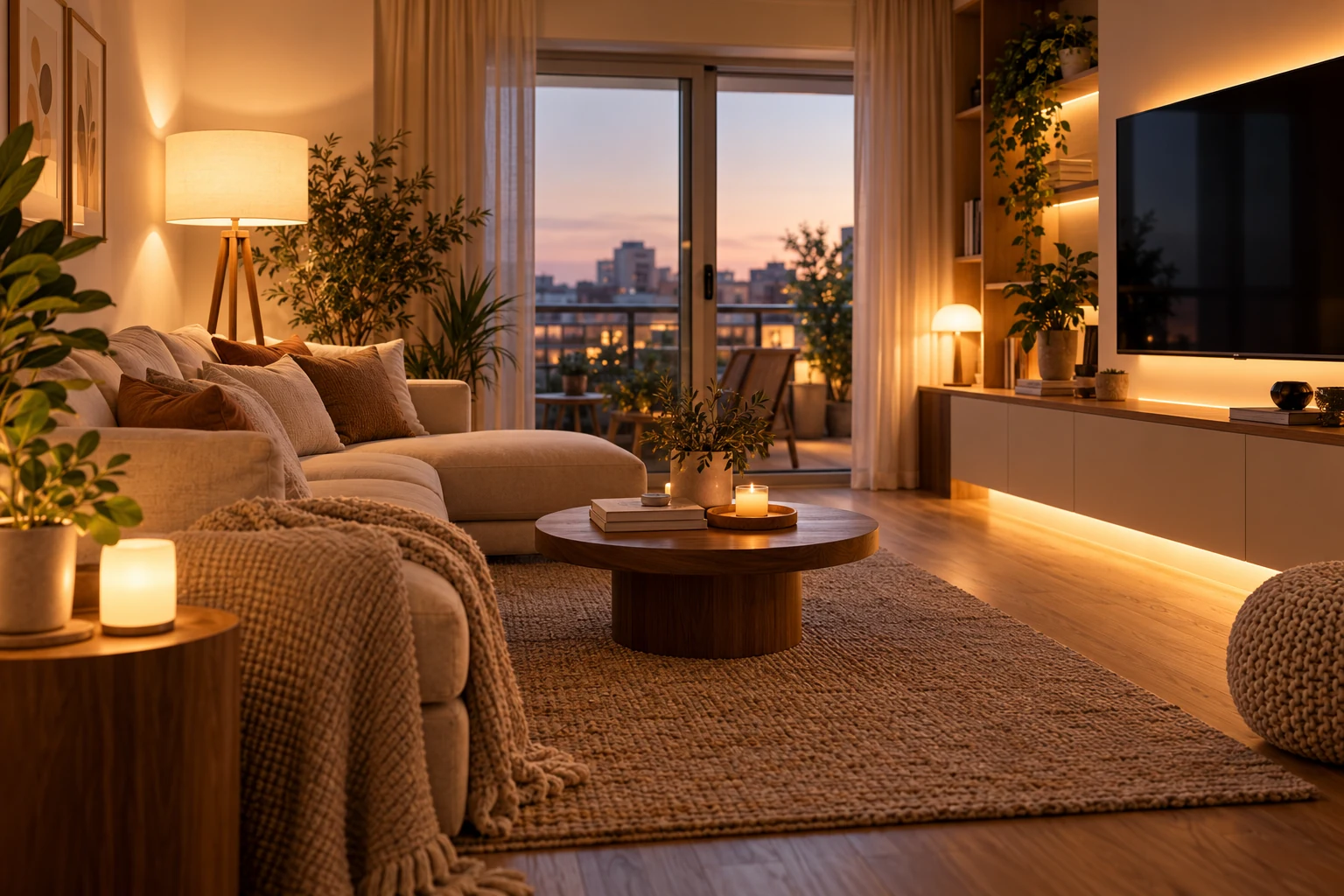
Start with an existing floor lamp or table lamp that provides comfortable ambient light. Add a focused reading lamp beside a chair and, if useful, a restrained strip behind the television or a bookshelf. A smart plug suits a lamp that needs on/off scheduling, while a compatible smart bulb is a better fit when you want adjustable brightness or white tone. Aim for three useful scenes: everyday, reading, and evening relaxation. Avoid positioning exposed bulbs directly in sightlines from the sofa.
Bedroom: Warm Light and Convenient Bedside Control
Use a dimmable, compatible bedside smart bulb to switch between a brighter getting-ready scene and low, warm evening light. If you want physical control, choose a wireless button explicitly compatible with the bulb or hub. Rechargeable wall sconces can add atmosphere without electrical work, but check whether they actually support app automation; many are remote-controlled rather than smart. Keep charging access practical and avoid hazardous loose cables near the bed.
Kitchen: Prioritize Safe Task Lighting
Light the preparation area rather than relying entirely on an overhead ceiling lamp. A manufacturer-approved plug-in under-cabinet LED kit can help illuminate a worktop where cabinets cast shadows. Check heat, moisture, cleaning and mounting requirements carefully. For color, many people prefer a neutral white when chopping or cooking, but choose according to visibility and your kitchen’s finishes. Never improvise electrical wiring or mount unsuitable lighting immediately beside a stove or sink.
Hallway and Entryway: Keep the Route Clear
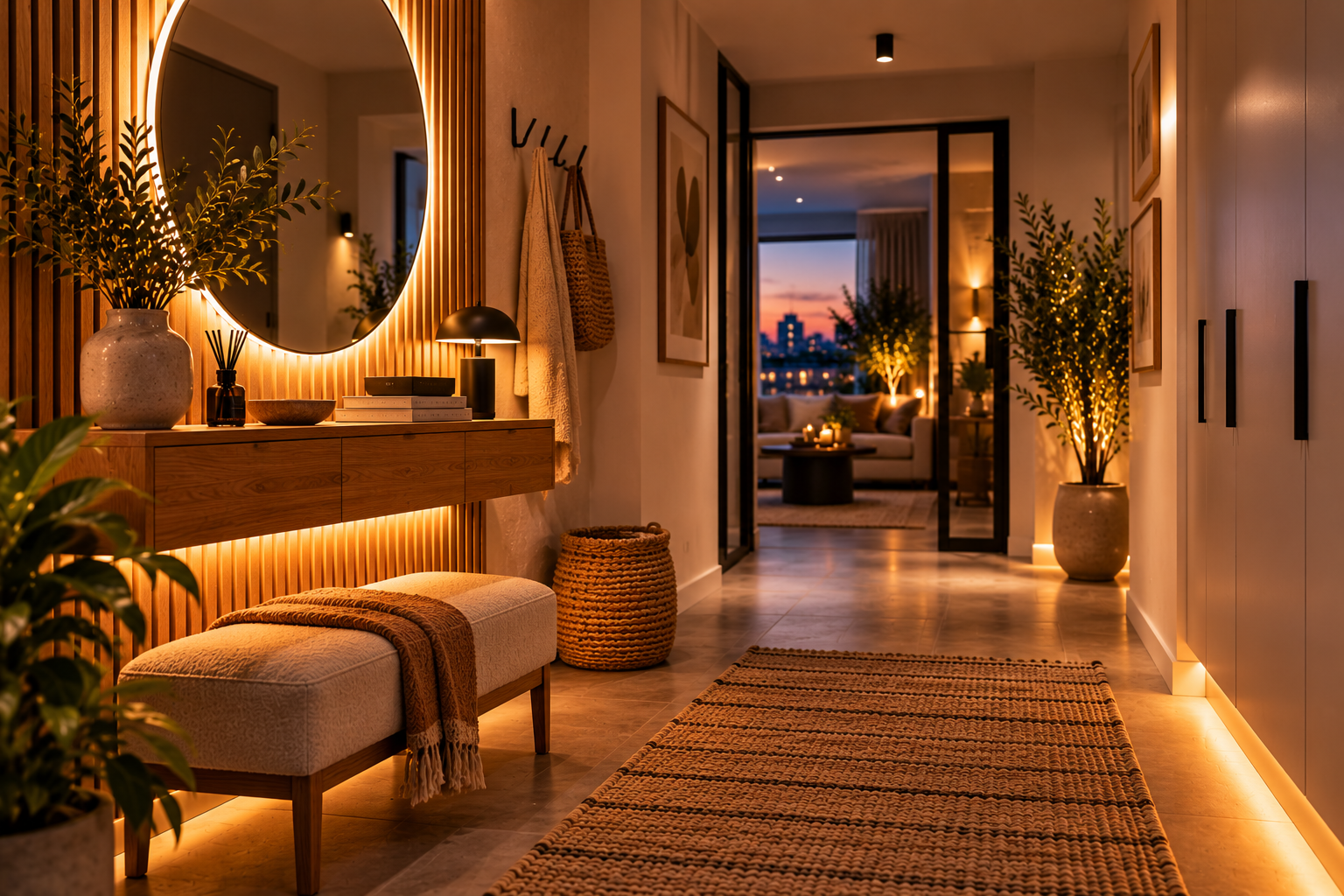
A suitable low-level motion-sensor night light can help navigation after dark. Ensure the sensor does not leave essential circulation routes unexpectedly dark. Place compact lights where they will not obstruct doors, become trip hazards, or interfere with exits. In many apartments, a simple battery night light is more appropriate than a complicated cloud automation.
Home Office: Illuminate the Work, Not the Screen
Use an adjustable task lamp and a compatible smart bulb or integrated smart lamp to adapt lighting over the day. Avoid screen glare and harsh reflected light. A desk-light scene can be brighter while a nearby ambient lamp provides a gentle background in evening video calls. Smart control does not compensate for a poorly positioned lamp.
Balcony: Portable, Outdoor-Rated Lighting Without Electrical Alterations

For an apartment balcony, choose only manufacturer-rated outdoor lighting and suitable weather-protected connections. Rechargeable outdoor lamps or outdoor-rated plug-in string lights may be simpler than installing permanent fittings. Check lease rules, wind exposure, cable routes and whether any smart plug is explicitly approved for outdoor use. This image illustrates a lighting mood rather than a particular purchasable setup.
Bathroom: Moisture-Safe Lighting That Respects Electrical Zones
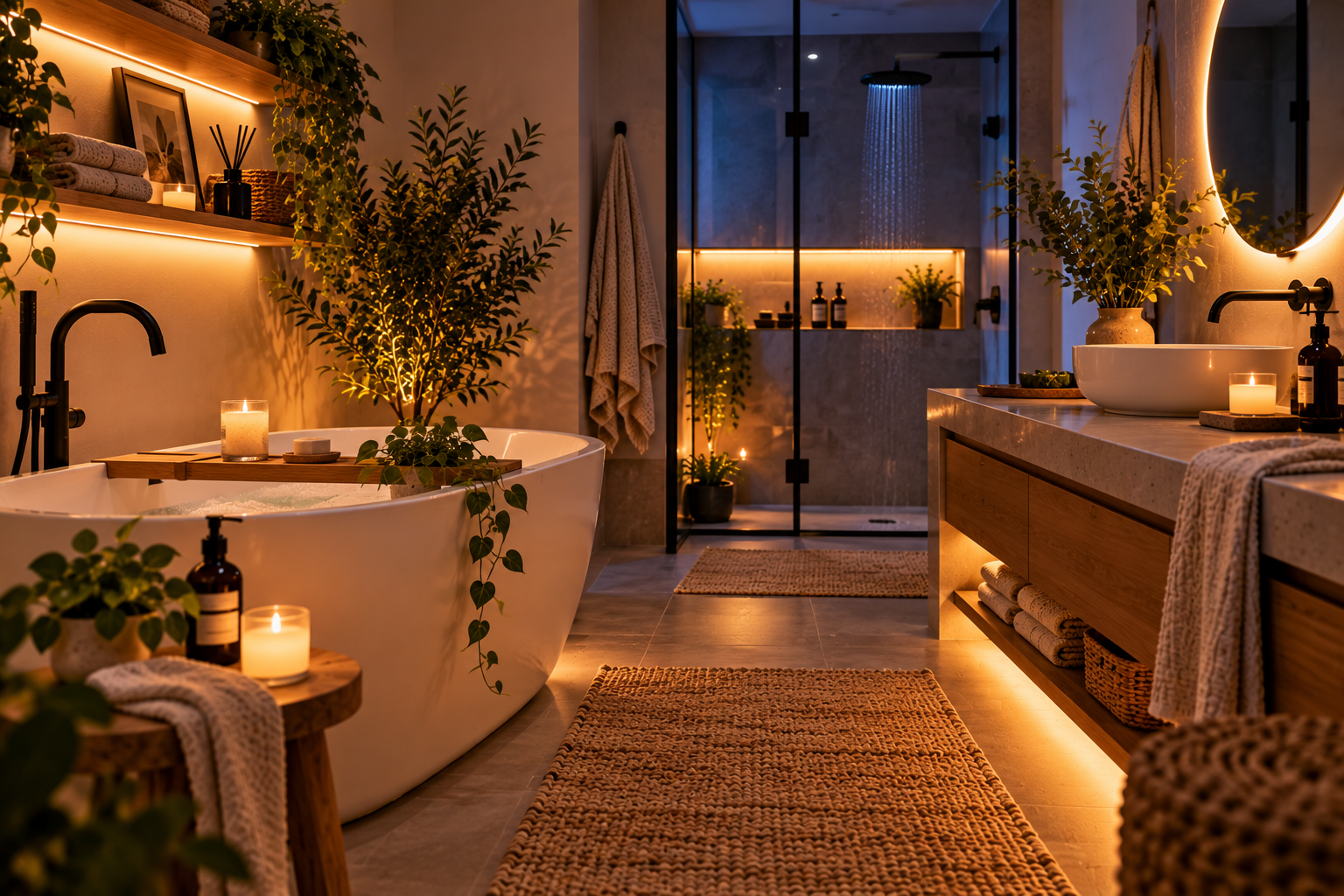
Bathroom lighting has stricter electrical safety requirements than ordinary dry rooms. Do not place standard smart plugs, portable lamps or non-waterproof strips near baths, showers or sinks. If you need an additional light, choose a solution specifically rated and permitted for its precise location and consult a qualified professional where local electrical rules require it. The photograph is inspirational: its fixed lighting details are not presented as no-rewiring installations.
Smart Bulbs vs Smart Plugs vs LED Strips: Which Should You Choose?
Comparison graphic note: Illustrated features and prices are examples, not guaranteed specifications. Smart plugs ordinarily provide on/off control only; bulb dimming and color controls, LED strip installation methods, and hub requirements differ by model. The written comparison below takes precedence when deciding what to buy.
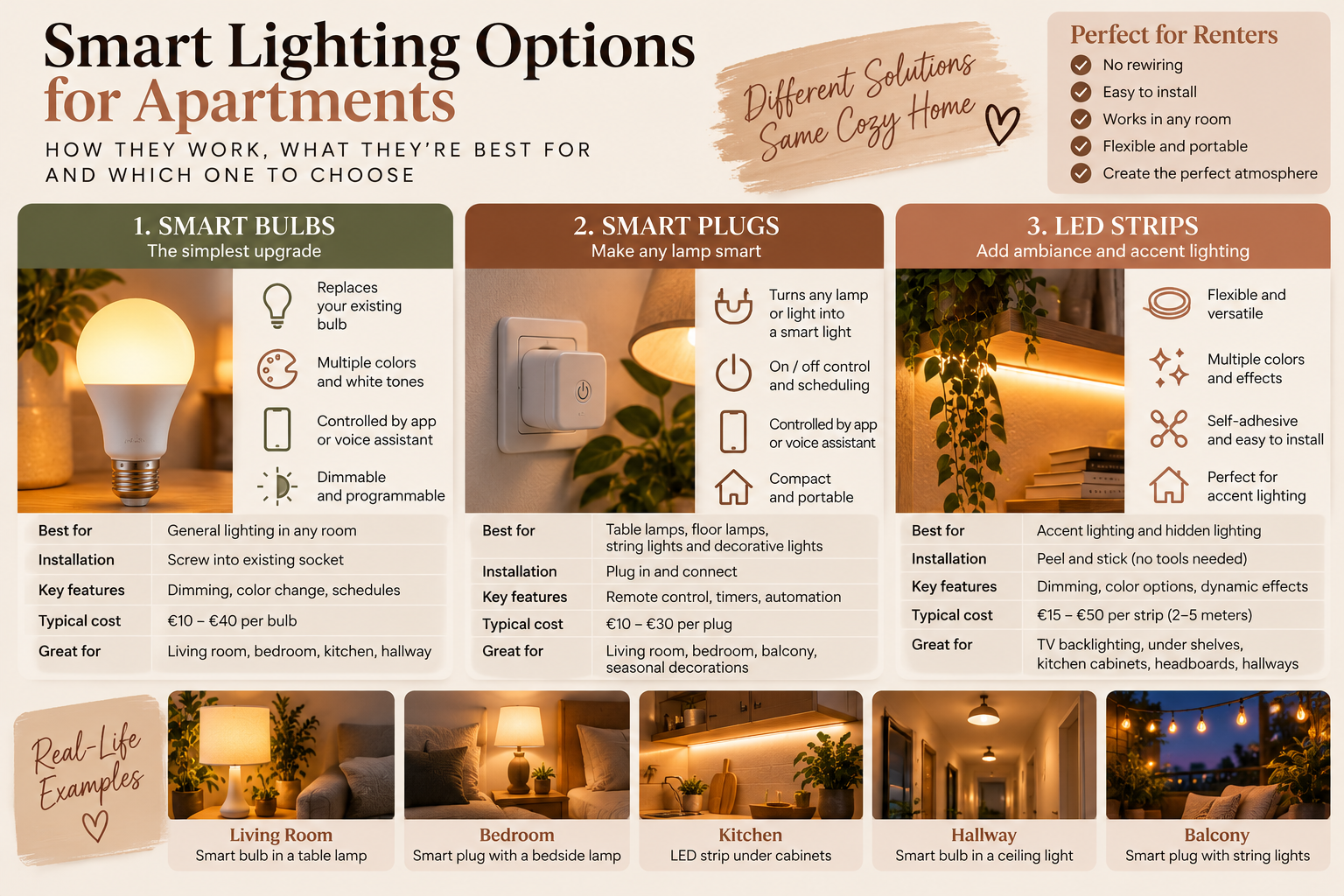
| Option | Best use | Typical control | Key limitation |
|---|---|---|---|
| Smart bulb | Existing compatible lamp | On/off; often dimming and sometimes color | Fixture compatibility and continuous power |
| Smart plug | Conventional plug-in lamp | On/off and schedules | Generally cannot dim a standard lamp |
| Smart LED strip | Accent or suitable worktop illumination | On/off; often brightness and color | Mounting, adapter, heat and moisture restrictions |
| Wireless scene button | Convenient physical control | Compatible scenes and shortcuts | May require a specific hub or ecosystem |
| Motion night light | Low-level route lighting | Automatic sensing | Many models are not smart-home connected |
The simplest choice: buy a smart bulb if you need to dim or adjust the actual light, a smart plug if you only need an existing lamp to switch on and off, and a strip if the priority is indirect accent lighting. Check each exact product’s stated capabilities before purchasing.
Kelvin, Lumens, and CRI: A Simple Lighting Cheat Sheet
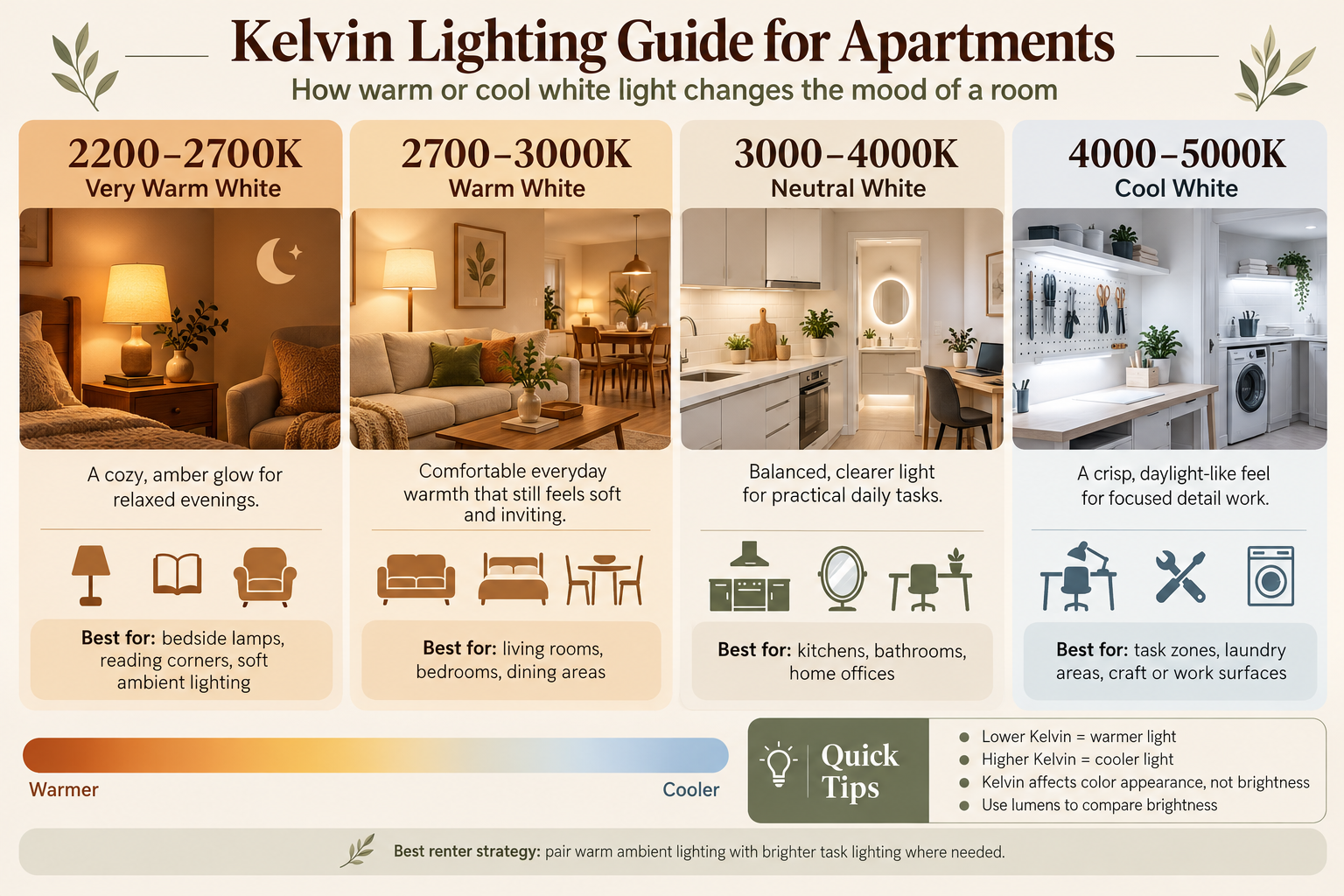
Kelvin (K) describes how warm or cool the white light looks. Lower values are generally warmer or more amber; higher values are cooler. Lumens (lm) describe emitted light output, while watts (W) indicate electrical power consumption. Compare bulbs using lumens rather than assuming higher watts mean brighter light. CRI is a color-rendering measure: when accurate appearance of food, textiles, and finishes matters, look for a higher-quality light source with suitable documented color rendering.
| Color temperature | Visual impression | Possible application |
|---|---|---|
| 2200–2700 K | Very warm / cozy | Evening ambient lamps and relaxation |
| 2700–3000 K | Warm white | General living-room and bedroom light |
| 3000–4000 K | Neutral to cooler white | Some kitchen and office task lights |
| 4000–5000 K | Cool / daylight-like | Selected detail tasks, depending on preference |
These are design guidelines, not mandatory standards for each room. The direction, brightness, diffusion, time of day and personal preference are just as important as the Kelvin rating.
| Approximate bulb output | Traditional incandescent comparison |
|---|---|
| 450 lumens | About 40 W equivalent |
| 800 lumens | About 60 W equivalent |
| 1,100 lumens | About 75 W equivalent |
| 1,600 lumens | About 100 W equivalent |
Comparisons are illustrative; check the actual Lighting Facts label and fixture limits. Sources: ENERGY STAR brightness guide; U.S. Department of Energy lamp specifications.
Three Starter Setups for Different Budgets
These are illustrative budgets in USD, not current verified product prices. Costs vary by region, retailer, product features and whether a compatible bridge or controller is required. Confirm local pricing and compatibility before shopping.
Starter Setup: Approximately $20–$45
Goal: make one bedside or living-room lamp more convenient. Choose one compatible smart bulb or one suitable smart plug, and reuse an existing lamp. Add a simple evening schedule. Avoid buying both unless they solve separate needs.
Comfort Setup: Approximately $50–$110
Goal: create a more flexible living room. Combine two compatible smart bulbs or one bulb plus a smart plug, and optionally add a modest plug-in accent strip. Use two scenes: brighter everyday light and a softer evening setting. Confirm everything works within your chosen ecosystem before ordering.
Whole-Apartment Starter Setup: Approximately $120–$250
Goal: cover bedside, living area, work corner and entryway. Consider several bulbs, a suitable smart plug, one accent strip, and a compatible wireless control or sensor. If a particular system requires a bridge or Thread border router, include that cost. Start room by room rather than placing one large order without testing compatibility.
How to Install a Simple Renter-Friendly Smart Lighting Setup
- Identify one existing plug-in lamp and check its socket, bulb type, fixture rating and accessible power source.
- Choose either a compatible smart bulb for adjustable light or a suitably rated smart plug for switching an ordinary lamp.
- Install the product exactly as instructed by its manufacturer; do not alter permanent wiring.
- Connect it to the required app, hub or network, following the product-specific setup guide.
- Create one reliable daily scene such as a low-brightness evening setting or a scheduled on/off time.
- Test physical switches, restarts, Wi-Fi interruptions and household-member access.
- Photograph the room after dark, reposition the lamp to reduce glare and only then expand to a second device.
Matter note: Matter is a smart-home interoperability standard, not a guarantee that every device supports every feature on every platform. Matter devices can use different underlying networks. In particular, a Matter-over-Thread product requires the appropriate compatible controller and Thread border router; check the exact device specifications before purchasing.
Frequently Asked Questions About Apartment Smart Lighting
Can I install smart lighting in a rental without asking my landlord?
Replacing a compatible bulb or using a suitable plug-in lamp usually does not alter permanent wiring. However, lease terms and local rules vary; check before attaching fixtures, drilling, modifying switches, or making any permanent changes.
Do smart bulbs work when the wall switch is turned off?
Usually not: if the switch cuts power, the bulb cannot normally receive wireless commands. Leave power available as directed by the manufacturer and consider a compatible wireless scene button for convenient physical control.
Is a smart plug the same as a dimmer?
No. A standard smart plug switches a connected lamp on or off. Only products specifically designed and approved for dimming offer dimming functionality, and the connected lighting must also be compatible.
Do I need a hub for smart lighting?
Not always. Some Wi-Fi bulbs and plugs connect directly to a suitable home network; other devices require a proprietary bridge or compatible Matter/Thread equipment. Check the exact model, router band requirements, platform and local control support.
What white-light temperature feels cozy in a living room?
Many people prefer approximately 2700–3000 K for relaxed ambient lighting, with brighter focused task lighting where needed. Color temperature controls the appearance of white light, not its brightness; use lumens to compare light output.
Can I use smart LED strips in a bathroom or outdoors?
Only products explicitly rated and permitted for the precise location. Moisture, weather exposure and bathroom electrical zones create additional risks. Do not use ordinary indoor smart plugs, adapters or strips near wet locations.
Will smart lighting still work if the internet goes down?
It depends on the specific products and configuration. Physical switching may remain available while cloud-based schedules or voice control stop. Check local-control capabilities and test the system before relying on an automation.
Can I use a regular dimmer with a smart bulb?
Not unless the bulb manufacturer specifically confirms compatibility. Many smart bulbs require uninterrupted supply power and may flicker or malfunction with conventional dimmers.
More Cozy, Renter-Friendly Ideas
For more ways to style your home around comfortable light, explore our warm lighting ideas for a cozy home, calming bedroom ideas, small home office upgrades, cozy meditation corner ideas, and small balcony inspiration.
The takeaway: Smart apartment lighting is most effective when it starts with one practical need. A compatible bulb, a suitable plug, or a well-placed accent strip can improve comfort without touching fixed electrical wiring.