
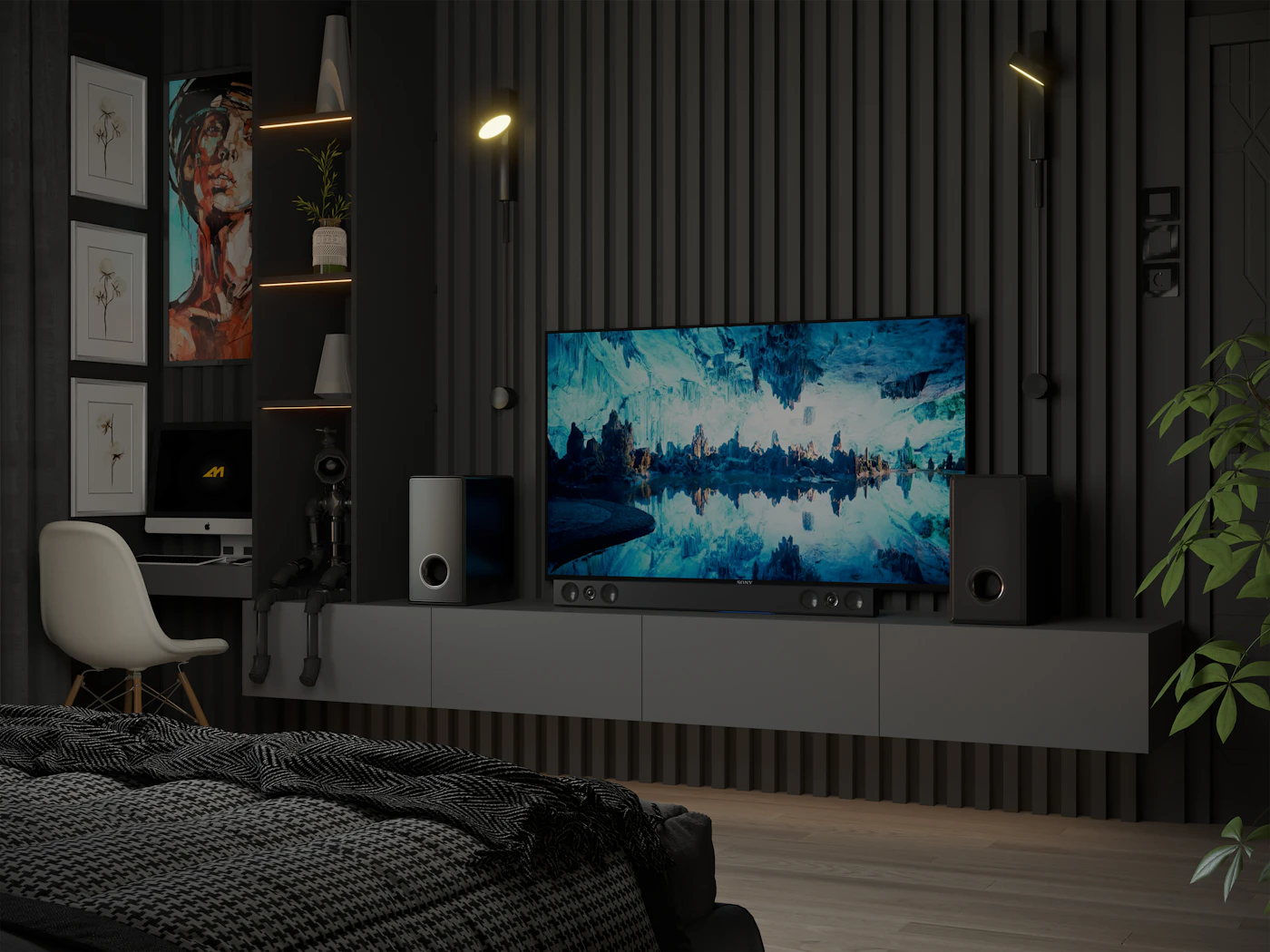
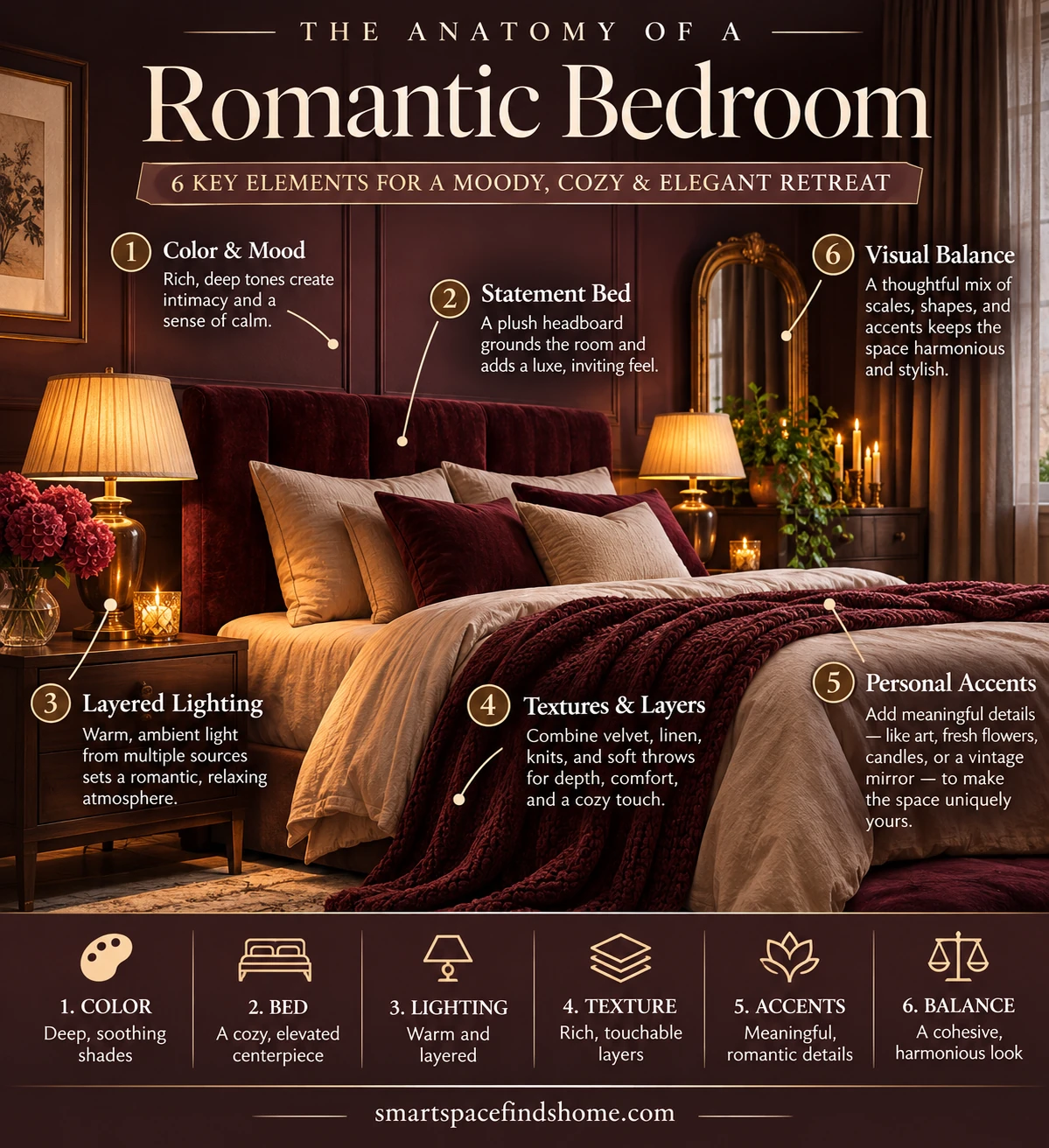
These moody romantic bedroom ideas are about more than dark walls. The most beautiful romantic bedrooms aren’t simply dark. They’re intimate, layered spaces where warm light softens deep color and every texture invites you to unwind.
Think deep burgundy against cream, olive walls beside walnut, velvet softened by cotton, and a little antique brass catching the evening light. You don’t need an enormous bedroom—or a renovation budget—to make that feeling your own.
Below, discover five moody romantic bedroom ideas you can actually recreate, plus a palette guide, small-room fixes, renter-friendly swaps, and a weekend plan that starts with what you already own.
One deep anchor + one lighter counterpoint + two contrasting textures + layered, usable lighting = a room that feels dramatic without losing its comfort.
Find the Romantic Mood That Feels Like You
The phrase dark romantic bedroom can describe anything from subtly dramatic to confidently gothic. Rather than trying to recreate an entire photo, begin with a color story. Choose a palette that suits your existing bed, flooring, daylight, and appetite for visual drama.
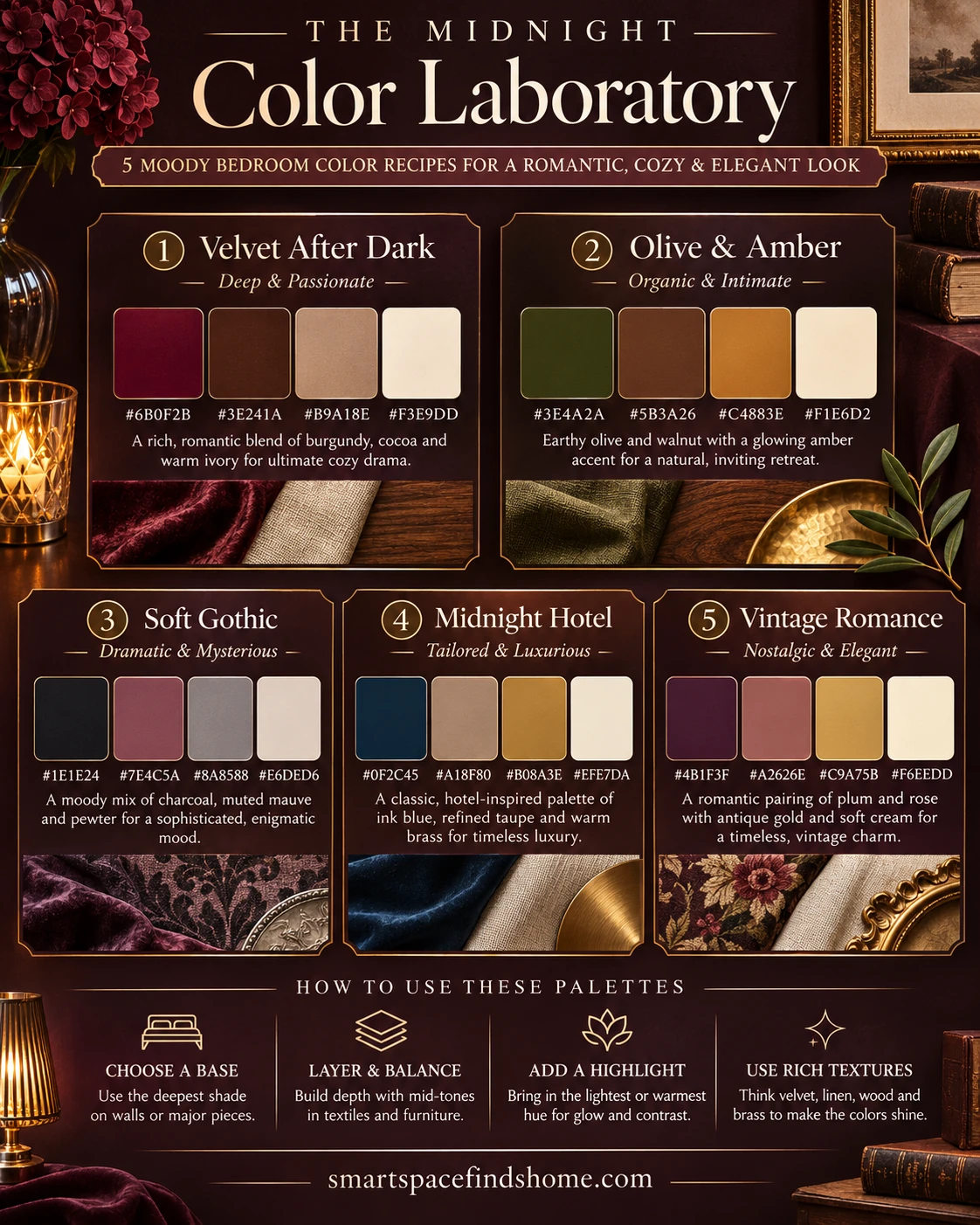
Velvet After Dark
Burgundy, cocoa and warm ivory. Best for rich bedding and relaxed glamour.
Olive & Amber
Deep green, walnut and honey. Best for organic warmth and natural textures.
Soft Gothic
Charcoal, dusty mauve and pewter. Best for understated, architectural drama.
Midnight Hotel
Ink blue, taupe and brass. Best for a polished boutique-hotel retreat.
Vintage Romance
Plum, antique gold and cream. Best for collected, characterful details.
The easy decision: If the room receives little daylight, begin with the color on a pillow or throw rather than four walls. If it has generous light and pale flooring, a saturated feature wall may be easier to balance. Test colors in the actual room; photographs and screens can shift their appearance.
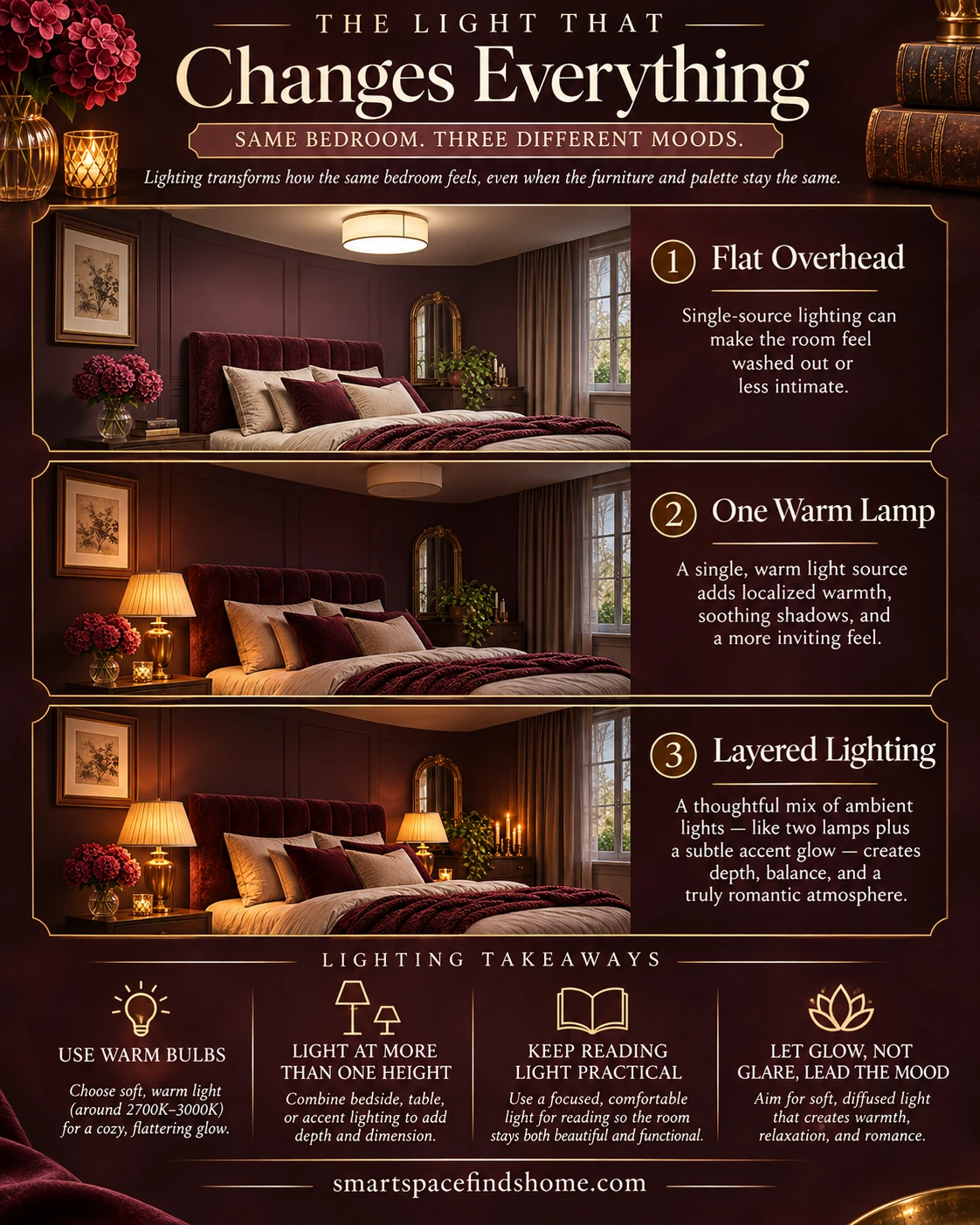
Use Pools of Warm Light to Make the Room Glow
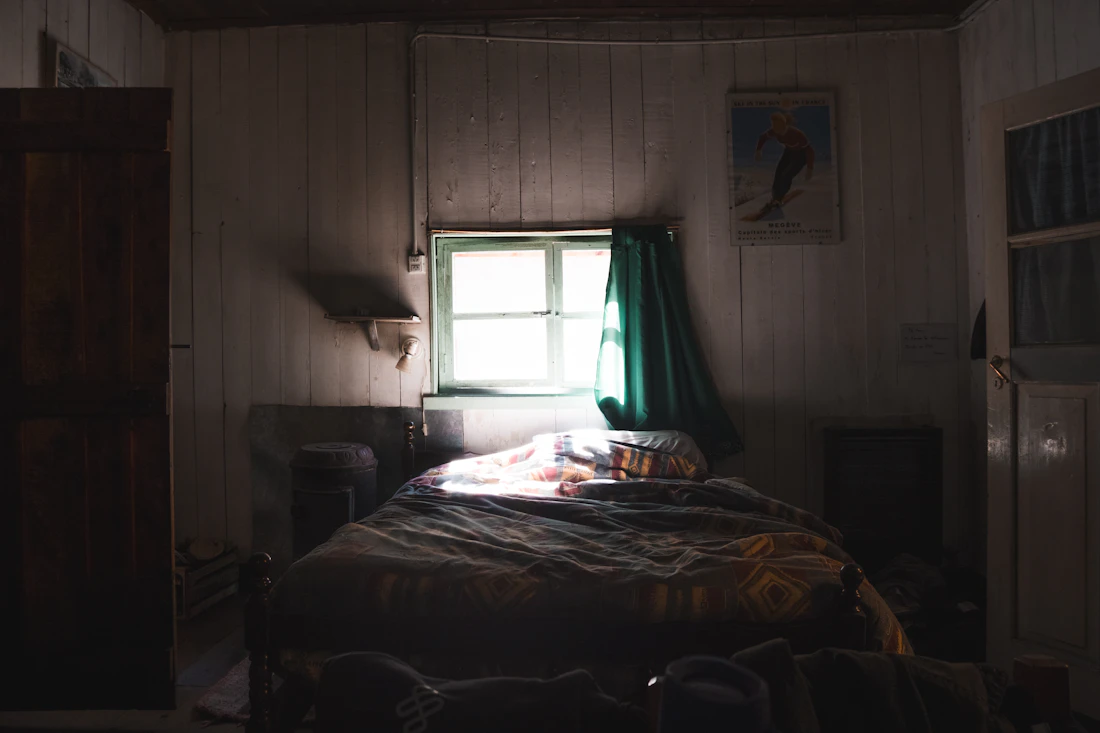
One ceiling fixture can make even a beautifully furnished bedroom feel flat. Layered light gives the space its evening personality: a shaded bedside lamp for softness, a focused source for reading, and a subtle accent that brings a favorite texture or object forward.
Start by switching off the overhead light and placing two lamps where you naturally spend time. If you share the bed, separate controls make it easier for one person to read while the other relaxes. Warm-looking bulbs often create a gentler evening effect than cool white ones, but don’t sacrifice the brightness you need for getting dressed or moving safely.
The designer’s lighting sequence
- Ambient: Use a shaded table lamp or soft ceiling fixture to orient yourself in the room.
- Task: Add an adjustable reading lamp that reaches the page without glaring into another person’s eyes.
- Accent: Illuminate one frame, textured wall or shelf—only if it adds something meaningful.
Measure the nightstand and lamp height, check bulb and dimmer compatibility, and keep cords clear of the route around the bed. Plug-in sconces can work in rentals where mounting is allowed; verify your lease and wall type first.
For a more detailed small-room styling approach, see our cozy bedside table styling ideas.
Let Burgundy, Plum or Olive Lead—Then Give Them Space
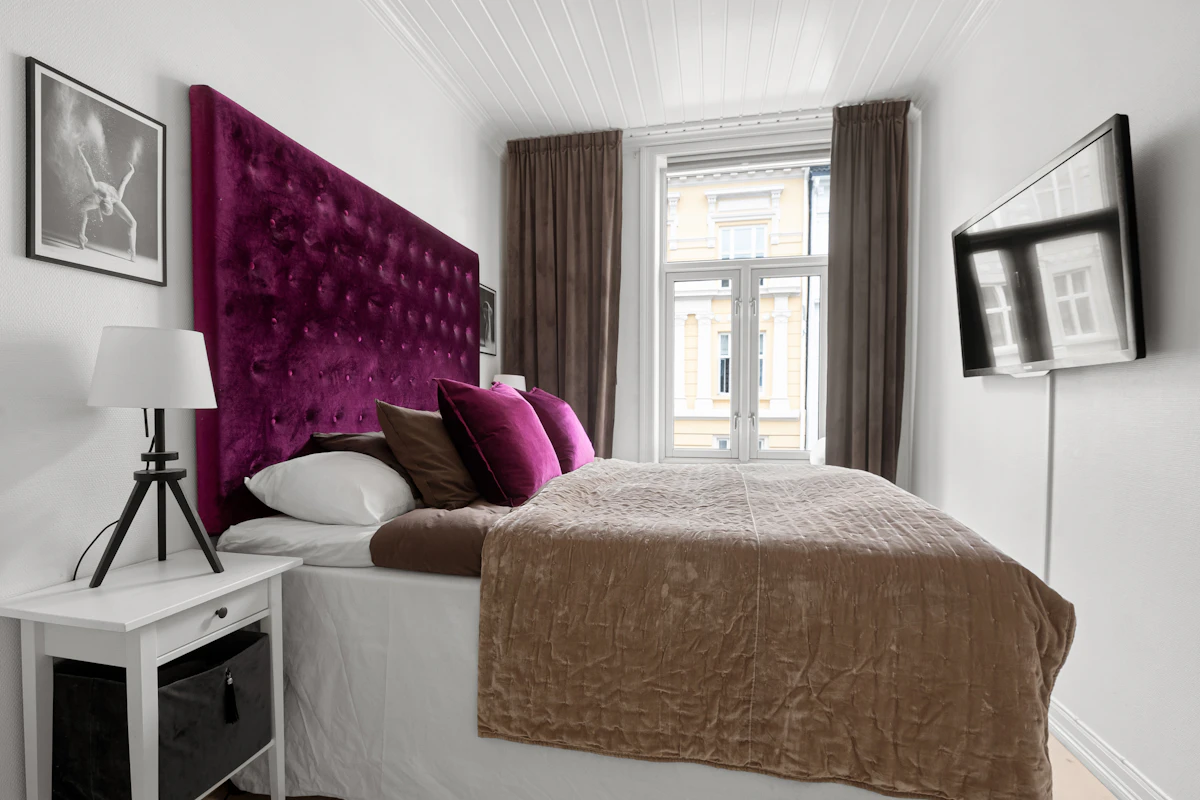
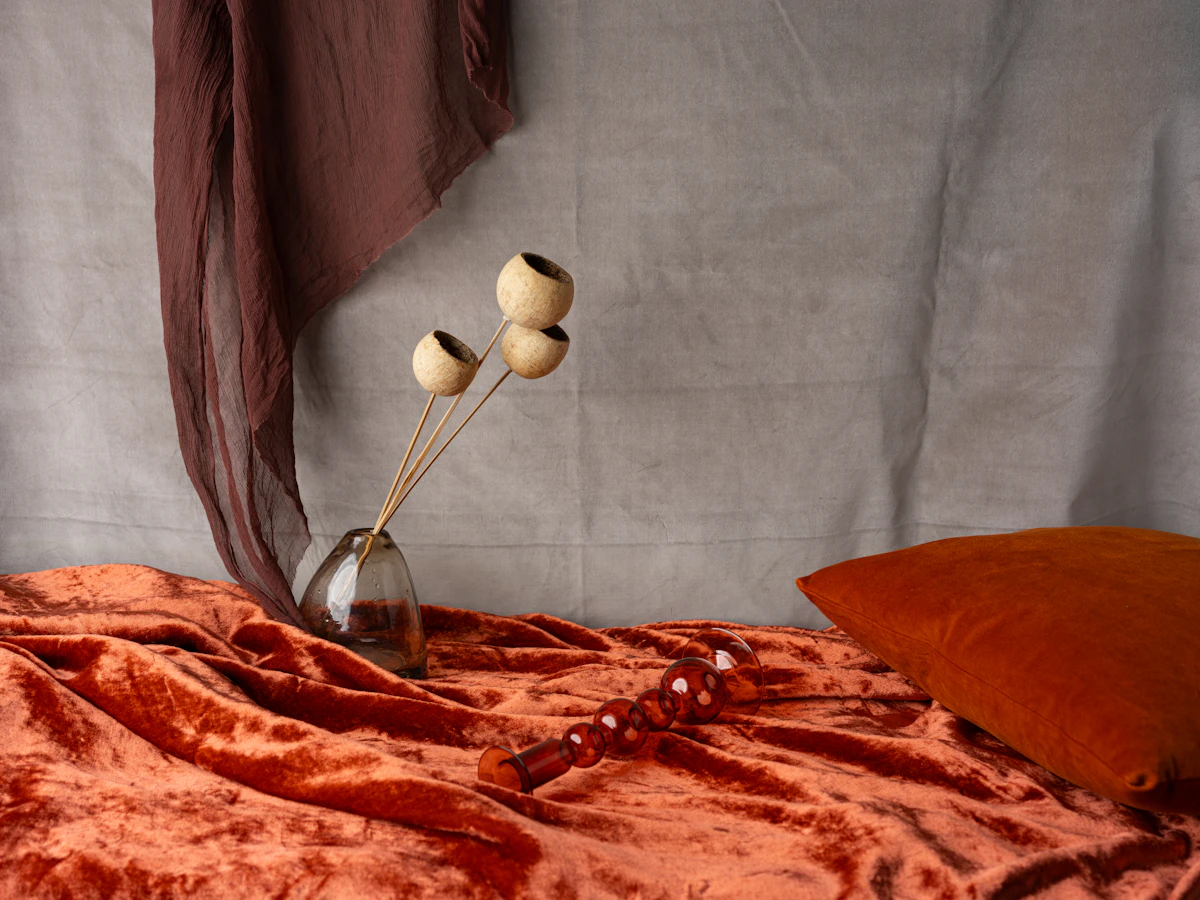
The difference between sophisticated and oppressive is usually contrast. A burgundy duvet looks more intentional against an ivory sheet; an olive wall feels warmer beside walnut; a charcoal headboard stands out when pillows aren’t equally dark. Avoid spreading a single near-black tone over every large surface.
Three pairings worth testing
| Deep anchor | Balancing element | Accent detail |
|---|---|---|
| Burgundy or oxblood | Ivory duvet or warm white sheets | Aged brass and dark walnut |
| Plum or aubergine | Oatmeal linen or pale stone | Soft mauve art |
| Smoky olive | Cream or sand bedding | Amber glass and medium wood |
Renter-friendly alternative: Use a saturated duvet cover, throw, large artwork or washable curtains instead of repainting. Choose one dark anchor and repeat a hint of it in another small element. This creates rhythm without making everything match.
Before committing to paint: View sizable samples near the bed and the window in morning, afternoon and lamplight. Undertones can shift dramatically; choose for your room, not the product photo.
If you want help extending the scheme beyond one room, explore how to choose a color palette for your home.
Layer the Bed Like a Boutique Hotel, But Make It Livable
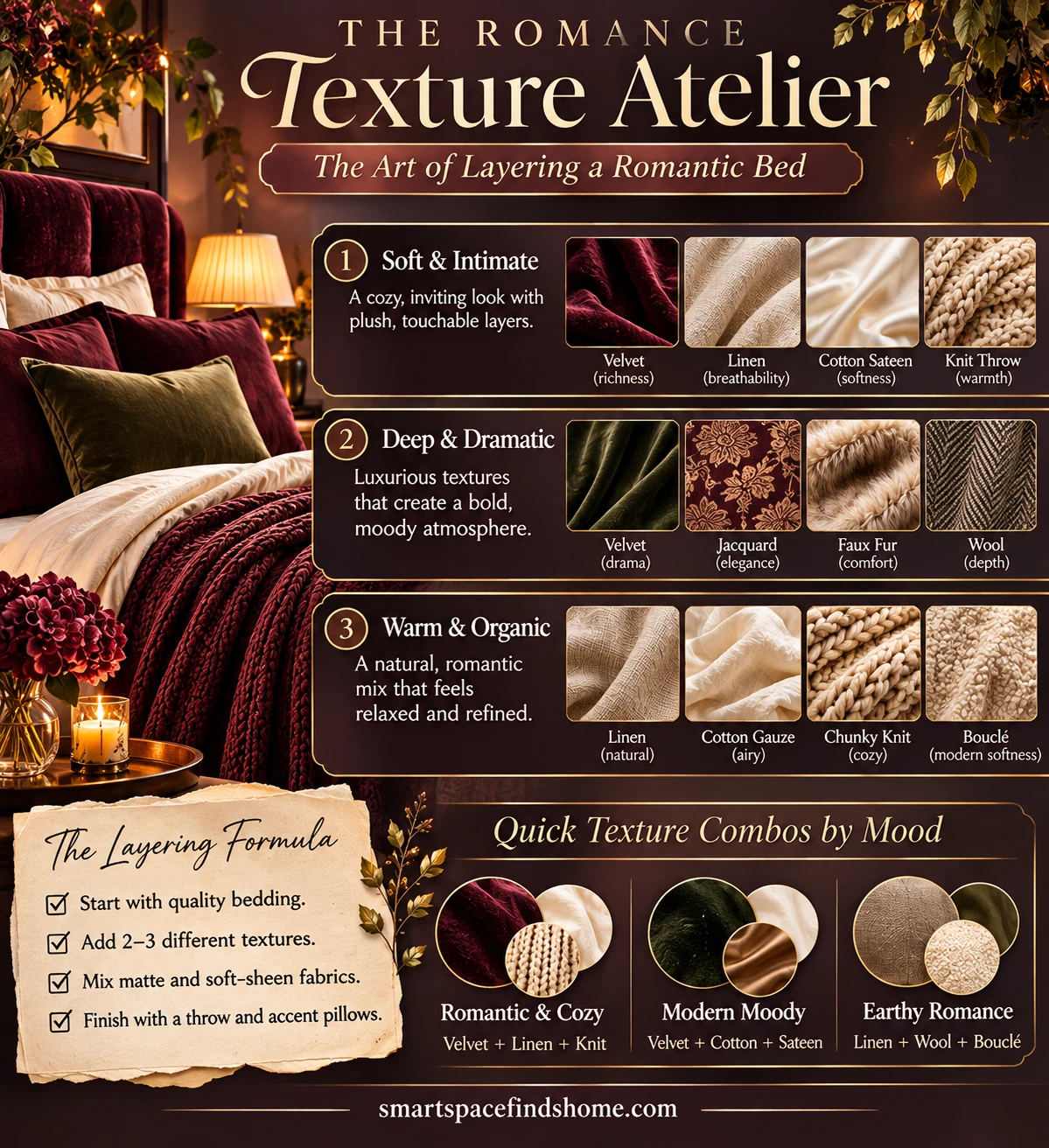
Moody bedroom decor comes alive when the fabrics differ. The contrast of smooth cotton, softly rumpled linen, a nubby quilt and a velvet cushion makes a bed look inviting even when the color palette is restrained. More layers don’t always mean more luxury; too many decorative pillows can make a small bedroom feel cluttered.
A three-layer bedding formula
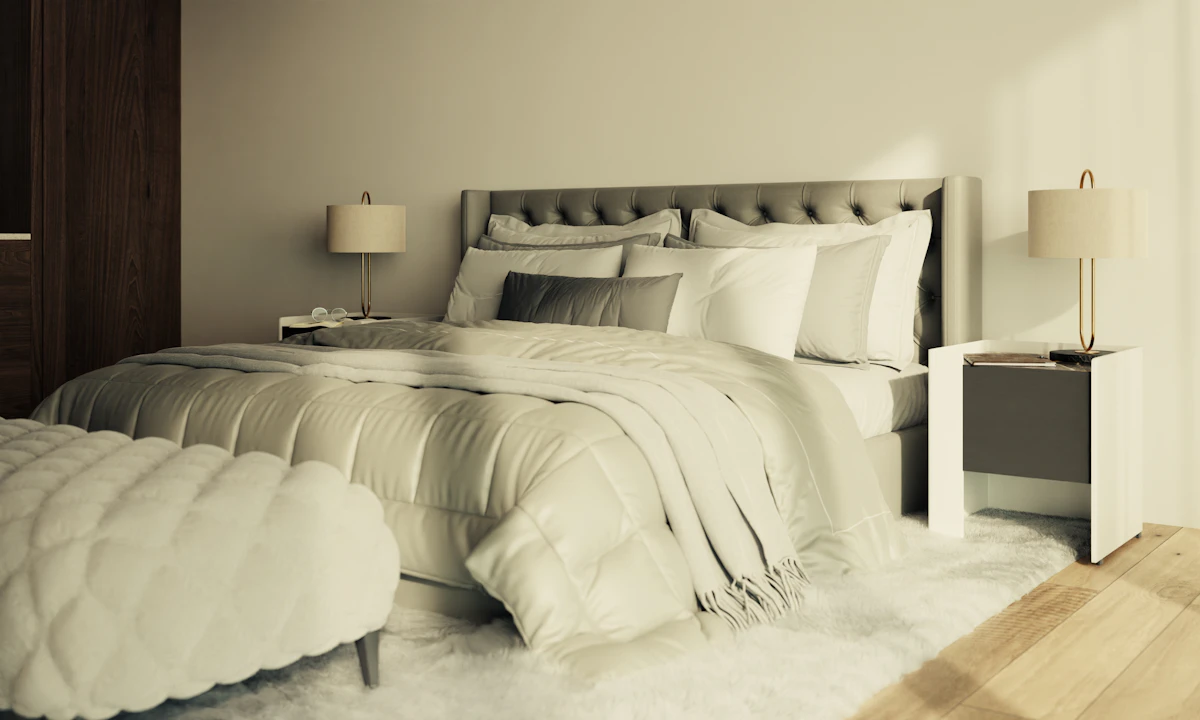
- Comfort first: Begin with breathable everyday sheets and a duvet suited to your room temperature.
- One tactile layer: Fold a cotton quilt or textured throw at the foot of the bed.
- One romantic accent: Introduce one or two velvet or embroidered pillow covers in your darker shade.
For the most effortless result, mix matte and softly lustrous finishes, but limit competing patterns. Choose machine-washable or easily maintained fabrics where possible, particularly when pets use the bedroom.
Keep the bed visually generous without adding bulk. A narrow folded throw and two accent pillows can give texture while leaving the bedside route and laundry routine simple.
See our complete luxury bedding layering guide for small bedrooms for deeper fabric and arrangement ideas.
Introduce One Vintage-Inspired Detail With a Story
Romance is often created by a single detail that looks as if it was discovered rather than ordered as a matching set. A softly tarnished brass frame, a curved mirror, a dark wooden nightstand or botanical artwork brings dimension to a contemporary bedroom.
Choose your focal point before adding accessories. A framed print can look exceptional beside a simple linen shade. An ornate mirror might be enough on its own. Repeat the material once—for example, a brass frame echoed by a lamp base—to create a composed look without overcrowding the room.
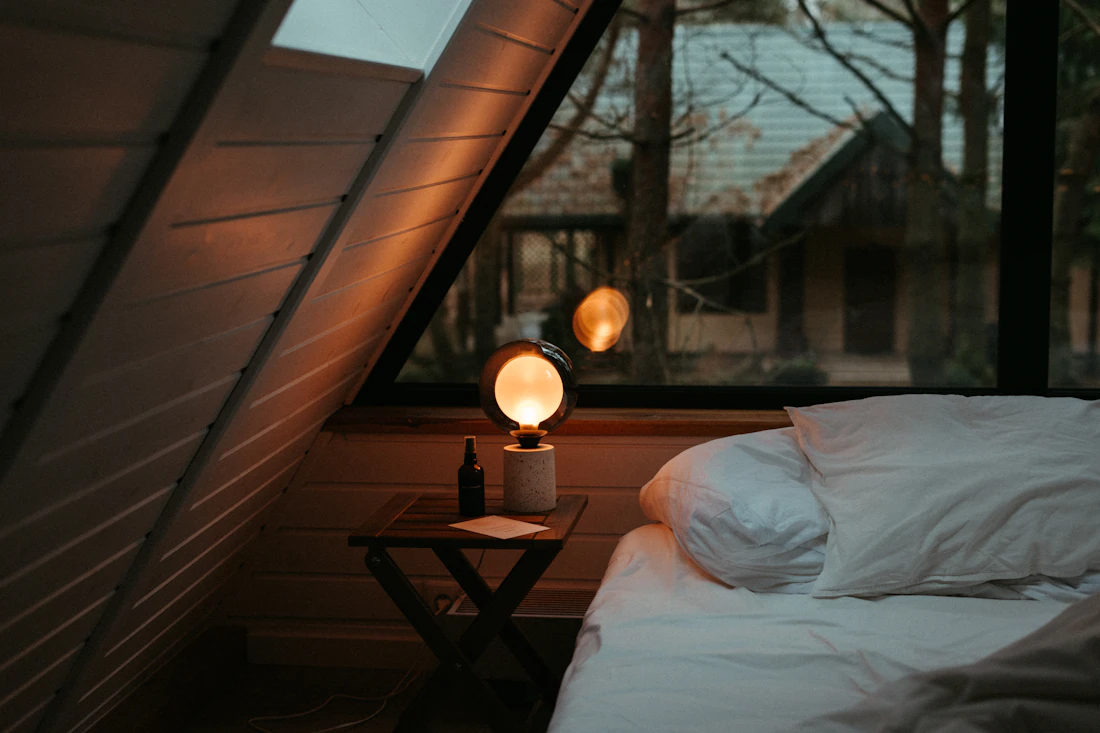
The two-object vignette

Try pairing one framed work of art with one useful bedside object such as a tray or small lamp. Leave breathing room around both. If your bedroom already has traditional furniture, contrast it with clean bedding instead of introducing still more ornament.
Keep heavy framed items securely mounted and away from positions where they could fall onto the bed. For a broader collected-home approach, visit our vintage-modern decorating guide.
Keep the Romance. Lose the Clutter.
A moody bedroom should be easy to live in at 7 a.m. as well as beautiful at 9 p.m. Accessible light switches, a reachable nightstand, practical storage, breathable bedding and safe walking paths aren’t compromises—they’re part of good design.
Before adding decor, clear one surface and test how the room functions. Can you set down water and a book? Can you open drawers without hitting a chair? Are charging cables out of the way? Does the window treatment provide privacy and the darkness you want for sleep?
A ten-minute evening reset
- Put away loose clothes and relocate objects that don’t belong on the nightstand.
- Fold the throw, smooth the bedding and leave everyday essentials accessible.
- Switch to your preferred evening light and check that the route to the door stays clear.
For a candlelit look without the fire risk near fabric, use flameless LED candles. A dramatic room works best when its beauty doesn’t add a daily maintenance burden.
For related inspiration, read how to make a small bedroom feel like a boutique hotel.
How to Place Romantic Lighting Around the Bed
A romantic atmosphere is easier to create when light comes from different positions rather than from one bright source. Use this simple bedside planning diagram as a starting point, then adapt it to your actual outlets, furniture and reading habits.
Sit where you normally read. Can you comfortably see a page? Can you reach a switch without getting out of bed? Can you move safely to the doorway? A beautiful setup should pass all three questions.
Five Mistakes That Make a Moody Bedroom Feel Heavy
| Common mistake | The better editorial choice |
|---|---|
| Every large surface is dark | Introduce cream, taupe or another warm light counterpoint. |
| Only one overhead light | Use an accessible bedside light plus focused task lighting. |
| All fabrics have the same finish | Combine one smooth, one textured and one subtle accent fabric. |
| Too many ornate details | Choose one meaningful vintage-inspired focal point. |
| Decor blocks real-life use | Keep the nightstand, walkways, switches and drawers accessible. |
A useful edit: Take one photograph of your bedroom during the day and another after dark. Compare the balance of bright and deep areas, whether the bed still looks inviting, and where clutter collects. Change one variable before photographing it again.
How to Make a Small Bedroom Moody Without Making It Feel Smaller
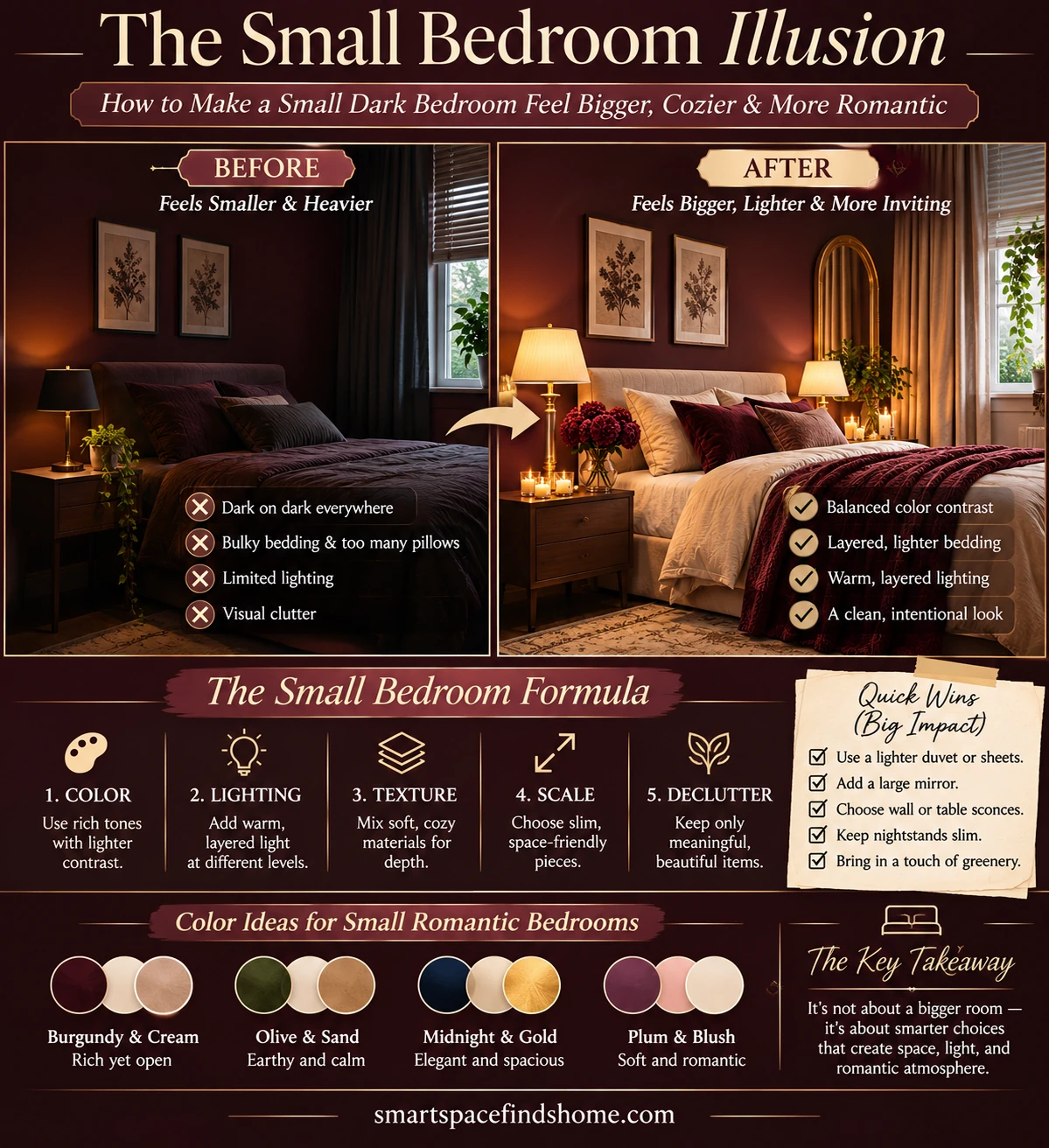
The goal is not to avoid deep colors. It’s to control where the eye rests. A room can be intimate and dramatic while staying visually open when the bed remains its clearest focal point, the floor stays unobstructed and each decorative detail earns its place.
Keep a light landing place
Let a cream duvet, pale curtains or existing light flooring break up darker walls and textiles. A single light surface can bring relief to a richly colored room.
Make nightstands work harder
Choose compact surfaces with enough space for essentials. If a floor lamp or extra chair blocks circulation, it doesn’t belong in the plan.
Go tall, not busy
Choose one larger piece of art instead of many small frames. Place it where it feels balanced and mount it securely away from sleeping positions.
Stand in your doorway. Can you identify a single focal point? Is there a clear line of sight to the bed and a safe path around it? If yes, your darker accents have room to breathe.
For another approach to compact bedroom design, see how to make a small bedroom feel like a boutique hotel.
Moody Romantic Bedroom Ideas for Renters—No Painting Required
Deep color can be a mood, not a permanent renovation. When walls must stay neutral, concentrate on surfaces that can travel with you: bedding, curtains that fit an approved rod, portable lamps, and carefully selected framed art.
Use a large textile as the visual anchor. Keep bedding sizes and laundering requirements in mind.
A shaded table lamp creates a similar softness without hardwiring. Route cords safely.
A freestanding mirror, small frame or decorative tray can add character. Check rental rules and stability.
Moving one lamp, editing clutter and layering existing fabrics can noticeably change the mood.
Important: Removable adhesives are not damage-free on every finish. Test an inconspicuous spot and check your lease before mounting art or window treatments.
The Mood, Texture & Light Design Board
Use these three visual layers to build a room that feels deliberately composed. They are not a shopping checklist; begin with objects you already have.
01 / Mood
Depth + relief
One deep color feels stronger when paired with a neutral surface.
02 / Texture
Matte + tactile
Build contrast with one smooth fabric, one tactile layer and one accent finish.
03 / Light
Glow + clarity
Use warm ambience while preserving enough light for reading and safe movement.
Try the one-variable rule: Photograph the room, change just one thing—light, color or texture—then photograph it again. Compare what feels better in everyday use, not only what looks dramatic on screen.
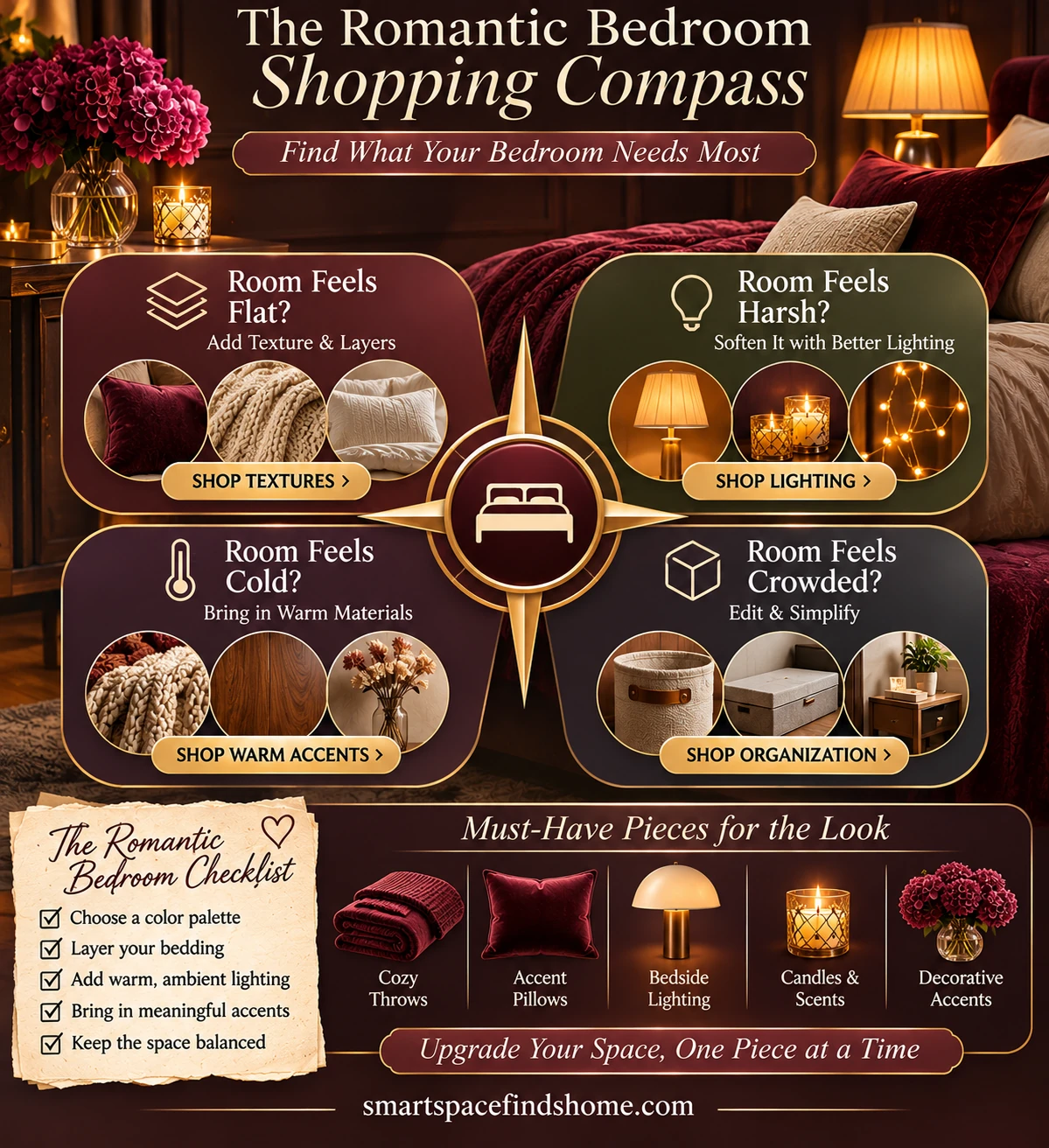
The Moody Bedroom Decision Matrix
Don’t start by shopping for a whole look. Identify the single change that would make the room more beautiful and more comfortable.
| If it feels… | Try first |
|---|---|
| Too dark | Ivory bedding plus a second usable light |
| Too flat | A textured throw and one accent pillow |
| Too busy | Fewer accessories and a smaller palette |
| Too cold | Warm-looking light, wood and matte fabrics |
| Too cramped | Compact lighting and clear floor space |
Our rule: Try a reversible change first. Buy only after you know which problem you’re solving.
A Romantic Bedroom Refresh in Three Days
You can make meaningful progress without ordering furniture or repainting a wall.
Friday — Edit your inspiration
Save three bedroom images you genuinely like. Identify their repeating features: perhaps an oxblood accent, warm pools of light or bedding that looks soft rather than formal. Ignore product labels at this stage.
Saturday — Style what you own
Reposition a lamp, clear the bedside table, fold a throw differently and test one darker fabric against your existing bedding. Photograph the room in daylight and after sunset to assess the actual effect.
Sunday — Decide what is missing
If the atmosphere is still harsh, consider a lamp. If it lacks depth, try a textile. If it feels cluttered, edit rather than add. Write down one specific purchase criterion, then compare options based on fit, comfort, cleaning and price.
Find Your Moody Bedroom Personality
Start with how you want the room to feel, not with a product list. Open the direction that sounds like you. Each offers a small, reversible first move.
♥ Velvet After Dark — rich, intimate and dramatic
Your signature: burgundy, warm ivory and walnut. Begin with one burgundy pillow cover or throw, then repeat that color in a framed print. Keep the sheets light and comfortable.
Avoid: buying a full matching set before seeing how the dark textile looks in your room.
✦ Olive & Amber — nature-inspired and quietly romantic
Your signature: deep olive, warm wood and amber light. Start with a lampshade, muted green textile or wood tray. Keep the largest fabrics cream or oatmeal.
Avoid: relying on a dim accent lamp when you also need useful reading light.
◆ Soft Gothic — sculptural, dark and minimal
Your signature: charcoal, dusty mauve and pewter. Add one dark framed print or a sculptural accent and leave surrounding surfaces uncluttered.
Avoid: oversized furniture that reduces bedroom clearance.
◈ Midnight Hotel — polished, restful and layered
Your signature: ink blue, taupe and brass. Focus on crisp everyday bedding, one beautiful throw and independently controlled bedside lights.
Avoid: decorative layers that make your daily bed routine harder.
Three Romantic Bedroom Color Recipes
Use this as an illustrative styling tool, not a rule of color science. Look at your room’s largest visible surfaces—walls, bed and flooring—before choosing little accents.
Recipe A: Light Room, Deep Romance
60% ivory · 30% warm wood · 10% burgundy. Ideal for smaller rooms or renters who want drama without dark paint.
Recipe B: The Olive Cocoon
45% olive · 35% ivory · 20% walnut. For rooms with an existing deep feature wall and enough light to keep it balanced.
Recipe C: Midnight Hotel
40% ink · 45% taupe · 15% brass and warmth. Best when the bedscape stays clean and the decorative accents remain selective.
Color percentages are meant to make choices easier. Adjust them to the existing room rather than forcing an exact count of objects.
Three Realistic Paths to a Romantic Bedroom
$0
Move a lamp, clear your nightstand, edit the bedding and restyle the artwork you already own.
$25–$75
Compare a textured throw, velvet covers, or one functional light. Choose one improvement rather than a collection of accessories.
$75–$200
Prioritize better bedding or more effective lighting. Check sizing, fit and care requirements before checkout.
These US-dollar figures are illustrative budgets, not verified prices or current Amazon offers.
Measure These Five Things Before You Buy Bedroom Decor
- Mattress size and depth: confirm dimensions against the actual duvet, fitted-sheet or cover listing.
- Nightstand width and depth: leave space for the lamp, water and other everyday essentials.
- Bedside light height: check reading-light reach while seated in your typical position.
- Curtain width and finished drop: measure from the installed rod, not merely the window frame.
- Walkway and drawer clearance: verify furniture still works with doors and drawers fully open.
Ask: Will I use it daily? Does it physically fit? Is it easy to clean? Can I return it if it doesn’t work? If you can’t answer these, don’t rush the purchase.
Moody Romantic Bedroom FAQs
Can a small bedroom look moody without feeling cramped?
Absolutely. Use deep color selectively, keep visual pathways open and counterbalance the dark elements with lighter bedding or wood. Compact bedside lamps and fewer oversized pillows help preserve space.
What colors work best for a dark romantic bedroom?
Burgundy, plum, olive, charcoal and ink blue are all options. Each benefits from a lighter partner—cream, oatmeal, taupe or warm ivory—and thoughtful lighting. The right choice depends on your natural light and existing furniture.
How can renters create a moody romantic bedroom without painting?
Try colored bedding, a textured throw, curtains where installation is allowed, portable lighting and framed art. These changes are easier to reverse than dark wall paint.
What lighting is best for a romantic bedroom?
Combine soft ambient light with a separate reading or task source. Warm-looking, glare-controlled lamps create atmosphere, while brighter functional lighting keeps the space usable.
Is a black bedroom the same as a moody bedroom?
No. Moody style is about depth, contrast and atmosphere. Deep olive, burgundy or brown can feel just as dramatic as black, particularly when layered with wood and fabric.
What should I buy first for a budget bedroom makeover?
Choose whatever solves the room’s largest problem. A lamp can improve harsh lighting, a throw can add texture and better organization can make a small room feel calmer. Avoid buying a complete matching decor set just to chase an aesthetic.
The best romantic bedroom isn’t the darkest, most decorated or most expensive. It’s the one that feels unmistakably yours—rich enough to feel special, soft enough to rest in, and practical enough for the everyday.
Shopping note: The linked products were selected for relevance to this room design guide. Some Amazon listings, variants, prices and availability may change. Please check the details on Amazon before ordering.