
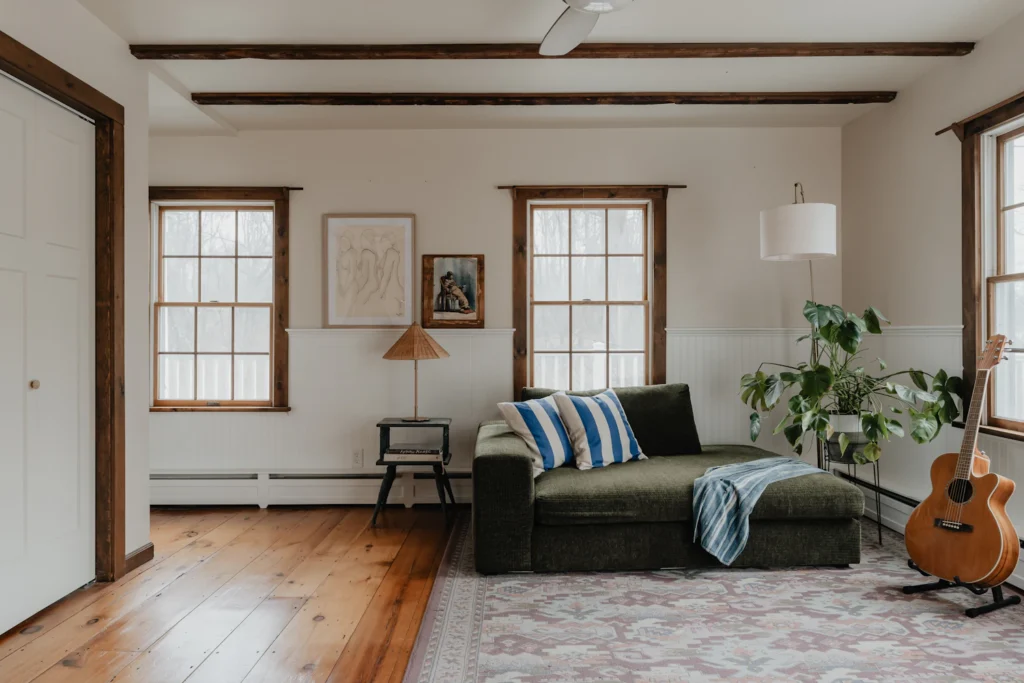
You do not have to pick a design label to create a home that feels unmistakably yours. Start with what draws you in, find the patterns, and turn them into decisions that actually work.
There is a peculiar frustration in saving dozens of beautiful rooms and still not knowing what to do with your own. One photograph makes you want a quiet, pared-back space; the next has a vintage rug, dark wood and a wall full of art. Which one is your style?
Possibly both. Finding your interior design style is less about getting a quiz result and more about understanding the colors, textures, proportions and everyday experiences you consistently enjoy. A name can help you describe that mix later. It should not dictate it.
What makes an interior feel like you?
Your decorating style is a visual language: the things you gravitate toward even when trends change. It might be the softness of washed linen, the character of dark wood, the symmetry of classic furniture, or the relaxed feeling of a lived-in room.
It also includes how you use a space. A living room for movie nights needs a different kind of comfort from one used mostly for entertaining. A small rental, a home with pets and a busy family kitchen all have practical realities that beautiful inspiration photos rarely show.
“A home with personality does not need to follow one style. It needs to make sense for the people living in it.”
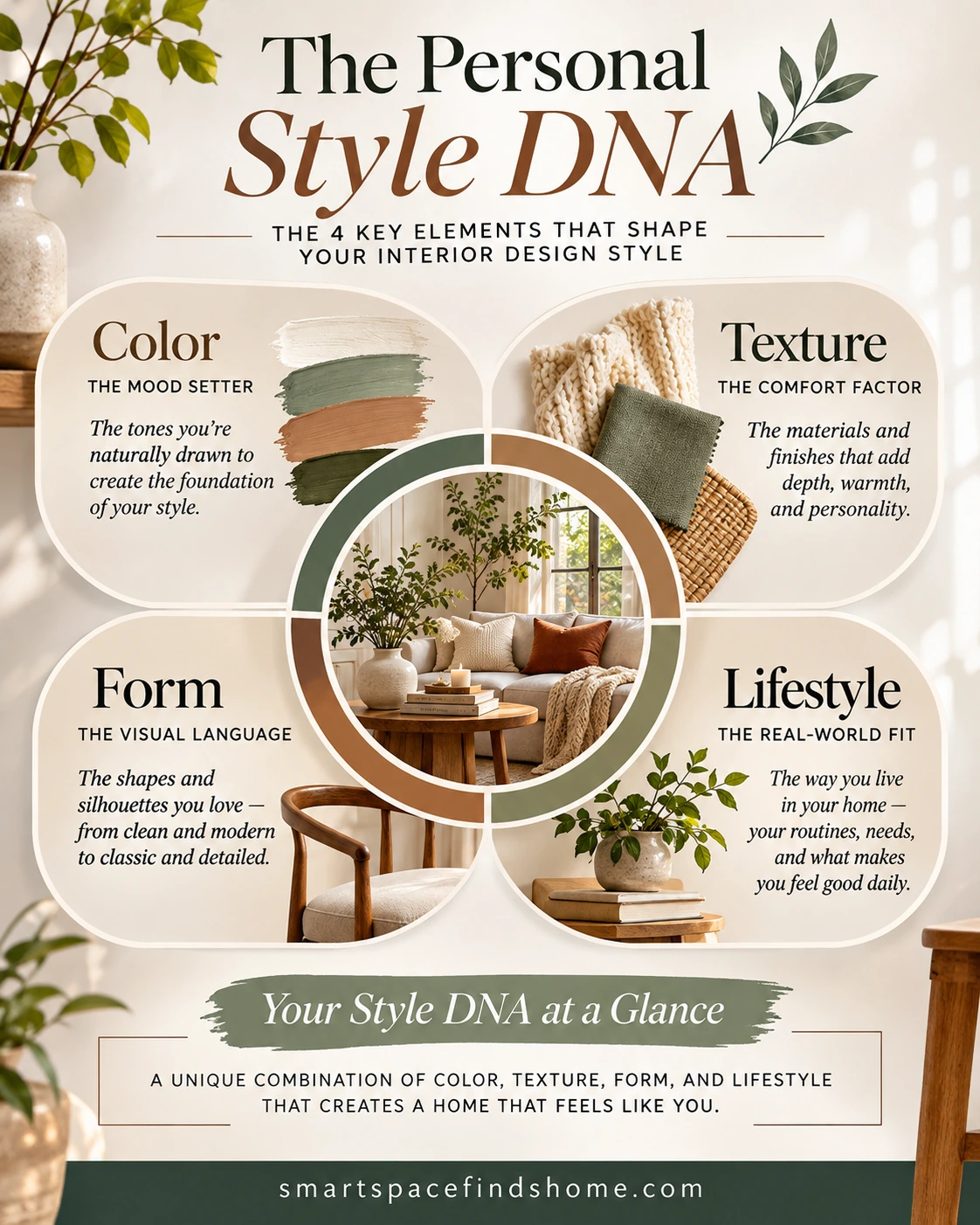
The Personal Style Compass: four clues worth following
Use these four lenses when you look at rooms you admire. Each reveals a different part of your taste.
Warm or cool? Soft and tonal, or bold and high contrast? Notice recurring colors rather than copying a complete palette.
Look for linen, velvet, wood grain, ceramics, stone, woven fibers and metal finishes. Texture is what makes a restrained room feel rich.
Do you favor curved edges or clean lines, sculptural pieces or classic proportions, delicate furniture or more grounded forms?
Consider storage, cleaning, pets, light, comfort and routine. Beautiful design must still survive an ordinary Tuesday.
Seven steps to discover your decorating style
1. Collect rooms before you collect style labels
Save around 20–30 interiors you instinctively like. Pull inspiration from Pinterest, magazines, hotels, cafés and friends’ homes. Resist naming each one “Japandi,” “coastal” or “traditional” just yet. Instead, ask whether it feels calm, layered, bright, intimate or expressive.
2. Make a small “not for me” board
Choose five to ten rooms that do not appeal to you. Perhaps the finishes feel too glossy, the space too stark or the pattern too busy. Your dislikes create useful boundaries and can prevent an expensive purchase that looks lovely online but never feels right at home.
3. Circle what repeats
Look across the images rather than studying each separately. Keep a running list of recurring details: sage green, warm oak, vintage frames, low-profile sofas, pleated lampshades, quiet walls or tactile rugs. If a detail appears repeatedly, it is a stronger signal than a single striking photograph.
4. Start with things you already own
Walk around your home and pick five objects you would happily keep even if you redecorated. It might be a pottery bowl, a wooden chair, a framed photograph or a well-loved throw. These pieces reveal a more durable preference than an algorithmic trend.
5. Write your three style words
Try “warm, collected, relaxed,” “quiet, airy, natural” or “colorful, playful, layered.” Keep those words handy while making decisions. A purchase that cannot support at least one of them deserves a second thought.
6. Test one reversible change
Restyle a shelf, change pillow covers, move a lamp or test paint on a removable sample board. See the result in morning and evening light. A small experiment tells you more about your home than an expensive cart full of accessories.
7. Edit slowly rather than finishing overnight
Let the room evolve. Keep the pieces that work, remove those that distract, and avoid buying objects only to fill empty corners. A little negative space makes the pieces you genuinely love feel intentional.
Popular interior design styles, without the rigid rules
Style vocabulary is useful when searching for inspiration or shopping, but these are starting points rather than identities:
- Modern: streamlined forms, simple surfaces and restrained decoration.
- Traditional: classic silhouettes, symmetry, richer details and layered textiles.
- Transitional: traditional warmth balanced with modern simplicity.
- Scandinavian: functional furniture, light woods and an airy, comfortable palette.
- Organic modern: quiet shapes with natural materials and tactile surfaces.
- Coastal: breezy, relaxed rooms often using pale hues and woven textures.
- Eclectic: a considered mix of periods, shapes and personal collections.
- Cottage-inspired: charming layers, pattern, vintage pieces and a welcoming feel.
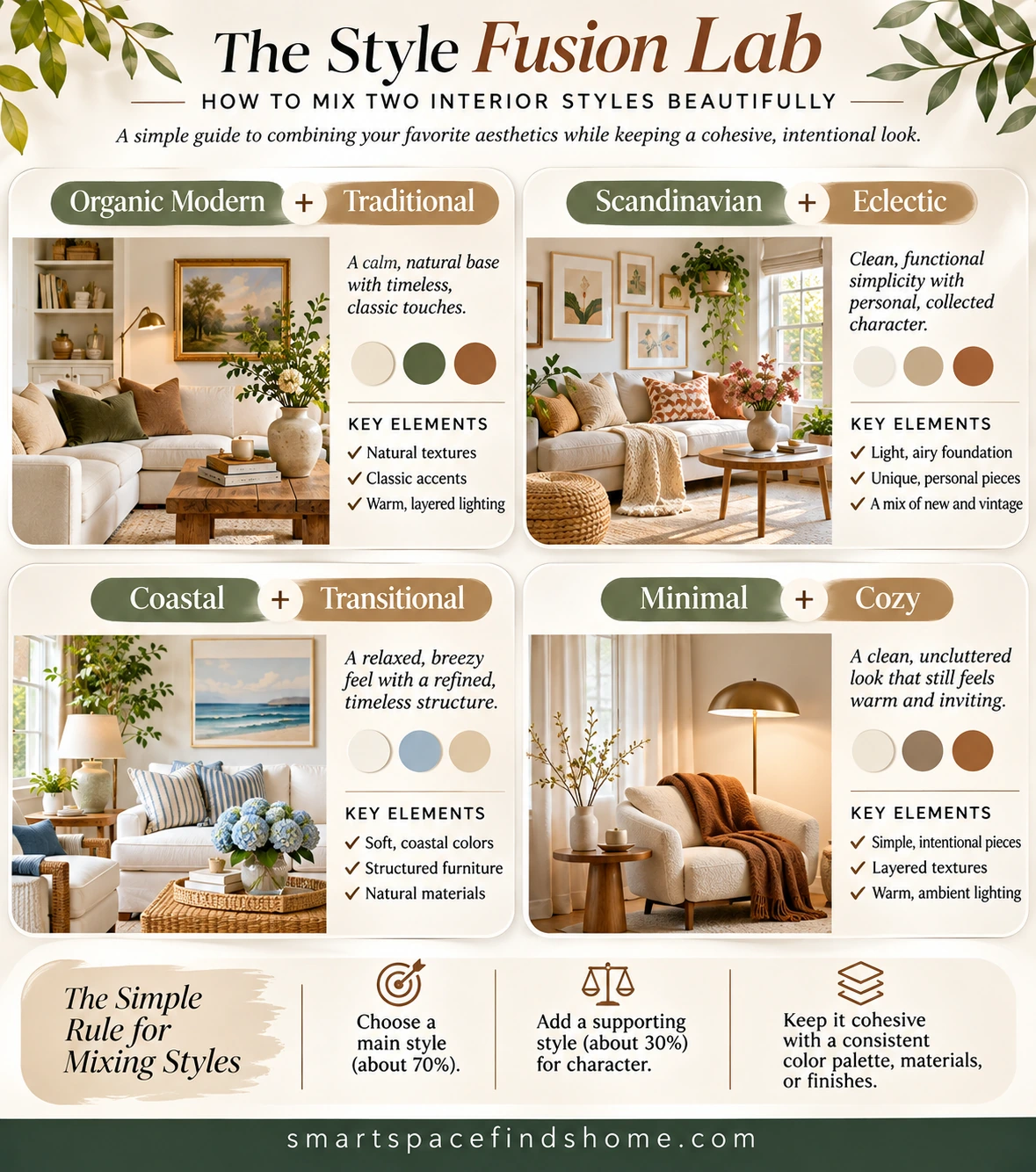
If you like more than one, that is useful information. Your personal style might be “organic modern with traditional touches” or “Scandinavian simplicity with collected vintage art.” For more specific visual references, explore our guide to room aesthetic styles and compare the details you actually want to live with.
How to mix two styles so the room still feels cohesive
Choose a primary direction for your larger furniture and use the second influence for accents. Repeat at least one element—wood tone, accent color, metal finish or texture—throughout the space to establish continuity.
Start with natural upholstery and simple shapes; bring in antique-style frames, a turned-wood table or a classic lamp.
Keep the large pieces light and functional; introduce playful art, collected ceramics and patterned textiles.
Combine soft colors and natural fibers with more tailored furniture shapes and classic proportions.
Edit surface clutter while adding depth with warm lighting, a textured rug and soft fabrics.
Small-space tip: You do not need a different style for every room. Carry two or three repeating materials or colors from one area to another, while adapting the function of each space.
Build a moodboard you can actually use
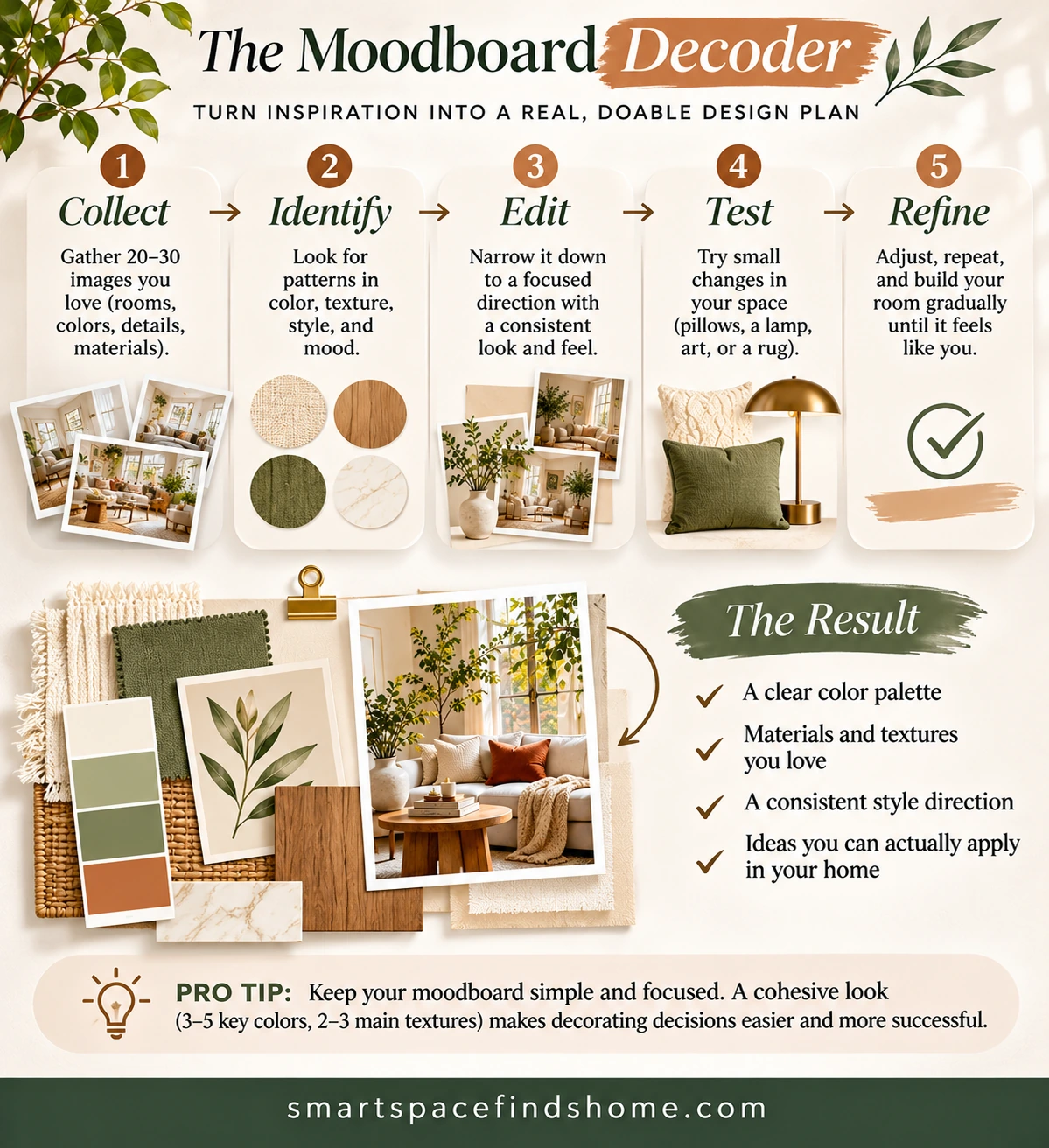
A useful moodboard is a decision-making tool, not simply a collage of beautiful photographs. Include a few room images along with specific colors, furniture silhouettes, textiles, wood finishes and lighting references.
- Pick one room: a living room or bedroom is easier to focus on than an entire home.
- Choose three anchor images: ones that show the atmosphere you want.
- Add material samples: two or three textures and one dominant wood or metal finish.
- Set a palette: one primary neutral, one supporting tone and one accent, adjusting to your existing finishes.
- Check practicality: consider light, cleaning, storage, scale and the pieces you already own.
Now remove anything that does not belong. When the board is clear enough to guide one purchase or one layout change, it has done its job. To turn your references into a cohesive scheme, use our step-by-step home color palette guide before committing to paint or large textiles.
Bring your style home without a full makeover
The most useful improvements often come from a handful of thoughtful edits—not replacing every piece of furniture. Start with changes you can reverse.
Use textiles to set the mood
Swap pillow covers, a throw or a curtain panel to see how a color and texture combination behaves in your light. Measure first, and choose fabrics that suit your maintenance needs.
Texture & Color Edit
Use soft furnishings to test your color palette and your preferred mix of textures without redecorating the whole room.
Affiliate disclosure: As an Amazon Associate, Smart Space Finds earns from qualifying purchases. Product details and availability may change; check the Amazon listing before buying.
Give lighting a starring role
Overhead light alone rarely makes a room feel inviting. Try a lamp at seated eye level and warm, appropriate bulbs. Evaluate the mood after dark, not just in a bright afternoon photograph.
Room Palette & Atmosphere
Window treatments and upholstery accents can shift the way daylight, color and texture feel throughout a space.
Affiliate disclosure: As an Amazon Associate, Smart Space Finds earns from qualifying purchases. Product details and availability may change; check the Amazon listing before buying.
Display something meaningful
Travel photographs, pottery, favorite books and inherited objects add a story that mass-produced accessories cannot reproduce. Group rather than scatter them so each piece gets breathing room. If you want inspiration for telling that story, see our personal home decor ideas.
A Personal Gallery & Collected Details
Build a gallery wall around artwork, memories and objects you already love, choosing frame finishes that reflect your style.
Affiliate disclosure: As an Amazon Associate, Smart Space Finds earns from qualifying purchases. Product details and availability may change; check the Amazon listing before buying.
Rearrange before buying
Make sure circulation works, chairs are comfortable to use and the largest pieces fit the room. An improved layout can change how a home feels more dramatically than a new decorative object.
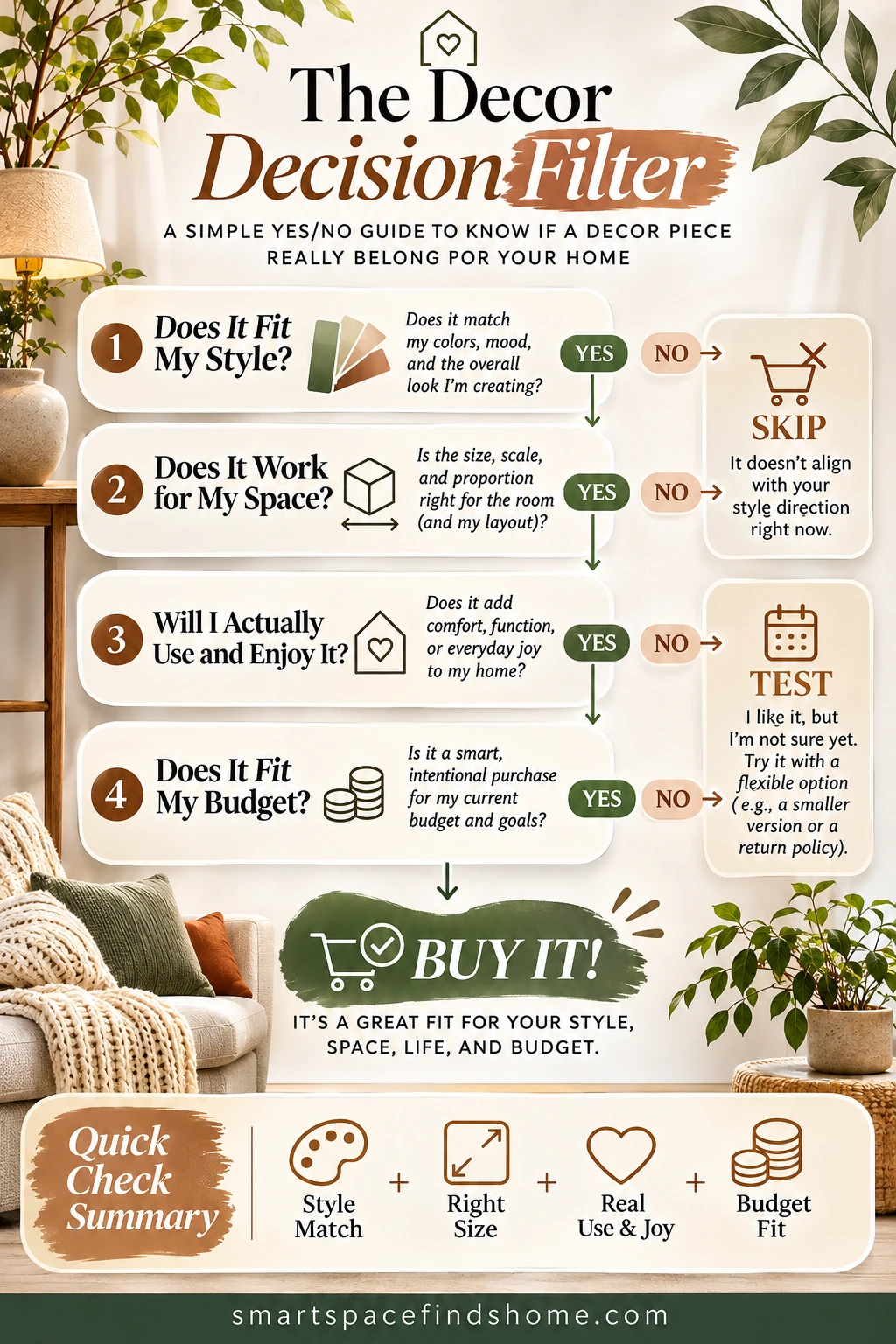
Before you shop: a simple personal-style decision filter
Ask four questions about the item you are considering: Does it match my three style words? Does it work with what I already own? Will its size, material and maintenance suit my daily life? Can I name exactly where it belongs? If one answer is uncertain, keep it on your inspiration board rather than checking out.
For larger pieces, make a quick floor plan with real measurements and confirm doorway clearance, walkways and the proportions of adjacent furniture. For paint or fabric, compare a physical sample in daylight and evening light: a screen image cannot reliably show how a finish will read in your home.
What to buy first—and what can wait
Start with: a practical lamp, useful textiles, framing for meaningful art, or an accessory that improves an existing corner. These are relatively small ways to test your palette and materials.
Wait on: oversized furniture, irreversible finishes, highly trend-specific pieces and decorative fillers with no defined place. Measure the space, compare samples in different light and prioritize lasting function before making a large purchase.
Thoughtful Finishing Touches
Finish a room with useful details you can live with: warm lighting, practical hardware, secure rugs and layered cushions.
Affiliate disclosure: As an Amazon Associate, Smart Space Finds earns from qualifying purchases. Product details and availability may change; check the Amazon listing before buying.
Five mistakes that make personal style harder to find
- Copying a photo exactly: the photographed room has different light, scale and architecture.
- Buying before defining your direction: individual attractive pieces can add up to a confused room.
- Ignoring everyday comfort: beautiful but impractical pieces quickly become frustrating.
- Using too many competing finishes: repeat a small number of materials to make the mix feel deliberate.
- Expecting instant perfection: a home with character is often edited and collected over time.
Your seven-day personal style discovery plan
Day 1 Save 20–30 rooms you love.
Day 2 Collect five to ten rooms you dislike and explain why.
Day 3 Identify repeated colors, shapes and materials.
Day 4 Choose five things you already own and love.
Day 5 Write your three style words.
Day 6 Assemble one focused moodboard.
Day 7 Make one small, reversible change.
Frequently asked questions
Do I need to choose only one interior design style?
No. Cohesion comes from deliberate repetition and balance, not loyalty to a single label.
What if my decorating taste changes?
That is normal. Build around useful, comfortable foundation pieces and experiment with smaller changes as your interests evolve.
How do I know whether a trend is right for me?
Ask whether it fits your three words, your practical needs and your existing room. You can admire a trend without bringing it home.
Can I find my style in a small apartment or rental?
Absolutely. Start with furniture scale, portable lighting, textiles, art and reversible arrangements. Always check rental rules before attaching or altering anything.
What if I like both minimal and cozy interiors?
Keep your furnishings and surfaces edited, then use softer materials and warm lighting to add comfort without clutter.
A home that feels like you
Your interior design style is not a finish line or a label someone else has to approve. It is a series of considered choices that make your daily life more comfortable, your rooms more useful and your home more personal.
Begin with one corner, one observation and one small change. The more you notice what consistently feels right, the easier the next decision becomes.