
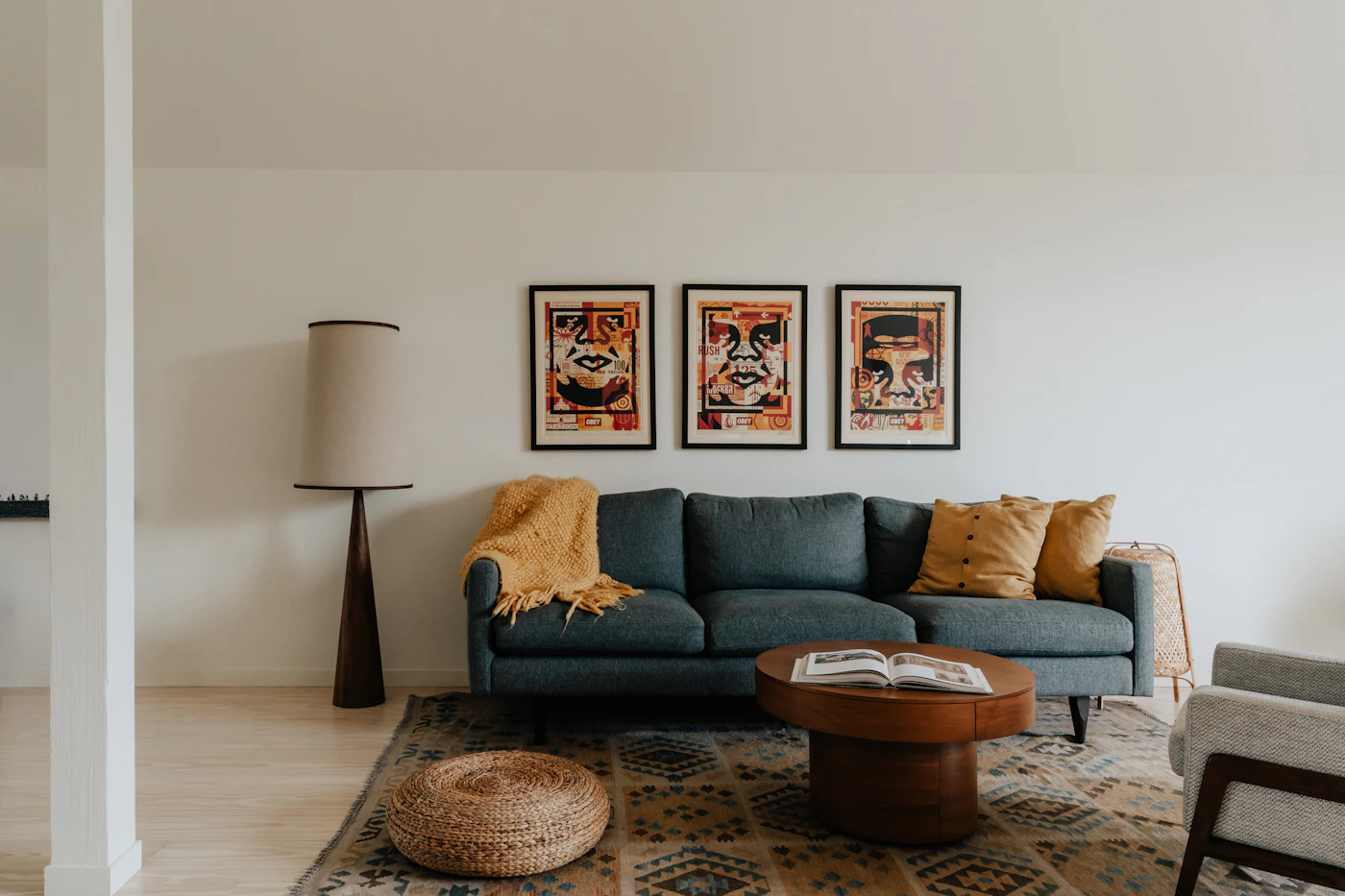
The personal space edit / Design guide
You might love the calm of a neutral bedroom, the charm of a vintage dresser, and the confidence of a colorful gallery wall. That does not mean your taste is inconsistent. It means you have options—and your room can reflect more than one side of you.
Room aesthetics are useful starting points, not personality tests you have to pass. The right style makes your daily routines easier and helps your space feel like somewhere you want to return to. Whether you live in a rented studio, share an apartment, or have an entire home to decorate, the most effective approach begins with what the room needs to do.
Before choosing a look, pay attention to your room
Think about the moment you enter your space at the end of a long day. Do you want fewer things competing for attention, a room filled with familiar objects, or a little color that gives you energy? That emotional preference is a helpful clue. It should be paired with the practical reality of the room: available daylight, circulation, storage, maintenance, and what you can change if you rent.
Take stock of three permanent or expensive elements first: your floor, your largest piece of furniture, and the dominant wall or window. Your new choices will feel more cohesive when they work with those existing features instead of fighting them.
The five-style comparison, at a glance
Use this table to narrow your first choice. These are editorial descriptions, not rigid design classifications; each look can be interpreted in different ways.
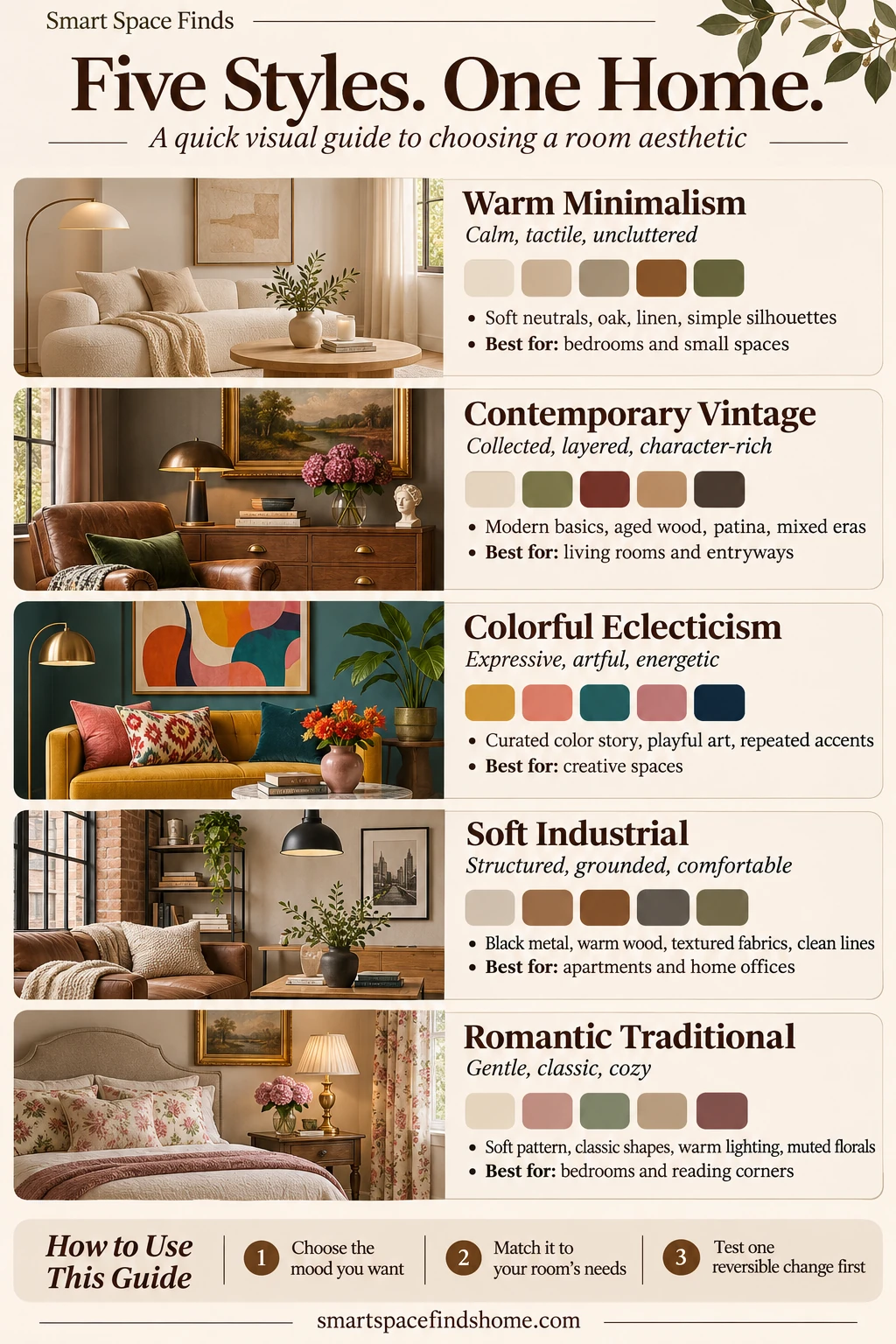
| Style | Feeling | Key ingredients | Best starting point | Watch out for |
|---|---|---|---|---|
| Warm Minimalism | Restful, grounded | Soft neutrals, oak, linen, simple silhouettes | Declutter one visible surface | Flat, texture-free rooms |
| Contemporary Vintage | Collected, familiar | Modern basics, older furniture, patina, contrast | Add one secondhand focal piece | Too many competing eras |
| Colorful Eclecticism | Expressive, creative | Intentional color, playful art, repeated motifs | Build a three-color story | Visual overload |
| Soft Industrial | Modern, grounded | Black metal, wood, warm textiles, structure | Balance one strong metal accent | Cold or harsh finishes |
| Romantic Traditional | Gentle, layered | Classic shapes, soft pattern, warm lighting | Layer a lamp and patterned textile | Overly ornate styling |
Aesthetic 01 / The quiet retreat
Warm Minimalism: calm without feeling empty
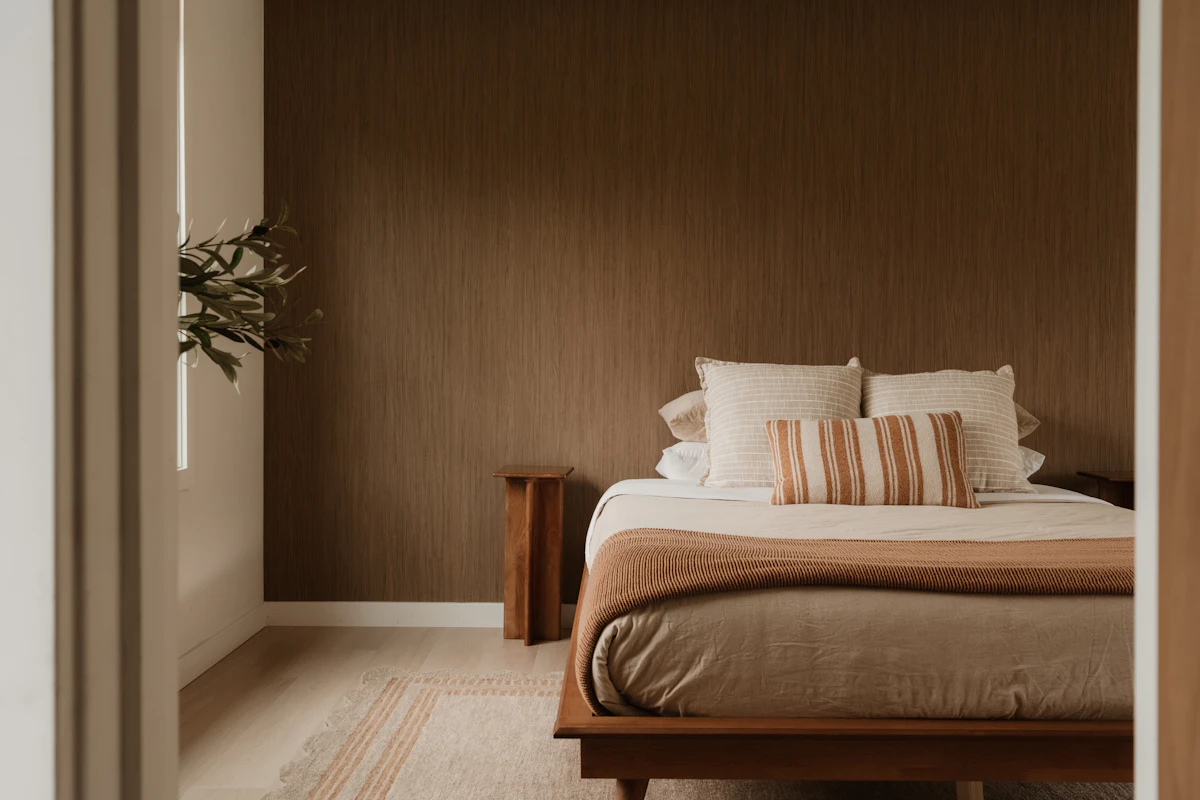
Imagine a bedroom where nothing shouts for attention: a comfortable bed, a natural wood bedside table, one reading lamp, and a woven throw that you actually use. Warm minimalism values breathing room, but it does not demand bare shelves or a perfectly beige life.
Palette direction: ivory · oatmeal · oak · muted sage · deep taupe
The design logic: Keep the outlines simple, then introduce depth through material rather than more decoration. A linen curtain, soft wool-look rug, handmade-looking ceramic vase, and wood grain can give a restrained room character.
Bedrooms, small living rooms, home offices, and multiuse spaces where visual calm helps the room feel less busy.
Rooms with insufficient closed storage or very little variation in material can feel unfinished instead of peaceful.
Try it in your own space
- Clear one bedside table or shelf and return only what is useful or meaningful.
- Choose one warm neutral for the largest textile surface.
- Bring in two contrasting textures, such as smooth wood and nubby cotton.
- Keep a practical place for everyday items so the calm appearance is sustainable.
Fewer competing objects make it easier to notice shape, light, and texture. Warm materials prevent the simplicity from becoming visually sterile.
Warm Minimalism Essentials
Soft textures, natural finishes, and unobtrusive lighting bring this calm, comfortable aesthetic together.
Hokibero Natural Linen-Blend Curtains, 2 Panels
Compare panel lengths with the height of your windows.
TWODRAPES Natural Pinch-Pleat Curtains, 40 × 84
Check pleat style and total window coverage.
DKCONONY Mini Lamp with Ash Wood Base
Consider the dimensions and light output for your surface.
MIULEE Oatmeal Textured Chenille Pillow Covers, Set of 4
Choose the correct insert size before ordering.
OIAHOMY 75L Woven Cotton Rope Storage Basket
Measure available floor space and storage needs.
Disclosure: As an Amazon Associate, we earn from qualifying purchases. Product availability and details may change; confirm the selected listing before ordering.
Aesthetic 02 / The collected room
Contemporary Vintage: old stories, current comfort
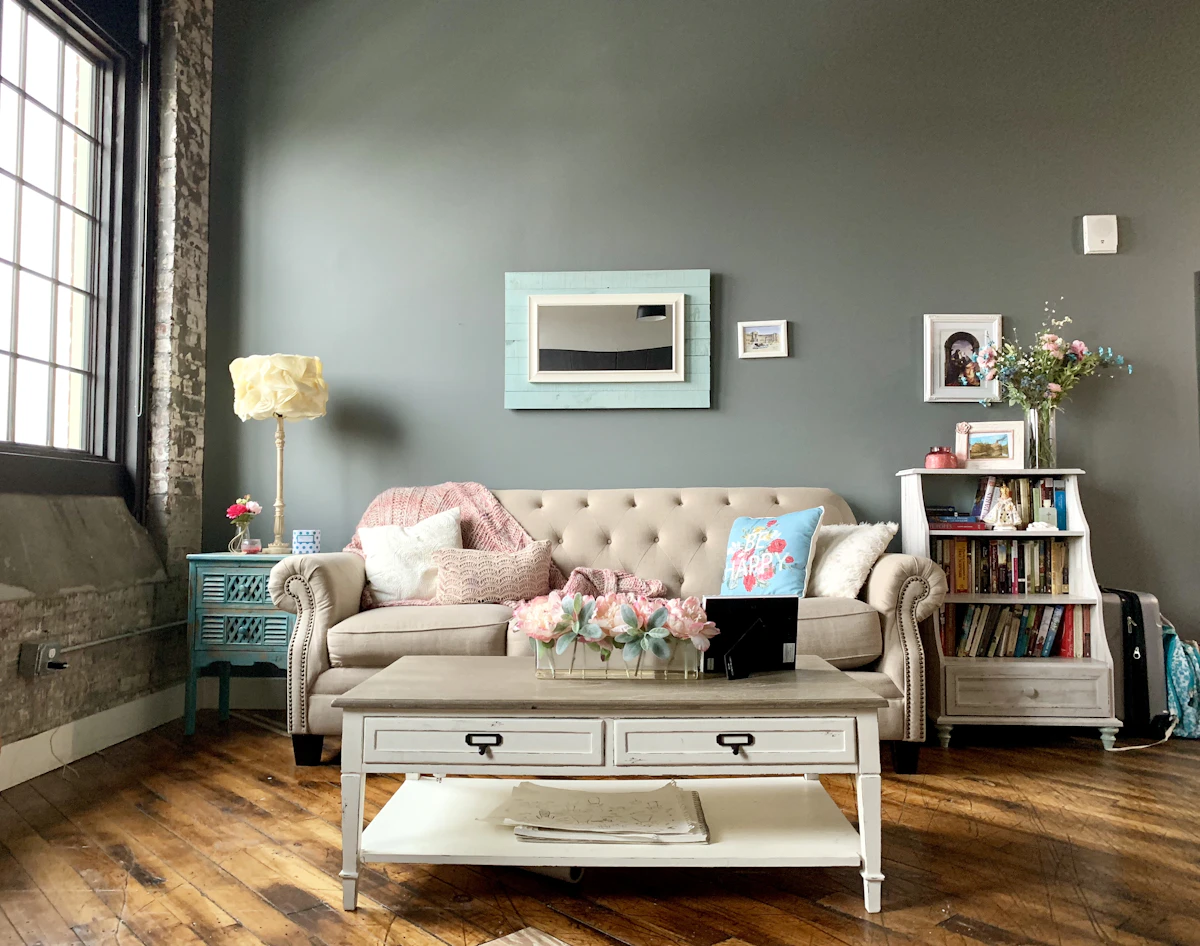
Not every vintage-inspired room needs floral wallpaper and antique furniture. Think of a clean-lined sofa next to a timeworn side table, or a contemporary desk paired with a vintage-framed mirror. The contrast is the point: useful modern pieces give older finds room to be noticed.
Palette direction: parchment · cognac · olive · faded rosewood · charcoal
The design logic: Keep large functional elements relatively simple and let a few pieces with visible age, interesting construction, or distinctive silhouettes carry the personality. Repeating a wood tone or metal finish helps unrelated eras feel intentional.
Living rooms, dining corners, entryways, and bedrooms with a mix of inherited, secondhand, and newer pieces.
Buying every piece from a different decade without a consistent scale, palette, or material can make the room feel accidental.
Try it in your own space
- Choose one vintage or secondhand anchor: a dresser, lamp, stool, or framed artwork.
- Place it beside a clean contemporary form for contrast.
- Repeat one shared detail elsewhere, such as dark wood, brass, or a dusty accent color.
- Check dimensions and condition before bringing older furniture home; prioritize stability and safe electrical components.
Contrast gives treasured pieces presence, while repetition connects them visually. The goal is a room that feels collected over time, not staged as one period.
For a deeper, product-by-product treatment, see our vintage modern home decor ideas.
Contemporary Vintage Finds
Balance useful new furniture with nostalgic details, warm finishes, and interesting silhouettes.
efperfect Orange Mid-Century Floor Lamp and Table
Confirm the dimensions of this combined accent piece.
SIILOOM Vintage Floral Washable Rug, 2 × 3
A small patterned accent for an entryway or bedside area.
Rugshop Traditional Medallion Runner, 2 × 10
Measure the runner placement and clearance.
HARRITPURE Gold Arched Wall Mirror, 16 × 24
Check mounting requirements and wall space.
EvruCexul Ornate Vintage Oval Picture Frame, 5 × 7
Use to introduce a traditional detail alongside modern art.
Disclosure: As an Amazon Associate, we earn from qualifying purchases. Product availability and details may change; confirm the selected listing before ordering.
Aesthetic 03 / The expressive space
Colorful Eclecticism: personality with a plan
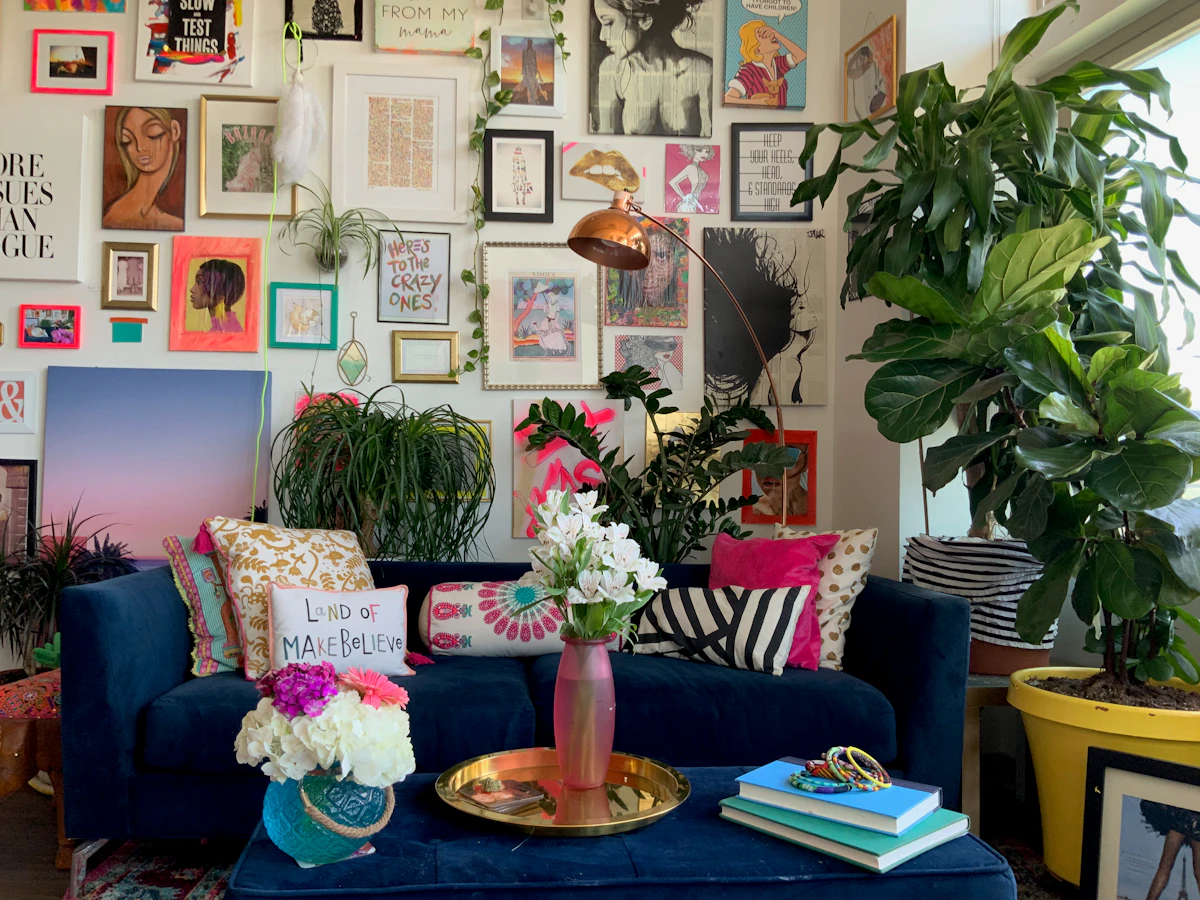
You can love bold artwork, patterned pillows, colorful pottery, and books on display without making a room chaotic. The trick is not to remove personality. It is to give your favorite things something in common.
Palette direction: warm cream · ochre · teal · coral · ink blue
The design logic: Start with a base color, add one main accent, and choose a smaller supporting accent. Repeat at least one hue in multiple places to create a relationship between pieces. Vary pattern scale rather than placing several equally busy prints side by side.
Creative studios, living rooms, teen or young-adult bedrooms, and corners built around art and collections.
Small rooms with many open storage zones or competing focal points can become visually tiring.
Try it in your own space
- Pick one object you love—an art print, patterned textile, or colorful rug.
- Pull two or three colors from it rather than choosing accents randomly.
- Repeat the primary accent in two different locations.
- Leave some quiet space around your boldest grouping; every surface does not need a statement.
Color repetition creates a sense of connection. A little negative space makes the expressive pieces easier to enjoy.
Colorful Eclectic Accents
An expressive room works best with a repeated color story and a few confident focal points.
Trademoon Braided Cotton-Jute Oval Rug, 5 × 7
Let the rug guide the room’s accent colors.
Colorful Abstract Framed Canvas Wall Art
Check the artwork dimensions against the intended wall.
EMEMA Baby Blue Velvet Pillow Covers, Set of 2
Repeat this hue in artwork or accessories.
Glivpny Orange Glass Mushroom Touch Table Lamp
Consider placement and brightness before buying.
Cynkeyee Colorful Ceramic Decorative Vases, Set of 3
Group or separate the pieces to repeat accent colors.
Disclosure: As an Amazon Associate, we earn from qualifying purchases. Product availability and details may change; confirm the selected listing before ordering.
Aesthetic 04 / The softened edge
Soft Industrial: structure meets comfort
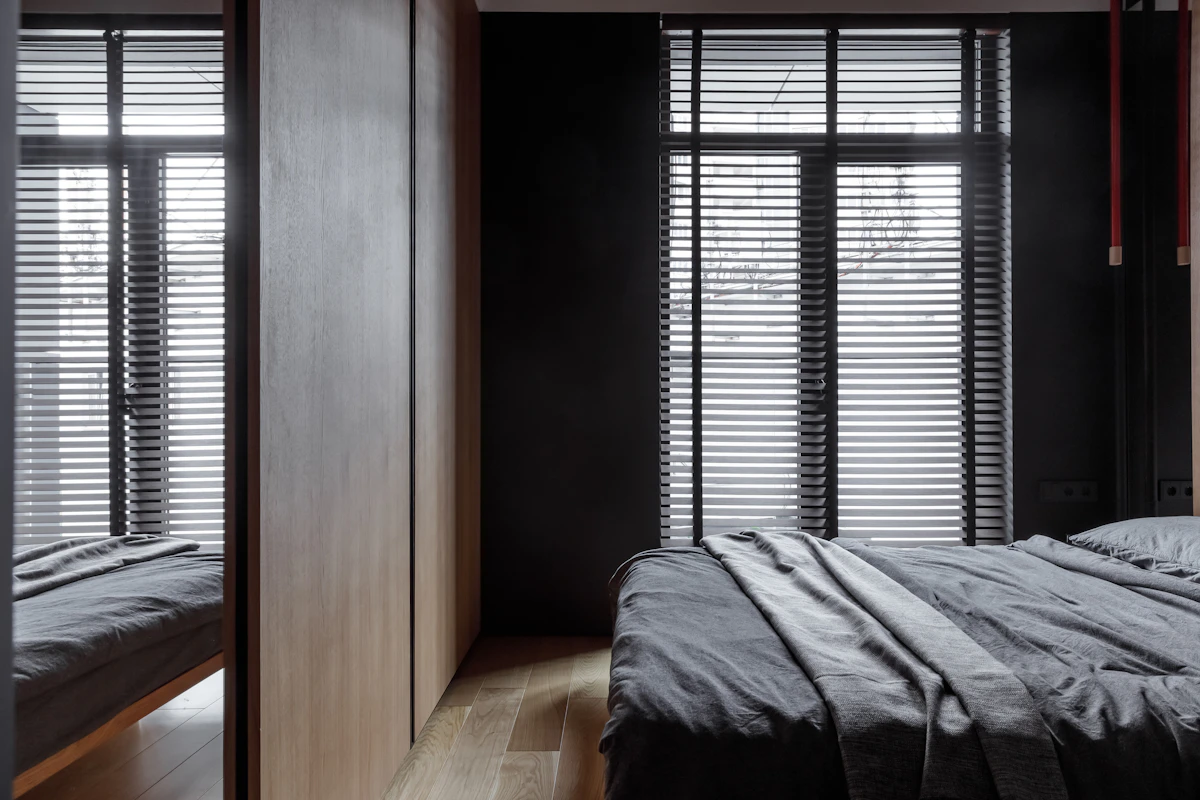
Industrial style is often pictured as exposed brick, dark steel, and concrete. Soft industrial borrows that sense of structure without requiring a warehouse apartment. A slim black floor lamp, a warm wood desk, and a generous textile can be enough to establish the mood.
Palette direction: warm white · putty · walnut · softened gray · graphite
The design logic: Use crisp structural outlines as accents, then soften them with warm lighting, tactile fabrics, and organic forms. Not every fixture needs to be metal; contrast is what keeps the result welcoming.
Home offices, open-plan living rooms, modern apartments, and small rooms with simple architecture.
North-facing or dim spaces with too much dark metal and cool gray can look severe. Heavy furniture can overwhelm narrow rooms.
Try it in your own space
- Choose one slim dark-metal element, such as a lamp or shelf bracket.
- Pair it with medium-tone wood and a generously textured textile.
- Use a warm-toned light source for evening comfort.
- Avoid decorative faux pipes or distressed finishes that do not suit the room’s architecture.
Strong silhouettes add definition; warmer surfaces and softer edges make the space easier to live in.
Soft Industrial Details
Pair streamlined metal and practical storage with wood and soft materials for warmth.
LITFAD Metal Arc Floor Lamp with Marble Base
Check lamp reach, floor clearance, and base dimensions.
IRONCK Industrial Open Bookshelf, 5 Tiers
Plan for wall anchoring where appropriate.
gianotter Wooden Desk Organizer with Drawer
Use to make an open desk feel more intentional.
LEPOWER Metal Gooseneck Desk Lamp
Review desk footprint and compatible bulb specification.
nuLOOM Grey Tribal Area Rug, 9 × 12
Confirm the large rug fits the furniture layout.
Disclosure: As an Amazon Associate, we earn from qualifying purchases. Product availability and details may change; confirm the selected listing before ordering.
Aesthetic 05 / The gentle classic
Romantic Traditional: softness, pattern, and familiarity
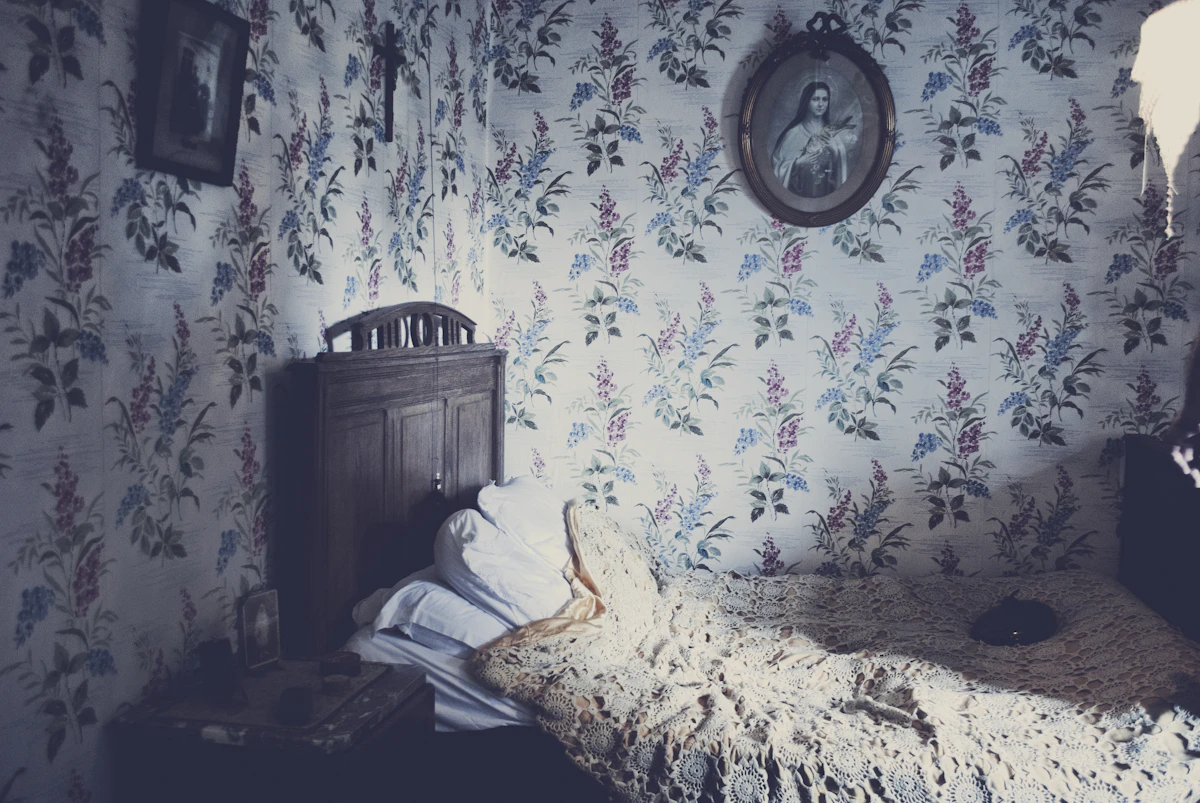
Picture a reading corner with a curved chair, a small pleated-shade lamp, a patterned cushion, and a favorite book nearby. Romantic traditional style can feel welcoming and expressive without resembling a formal sitting room. It takes recognizable classic details and edits them for modern routines.
Palette direction: cream · dusty blush · sage · antique brass · warm brown
The design logic: Use softer profiles and a little symmetry to establish order. Add one delicate pattern, one warm metal or wood note, and layered light. Let comfort—not ornament for its own sake—lead.
Bedrooms, reading nooks, cozy living rooms, and rental spaces where textiles and lighting can transform the atmosphere.
Too many ruffles, floral patterns, and ornate accessories can compete for attention, especially in a small room.
Try it in your own space
- Start with one traditional-looking shape, such as a curved mirror or classic lamp.
- Add a muted patterned cushion or curtain.
- Choose a practical warm light source for the times you actually use the room.
- Keep surrounding furniture simple enough to let the softer details stand out.
Familiar shapes and repeated soft details establish rhythm. Editing the ornamentation gives the room breathing space.
Romantic Traditional Favorites
Soft patterns and classic forms add character without requiring a full-room makeover.
JIAOGEPENGYOU White Fringe Clip-On Lamp Shade
Check attachment and lamp compatibility carefully.
DriftAway Vintage Botanical Green Curtains, 52 × 84
Check panel count, fabric opacity, and correct length.
HARRITPURE Gold Arched Wall Mirror, 30 × 40
Check wall space and installation requirements.
J Hunt / Jimco Celine Table Lamp — Champagne
Ornate champagne-tone base, faceted glass accent, and a pleated shade for a traditional statement lamp; verify available space and bulb compatibility.
HOSTECCO Embroidered Botanical Lumbar Pillow Covers, Sage Green, 12 × 20, Set of 2
Two embroidered botanical lumbar covers in sage green; the 12 × 20 shape is ideal for a smaller layered accent, not a square pillow substitute.
Disclosure: As an Amazon Associate, we earn from qualifying purchases. Product availability and details may change; confirm the selected listing before ordering.
Interactive style finder / No signup required
Which room aesthetic sounds most like you?
Choose the statement that feels closest to your ideal room. Open it for a suggested starting style and your first low-commitment design move. If two answers appeal to you, you can combine them.
I want my room to feel calmer and easier to maintain.
Your starting point: Warm Minimalism. Reduce the objects on one visible surface, then add warmth with a textured textile. You may also enjoy a touch of Romantic Traditional through gentle lighting.
I want a home that feels collected, not straight from a showroom.
Your starting point: Contemporary Vintage. Pair one older piece with a clean modern element. Try a small side table or framed art before changing major furniture.
I feel happiest around color, art, and meaningful objects.
Your starting point: Colorful Eclecticism. Use one favorite print to set a repeatable color story. Keep a little empty space around your collection.
I like clean architecture but still need comfort.
Your starting point: Soft Industrial. Combine one dark linear accent with warm wood and an inviting rug or throw.
I gravitate toward cozy classics, soft details, and gentle pattern.
Your starting point: Romantic Traditional. Try a softly shaped lamp and one subtle patterned textile before adding more accessories.
This is an informal design reflection, not a scientific personality assessment. Your room’s layout, existing furniture, and daily needs should still guide the decision.
The 10-minute design personality exercise
Find your visual through-line
- Save five rooms that you genuinely like. Do not look at their style labels.
- Circle three repeats: a color, a material, and a furniture shape or pattern.
- Name one friction point: clutter, low light, lack of storage, difficult cleaning, or too little seating.
- Write a one-sentence brief: “I want a [feeling] room with [material/color] that still lets me [daily activity].”
- Choose one reversible test before making a large purchase.
Example: “I want a relaxed, collected living room with walnut and olive tones that still has room for two people to work.” That brief could lead to Contemporary Vintage with Warm Minimalist storage.
How to mix two aesthetics without losing the plot
You do not need to choose one label for your whole home. A more useful approach is to select a dominant style for the large surfaces and furniture, then a supporting style for accents. As a planning shortcut, think roughly 70% visual foundation and 30% accents—not a mathematical rule or a reason to buy more objects.
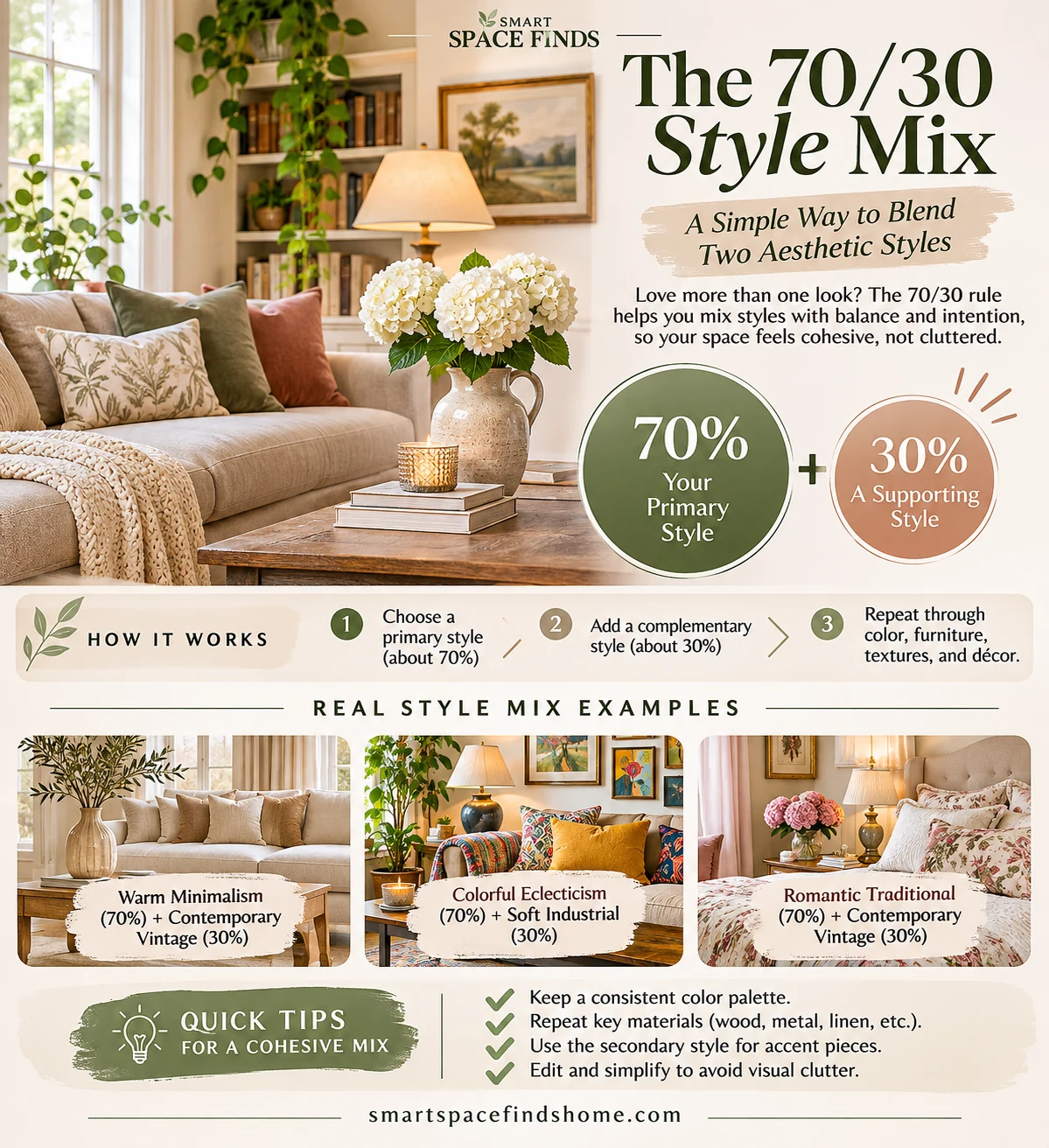
Five pairings worth trying
- Warm Minimalism + Contemporary Vintage: understated furniture, one aged wood chest, and textured linen.
- Warm Minimalism + Romantic Traditional: simple backdrop, softly patterned bedding, and a classic lamp.
- Contemporary Vintage + Colorful Eclecticism: secondhand furniture with a controlled art-led color palette.
- Soft Industrial + Warm Minimalism: black metal outlines, tactile neutrals, and plenty of clear surfaces.
- Romantic Traditional + Colorful Eclecticism: classic silhouettes with one confident print or lively accent color.
To make the mix coherent, repeat one finish or color at least twice, keep furniture proportions in conversation with each other, and use lighting to unify the atmosphere. Avoid placing every decorative statement in the same sightline.
Mix Your Aesthetic
Use a few adaptable pieces to connect two styles through repeated color, materials, or shapes.
VASAGLE Industrial Side Table with Mesh Shelves
Bridge warm wood and structured metal furnishings.
AIEAMPDO Ceramic Table Lamps with Linen Shades, Set of 2
Verify the height and shape for both sides of the room.
Bedsure Sherpa Fleece Throw Blanket, 50 × 60
An easy way to add texture to a cleaner-lined space.
Medpol Retro Red Abstract Eye Canvas Art Print
Use as a small accent that connects existing colors.
YCOLL Textured Bouclé Pillow Covers, Ivory, 20 × 20, Set of 2
Soft ivory textured covers add gentle contrast to contemporary or vintage pieces. Check 20 × 20 inserts and the seasonal product listing.
Disclosure: As an Amazon Associate, we earn from qualifying purchases. Product availability and details may change; confirm the selected listing before ordering.
Make color and texture choices that work in real life
Color looks different in morning daylight, cloudy weather, and lamplight. Before choosing paint or a large textile, compare samples in the actual room at different times of day. If the room feels dark, pale colors are an option—but a well-chosen mid-tone can also look intentional. The right result depends on the light and the mood you want.
The simple color-and-texture framework: begin with a background tone drawn from your existing floor or large furniture, choose one complementary material, add one accent color, and introduce a texture that improves comfort. A room with polished surfaces may benefit from woven or soft materials; one filled with plush fabrics may need a smoother, cleaner-lined object for balance.
Before introducing anything new, ask: Does it support the room’s function? Does its color, scale, or material connect to something already here? Will I still appreciate it when the trend changes? If the answers are unclear, leave it on your wish list for now.
A practical shopping checklist (before you buy)
You can make meaningful progress with rearranging, editing, borrowing, or repurposing what you own. If you decide to shop, use these questions to avoid attractive purchases that become clutter.
- Measure the item’s width, depth, height, and the clearance needed to move around it.
- Check whether its material and finish suit your cleaning routine, household, and level of use.
- Compare its color to existing pieces in your room, not just to a styled product photo.
- Identify what the item will replace, improve, or enable.
- Check return terms and, for lighting or vintage electrical items, appropriate safety information.
- Leave money in your budget for essential function, not just decorative accents.
If the challenge is first defining your broader decorating preferences, our guide to finding your personal style offers a complementary perspective. For an existing room that needs to feel less visually busy, explore ways to make your home feel less cluttered. And if you want the room to reflect your hobbies and memories, see our personal home decor ideas.
Common questions about room aesthetics
What if I like more than one aesthetic?
That is normal. Pick a dominant look for the big decisions and use the second as an accent. Shared colors, materials, or shapes will help them work together.
Which aesthetic is easiest for a small room?
Warm Minimalism and Soft Industrial can give you straightforward starting structures, but every aesthetic can work in a small space. Furniture scale, circulation, and storage are more important than the label.
Can renters create a distinct aesthetic?
Yes. Focus on portable lighting, art displayed with appropriate removable solutions, bedding, cushions, rugs, and moveable furniture. Check lease rules before attaching fixtures or altering surfaces.
Do I need to follow current decorating trends?
No. Trends can introduce useful ideas, but your budget, comfort, and existing pieces are stronger long-term guides.
The best room aesthetic is not the one you can copy most accurately. It is the one that makes the everyday parts of your life feel more natural. Find one mood you love, build around what is already working, and let the space evolve a little at a time.