
The considered home | Smart buying guide

Some home purchases earn their place every single day. Others look beautiful for a season and then end up in a closet. Knowing the difference helps you create a home that feels polished, functions better, and respects your budget.
When you’re deciding what to splurge on for your home and where to save, the answer isn’t simply “buy expensive furniture” or “always choose the budget version.” It depends on how often you use something, what happens if it fails, whether the product actually fits your body and space, and how difficult it would be to replace.
The short answer
Spend more selectively on a mattress that fits your sleep needs, a properly fitted daily-use chair, and dependable safety equipment. Save creatively on decorative vases, seasonal accents, and trend-driven accessories. Never pay extra for a label if you cannot identify a meaningful improvement.
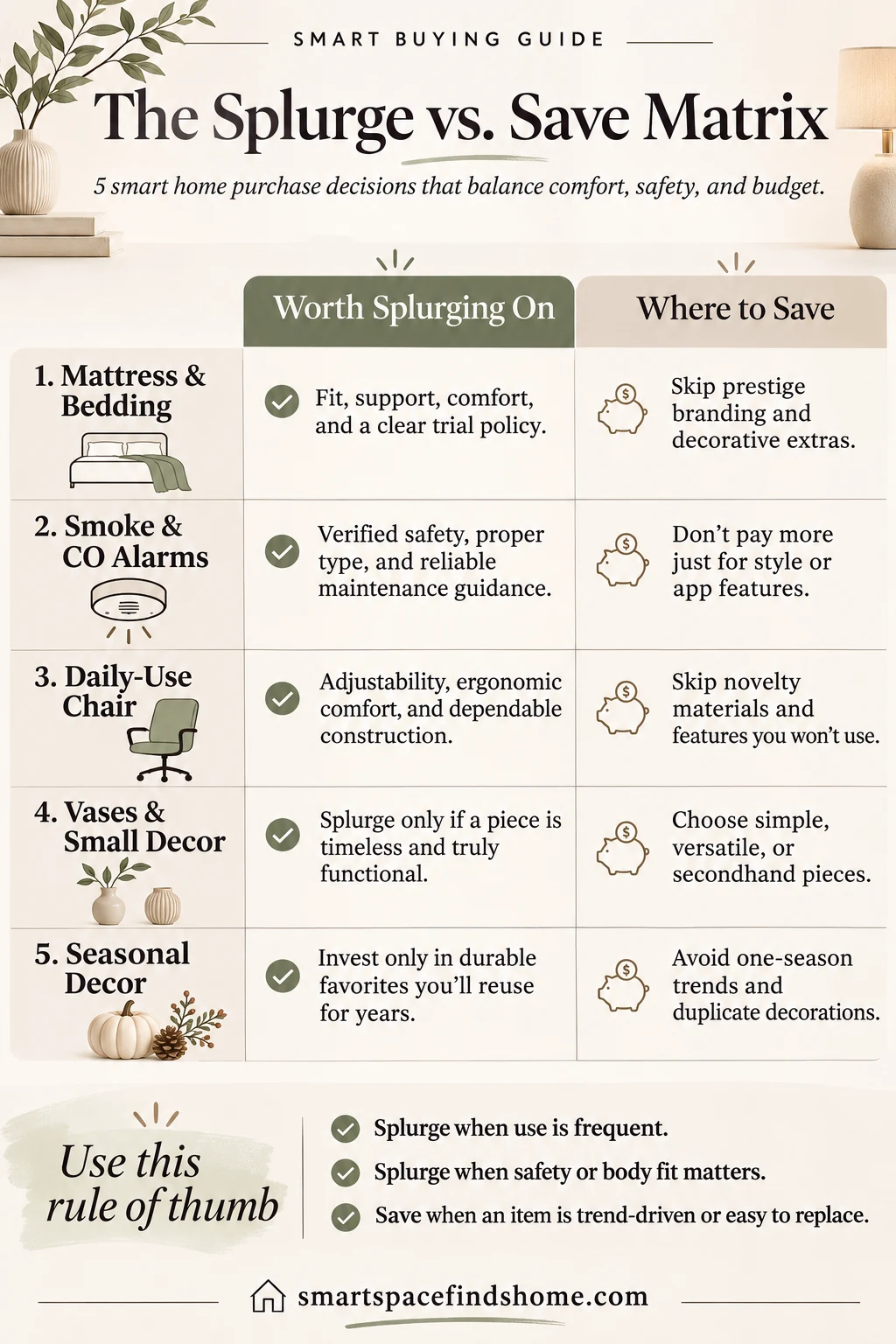
At a glance: where to splurge and where to save
| Home purchase | Smart default | What matters most |
|---|---|---|
| Mattress and sleep essentials | Spend selectively | Fit, support, trial policy, longevity |
| Smoke and carbon monoxide alarms | Prioritize verified safety | Appropriate listing, placement, reliability |
| Everyday desk or reading chair | Spend on fit | Ergonomics, adjustability, warranty |
| Vases, trays and small decor | Save | Proportion, condition, versatile styling |
| Seasonal decorations | Save and reuse | Storage, durability, repeat use |
Important: These are shopping priorities, not instructions to buy. If a piece you already own works well, keeping it is often the best-value decision.
1. Mattress and bedding: splurge on fit, not marketing

A mattress is a high-use purchase, but “more expensive” does not automatically mean more comfortable or supportive. Think about preferred sleep position, firmness, motion transfer, heat retention, edge support, and whether the mattress works with your bed frame. Test options where possible, and examine the trial’s return costs and exclusions.
Worth paying for
Fit you can actually feel
Appropriate support, durable construction, a clearly documented trial and a warranty you understand.
Where to save
Brand prestige and extras
Skip trendy “luxury” language and decorative bedding bundles that do not improve comfort or use.
Try this before purchasing: Compare three mattresses using the same checklist. Record how each feels after a reasonable trial, check whether returns require fees, and note delivery or removal charges. For pillows and sheets, material preferences and washability can matter more than premium packaging.
Shop the Sleep Edit
Choose the correct bed size and compare construction, trial conditions and comfort preferences before ordering.
Affiliate disclosure: As an Amazon Associate, Smart Space Finds earns from qualifying purchases. We may earn a commission at no additional cost to you. Check the current product, variant, price and availability on Amazon before ordering.
2. Smoke and carbon monoxide alarms: buy for safety, not style
Safety equipment is not a category for speculative bargain hunting. Choose an alarm appropriate to your home and local requirements, confirm recognized safety listing or certification where applicable, check the manufacture and replacement dates, and follow the instructions for placement and testing. Battery type, hardwiring and interconnection needs depend on the home.
Priority
Documented compliance
Correct alarm type, credible certification, installation compatibility and reliable maintenance instructions.
Not worth an upgrade alone
Decorative appearance
A premium finish or app feature does not replace fundamental detection performance and proper installation.
For authoritative maintenance and replacement guidance, consult the U.S. Consumer Product Safety Commission’s smoke alarm guidance. Follow manufacturer directions and applicable local codes. If you rent, clarify responsibilities with your landlord or building manager.
Safety Essentials — Choose Compatibility First
Select only equipment appropriate for your home and local requirements. Verify the current listing, power source, safety certification and installation instructions.
Affiliate disclosure: As an Amazon Associate, Smart Space Finds earns from qualifying purchases. We may earn a commission at no additional cost to you. Check the current product, variant, price and availability on Amazon before ordering.
3. A chair you use every day: splurge on adjustability and comfort

The chair that supports your longest work or study sessions can be worth a larger share of your budget than a statement accent chair. But your body dimensions, desk height and actual working posture matter more than a dramatic price tag.
Look for sensible seat height and depth, back support, stable construction, comfortable arm placement, breathable upholstery where desired, and controls you can reach and use. Read the warranty on moving parts and check whether you can return an assembled chair.
Worth testing
A chair that adjusts to you
Seat, back and arm adjustments that genuinely improve the way you sit at your actual desk.
Where to save
Showroom features
Extra styling, novelty materials and features you will rarely use. Refurbished commercial seating may also be worth comparing.

The Daily-Use Chair Edit
Compare seat dimensions, adjustability, comfort and assembly or return costs. Accessories are optional, not substitutes for a well-fitting chair.
Affiliate disclosure: As an Amazon Associate, Smart Space Finds earns from qualifying purchases. We may earn a commission at no additional cost to you. Check the current product, variant, price and availability on Amazon before ordering.
4. Decorative vases, trays and accessories: save with intention

Accessories make a room feel personal, but they often do not need premium price tags. For a thoughtful, collected look, start with what you own, visit secondhand stores, or look for simple pieces that can travel between rooms. Check for chips, tipping hazards, cleanability and appropriate use with food or water.
One large vase may have more presence than a shelf full of tiny objects. A useful tray can organize a coffee table or dresser. Choose a restrained color palette and vary the shapes and textures rather than buying a complete matching set.
Stylist’s edit
Before buying a new accessory, move three things you already own into a different arrangement. If the room feels finished, save the money for something that solves a real problem.
Small Decor, Considered Spending
These decorative details can finish a room without requiring a full furniture refresh. Check sizes, finishes and set quantities.
Affiliate disclosure: As an Amazon Associate, Smart Space Finds earns from qualifying purchases. We may earn a commission at no additional cost to you. Check the current product, variant, price and availability on Amazon before ordering.
5. Seasonal decorations: save on pieces you use only briefly
Seasonal decor can make home rituals joyful, but limited-use products are easy to overbuy. Favor a reusable foundation—simple lights, one versatile wreath base, a few durable ornaments—then refresh the arrangement rather than rebuilding the collection each year.
Calculate where items will live for the other months. Fragile decorations need protective storage, and oversized pieces can consume valuable space in small apartments. For electrical holiday decor, follow appropriate safety instructions and suitability ratings.
Worth keeping
Repeat-use favorites
Durable objects you genuinely enjoy taking out year after year and can store safely.
Where to save
One-season trends
Novelty colors, disposable themes and duplicates of what is already in your collection.
Protect, Store & Reuse Seasonal Decor
Buying durable storage helps preserve decorations you already love. Check tree height, box dimensions and ornament capacity before purchase.
Affiliate disclosure: As an Amazon Associate, Smart Space Finds earns from qualifying purchases. We may earn a commission at no additional cost to you. Check the current product, variant, price and availability on Amazon before ordering.
The 5-minute splurge-or-save decision framework
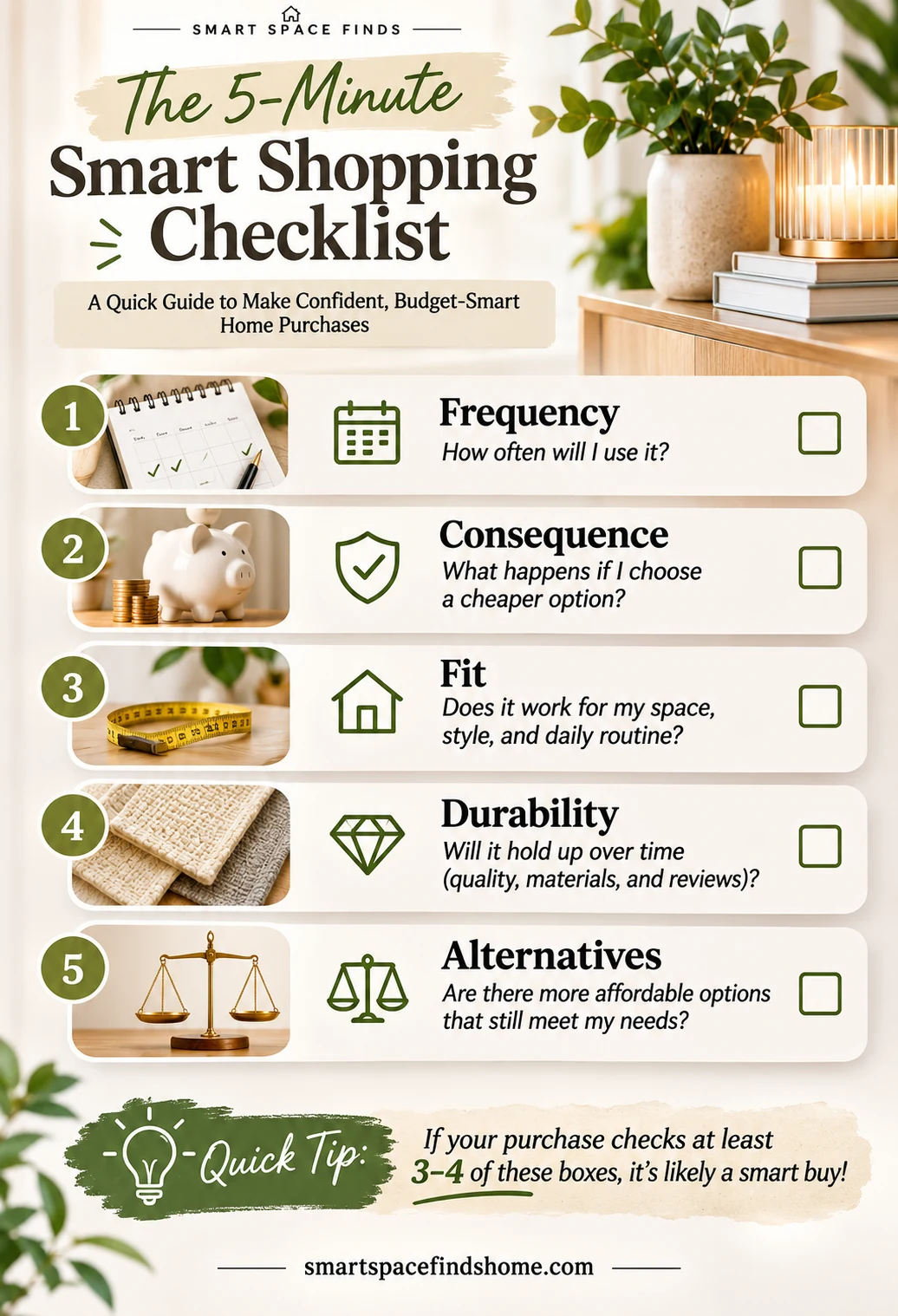
Use this checklist before adding anything to your cart. Each answer should describe your home and habits, not an imagined lifestyle.
- Frequency: Will I use this daily, weekly or only occasionally?
- Consequence: Would failure mean inconvenience, wasted money or a genuine safety concern?
- Fit: Have I measured the space and checked the relevant specifications?
- Durability: Can I clean, maintain, repair or replace its parts?
- Alternatives: Could I use something I already own, buy secondhand or delay the purchase?
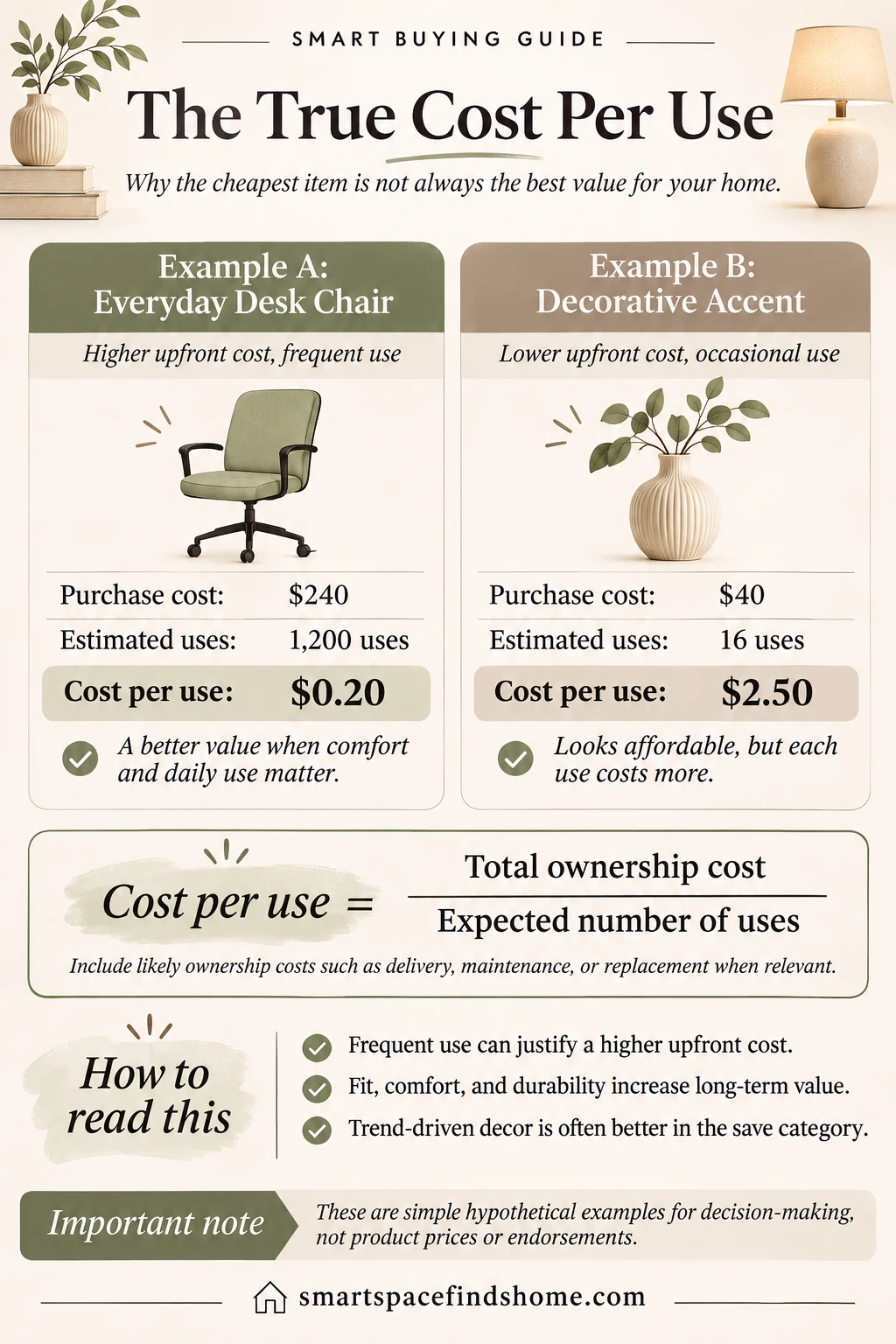
A better comparison than sticker price
Approximate cost per use = total expected ownership cost ÷ expected number of uses
Example: an illustrative $240 chair used 300 times a year for four years costs about $0.20 per use, excluding resale value. A $40 decorative object used 8 times over two years costs $2.50 per use. These examples are not product prices or performance promises; they simply help reveal how usage changes value.
Three shopping scenarios that make the choice easier
If you’re furnishing your first apartment
Start with functioning safety equipment as required, a comfortable sleep setup, essential seating and good lighting. Build your decorative layer slowly. Measure hallways, doorways and room dimensions before ordering large items.
If you’re refreshing a room on a limited budget
Keep the big pieces that still work. Rearrange furniture, update a textile or two, and edit accessories before replacing anything structural. Allocate larger spending only to a piece that solves a repeated frustration.
If you’re working from home
Prioritize your actual work setup: desk height, seating fit, lighting and enough room to move. Decorative desk accessories come after the foundational ergonomics.
Keep exploring: make every purchase work harder
Need more practical inspiration? Explore our creative desk setup ideas for a workspace that fits your routines, then see how to create a quiet-luxury look without relying on constant shopping. For personal finishing touches, our guide to expressing your personality through home decor offers more ways to use what you love.
Common mistakes that make a home purchase more expensive
- Buying by discount percentage: A large markdown isn’t a saving if the item doesn’t suit your home.
- Ignoring the full cost: Include delivery, assembly, upkeep, replacement parts and potential returns.
- Assuming expensive means durable: Inspect construction, realistic maintenance and warranties.
- Buying a look rather than a function: Editorial inspiration is a starting point, not evidence a product fits.
- Skipping measurements: Beautiful items are still poor purchases when they overwhelm the room.
Frequently asked questions
What home items are worth splurging on?
Prioritize items that are used frequently, need to fit your body well, or have important safety requirements. A mattress and daily-use chair may qualify; safety products should be chosen on compliance and suitability, not price alone.
Where should I save money when decorating?
Small vases, trays, seasonal accents, some textiles and trend-driven accessories are usually flexible categories. Shop what you own first and consider secondhand finds in suitable condition.
Is expensive furniture always better?
No. Construction, dimensions, fit, materials, warranty and after-sales support matter more than the price label. Compare products against the same practical criteria.
How can I avoid impulse home purchases?
Write down the problem you want to solve, measure the space, check your existing alternatives, and wait before buying nonessential decor.
What if my budget is very small?
Buying nothing is a valid option. Maintain functioning essentials, prioritize genuine safety needs, and improve the appearance of a space through cleaning, rearranging and selective reuse.
The bottom line: buy for the life you actually live
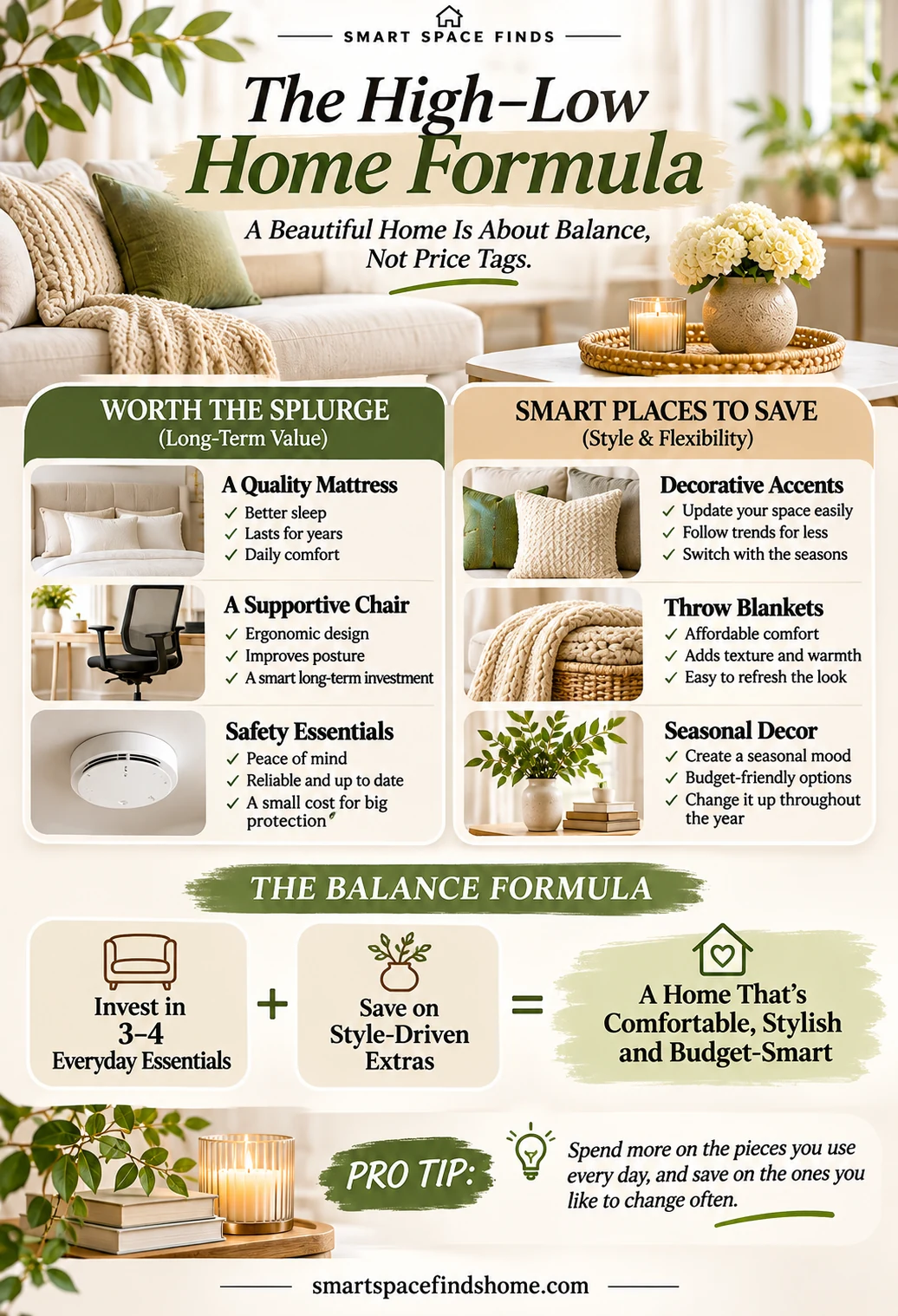
A beautiful home isn’t built by spending the most. It comes from putting resources where they improve comfort, usefulness and peace of mind—and being deliberately frugal where simple, reusable objects work just as well. Choose one purchase you’re considering, run it through the five-minute framework, and make the decision on your terms.
Editorial note: This guide offers general decision criteria, not individually tested product endorsements. Specifications, prices and availability change. Product examples include Amazon affiliate links supplied after a shopper-side availability check; live inventory, selected variants, sellers and shortlink destinations may change and have not been independently confirmed for every listing. Last editorial revision: November 2026.