
THE SMART SPACE FINDS ENTERTAINING EDIT • DINNER AT HOME
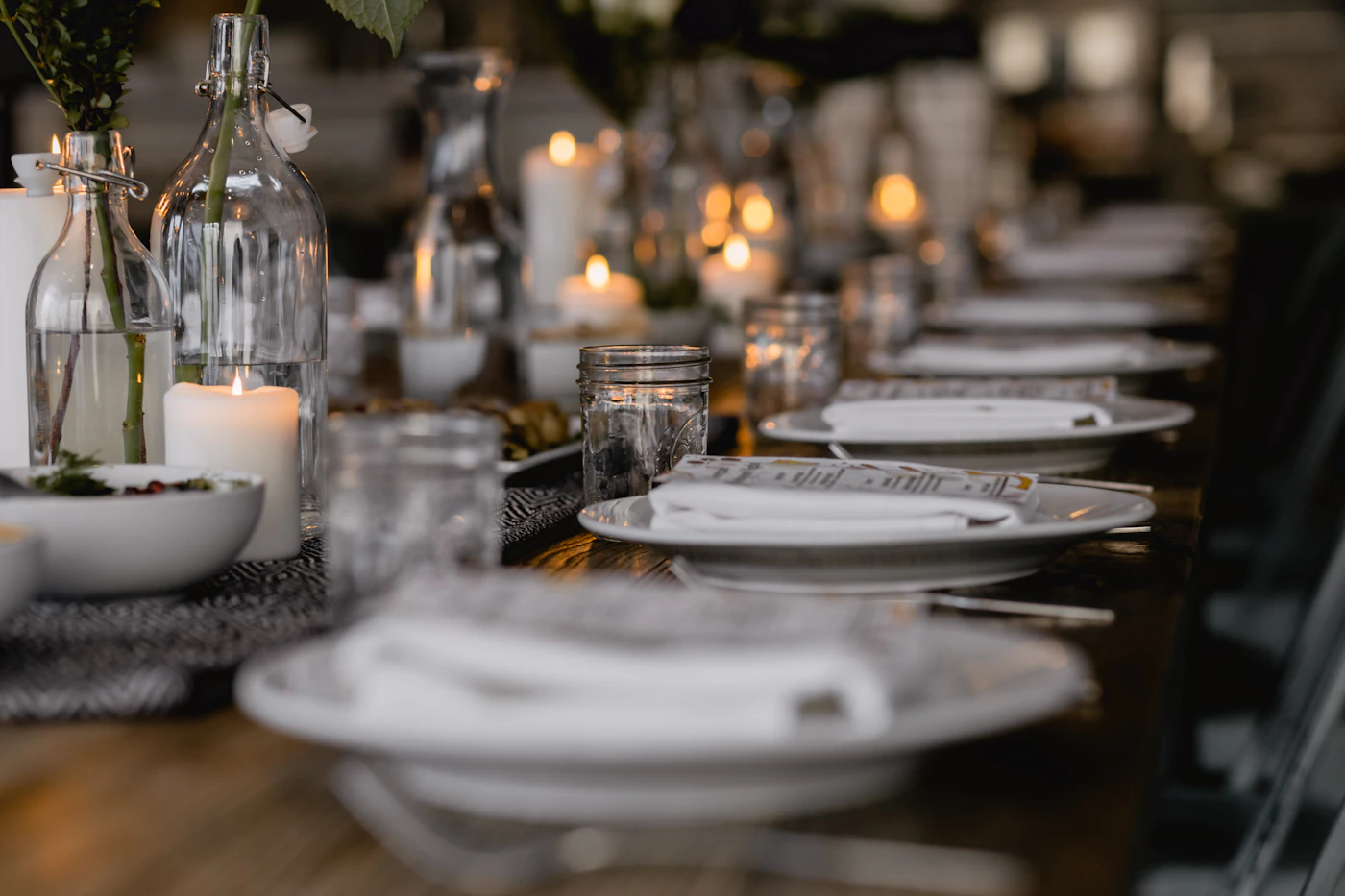
A welcoming dinner table needs thoughtful composition more than expensive tableware. Photo: Nadia Valko / Unsplash.
A memorable restaurant-style dinner at home is not about reproducing a tasting menu or buying matching dinnerware. It is about the feeling of being cared for: a menu that makes sense, a table that invites conversation, beautiful but unfussy plates, and a host who can actually sit down.
Below is a complete, repeatable approach to creating an elegant dinner at home—whether you are cooking for two, hosting four friends, or working with a very small kitchen. Start with what you already own; spend only where a missing tool solves a recurring problem.
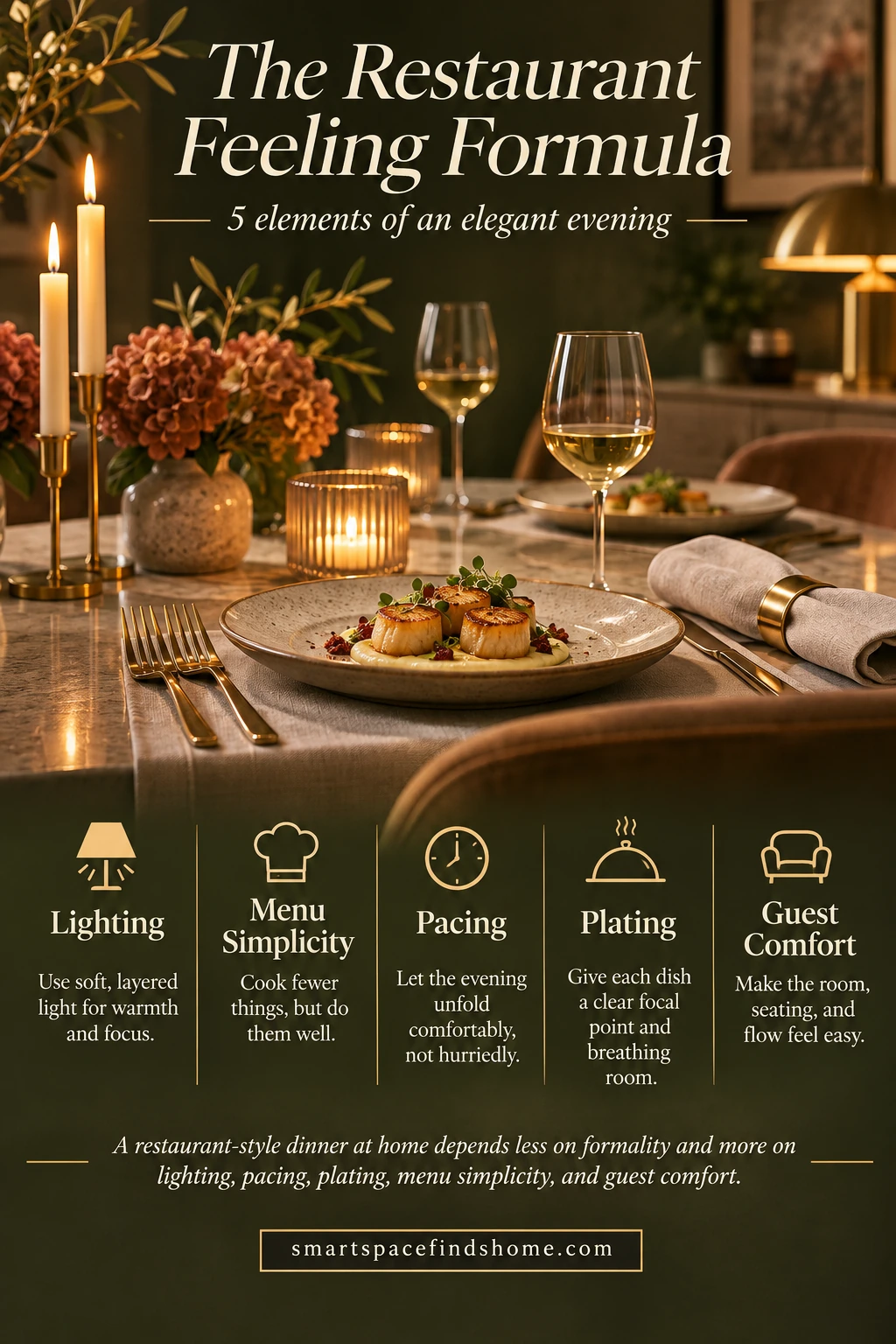
The five elements of a restaurant-style dinner at home: lighting, menu simplicity, pacing, plating, and guest comfort.
The five elements of a restaurant-style dinner at home
1. Design one coherent menu—not three separate showpieces
Pick a main dish you know how to execute, then choose a starter and dessert that complement it in flavor, temperature, and effort. For example, follow a rich braised main with a crisp, acidic salad and finish with citrus or fruit rather than another heavy dish. A seasonal ingredient used across two courses creates continuity without extra shopping.
Chef’s planning rule: make only one component genuinely last-minute. If the main demands constant attention at the stove, choose a chilled or room-temperature starter and a dessert made earlier. Ask about food allergies and dietary needs before planning; avoid cross-contact when preparing alternatives.
2. Prepare the components, not just the ingredients
Professional kitchens rely on mise en place: every ingredient, utensil, serving plate, and next action has a place before service. At home this means washing greens, measuring dressings, portioning garnishes, checking oven space, and locating a clean platter before guests arrive.
The biggest improvement is to make a service map: what can be finished the day before, what needs warming, and what must happen right before serving. It prevents the familiar problem of a beautiful first course followed by a 40-minute wait for the main.
3. Begin with a small, deliberate welcome
A modest opening bite gives the evening a beginning: marinated olives and warm bread, a small cup of seasonal soup, shaved fennel with lemon, or a simple tomato salad. It should be easy to serve and light enough to leave room for the main event.
4. Plate for clarity and eating comfort
Choose a plate that comfortably contains the food. Place the central ingredient first, group supporting vegetables rather than scattering them randomly, add sauce where it improves the bite, and finish with one purposeful accent such as chopped herbs or lemon zest. Wipe unintended drips from the rim with a clean cloth. Avoid towers or garnishes that are not meant to be eaten.
5. Create atmosphere through light, sound, space, and pacing
Turn down harsh overhead lighting and bring in warm, safe, indirect light. Keep centerpieces below conversational sightlines. Choose music low enough that nobody has to raise their voice. Clear just enough table space for serving and comfortable arms; if the table is small, bring platters from the kitchen in stages.
Restaurant-style is a rhythm of thoughtful details—not a price tag.
THE SUPPER CLUB LAB / A PRACTICAL DESIGN GUIDE
The dinner architecture: flavor, friction, and feeling
Before you write a shopping list, sketch the evening across three dimensions. Flavor describes what belongs on the plate; friction describes how much attention it takes to deliver; feeling describes how guests experience the space. Strong dinner planning balances all three. A gorgeous menu that demands five simultaneous last-minute finishes has high friction—even when every dish is individually easy.
Make a clear promise
Pick one main ingredient or seasonal idea. Build contrast through acidity, texture, and temperature rather than endless courses.
Limit the live work
Count jobs that require attention at the same moment. Move anything safe and practical to the day before.
Design for comfort
Give guests a place for a drink, space to converse, and a host who is present for most of the evening.
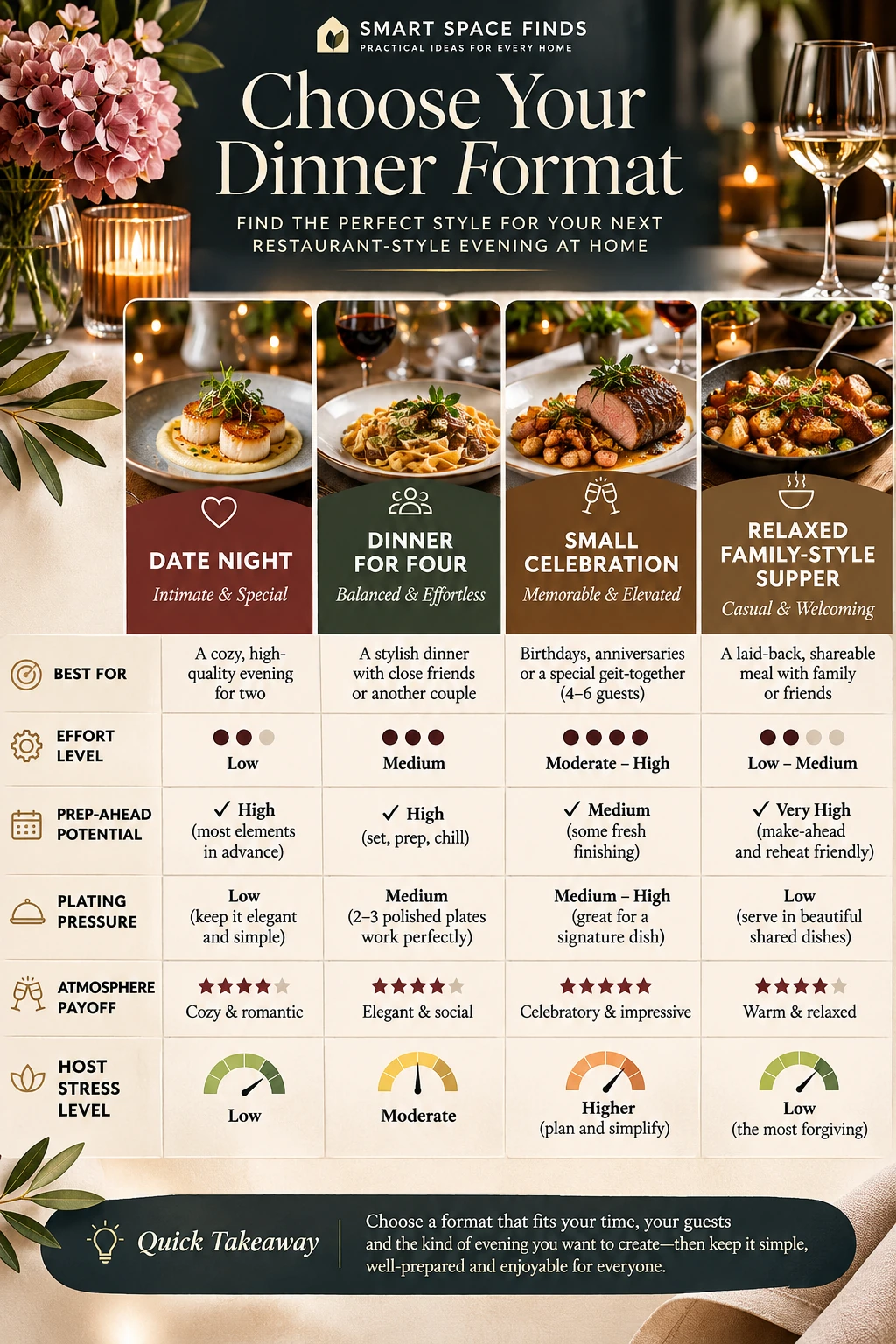
Choose a dinner format that fits your guest count, available preparation time, and preferred style of service.
Dinner for two, four, or six: what actually changes?
Do not multiply every task when the guest count increases. Scale the recipe, but rethink the service format. Two guests can enjoy individually composed plates; six may have a better evening with platters passed around the table.
| Guests | Most manageable service | Where to simplify |
|---|---|---|
| 2 | Individual plating, one shared side | Skip excessive garnishes; use a compact table setting |
| 4 | Plated starter, main plated or shared | Choose a dessert ready before guests arrive |
| 6+ | Shared main and sides, self-serve drinks | Minimize individual plating, clear a staging counter, and confirm seating capacity |
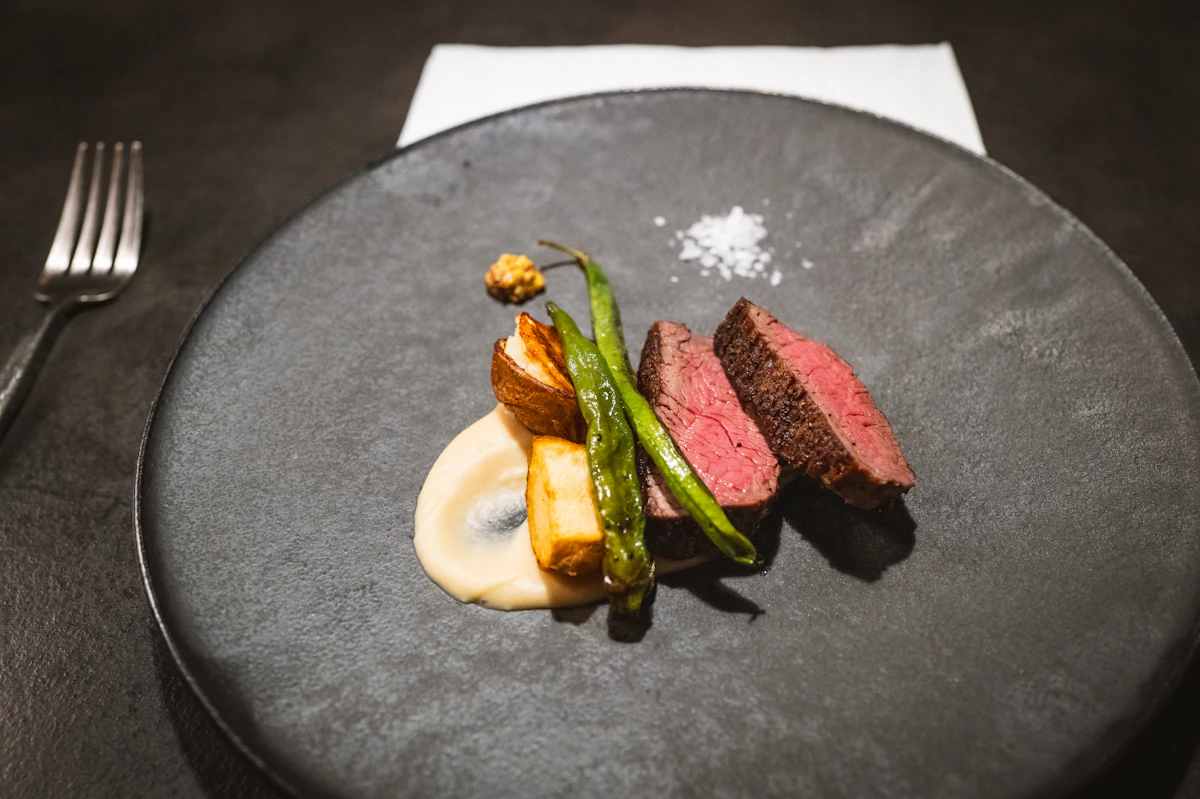
The best presentation combines a clear focal point with food that is comfortable to eat. Photograph: Sung Jin Cho / Unsplash.
Three hosting upgrades to test before you shop
The lighting swap
Eat one familiar dinner with only harsh overhead lighting, then repeat with comfortable layered light. Keep enough light for safe movement and food handling. Notice how the table feels, rather than buying a lamp immediately.
The plating rehearsal
Serve the same dish once in a crowded arrangement and once in three clear groups. Use whichever layout makes the food easier to recognize and eat.
The host’s-seat test
Before inviting anyone, sit in every chair. Can guests see one another, reach their glasses, and move safely? Reposition objects before buying new table decor.
These are editorial exercises, not scientific comparisons. They are designed to help you choose changes that matter in your own home.
The three-menu blueprint: choose your hosting style
These are menu concepts rather than tested recipes. Match cooking times to your chosen recipes, appliances, dietary requirements, and safe food-handling guidance.
| Menu | Welcome / starter | Main | Finish | Best for |
|---|---|---|---|---|
| Coastal Mediterranean | Citrus-marinated olives and shaved fennel salad | Roasted fish or white beans, lemony potatoes, broccolini | Greek yogurt, honey, seasonal fruit | Bright flavors and a relaxed table |
| Modern bistro | Simple greens with mustard vinaigrette | Slow-braised chicken or mushrooms, silky mash, glazed carrots | Chocolate mousse prepared ahead | Comfort food with polished presentation |
| Vegetable-forward supper club | Roasted carrot soup in small bowls | Herb-roasted cauliflower or lentil ragù, creamy polenta, crunchy salad | Poached pears or baked apples | Budget-minded, colorful seasonal cooking |
The five-question menu filter
- Contrast: is there something crisp or acidic alongside richer flavors?
- Workload: can two courses be largely prepared ahead?
- Equipment: do the oven, burners, and refrigerator have enough space?
- Guests: do the dishes respect dietary needs and preferences?
- Service: can you serve food at an appropriate temperature without rushing?
If the answer is no to two or more, simplify the menu before buying anything.
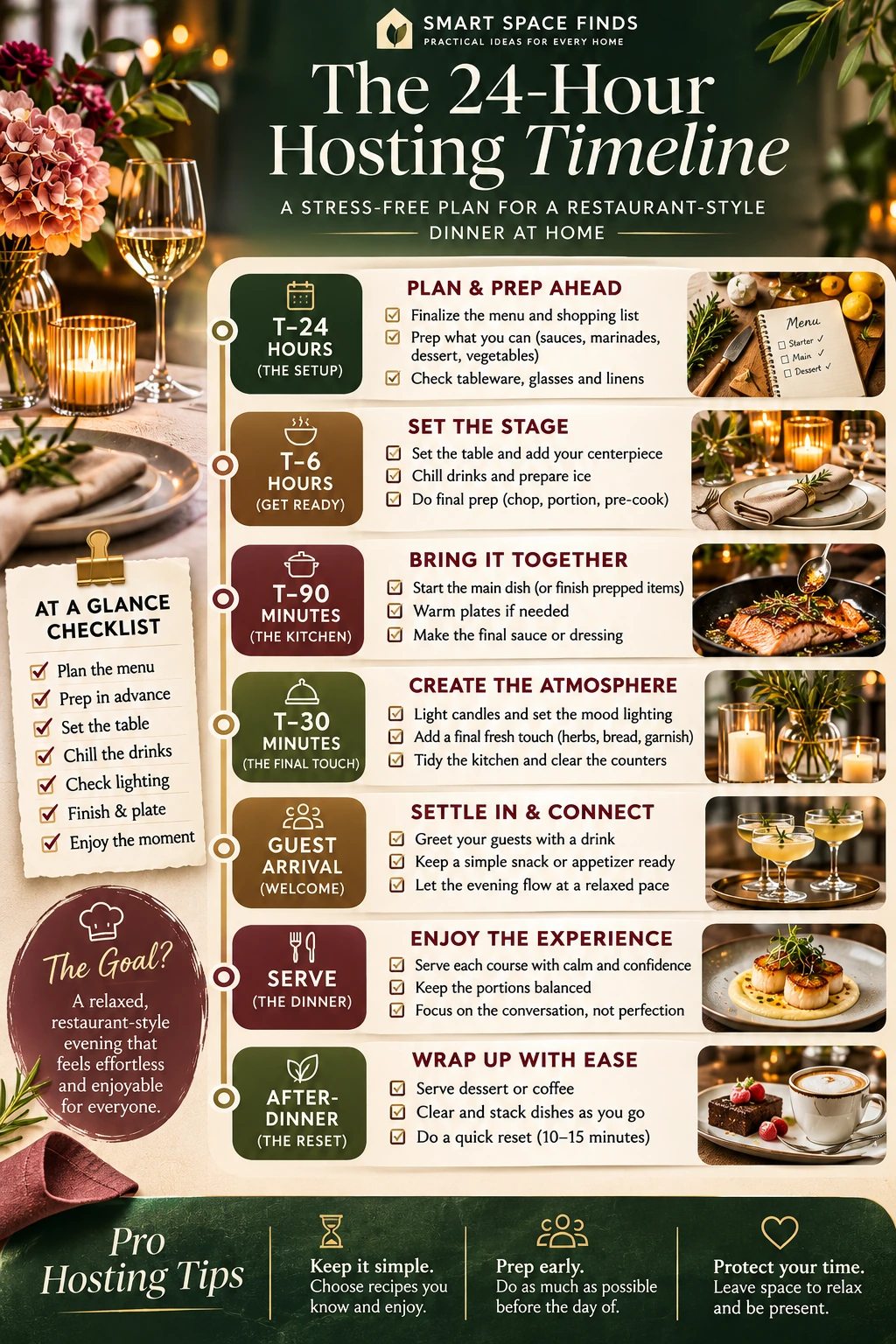
A visual preparation timeline to help keep the evening organized; adapt cooking times and food-safety steps to your menu.
The Make-Ahead Cookware Edit
Choose cookware that reduces the number of last-minute tasks. The Dutch ovens are color alternatives, not a buy-both recommendation.
Lodge Enameled Dutch Oven · Oyster White, 6 qt
For make-ahead braises and oven-to-table meals.
Lodge Enameled Dutch Oven · Red, 6 qt
An alternative finish for the same hosting role.
Hamilton Beach Set & Forget Slow Cooker · 6 qt
For recipes that suit slow cooking and holding.
Cuisinart Custom 14 Food Processor
For repeat prep tasks and larger ingredient batches.
Lodge Pre-Seasoned Cast Iron Skillet · Black, 12-Inch
For searing, roasting, and oven-to-table dishes; a practical alternative to enameled cookware.
Nordic Ware Naturals Aluminum Half Sheet
A useful tray for roasting or prepping components.
USA Pan Half Sheet Baking Sheets · 2-Pack
An alternative baking-sheet option for larger batches.
Affiliate disclosure: As an Amazon Associate, we earn from qualifying purchases. Product availability and prices may change.
The realistic restaurant-at-home hosting timeline
Work backward from the moment you want guests to eat. This sample assumes a 7:00 p.m. arrival; adjust around the actual cooking instructions for your menu.
| When | Host’s job | Why it matters |
|---|---|---|
| 2–3 days before | Confirm guests, allergies, menu, ingredients, serving ware, and shopping list | Prevents last-minute menu changes |
| Day before | Make suitable desserts, dressings, marinades, and components that can be safely refrigerated | Moves effort away from guest time |
| 3 hours before | Set the table; prepare vegetables and equipment; clear countertops | Frees work surfaces during cooking |
| 90 minutes before | Start approved long-cooking items; organize labeled mise en place | Keeps the critical path visible |
| 30 minutes before | Check serving dishes, drinks, lighting, music, and the first-course setup | Creates a relaxed arrival |
| 7:00 p.m. | Welcome guests with a ready-to-serve small bite | Eliminates a rushed beginning |
| Before main | Finish only the final cooking and plating steps that truly need doing now | Keeps food fresh and service predictable |
At T−90, ask: What is cooking? What is already plated or chilling safely? What are the only three things still requiring my hands? If you have more than three active tasks, delegate or simplify.
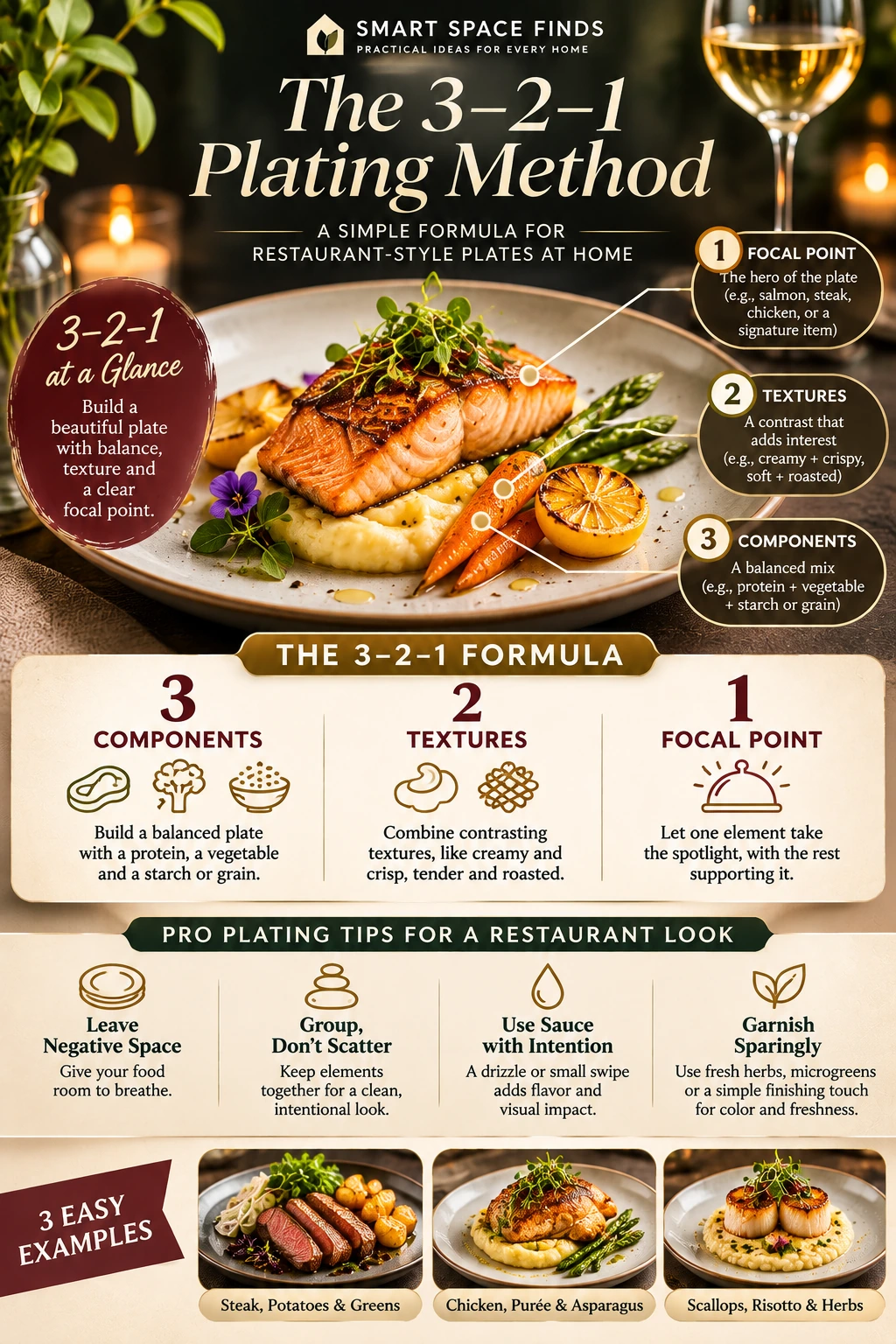
The 3–2–1 plating method: three components, two textures, and one clear focal point.
A simple restaurant plating method anyone can learn
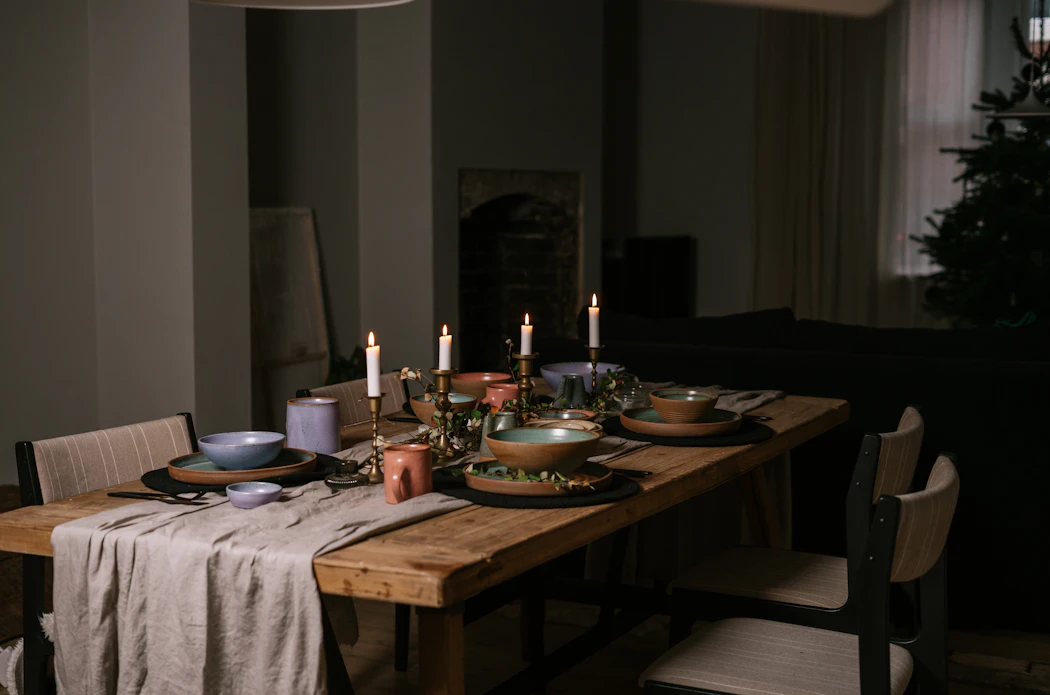
Simple dinnerware offers a neutral base for focused, practical food presentation. Photo: Toa Heftiba / Unsplash.
Use the 3–2–1 plate
3: three recognizable food groups or elements. 2: two contrasting textures, such as creamy and crisp. 1: one clear focal point—the ingredient you want the guest to notice first. Finish with a purposeful garnish only when it adds flavor or freshness.
Take the plate audit
Can the guest identify the main ingredient? Is the plate easy to cut and eat from? Does the sauce belong with the food rather than decorate empty porcelain? Is the rim clean? These matter more than elaborate height.
A practical example: for roast chicken, begin with a spoonful of creamy potato purée, arrange carved chicken partly beside it, place vegetables as one compact group, then spoon sauce beside or lightly over the chicken. Finish with a small amount of fresh thyme. Keep hot components hot and don’t spend several minutes embellishing each plate.
The Plating & Finishing Edit
Practical tools for finishing, measuring and serving food neatly; you do not need every item.
Microplane Premium Classic Zester · Blue
Fine citrus zest and finishing accents.
OXO Good Grips Stainless Tongs · 9-Inch
A compact option for precise handling.
OXO Good Grips Nylon Tongs · 9-Inch
An alternative where nylon tips suit the cookware.
OXO Stainless Locking Tongs · 12-Inch
Longer reach for handling hot ingredients.
OXO Angled Measuring Cup · 2 Cups
Measurements you can check from above.
OXO Steel Angled Measuring Jigger · 2 oz
For precisely measured drinks and dressings.
Affiliate disclosure: As an Amazon Associate, we earn from qualifying purchases. Product availability and prices may change.
Set a memorable dinner table without creating clutter
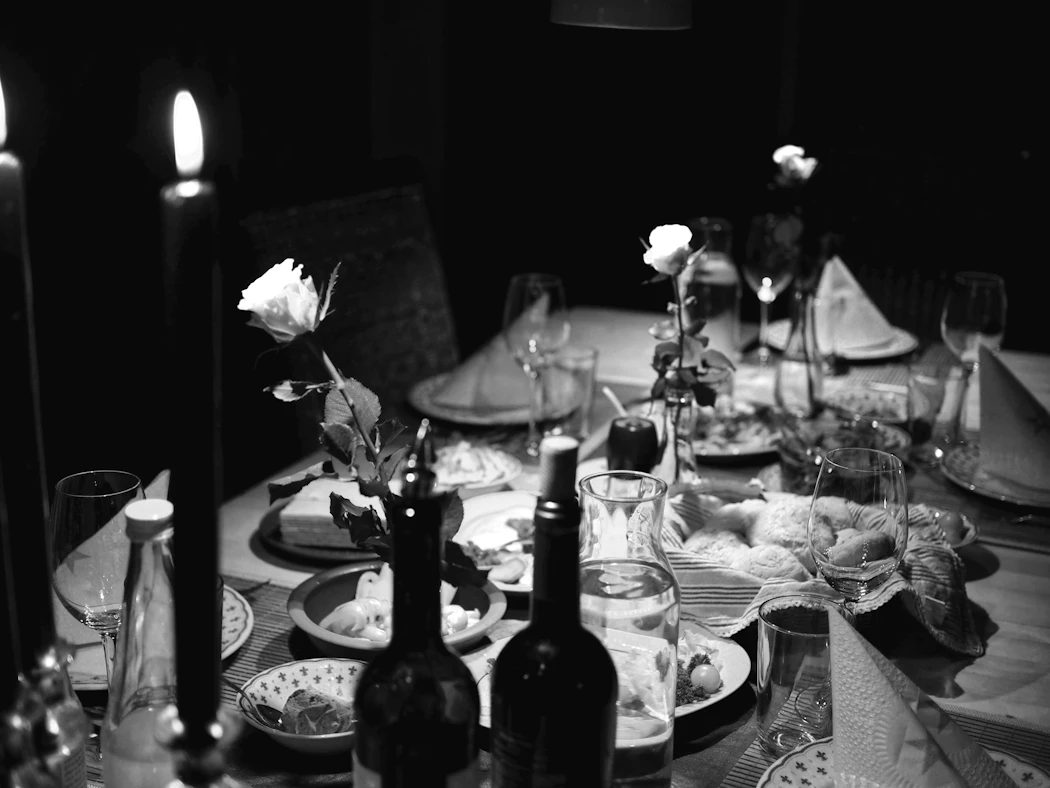
Consider repetition, scale, and conversational comfort when setting a dinner table. Photo: Niklas Ohlrogge / Unsplash.
Start with three anchors: a consistent base (bare wood or linen), one repeated material (ceramic, clear glass, or metal), and one accent (greenery or warm color). Repetition looks considered even when dishes are mismatched. The right table setting is the one that supports the meal rather than competing with it.
- For a small dining nook: use one short centerpiece, stack additional plates in the kitchen, and choose slim water glasses.
- For dinner for two: concentrate the atmosphere around one small light source and a shared serving dish.
- For four to six guests: use a separate sideboard or counter for drinks, extra cutlery, and serving platters.
- For a rental or apartment: favor portable lighting, a washable runner, and reusable textiles instead of permanent changes.
For spatial planning, see our compact dining storage ideas. For seasonal inspiration, explore table decor for small dining nooks and adapt the same scale principles for year-round dinners.
The Table-Ready Edit
Use what you own first. These reusable pieces can help with everyday dinners as well as special occasions.
Utopia Home Cloth Napkins · 24-Pack
A reusable, washable table essential.
Libbey Stackable Stemless Glasses · Set of 6
A compact glassware option for serving drinks.
Libbey Kentfield Estate Wine Glasses · Set of 4
A more formal stemmed-glass alternative.
Bormioli Rocco Bodega Maxi Glasses · Clear, 17 oz, Set of 12
A simple stackable-style tumbler alternative for water and other drinks.
Libbey Stemless Wine Glasses · Clear, Set of 12
A mix of stemless red- and white-wine glass shapes for entertaining.
Gibson Home Oslo Porcelain Dinnerware · White/Black Rim, 16-Piece
A contrasting-rim setting for four, with versatile plates and bowls.
Gibson Elite Manila Bay Stoneware · Reactive Glaze, 16-Piece
An artisan-inspired alternative with a distinctive glaze.
Corelle Vitrelle Winter Frost White · 18-Piece
A versatile light-colored dinnerware set.
Affiliate disclosure: As an Amazon Associate, we earn from qualifying purchases. Product availability and prices may change.
The spend-$0-first elegance test
Before purchasing tableware, try a complete dry run with your current dishes. Launder or press your napkins, use everyday plates, rearrange lighting, reduce visible clutter, and prepare one simple menu you have cooked before. Notice what actually caused friction—insufficient serving dishes, poor task lighting, missing tongs, or nowhere to set a hot pan.
| Free upgrade | Consider buying only if… | Skip when… |
|---|---|---|
| Fold existing napkins neatly | You regularly need washable extras for guests | It is just a one-night color trend |
| Move a lamp closer to the table | Your dining area consistently lacks comfortable light | Safe, effective lighting is already available |
| Serve on ordinary plates with cleaner composition | You repeatedly run out of useful serving pieces | New shapes will crowd limited storage |
| Use a baking tray to group kitchen tools | Dedicated tools would significantly simplify frequent hosting | They duplicate equipment you own |
Food safety belongs in an elegant dinner plan
Keep perishable foods refrigerated at 40°F (4°C) or below until needed, follow safe internal cooking temperatures for the particular food, and return leftovers promptly to refrigeration in shallow containers. The USDA advises not leaving perishables at room temperature for more than two hours, or one hour in temperatures above 90°F. This is especially important when courses are served slowly. Read the USDA two-hour rule.
The first-dinner experiment: one evening, three things to notice
Host a trial dinner for yourself or one trusted guest. Afterward, record: (1) which moment felt effortless, (2) where you lost time, and (3) which detail made the table more comfortable. Change one variable next time. An elegant ritual is something you can repeat—not a production you need a week to recover from.
Restaurant-style dinner at home: frequently asked questions
How do I make dinner feel fancy without spending much?
Use your existing dishes, choose a well-balanced menu, clean the table, soften the lighting, and prepare food in advance. Intentional presentation is usually more valuable than new décor.
What is the easiest three-course menu for beginners?
Choose a cold salad or soup that can be made ahead, a familiar roasted or braised main with one side, and a ready-to-serve dessert. The easiest menu is one whose steps fit your own equipment and skill level.
How many courses should a dinner party have?
Two or three courses are plenty for most home dinners. A welcoming snack, a main dish and an easy dessert can feel more generous than a complex five-course menu with long delays.
How can I plate food like a restaurant chef?
Use a plate with enough room, organize food into clear groups, pair textures, place sauce purposefully and finish with one edible garnish. Prioritize temperature and the eating experience.
What if I have a very small kitchen or dining table?
Pick a make-ahead menu, minimize last-minute stove work and keep extra serving pieces off the table. Use a nearby counter as a staging area and serve in two or three deliberate stages.
Can I prepare an elegant dinner the day before?
Many menu components can be prepared in advance, but not all. Choose recipes that explicitly permit advance preparation, chill perishables safely and reserve final heating or crisping for service.
The Host’s Practical Prep Kit
Small workflow improvements may matter more than extra decoration.
OXO Good Grips Salad Spinner · 6.22 qt
For drying leafy greens ahead of service.
ThermoPro TP19H Instant-Read Thermometer
Check doneness rather than relying on guesswork.
OXO Stainless Steel Mixing Bowls · Set of 3
Organize prepared components and mix ingredients.
Rubbermaid Brilliance Glass Food Storage · 9-Count
Keep prep organized in reusable containers.
Amazon Basics Digital Kitchen Scale · 11 lb
Measure recipe ingredients consistently.
KitchenAid Albany Kitchen Towels · 4-Pack
Keep clean, reusable towels ready for preparation.
Affiliate disclosure: As an Amazon Associate, we earn from qualifying purchases. Product availability and prices may change.
The service choreography: run your dinner like a calm little restaurant
The difference between a kitchen that feels organized and one that merely looks tidy is the order of operations. For each course, name the final action, identify its dependency, and choose a place for the finished plate. In a professional kitchen, this sequence is planned before service; at home it can fit on a sticky note.
Set the pass
Put clean plates, serving utensils, a towel, and finishing ingredients in one accessible spot.
Cook the last-minute item
Finish the one component that needs heat or crispness while everything else is ready.
Repeat one composition
Use the same sequence for every plate to reduce decisions and keep portions consistent.
Move together
Bring completed plates out promptly; don’t hold food while arranging decorative details.
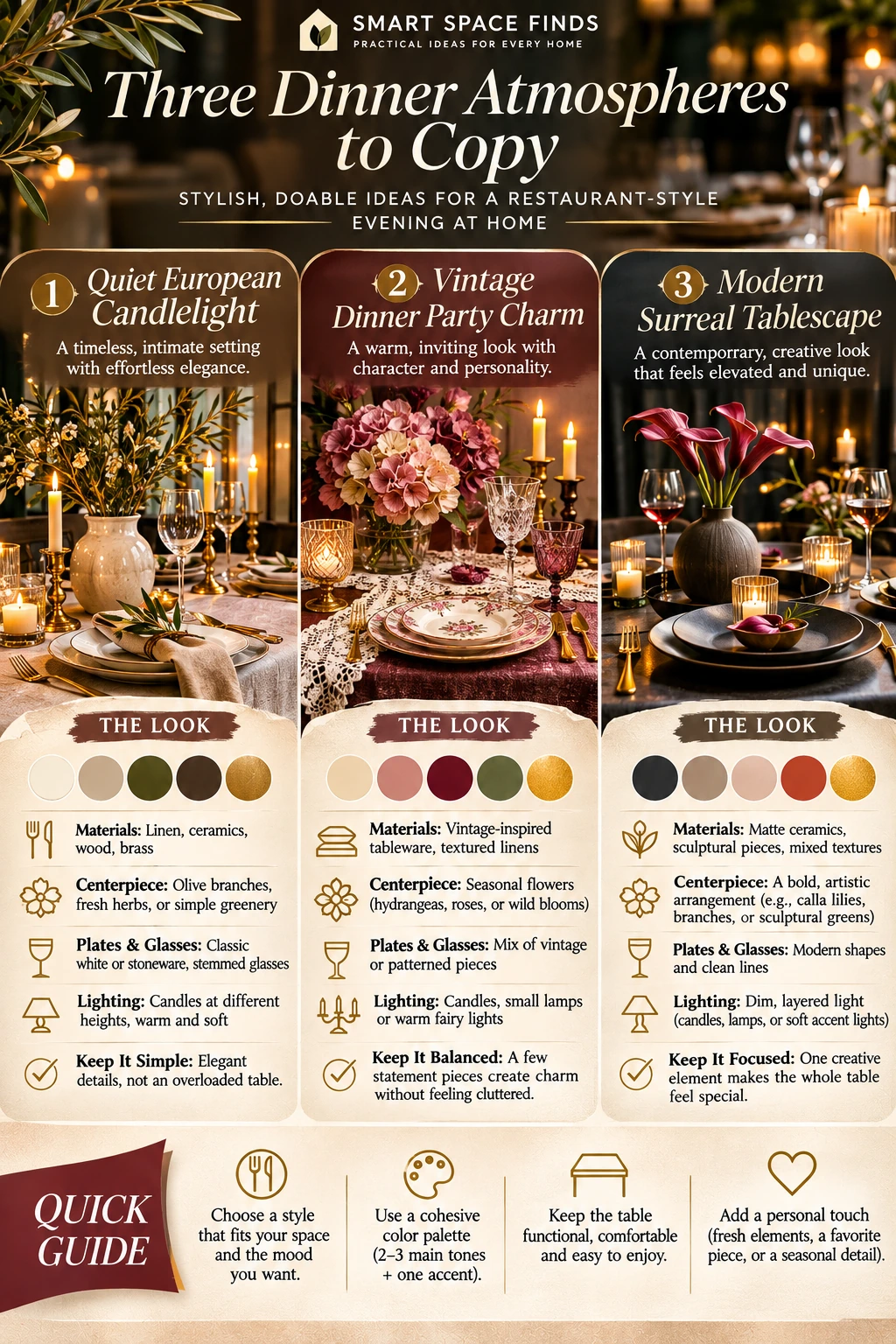
Three distinct dinner table aesthetics, with materials, color palettes, lighting, and centerpiece ideas you can adapt at home.
The restaurant-at-home atmosphere formula
Think in three layers rather than a single centerpiece: what your guest notices at the doorway, what feels comfortable while seated, and what makes the food enjoyable. A striking table that leaves no room for glasses or serving dishes is not a successful design.
Remove countertop clutter from the guest’s sightline.
Layer warm ambient light with enough task light for safe food handling.
Keep flowers and candles low and avoid scent-heavy arrangements.
The Candlelight Atmosphere Edit
One thoughtfully placed lighting detail can be enough; avoid crowded or visually distracting tables.
Homemory Flameless Taper Candles · Ivory
Battery-powered candlelight for a softly lit dinner table.
Affiliate disclosure: As an Amazon Associate, we earn from qualifying purchases. Product availability and prices may change.
The elegant dinner rescue guide
Beautiful hosting is not an evening without surprises; it is knowing which compromises are worth making. Use this quick decision table when timing or space starts to work against you.
| If this happens… | Do this instead | Protect this priority |
|---|---|---|
| The main is running late | Serve the planned starter and explain the timing simply; do not rush safe cooking. | Food safety and guest comfort |
| Every burner is occupied | Choose a room-temperature starter or finish a vegetable side earlier. | Manageable kitchen capacity |
| The table feels crowded | Move drinks and serving platters to an adjacent surface. | Elbow room and clear sightlines |
| The plating looks fussy | Remove one decorative element and emphasize the main ingredient. | Food clarity and temperature |
| Guests have different diets | Prepare a safe, deliberate alternative and use separate tools where allergen cross-contact is a concern. | Inclusion without improvising safety |
| You are doing everything yourself | Serve the main family-style and use a prepared dessert. | Time spent with guests |
Your one-page dinner briefing
Before the evening, copy these prompts into your phone or notebook. They are deliberately short enough to use while shopping or cooking.
How many seats? Any dietary requirements, allergies, or access needs?
Welcome bite: ____
Main: ____
Easy finish: ____
Day-before item: ____
Last-minute item: ____
Serving spot: ____
Lighting: ____
Music: ____
Where extra dishes go: ____
The last word
The most convincing luxury is not performance. It is a dinner that feels thoughtful from arrival to the final cup of tea—and leaves the host with time to enjoy the people at the table. Choose a menu you trust, prepare a little more than you think you need, and let simplicity do the rest.