
Small-Space Living / The Organization Edit
Your home gym should work hard—and disappear beautifully when your workout is over. These home gym equipment storage ideas turn awkward corners, shallow closets, and underused furniture into an organized fitness setup that fits real apartment life.
The quick answer
For most small homes, the smartest combination is low, weight-rated storage for dumbbells and kettlebells, vertical holders for yoga mats, hooks or a small organizer for bands, and a dedicated parking spot for foldable equipment. Keep heavy gear low, frequently used pieces accessible, and the walkway completely clear.
Below, you’ll find 15 ideas, three realistic room layouts, a measurement checklist, and a product-selection framework that helps you buy only what your space actually needs.
In this guide: 15 storage ideas · Storage by equipment type · Three small-room layouts · What to buy first · FAQs
Think of your home gym as a room that transforms
The best-looking home gyms in small spaces have two modes. During a workout, everything is accessible; afterward, the floor clears and the room returns to being a bedroom, office, or living space. That is the design brief: fast to set up, easy to put away, calm to look at.
Before buying a rack, divide your equipment into four groups:
The most beautiful storage solution is the one you’ll actually use after every workout.
15 Home Gym Equipment Storage Ideas That Make Small Spaces Feel Bigger
1. Create one dedicated strength-training corner
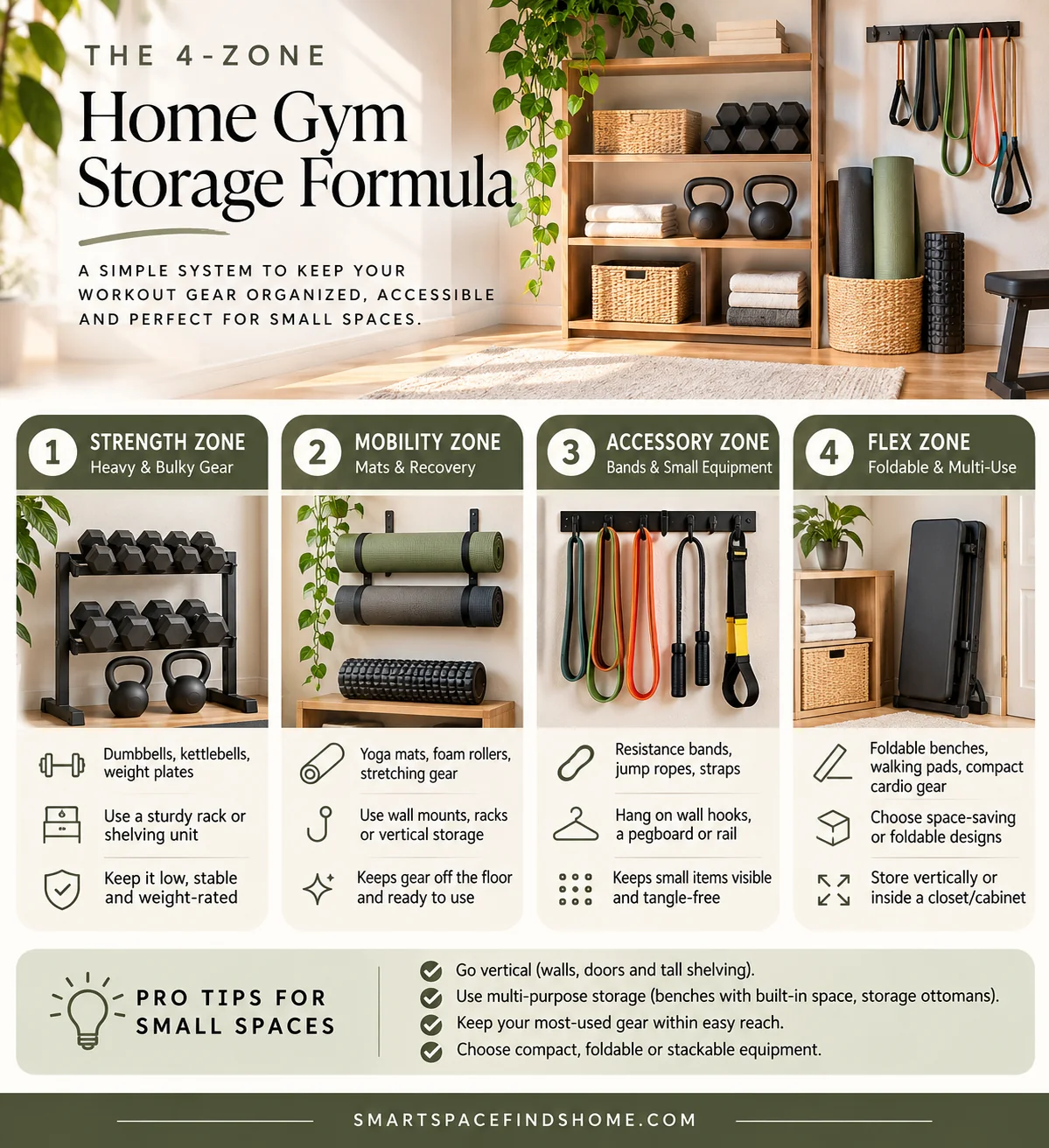
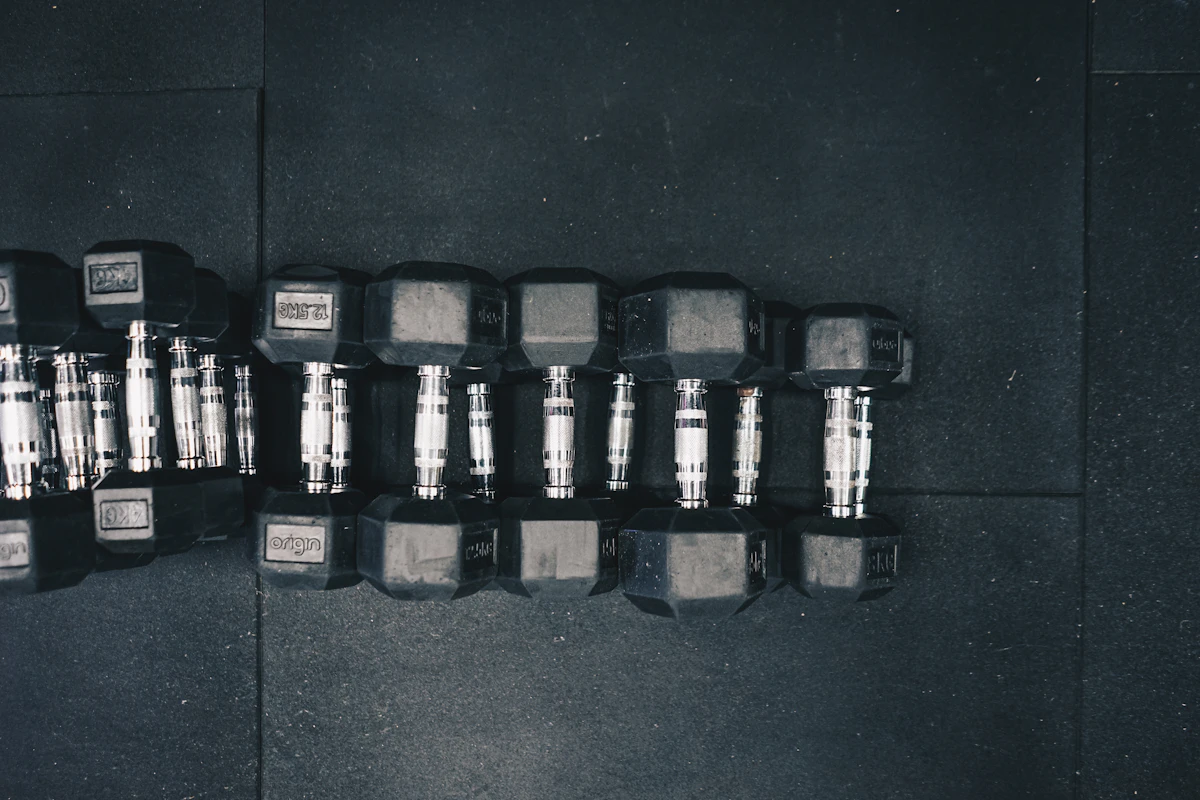
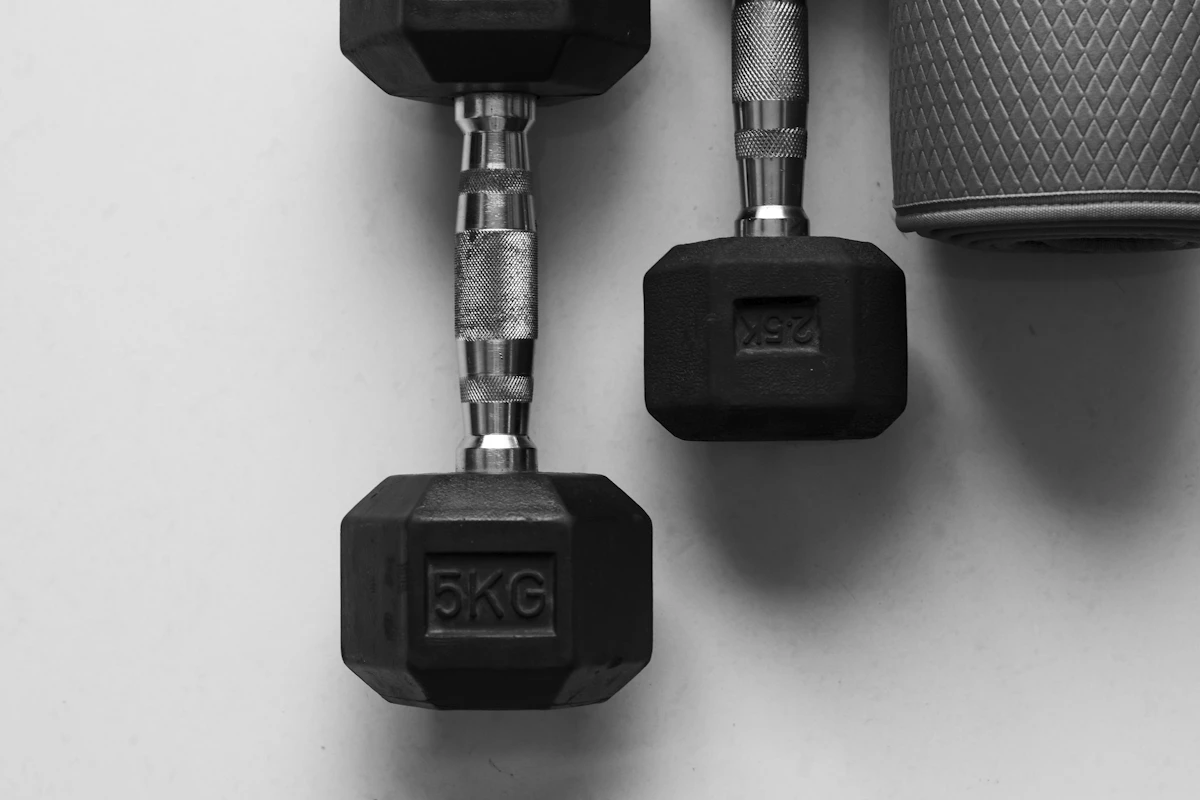
Choose a spot near your workout area and keep all dense equipment together, rather than scattering weights beneath furniture. A compact freestanding rack may be worth the floor space if it keeps each dumbbell in a secure cradle and prevents rolling. Measure the rack’s full depth—including the weights—before ordering.
Best for: people who train with multiple dumbbell pairs or a few kettlebells. Look for: a stable base, total and per-tier load ratings, protective feet, and easy access to every weight.
SMART SPACE FINDS / CURATED STORAGE EDIT
01 / Strength storage
Start with the weight setup that matches your equipment and available floor space. Check the rated capacity and rack dimensions.
Affiliate disclosure: As an Amazon Associate, we earn from qualifying purchases. Product availability, prices and sellers may change; please verify the details on Amazon before buying.
2. Stand yoga mats in a slim vertical holder
A rolled yoga mat is surprisingly awkward to store horizontally. A slim floor stand, upright basket, or purpose-built mat holder can make use of a narrow space beside a bookcase. Make sure the holder stays upright when mats are removed and that damp mats dry fully before being enclosed.
Design tip: choose a matte finish or a natural-toned holder that coordinates with your furniture, rather than introducing another bright plastic container.
3. Give resistance bands their own hook system
Bands disappear into drawers, tangle around one another, and become difficult to identify. A rail with several hooks or a small pegboard can separate loop bands, tube bands, and handles. Use light-duty hooks only for light accessories—not for weights or load-bearing exercise attachments.
For renters: an over-door organizer or a drawer with dividers can avoid drilling. Check door clearance and hardware restrictions before installation.

SMART SPACE FINDS / CURATED STORAGE EDIT
02 / Mobility & yoga storage
Choose a freestanding or wall-mounted system according to your space, lease and mounting conditions.
Affiliate disclosure: As an Amazon Associate, we earn from qualifying purchases. Product availability, prices and sellers may change; please verify the details on Amazon before buying.
4. Turn a closet into a mini equipment station
A shallow closet can hold far more than workout clothes. Keep heavy equipment on a stable bottom surface, place light accessories in shallow labeled containers, and reserve an upright slot for a mat or roller. The door must still close without pressing on the equipment.
Make it effortless: keep the items used in your most frequent workout together at waist height, except for heavy weights, which belong low.
5. Use a low-profile bin under the bed—for light gear
Under-bed storage is ideal for sliders, light bands, workout towels, gloves, and jump ropes. Measure both the container’s height and the route it must travel to slide out. Choose a lid only if the contents are completely dry. Heavy dumbbells do not belong in flimsy rolling bins.
6. Hide lightweight workout accessories in a storage ottoman
A storage ottoman is the living-room-friendly solution when you want the room to look fully residential. It can hold a jump rope, yoga blocks, rolled towels, and small recovery tools. Check the furniture’s stated storage load limit; an ordinary ottoman is not automatically a safe weight rack.
SMART SPACE FINDS / CURATED STORAGE EDIT
03 / Concealed storage
Keep light accessories out of sight with under-bed bags, fabric cubes or dual-purpose furniture. Do not use soft bins for loose heavy weights.
Affiliate disclosure: As an Amazon Associate, we earn from qualifying purchases. Product availability, prices and sellers may change; please verify the details on Amazon before buying.
7. Install a narrow pegboard for everyday accessories
Organize bands, straps, hand grips, and a workout timer vertically. Keep the pegboard visually quiet with evenly spaced hooks and just a few frequently used items. Heavy gear requires a separately engineered, rated mounting system—not decorative pegboard hooks.
SMART SPACE FINDS / CURATED STORAGE EDIT
04 / Easy-access accessories
Portable and wall-mounted solutions keep lightweight workout essentials together.
Affiliate disclosure: As an Amazon Associate, we earn from qualifying purchases. Product availability, prices and sellers may change; please verify the details on Amazon before buying.
8. Create a ‘one basket’ recovery station
A foam roller, massage ball, yoga block, and towel can live in one breathable floor basket. Choose a basket with a shape that prevents the roller from falling out. This is especially effective beside a neutral armchair or a reading corner.
SMART SPACE FINDS / CURATED STORAGE EDIT
05 / Recovery essentials
One optional add-on for the mobility kit: choose a size you have room to store.
Affiliate disclosure: As an Amazon Associate, we earn from qualifying purchases. Product availability, prices and sellers may change; please verify the details on Amazon before buying.
9. Store a folding bench only where it actually fits
A foldable workout bench can be tucked behind a sofa or placed in an approved closet orientation, but don’t assume every bench is designed to stand upright. Check the manufacturer’s storage instructions, folded measurements, locking mechanism, and potential tip risk.
10. Design a parking space for a walking pad
A walking pad may fit beneath a raised sofa, a bed, or against a wall—but only if its instructions permit that exact storage position. Measure the entire stored height, including wheels and handles, and leave access for safe lifting. Avoid tight spaces that crush cables or obstruct ventilation during use.
11. Use a rolling cart for lightweight equipment
For resistance bands, yoga blocks, water bottles, and towels, a narrow rolling cart gives you a portable setup that tucks into a closet after training. Check wheel locks, cart stability, and shelf ratings; avoid loading it with loose dumbbells.
12. Add a small open shelf above the accessory zone
Use a shallow shelf for lightweight items, small storage boxes, and a folded towel stack. It’s a good way to bring visual structure to an equipment corner. Never put dense weights on an ordinary floating shelf unless the complete mounting assembly and supporting wall are explicitly rated for that load.
13. Use furniture that visually matches your living space
A cabinet with ventilated interior storage, a low storage bench, or a coordinated basket can make fitness equipment feel intentionally integrated. Look for smooth doors, hidden cable management where needed, and finishes that echo your room’s wood, metal, or textile palette.
14. Keep a ‘daily workout kit’ within easy reach
Pack your most-used bands, straps, and sliders in one small pouch or tray. This avoids opening five different containers before every session. Store occasional-use items separately, so the daily kit stays genuinely compact.
15. Design a five-minute post-workout reset
Give each item a specific return location. Wipe equipment after use, allow anything damp to dry, return heavier pieces first, coil and separate bands, then clear the floor. A storage system that takes too long to reset is usually too complicated.
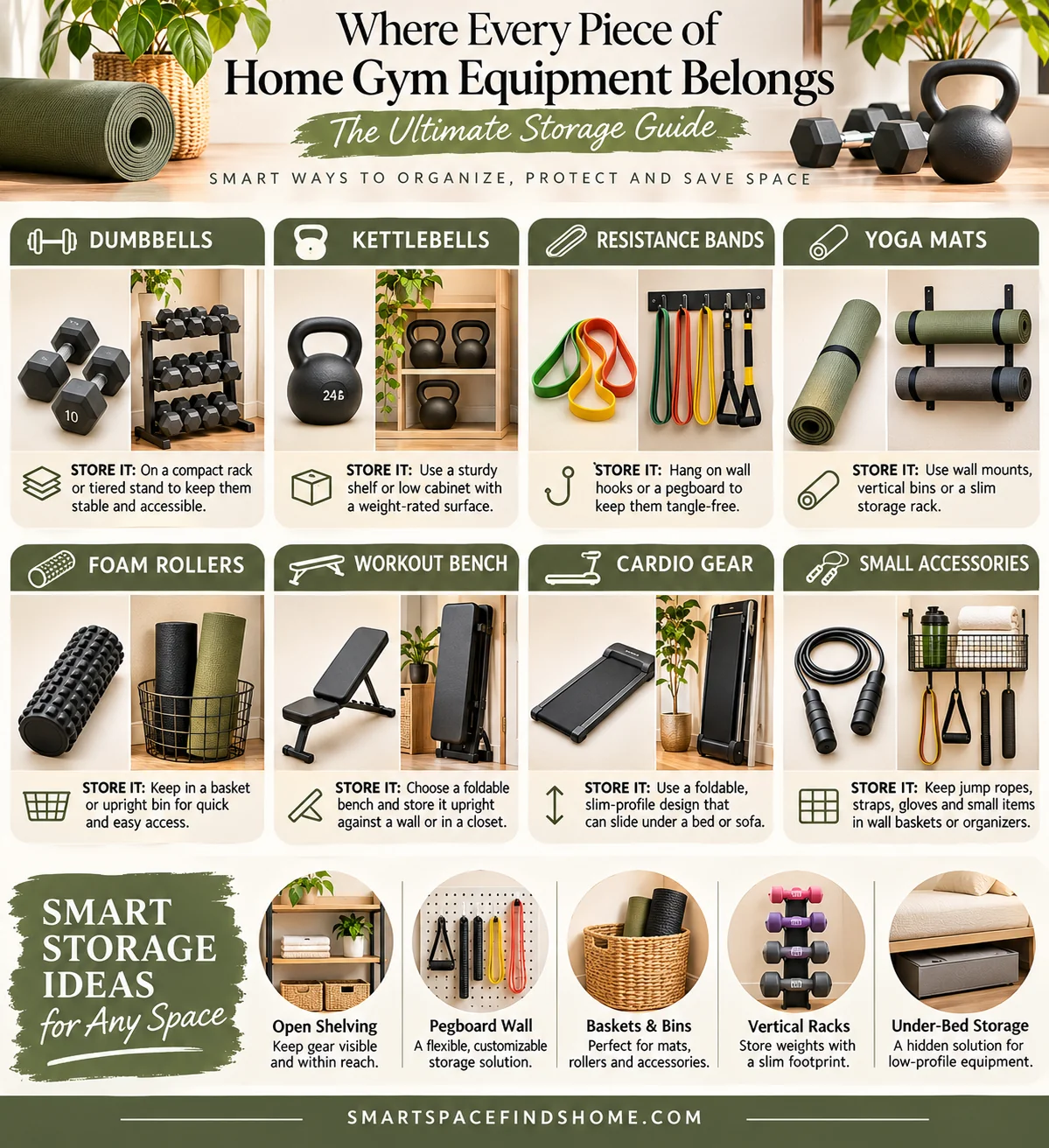
The right storage method for every piece of equipment
| Equipment | Smart storage choice | Avoid |
|---|---|---|
| Dumbbells | Floor-level tray or weight-rated rack | Unrated shelves, loose rolling weights |
| Kettlebells | Stable low surface with handle access | High shelves and precarious stacking |
| Resistance bands | Separated hooks, divided drawer, pouch | Knots, sharp edges, direct heat |
| Yoga mats | Upright mat holder or mat strap | Storing damp in sealed bins |
| Foam rollers | Tall basket or dedicated horizontal cubby | Loose placement in walkways |
| Folding bench | Approved folded position in measured alcove | Unstable upright leaning |
| Walking pad | Manufacturer-approved stored position | Blocked doors, crushed cables |
Three layouts that work in real small homes
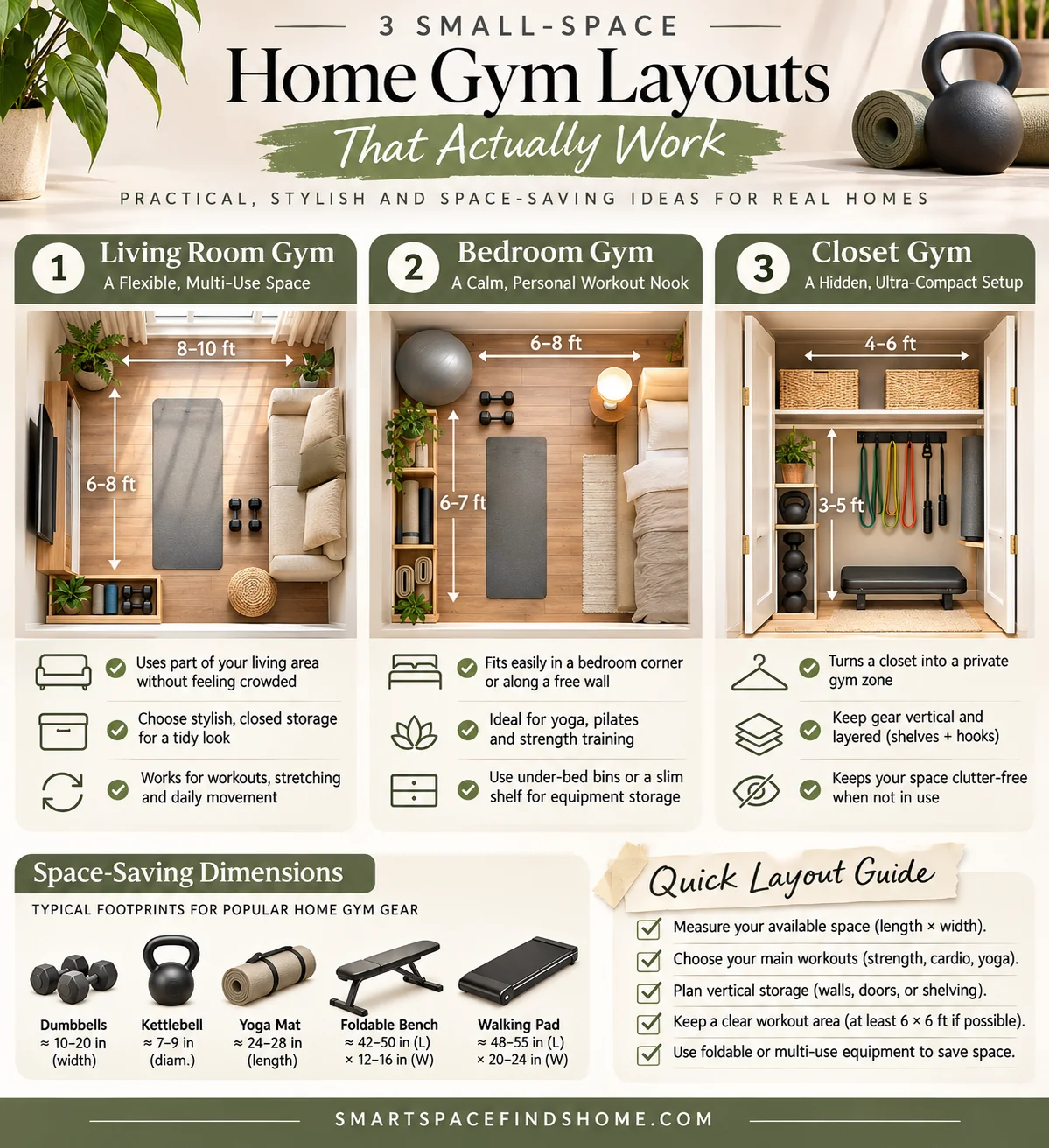
Layout A / The living room that becomes a gym
The plan: place a compact rated weight rack against a solid wall, use a lidded ottoman for lightweight accessories, and keep a rolled mat in a narrow holder beside the cabinet. Open the floor for workouts; close everything away afterward.
Best purchases: one weight-storage solution and one discreet accessories container. Skip: bulky open shelving if your living room already has enough visual clutter.
Layout B / The renter-friendly bedroom workout nook
The plan: use under-bed bins for lightweight accessories, a freestanding mat holder beside the wardrobe, and a low stable location for weights. Favor removable organizers, but don’t assume adhesive hooks can carry anything beyond their stated light-duty rating.
Best purchases: slim mat holder, under-bed bin, drawer dividers. Skip: wall-mounted weight systems that require unapproved drilling.
Layout C / The closet gym that disappears
The plan: reserve the bottom for properly supported heavy equipment, middle-level bins for the daily kit, and vertical space for mats. Label sections simply: STRENGTH, MOBILITY, ACCESSORIES.
Best purchases: stable low rack or tray and matching shallow bins. Skip: extra containers before measuring your closet opening and usable depth.
The measurement checklist: know these numbers before you shop
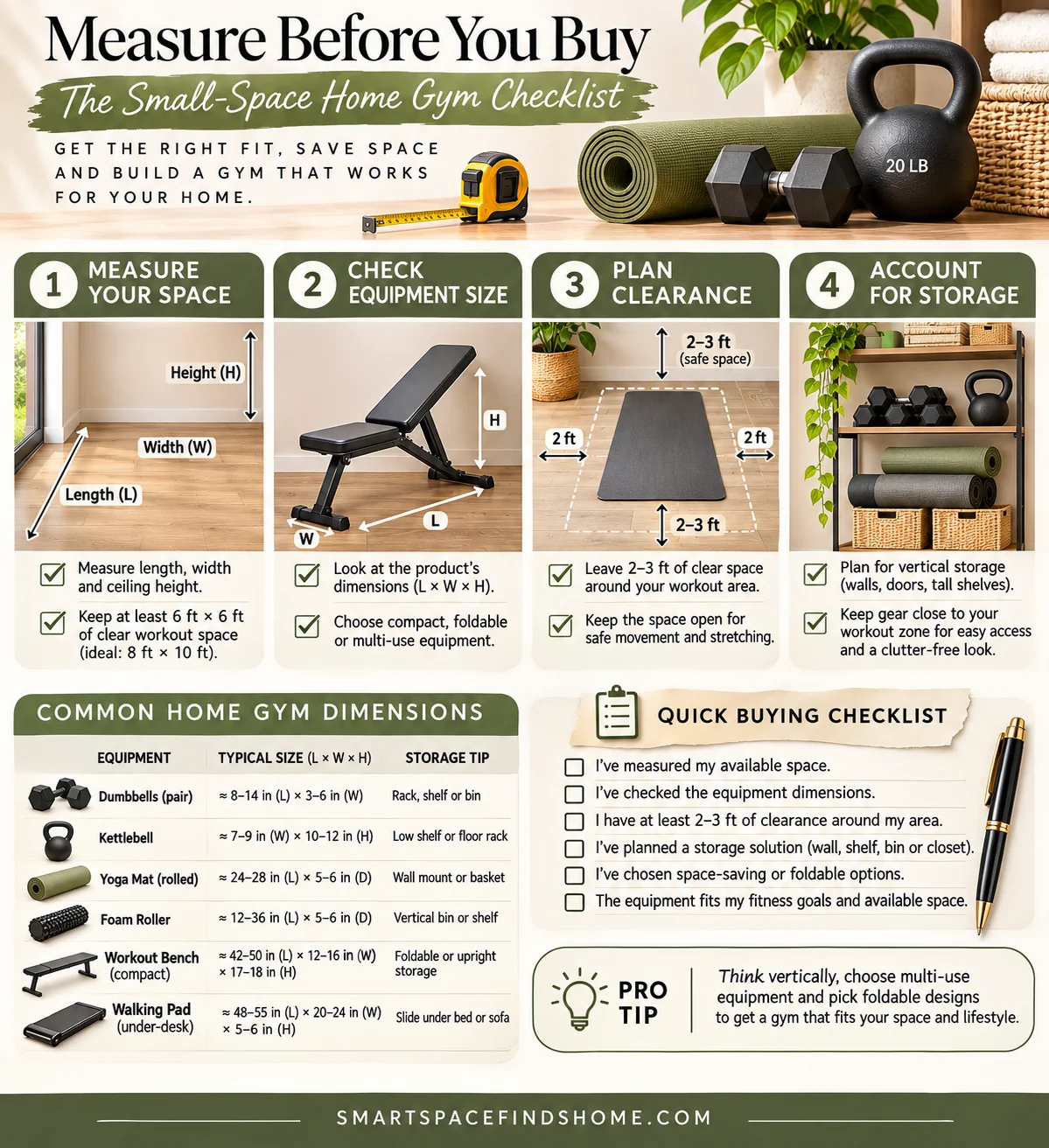
- Storage footprint: measure width, depth, and height of your intended storage zone.
- Retrieval clearance: allow space to lift out a kettlebell, remove dumbbells, or roll a cart forward safely.
- Equipment dimensions: measure folded size, handles, wheels, and any protruding parts.
- Load ratings: compare the actual combined equipment weight with the organizer’s stated limits; account for the supporting wall or floor.
- Traffic paths: ensure you can open doors, reach exits, and move around the room without tripping.
Safety comes before aesthetics. Never store heavy free weights above head height on ordinary household shelving. Verify wall construction, anchors, organizer ratings, and all equipment manufacturer’s instructions. Children and pets should not be able to pull over a rack or access unsecured weights.
What to buy first: a smarter shopping strategy
Do not buy all the organizers at once. Start with the biggest storage problem and add only what solves it. The best first purchase depends on your equipment, not on how many products can fit in an online cart.
The five questions that make a storage product worth buying
- Will it hold the equipment I own today—not a hypothetical future setup?
- Does it fit the measured footprint and allow safe access?
- Is it rated for the weight and correctly supported?
- Can I put equipment away quickly after each workout?
- Does the finish and silhouette work with the room?
The common storage mistakes that make a small gym feel smaller
- Buying a big rack before measuring. The rack may technically fit but leave no space to remove equipment.
- Putting weights on decorative shelves. Small dimensions do not mean low weight.
- Using too many baskets. Multiple containers can create more visual clutter than one well-designed station.
- Ignoring your reset routine. The best setup is one you can close down after every session.
- Buying organizers before sorting gear. Remove duplicate or unused accessories first; don’t pay to store them.
A practical seven-day organization plan
Day 1: inventory your equipment. Day 2: measure every candidate storage spot. Day 3: pick a safe permanent home for weights. Day 4: contain mats and rollers. Day 5: separate bands and accessories. Day 6: test a complete workout and reset. Day 7: buy only the missing organizer that would make the system easier to use.
Home Gym Storage FAQs
How do you store gym equipment in a small apartment?
Group it by weight and shape. Keep heavy weights on a stable low rack or surface, store mats vertically, organize bands separately, and reserve a measured spot for foldable items. Keep doors and walkways clear.
Can you store dumbbells on regular shelves?
Only if the shelving, brackets, fasteners, wall or floor support, and individual shelf load are all rated for the actual weight. A purpose-built low rack is generally easier to assess than decorative shelving.
What is the best storage for resistance bands?
Separate hanging hooks, a divided drawer, or a small band organizer prevent tangles. Keep bands away from heat, sharp edges, and conditions prohibited by their manufacturer.
Where should you put a yoga mat in a small bedroom?
Try a narrow vertical holder beside a wardrobe, a dedicated closet slot, or a mat strap on a suitable lightweight hook. Let the mat dry before enclosing it.
How can renters organize a home gym without drilling?
Use freestanding mat holders, stable low racks, drawer organizers, under-bed bins for lightweight items, and furniture with built-in storage. Follow lease rules and avoid attaching heavy equipment to temporary hooks.
Is it safe to store a folding bench or walking pad upright?
Only when the manufacturer specifically approves that orientation and any required locking or securing steps. Otherwise follow the product’s storage instructions.
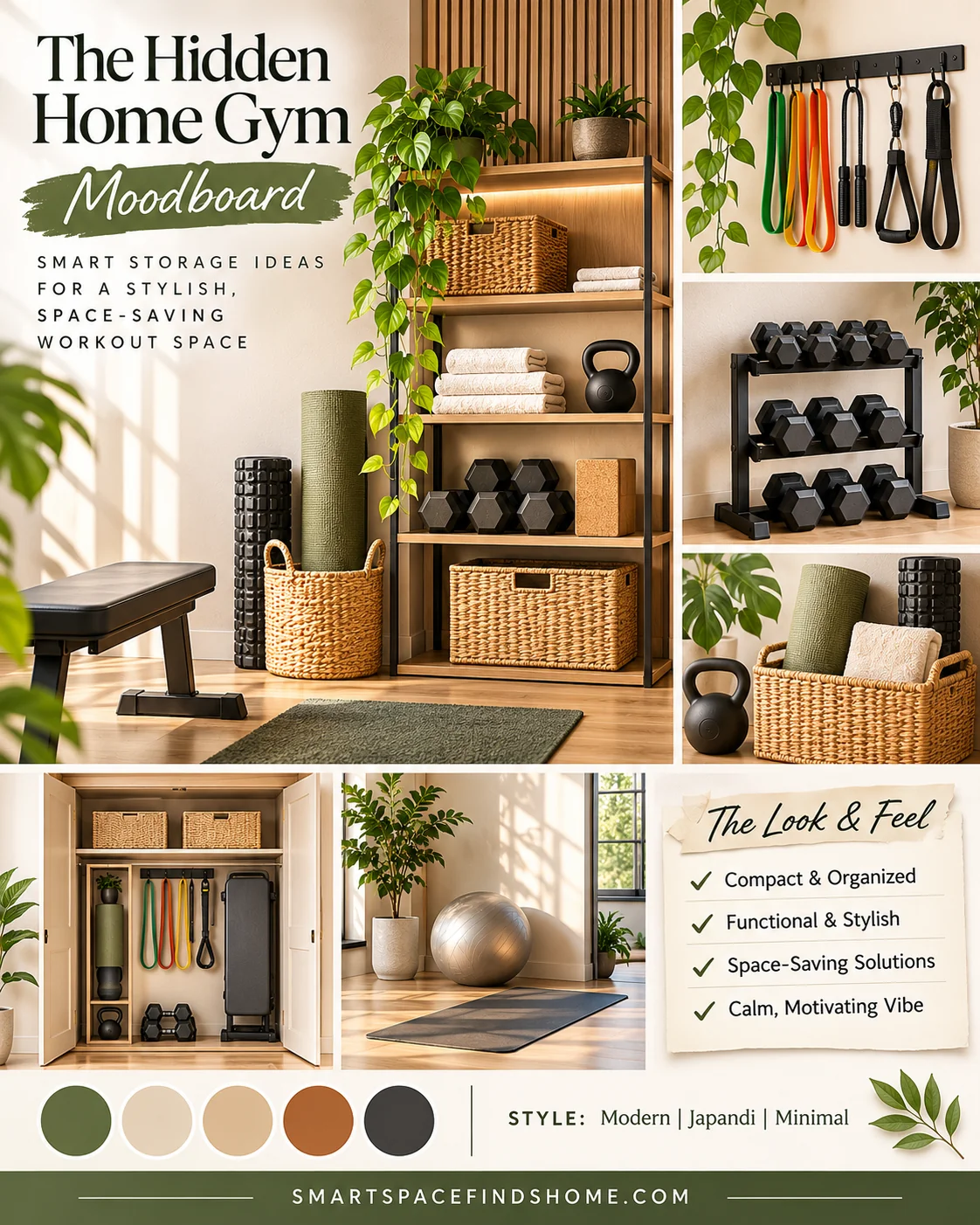
The final edit: less equipment on display, more room to live
A well-organized small home gym doesn’t need to announce itself. A compact weight station, a slim mat holder, and a discreet accessories container can make an entire workout system feel like part of the architecture of your home. Choose safe storage first, keep your favorite gear easy to reach, and let the room return to calm when you’re finished.
Start with one move today: choose the piece of equipment that causes the most clutter and give it a permanent home. That’s the foundation of a home gym you’ll actually enjoy using.