
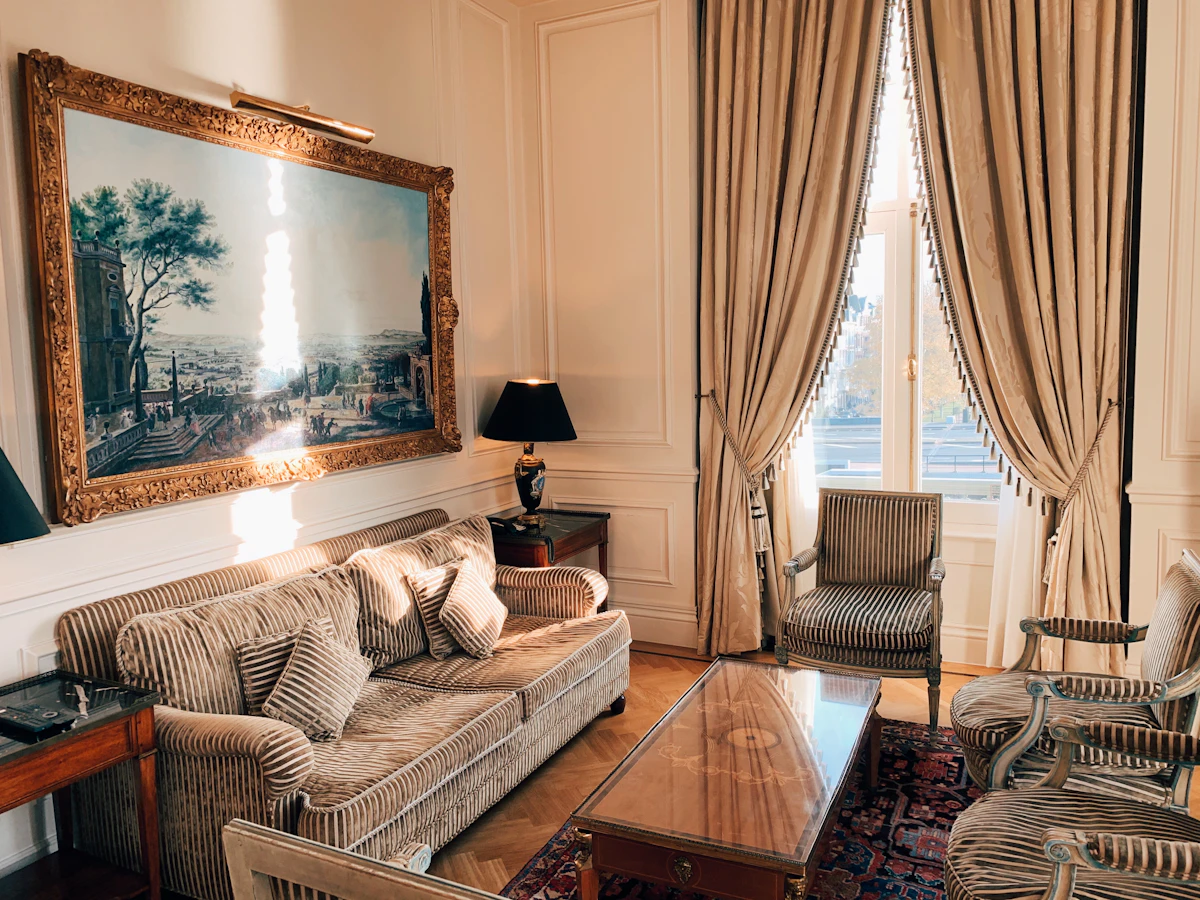
THE RENTAL DESIGN EDIT · REVERSIBLE ARCHITECTURE
The Architecture You Can Take With You
A blank apartment wall can make even a beautiful sofa feel temporary. The missing ingredient may not be more furniture, but a visual framework: carefully proportioned lines that give a room depth, rhythm and character.
These twelve removable wall molding ideas for rental homes range from conditional no-nail trim systems to portable alternatives that never touch the wall. The goal is to make the architecture feel permanent, not the installation.
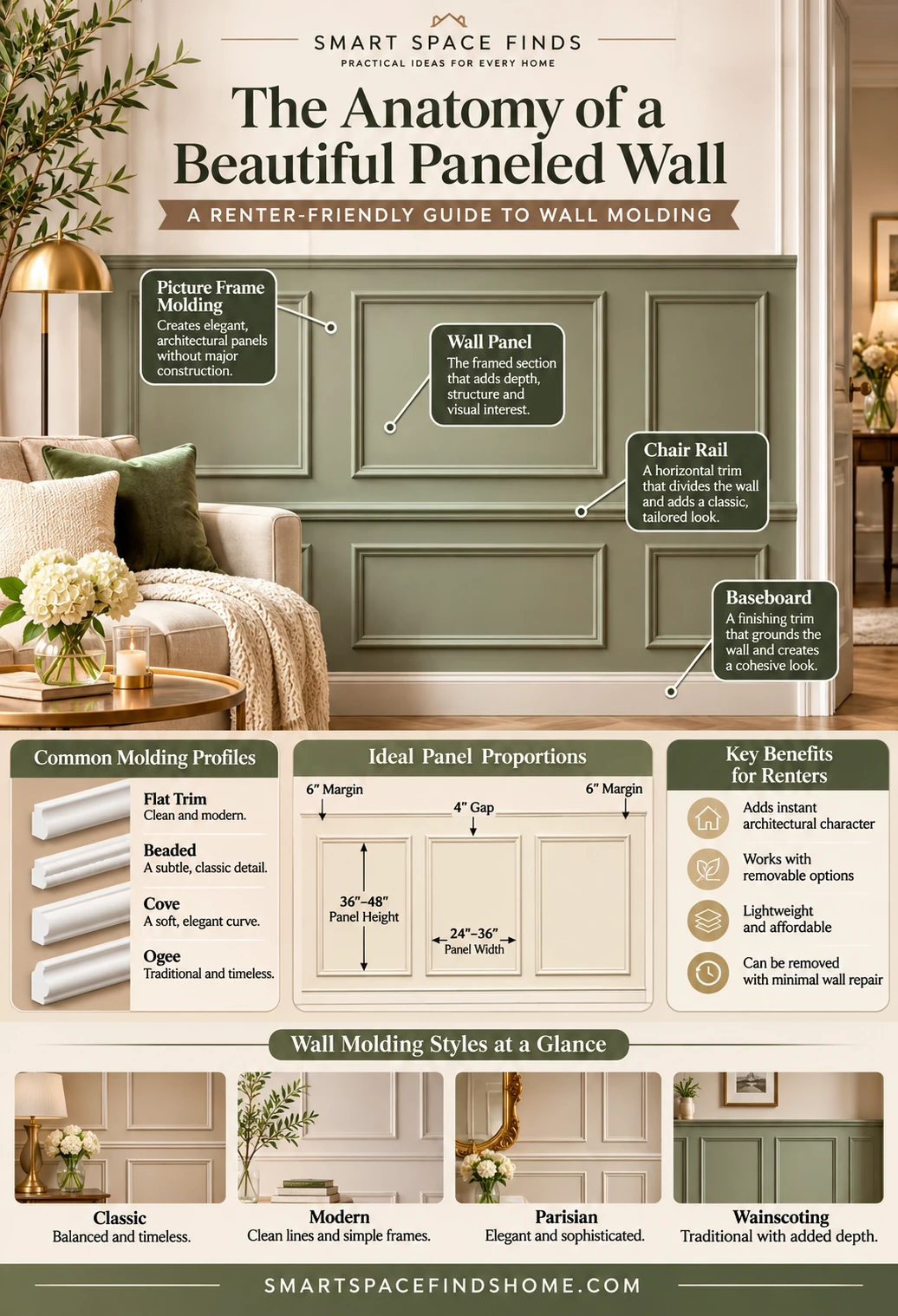
The 60-second answer
For renters, the best wall molding is either a system explicitly designed for removal from the existing finish, or an architectural effect that requires no wall attachment. Ordinary peel-and-stick molding may use permanent adhesive. Start with one focal wall, get permission, and plan removal before purchasing.
Best first project: one large picture-frame composition or portable framed artwork. Best for uncertain wall finishes: freestanding decor. Best for approved permanent work: traditional wood or MDF millwork.
Which wall molding method is right for renters?
- Printed architectural artwork
- Low intervention when displayed on stable furniture; no adhesive needed.
- Freestanding decorative screen
- Portable visual architecture; follow stability requirements.
- Manufacturer-approved removable trim
- Conditional on a sound compatible surface, lease permission and the exact removal method.
- Permanent self-adhesive trim or construction adhesive
- Not a default rental choice. Reserve for owner-approved permanent improvements.
SMART SPACE FINDS · DESIGN INTELLIGENCE
Find your reversible architecture strategy
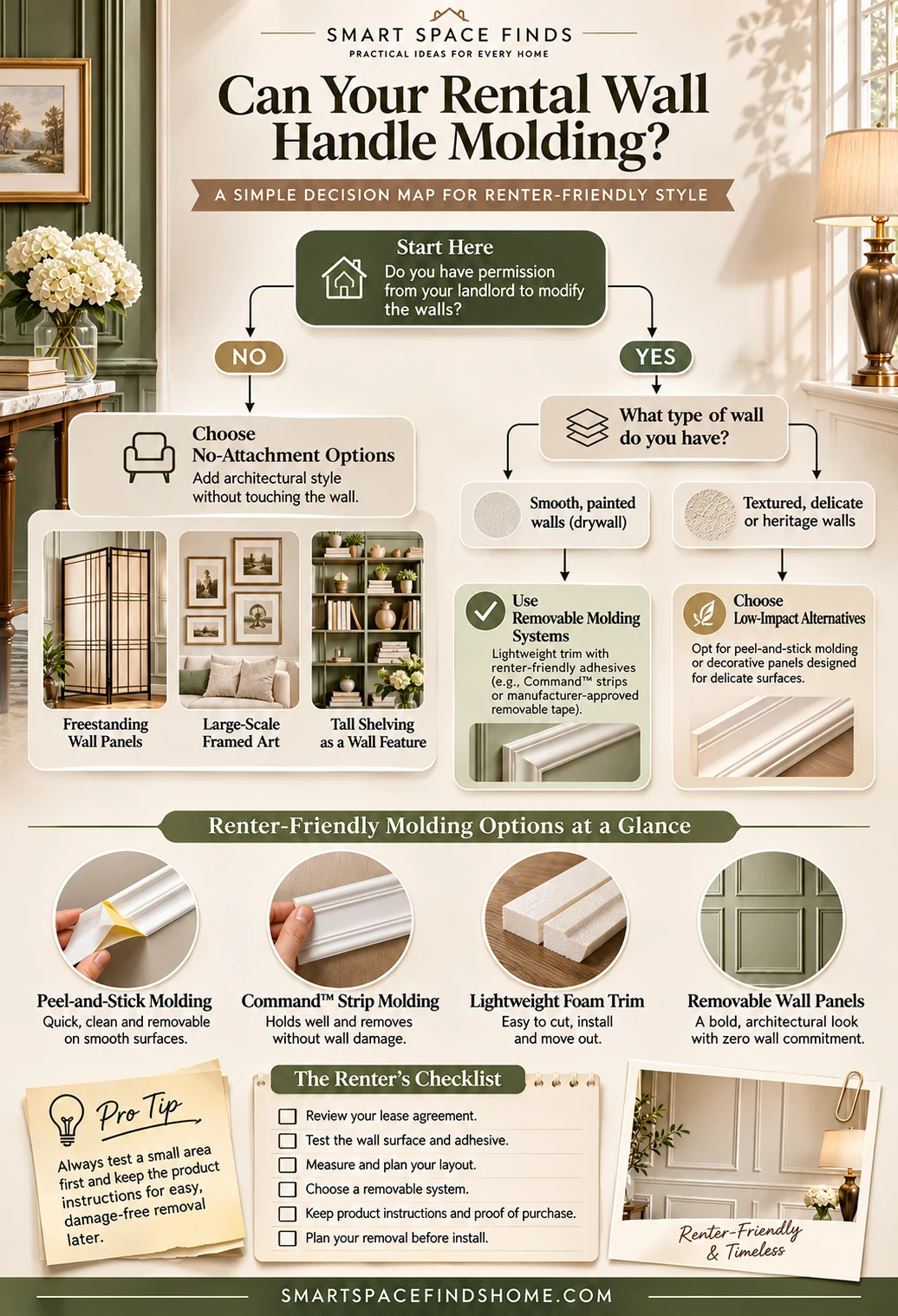
Start with the wall you have, not the molding you want. Ask three questions: Can I alter this surface? Can the product be removed as instructed? Can I safely keep or reuse the result?
My lease prohibits adhesive or holes
Choose a tabletop architectural print, detailing on furniture you own, or a stable freestanding screen. These create a framed effect without modifying the rental wall.
My wall is smooth, sound and I have permission
Consider a trim system with explicit removable-use instructions for that exact finish. Check the product weight, removal mechanism and any cure requirements. Do not treat ordinary self-adhesive trim as reversible.
My wall is textured, newly painted or fragile
Avoid adhesive unless the manufacturer explicitly supports that surface and condition. Use portable alternatives; a successful short patch test cannot guarantee safe long-term removal.
My landlord has approved permanent improvements
Agree in writing on materials, installation and move-out responsibilities. Permanent millwork belongs in a different risk category than portable decor.
THE SMART SPACE FINDS EDIT · C
Mounting & Surface Protection
Picture-hanging strips are for compatible frames, not unapproved molding applications. Painter’s tape is for temporary layout marking.
As an Amazon Associate, we earn from qualifying purchases.
12 removable wall molding ideas for rental homes
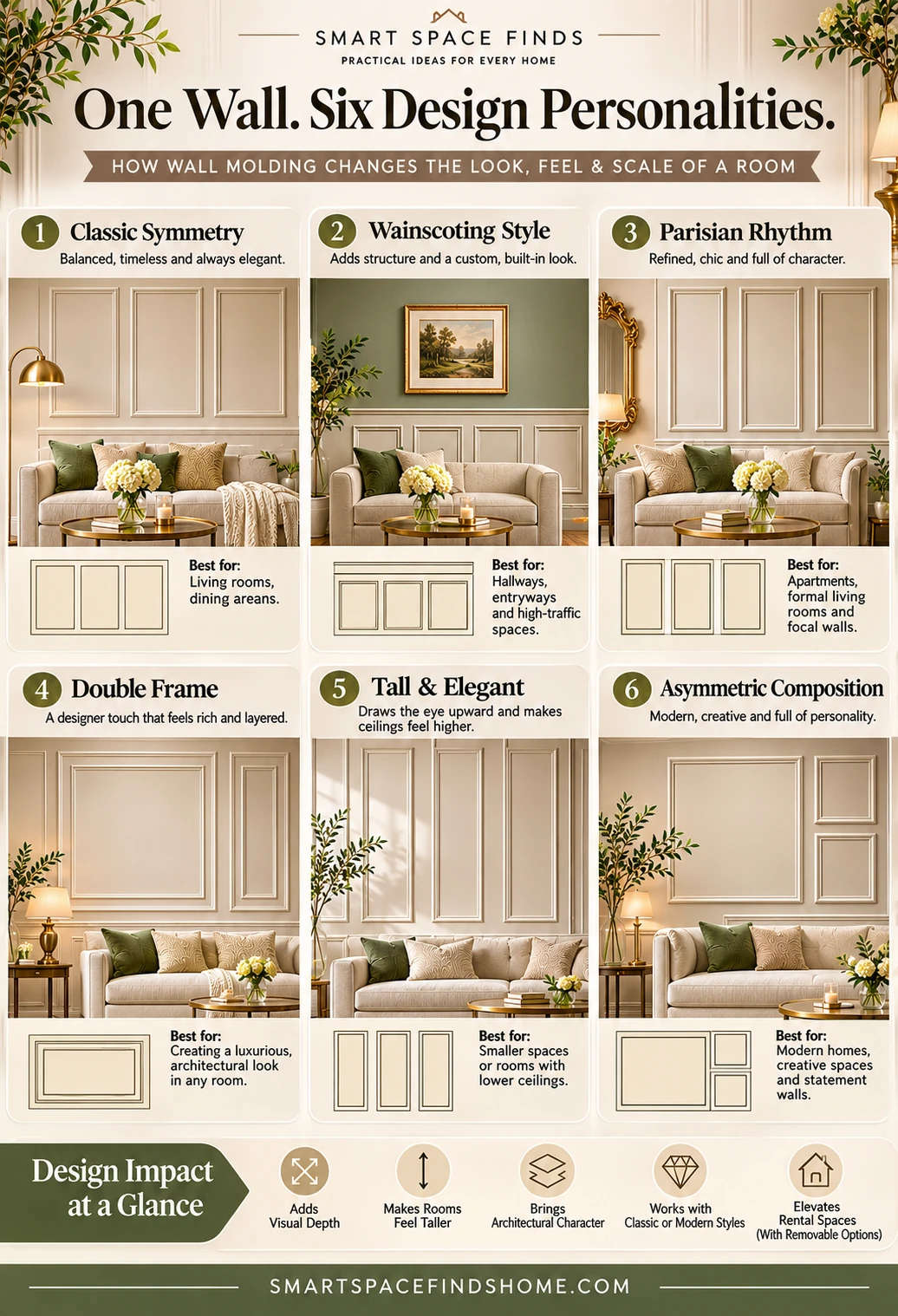
DESIGN STUDY 01
The single salon rectangle
One generous outline can anchor a console or seating arrangement. Center the composition on the dominant furniture, not necessarily the entire wall. Keep the profile narrow in compact rooms.
DESIGN STUDY 02
Three-bay Parisian rhythm
Use three equal rectangles with consistent gaps. Measure from a level reference line rather than assuming the floor is straight. Sketch the entire wall before buying.
DESIGN STUDY 03
Faux wainscoting
A horizontal division around 32–36 inches above the floor is a useful starting point, not a universal rule. Coordinate it with furniture and existing trim. A portable screen can reproduce the effect without wall adhesive.
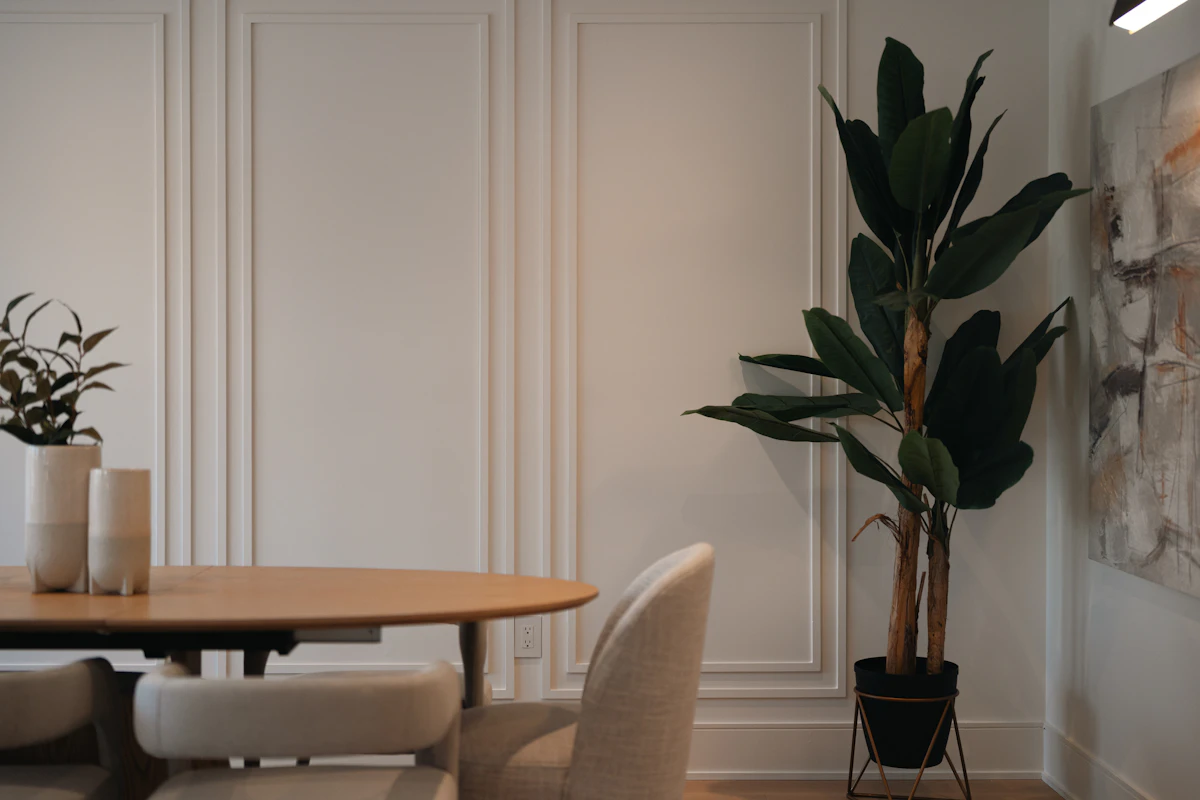
DESIGN STUDY 04
Framed architectural art
A lightweight print with nested outlines can suggest millwork. Display it on stable furniture if your lease or wall finish rules out mounting.
DESIGN STUDY 05
Furniture-front detailing
Apply compatible decorative trim to a cabinet you own rather than the landlord’s cabinetry. Keep hinges, handles and moving parts clear.
DESIGN STUDY 06
Tone-on-tone molding
Choose a profile close to the existing wall color for understated shadow lines. Avoid repainting without permission.
DESIGN STUDY 07
Entryway focal bay
A single tall composition beside a narrow console creates a visual landing zone. Keep the door swing, switches and coat hooks unobstructed.
DESIGN STUDY 08
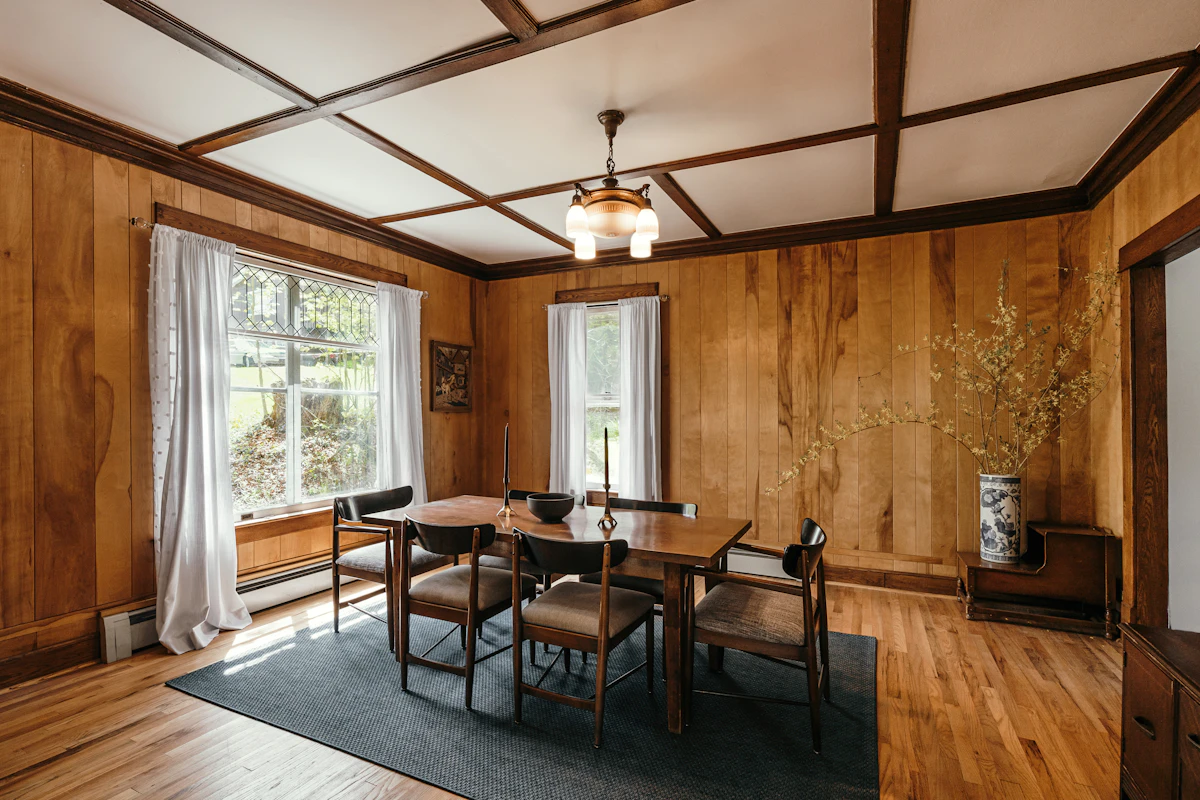
Dining-room rhythm
Repeat broad shapes behind the dining area, using the table centerline as a reference. Avoid brittle protrusions where chairs or people pass.
DESIGN STUDY 09
Tabletop heritage panel
A stable commercially made tabletop frame or decorative panel introduces architectural detail without touching the wall.
DESIGN STUDY 10
Double-border composition
Two nested lines create depth. Keep the inner gap consistent and test a paper mockup before committing.
DESIGN STUDY 11
Existing picture rail
Where a genuine load-rated picture rail already exists, ask the owner about compatible hooks and cords. Decorative crown molding is not a structural picture rail.
DESIGN STUDY 12
Portable architectural screen
Choose a commercially made stable freestanding screen with a paneled appearance. Follow stability instructions and never block exits.
THE SMART SPACE FINDS EDIT · A
Architectural Molding & Trim
For owner-approved projects only. Self-adhesive trim may damage paint on removal.
As an Amazon Associate, we earn from qualifying purchases.
THE SMART SPACE FINDS EDIT · E
Portable Architectural Alternatives
Freestanding screens add visual structure without adhesive wall mounting. Follow stability and placement instructions.
As an Amazon Associate, we earn from qualifying purchases.
Wall molding layout planner
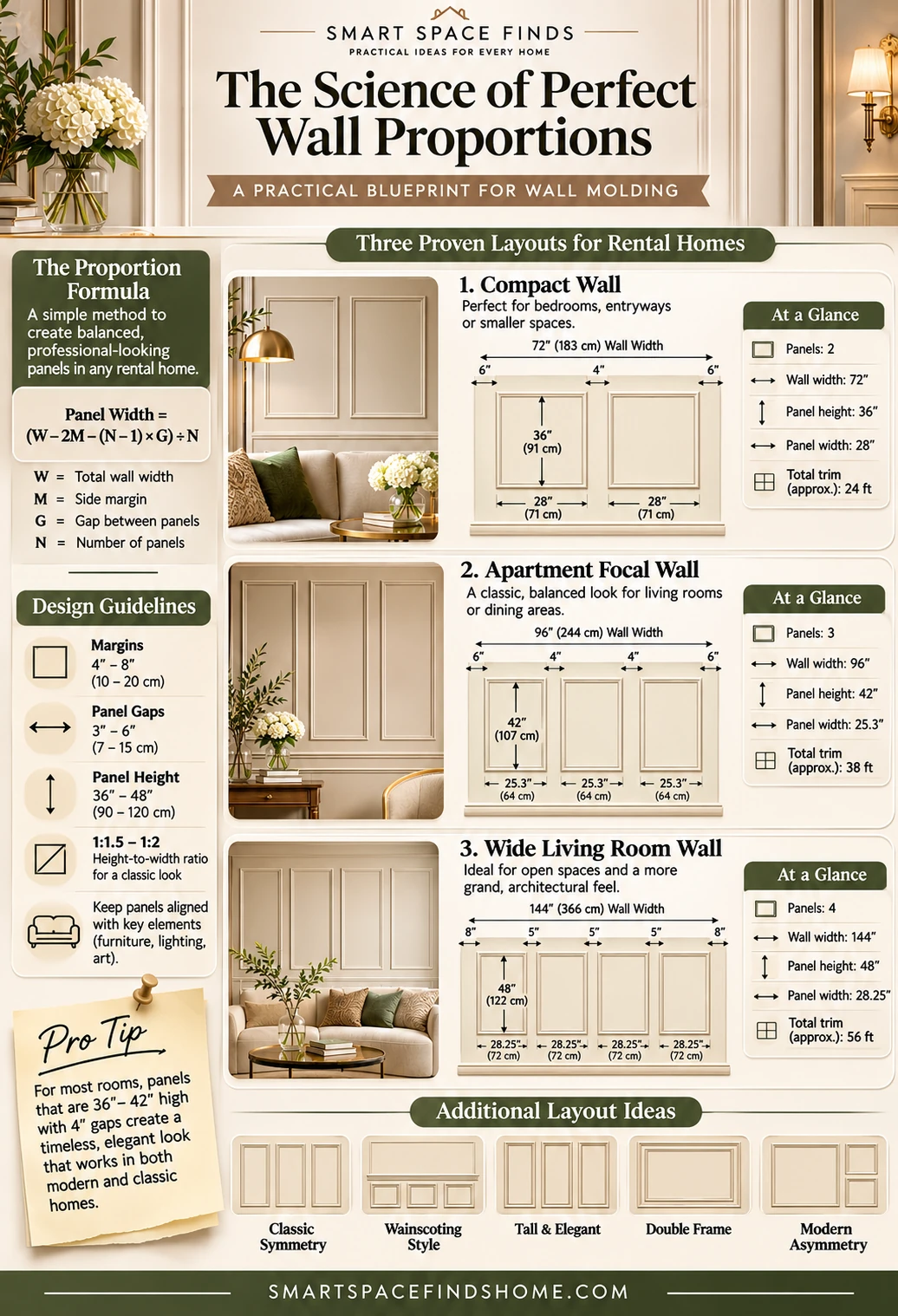
Measure the uninterrupted wall width in inches. Subtract both end margins and the gaps between panels, then divide by the number of panels.
Panel width = (wall width − 2 × margin − (panel count − 1) × gap) ÷ panel count.
For a 120-inch wall, three panels, 8-inch end margins and 5-inch gaps, each panel is about 31.33 inches wide. At 48 inches high, the total outer perimeter is approximately 39.7 linear feet. Add a 10% planning allowance for roughly 44 feet, then round up to available stock lengths. Check actual cutting geometry and profile before buying.
The proportion lab: three layouts to try
Compare three measured starting layouts. Each drawing preserves the relative panel proportions, side margins and gaps.
Compact wall
72 in wall · 2 bays · 28.00 × 36 in each · 6 in side margins · 4 in gaps.
21.3 ft net trim · 24 ft with 10% allowance
Apartment focal wall
96 in wall · 3 bays · 25.33 × 42 in each · 6 in side margins · 4 in gaps.
33.7 ft net trim · 38 ft with 10% allowance
Wide living room
144 in wall · 4 bays · 28.25 × 48 in each · 8 in side margins · 5 in gaps.
50.8 ft net trim · 56 ft with 10% allowance
Planning examples, not cutting templates. Round up to available stock lengths and verify the actual profile and joint geometry.
THE SMART SPACE FINDS EDIT · D
Precision Layout & Installation Tools
Confirm tool compatibility with the actual trim material before cutting.
As an Amazon Associate, we earn from qualifying purchases.
Proportion before decoration
Establish one consistent datum line. Narrow profiles suit modest rooms while wider profiles require breathing room. Check a full-size mockup in daylight and evening light: grazing light reveals irregular seams and uneven shadows.
THE SMART SPACE FINDS EDIT · B
Decorative Wall Panel Kits
Check installation instructions and obtain permission; adhesive and glue systems are not inherently reversible.
As an Amazon Associate, we earn from qualifying purchases.
Material intelligence and budget
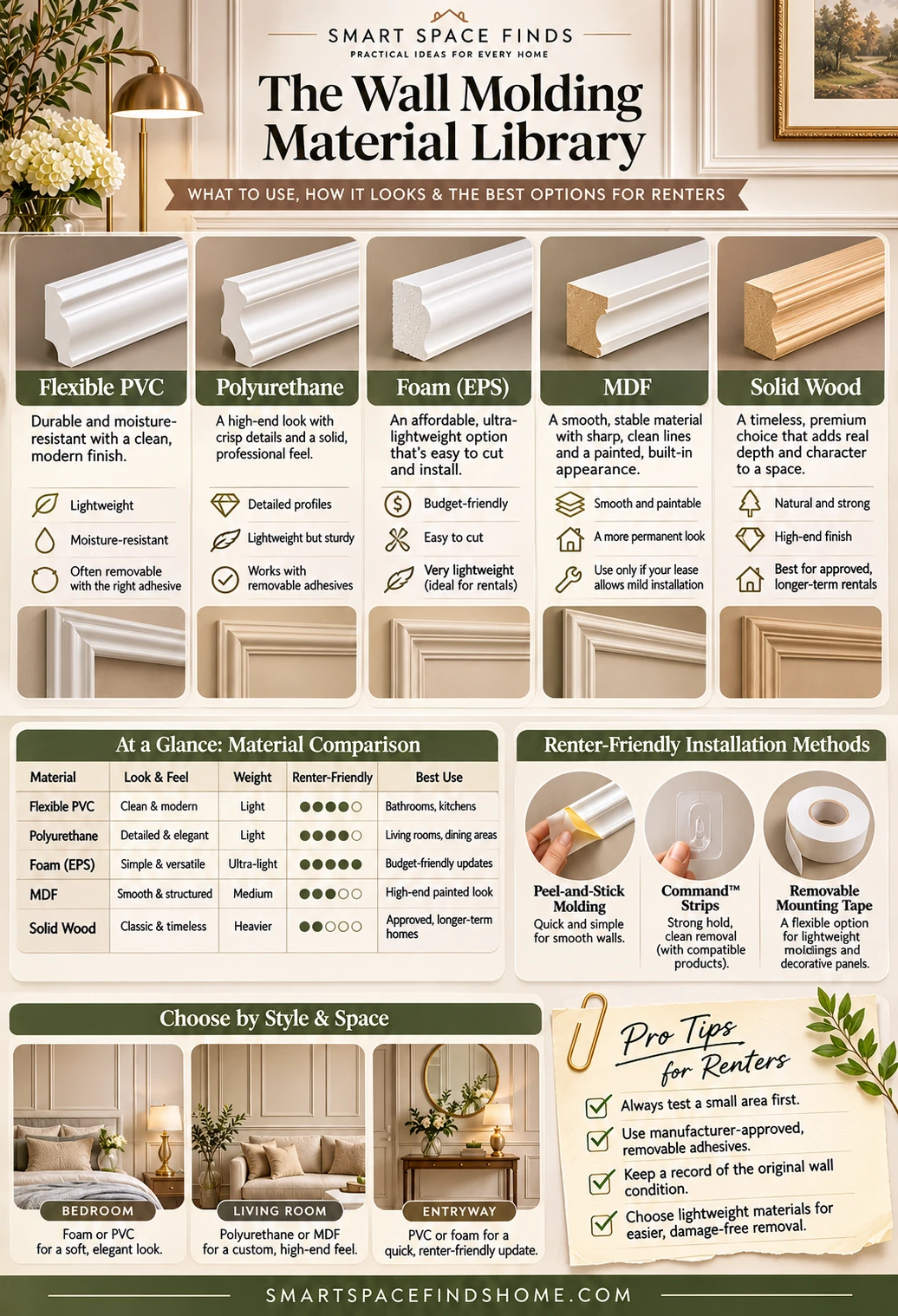
Compare molding materials before you shop
- Flexible PVC or polyurethane trim
- Useful for curved or irregular decorative profiles. Check adhesive chemistry and whether the maker explicitly supports removal.
- Lightweight foam profiles
- Easy to handle, but the surface may dent and adhesives may still damage paint. Avoid exposed impact zones.
- MDF and solid wood
- Crisp edges and traditional shadow lines; typically require more substantial fastening. Better suited to approved permanent work or furniture you own.
- Paper, printed art and portable screens
- Best starting point when wall attachment is prohibited. Recreate visual rhythm rather than physical millwork.
Lightweight foam and plastic trims may be easy to handle but are not automatically removable. Wood and MDF generally need more substantial fastening. Adhesive compatibility, weight and removal instructions matter more than material alone. Avoid unapproved applications over beds, seating or walkways.
Illustrative US planning allowances, not live retail quotes: $15–40 for framed architectural effects, $40–100 for a small compatible trim project, or $100–200+ for multiple bays or a portable screen. Include tools, waste and any agreed restoration costs.
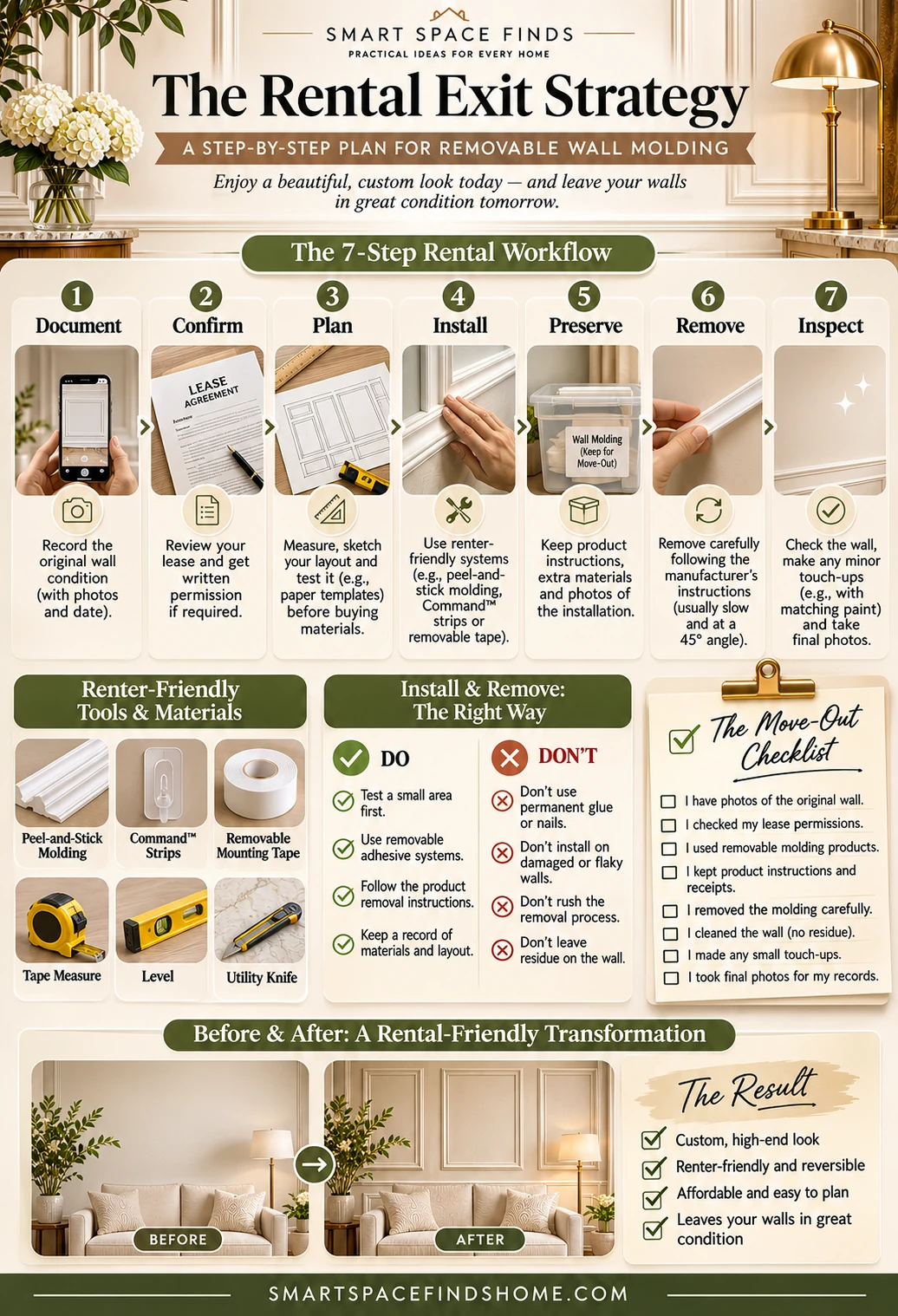
The rental exit plan: five things to save
- Written permission and any agreed restoration conditions.
- Dated photographs of the original finish.
- The exact product packaging, instructions and model number.
- A record of the installation date and each attachment location.
- A move-out inspection plan and the manufacturer’s removal instructions.
For framed artwork mounted with compatible Command picture strips, 3M specifies waiting at least seven days after painting and avoiding wallpaper and above-bed applications. The paint may require longer to cure. Follow the particular package instructions, including the prescribed release direction and clearance. These instructions are for approved picture-hanging applications, not an endorsement of mounting molding with picture strips.
Installation and move-out checklist
- Document the existing wall condition and confirm lease permissions.
- Identify the substrate and paint condition. Avoid wallpaper, flaking paint and unsuitable textured surfaces.
- Plan the layout and test permitted products in an inconspicuous area according to their instructions.
- Follow manufacturer application, load and cure requirements. Do not substitute picture-hanging strips for narrow trim unless the intended application is supported.
- Keep any authorized stretch-release tabs accessible; do not conceal or paint over them.
- Follow the exact removal instructions. Stop if the finish lifts and consult the owner before repairs.
Three room recipes: recreate the architectural look
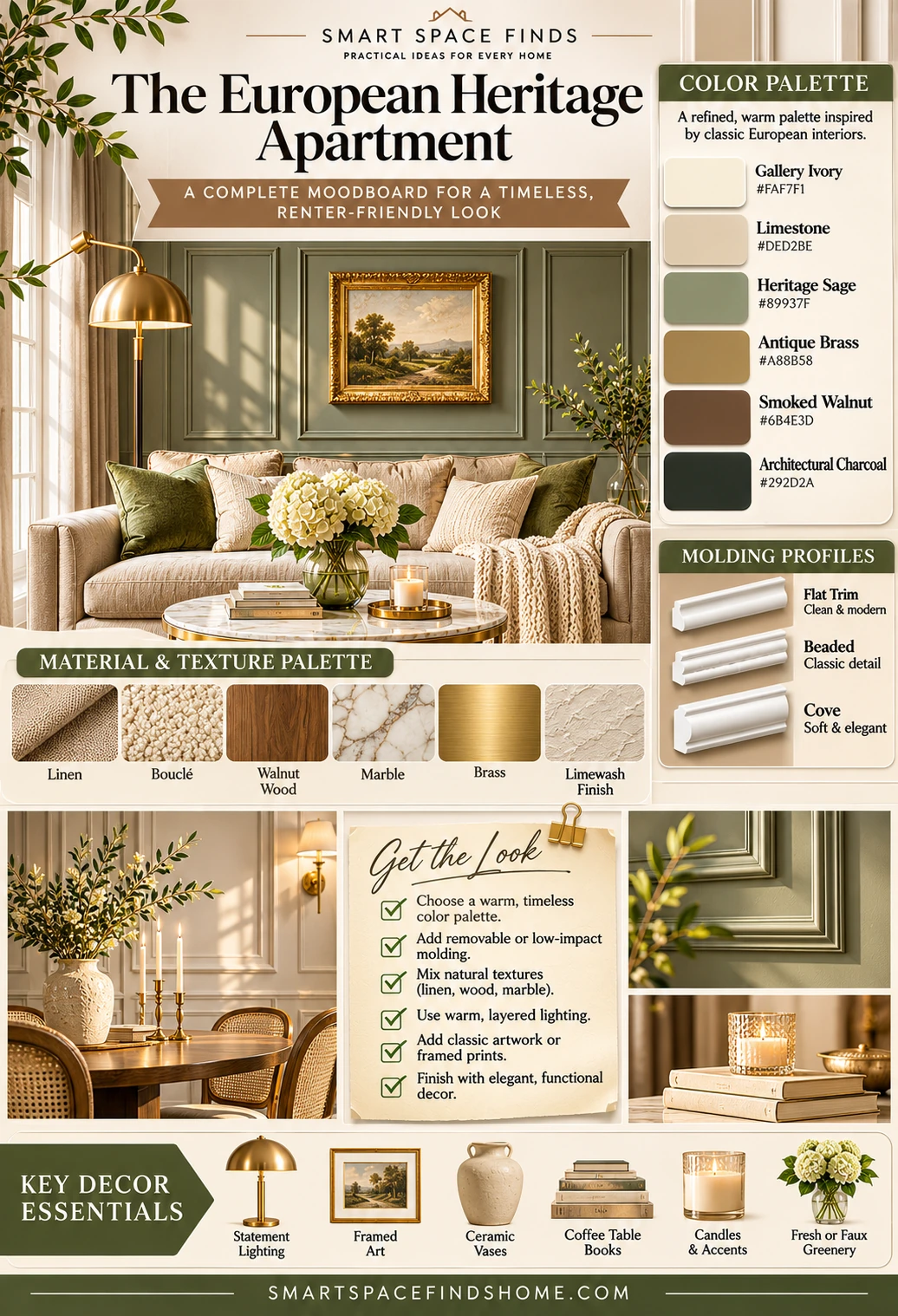
THE SMART SPACE FINDS EDIT · F
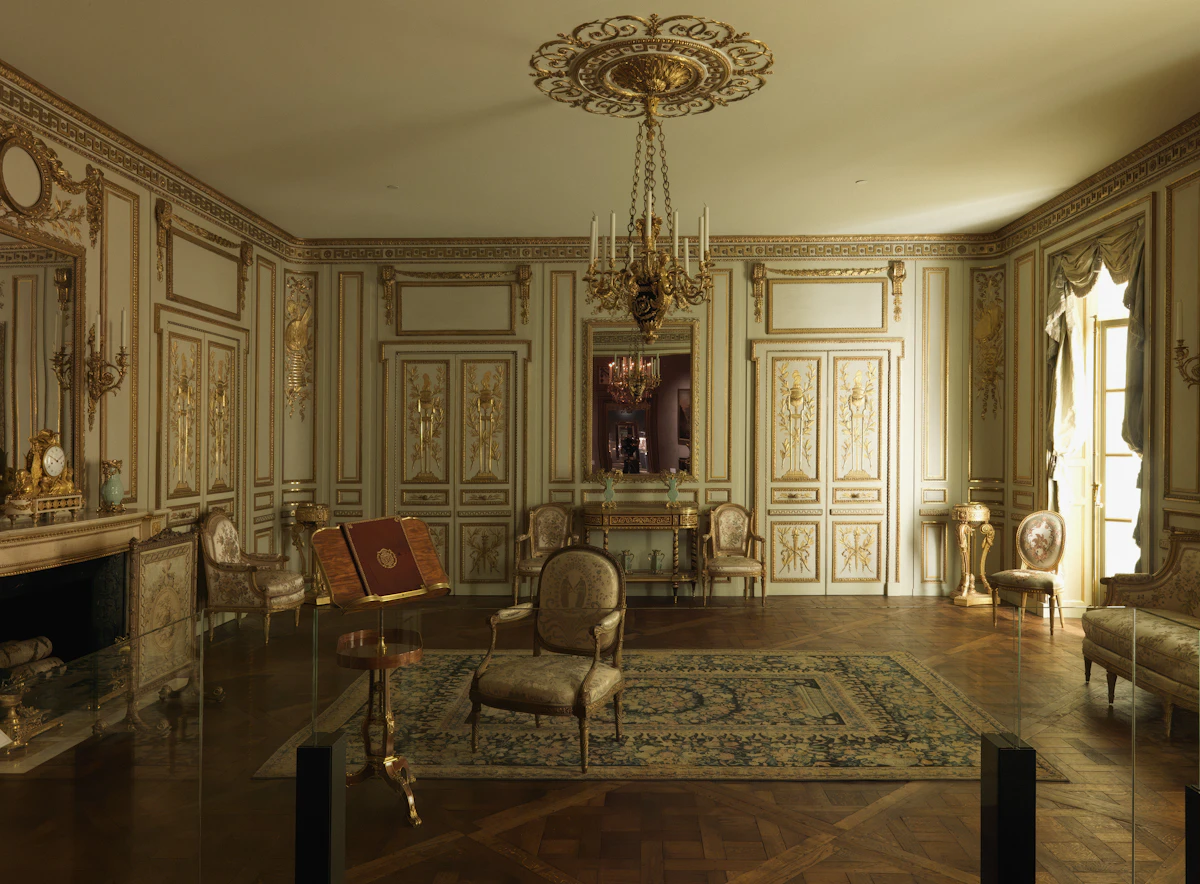
European Heritage — Recreate This Look
Use freestanding decor and compatible framed artwork to echo the moodboard.
As an Amazon Associate, we earn from qualifying purchases.
Quiet luxury living room
Warm ivory, natural oak, linen and aged brass. Use one broad focal rectangle and a restrained profile. Let side lighting reveal shadows instead of adding competing patterns.
Parisian-inspired dining corner
Soft putty, walnut and antique gold. Repeat vertical bays at equal intervals; align them with the dining table and preserve chair clearance.
Contemporary heritage entryway
Muted sage accents, cream and dark bronze. Choose one tall outlined composition, a slim console and a portable framed print when the wall cannot be altered.
The 1:1 paper rehearsal
Before purchasing trim, sketch the wall with doors, switches and furniture. Cut paper strips to the intended profile width and arrange them on a floor or hold a mockup against the wall with a helper. Step back to the normal viewing distance. Photograph the layout and compare one wide bay with two or three narrower bays. Measure the clear space around obstructions before finalizing the design.
Design test: if the outlines compete with the furniture or make the room feel crowded, reduce the number of bays before reducing their spacing.
Common mistakes
- Assuming all peel-and-stick products are removable.
- Installing permanent adhesive without permission.
- Blocking outlets, switches, vents or access panels.
- Using too many narrow frames in a small room.
- Assuming a successful patch test guarantees damage-free removal months later.
Frequently asked questions
Can renters install wall molding without nails?
Some products are designed for compatible surfaces without nails. Verify permission and removal requirements. Portable screens and tabletop artwork avoid wall fastening entirely.
Is peel-and-stick molding removable?
Not necessarily. Some products have permanent adhesives. Verify explicit removal instructions before purchasing.
Can Command strips hold wall molding?
Picture-hanging strips are designed for specified frames, surfaces and weights. Do not assume they work for narrow trim unless the manufacturer supports that application.
Does removable molding work on textured walls?
Many removable adhesives are unsuitable for rough or textured surfaces. Choose a portable alternative when compatibility is uncertain.
What makes picture-frame molding look expensive?
Consistent spacing, restrained contrast, clean joints and proportionate profiles create a more refined look than simply adding more panels.
How much molding do I need for one wall?
Add the outside perimeter of every rectangular frame, convert inches to feet, and allow for cutting waste. For double borders, calculate both sets separately. Use the layout planner above and check available lengths before ordering.
Can I create the look without painting?
Yes. Select a compatible prefinished profile close to the existing wall color, or use portable artwork and screens. If the finish cannot be matched without painting, intentional contrast can look more coherent than a near match.
Continue your rental transformation
- 30 renter-friendly home upgrades
- Add color without painting
- Modern neutral living room decor
- Small room makeover ideas
THE DESIGN TAKEAWAYMake the architecture feel permanent, not the installation.