
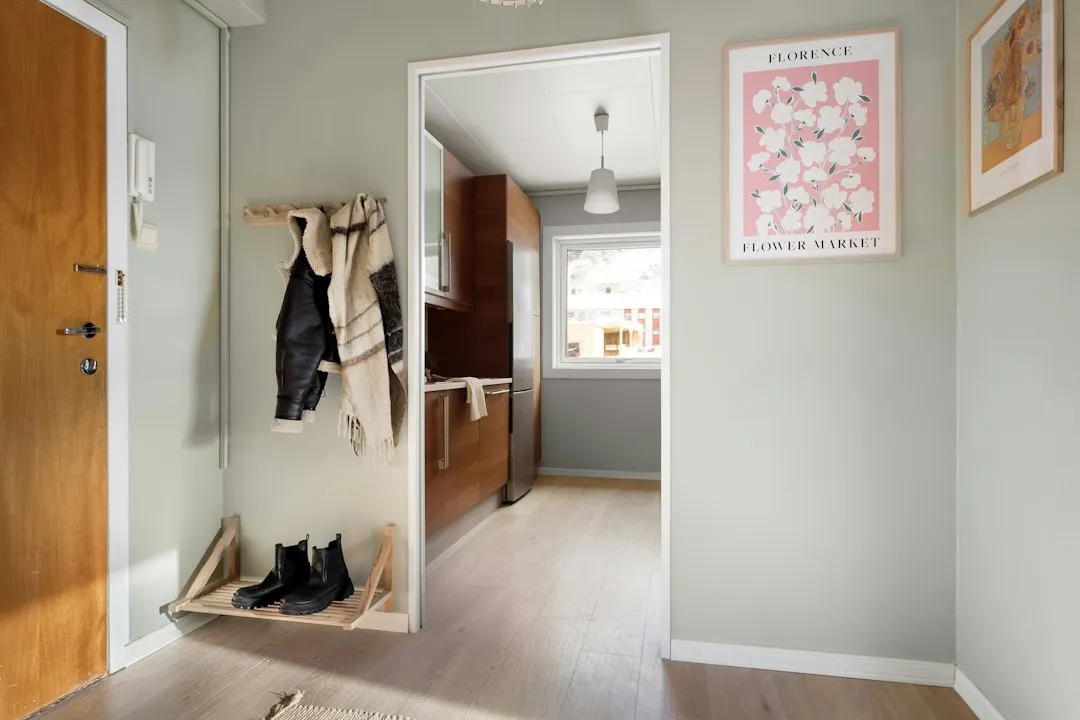
Entryway organization without a hallway is possible—even when your front door opens directly into the living room, kitchen or a one-room studio. You do not need a traditional foyer or a bulky console. You need an intentional place for shoes, keys and everyday bags, plus an uncluttered route into the home.
This practical guide covers 15 small-apartment entryway ideas, renter-friendly alternatives, floor-plan solutions, measurements, styling principles and a simple daily reset. Use it to build an entrance that feels like part of your home rather than a makeshift storage corner.
Quick answer: how to organize an entryway without a hallway
- Define a zone: use a low-profile mat or an existing surface near the entrance.
- Give keys one landing spot: a shallow tray or small organizer.
- Limit shoe storage: keep only frequently worn pairs at the door.
- Hang essentials safely: choose appropriate hooks or stable freestanding storage.
- Make it belong: repeat a material or color from the adjoining living space.
- Reset daily: put away stray belongings in two minutes.
Three layouts that work when your apartment has no foyer
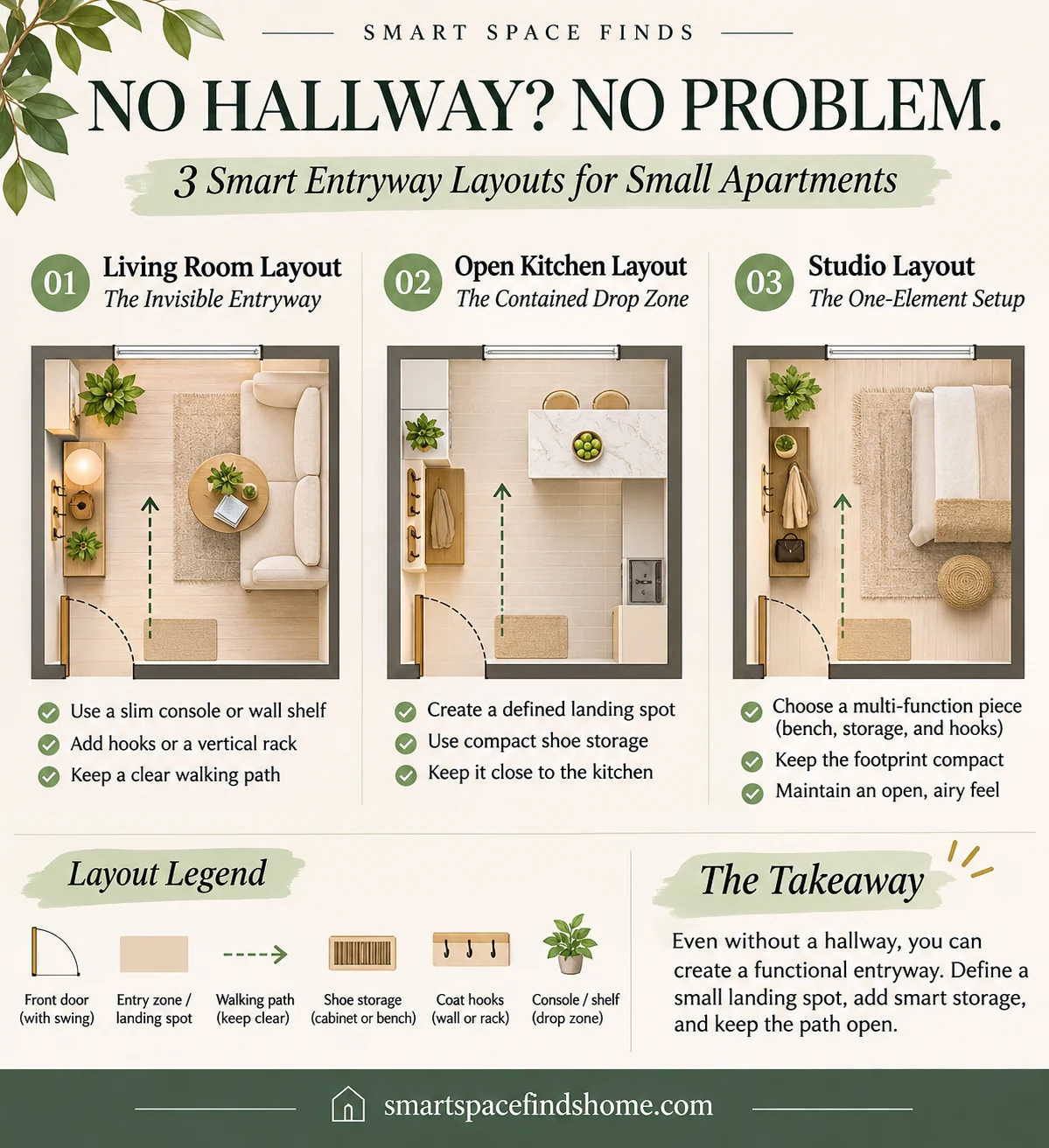
The ideal design depends on the room your door opens into. Choose an approach that fits the way you move through the home instead of imposing a one-size-fits-all entryway bench or cabinet.
THE DESIGN PLAYBOOK / 15 SOLUTIONS
A small entrance can make a big first impression.
15 smart entryway organization ideas for apartments without hallways
01. Start with the front-door landing zone
An entryway is a function, not necessarily a separate room. Stand just inside your front door and identify where your keys, everyday bag, shoes and outerwear naturally land. The smallest effective setup gives those items a deliberate place before they spread into the living area.
Start with a key dish on a surface you already own, a slim dirt-catching mat and one place for your daily bag. If an object is not part of your arriving-or-leaving routine, it probably belongs somewhere else.
02. Measure before adding a console or rack
Measure the usable wall width, the maximum furniture depth, and how far the door opens. Mark a proposed footprint with painter’s tape, then walk through the space carrying groceries. Repeat the test with all doors and drawers opened.
Do not copy a generic clearance measurement from an online photo. Your usable route depends on the home, household needs and applicable safety rules. Never narrow a required exit or accessibility route. When floor area is limited, move storage to an adjacent wall or room.
03. Make a micro-entryway when the door opens into the living room
A living-room entryway looks best when its materials echo the room. Try a shallow tray on an existing cabinet, a practical mat and appropriately fixed hooks in the same metal or wood finish as nearby furniture. That repeated finish makes the entrance feel planned, not improvised.
Resist the urge to create a hallway with a bulky bookcase. If a visual boundary is needed, let the edge of a rug or the shift in wall decor define the zone while preserving light and a clear path.
04. Create a no-hallway drop zone in a studio
In a studio, every object is visible from several angles. Edit aggressively: one hook per regular coat or bag, one compact surface for keys and only the shoes in active rotation. Store seasonal items out of sight in a wardrobe or under-bed system.
A matching basket can conceal lightweight accessories, but skip it if it becomes a dumping ground. Keeping the floor visible is what makes a one-room apartment feel more spacious.
05. Choose a slim shoe system you will actually use
Affiliate disclosure: As an Amazon Associate, Smart Space Finds earns from qualifying purchases. We recommend products only where they support the small-space solutions in this guide. Prices and availability may change.
THE CLOSED SHOE STORAGE EDIT
These cabinet alternatives require exact depth measurements and appropriate anti-tip installation.
VASAGLE Slim Rattan-Look Shoe Cabinet
C03 · Boho-style flip drawers · verify measurements, finish and anchoring
VASAGLE Farmhouse Flip-Drawer Shoe Cabinet
C04 · Larger closed-storage option · check footprint and door clearance
THE COMPACT SHOE STORAGE EDIT
Two different widths. Measure the available floor space and door clearance before choosing.
SONGMICS Compact 3-Tier Shoe Rack
C01 · Ink Black · 24.5 in W × 11.7 in D · freestanding
SONGMICS 3-Tier Metal Shoe Rack
C02 · Black · 36.2 in W × 11.8 in D · for wider entry zones
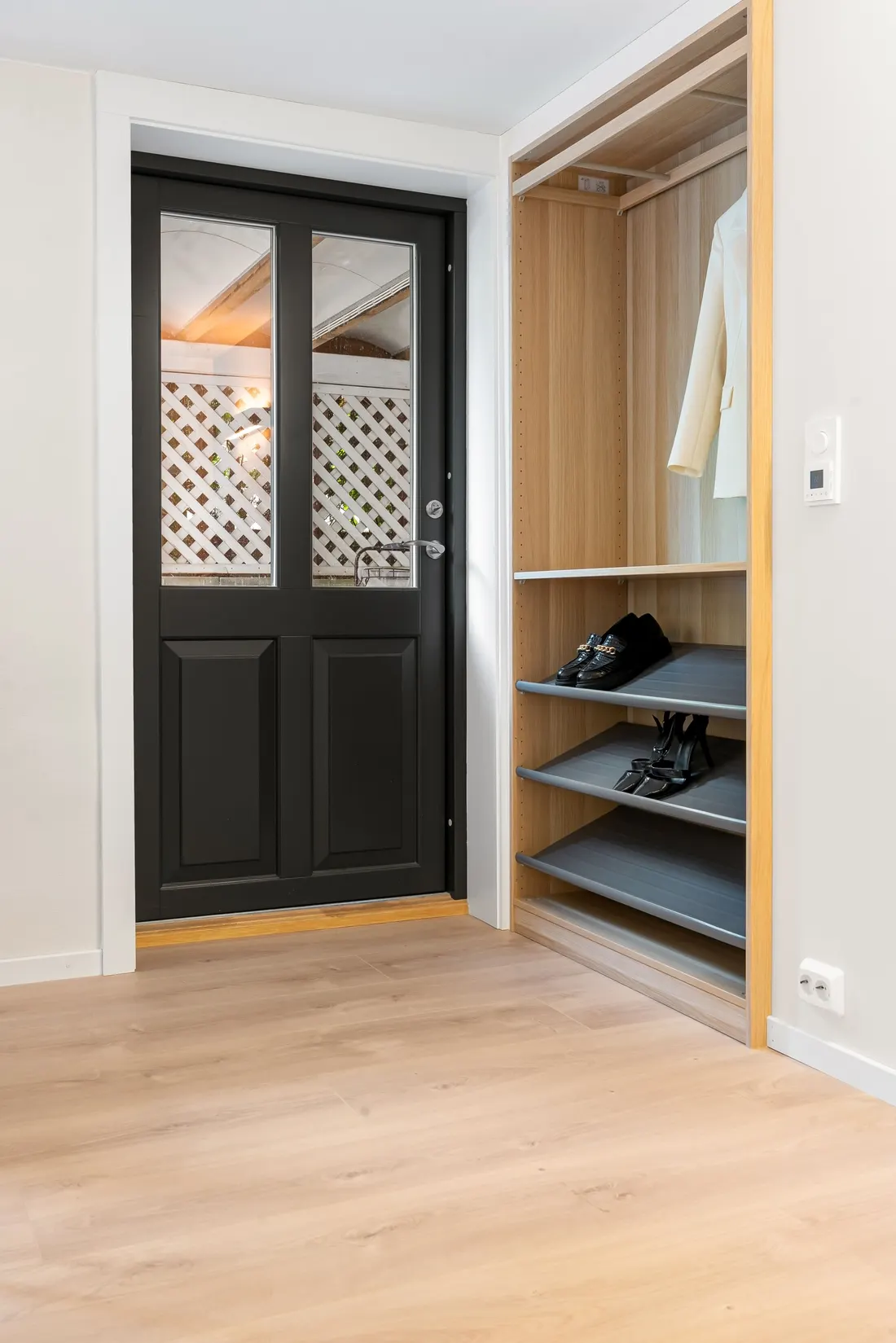
Before buying a slim shoe cabinet, count the pairs used during a typical week. A low boot tray may be enough for one person; a shallow freestanding rack may work better for two. Closed cabinets reduce visual clutter, but they still need adequate opening clearance and ventilation.
Avoid unstable stacks and overfilled shoe towers. Wet footwear needs somewhere to dry, and tall units must follow their manufacturer’s anchoring and anti-tip instructions. If no rack fits safely, keep shoes in a nearby closet rather than at the door.
06. Use renter-friendly coat and bag hooks responsibly
Umbra Estique Over-the-Door Organizer
A03R · White / Natural · 5 hooks · check door closure and clearance
THE VERTICAL STORAGE EDIT
Check mounting compatibility, supplied hardware and actual product load limits before installation.
Command Large Utility Hooks
B01 · White · 7 hooks / 12 strips · check surface and weight guidance
Umbra Flip Wall-Mounted Coat Rack
B02 · Concealed flip-down hooks · compact wall-mounted rail
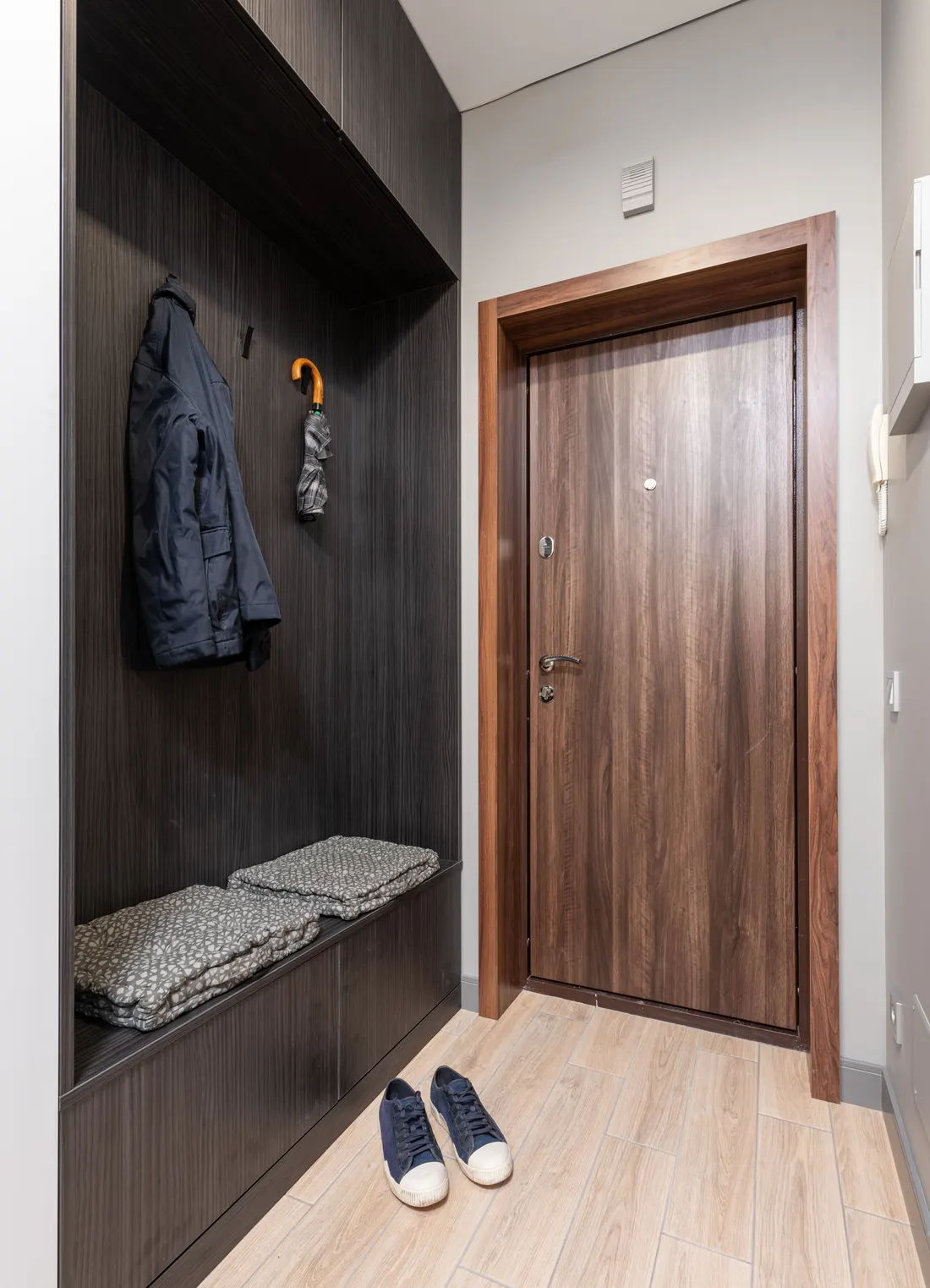
Hooks clear bags from chairs and the floor, but weight ratings are specific to the product and mounting surface. Removable adhesive hooks can damage some finishes or detach when overloaded. Over-the-door organizers can interfere with a door’s operation or closing mechanism.
Always review your lease, the wall or door material and the manufacturer’s directions. If drilling is permitted, choose suitable fixings for the substrate. If not, a stable freestanding option away from circulation may be preferable.
07. Give keys, sunglasses and mail one home
Command Key Rail — Quartz
B03R · Compact 4-hook adhesive key organizer · follow surface and load instructions
THE DAILY DROP ZONE EDIT
Choose one practical landing system rather than installing multiple competing organizers.
Yamazaki Home RIN Magnetic Key Rack
A01 · Ash · magnetic steel-and-wood key tray with hooks
Lwenki Key Holder with Shelf
A02 · Compact wood shelf · key and mail organizer
Lwenki Key & Mail Organizer
A04 · Wall-mounted letter holder and hooks · larger alternative
A shallow tray or small divided organizer makes the handoff from outside to inside feel effortless. Place it where you naturally reach when entering; a beautiful tray across the room will not change daily behavior.
Paper deserves a separate rule: use one small incoming-mail folder and clear it weekly. Sort recycling promptly instead of treating the landing surface as permanent storage for envelopes, receipts and packages.
08. Contain wet shoes, umbrellas and dirt
GORILLA GRIP Natural Rubber Boot Tray
D03R · Black · 32 × 16 in · raised-edge wet shoe tray
ALTERNATIVE BOOT TRAY
A second tray option; buy only the footprint that fits your space.
Ottomanson Waterproof Boot Tray
D01 · Raised edges · water and dirt containment · check size variant
THE WET-WEATHER ESSENTIAL
Ottomanson Raised-Edge Waterproof Boot Tray
D02 · Black · 15 × 30 in · compact shoe and boot drip tray
Choose a flat, easy-clean mat that catches grit without catching under the door. For a rainy climate, provide a drip-safe umbrella spot and a washable surface for wet footwear. The mat should not slip, curl or create a trip hazard.
Never cram damp coats into an unventilated basket or against moisture-sensitive walls. Your entryway should manage the mess until things are dry—not hide moisture where it can cause problems.
09. Make a narrow entry feel wider
A pale or tonally consistent palette keeps the entrance connected to the main room. Leave breathing room around a single tray or hook rail and choose visually light furniture with a small footprint. A securely mounted mirror can help reflect existing light if it is placed clear of the door swing.
Good lighting matters more than a styled vignette. Use an existing fixture or a safe lamp position that does not leave a trailing cord across the walking route. Avoid cluttering the only usable ledge with multiple decorative objects.
10. Set up an entryway for two people or a family
Shared entryways fail when everyone has to guess where their belongings belong. Assign a clear hook, tray section or shoe spot to each person. Make the system easy for shorter household members to use while storing heavy or hazardous items safely out of reach.
Agree that only the current season’s daily essentials live near the door. Overflow needs a second location, not another pile next to the entrance.
11. Keep a tiny entryway from becoming a parcel station
Deliveries are temporary visitors. Unpack them promptly, recycle cartons appropriately and move returns to a designated place away from the door. If packages need to wait, use an existing storage area that does not obstruct movement.
Never place packages or shoe storage in a shared corridor or an emergency exit. The best entryway is one you can pass through comfortably while carrying several bags.
12. Make an awkward corner work without bulky furniture
If the wall beside the door is too short, look for a safe landing point on the nearest adjacent wall or existing furniture a few steps away. A tiny zone can be split: keys on a shelf in the living room, shoes near a closet and a coat on a secure hook.
The pieces do not have to stand together to work as one system. Their job is to reduce friction in your daily routine, not imitate a conventional foyer.
13. Organize on a small budget
Before buying, test your proposed arrangement with things you already own: a dish for keys, a washable mat and a sensible limit on shoes. After a week, note the item that still ends up in the wrong place.
Spend only on the specific bottleneck. If your bag always lands on the sofa, hooks may matter more than a console. If shoes spread into the walkway, solve that first. Price and availability vary, so compare dimensions and quality rather than shopping from a rigid product list.
14. Build a two-minute entryway reset
Each evening, put keys and bags back, line up daily shoes and remove packaging. Once a week, empty the mail folder, wipe down the mat and put away out-of-season layers. The reset should be short enough to happen even on busy days.
If the same mess returns, redesign the friction point. A hook may be too high, a tray too far from the door, or a rack too small for the number of active pairs. Convenience is the foundation of long-term organization.
15. Know when not to add entryway storage
If your door opens into a very narrow space, a cabinet or shoe bench may compromise movement more than it helps. Use existing nearby storage or an alternate landing spot rather than forcing a decorative entry arrangement where it cannot fit.
Beware of tall unstable organizers, protruding hooks, sharp corners and low floor baskets that are difficult to see. Protect the door swing and any required exit route, and follow manufacturer installation and anchoring instructions.
A beautiful entry begins with three decisions: where belongings land, where shoes live, and how the walkway stays clear.
Entryway measurements and buying checklist
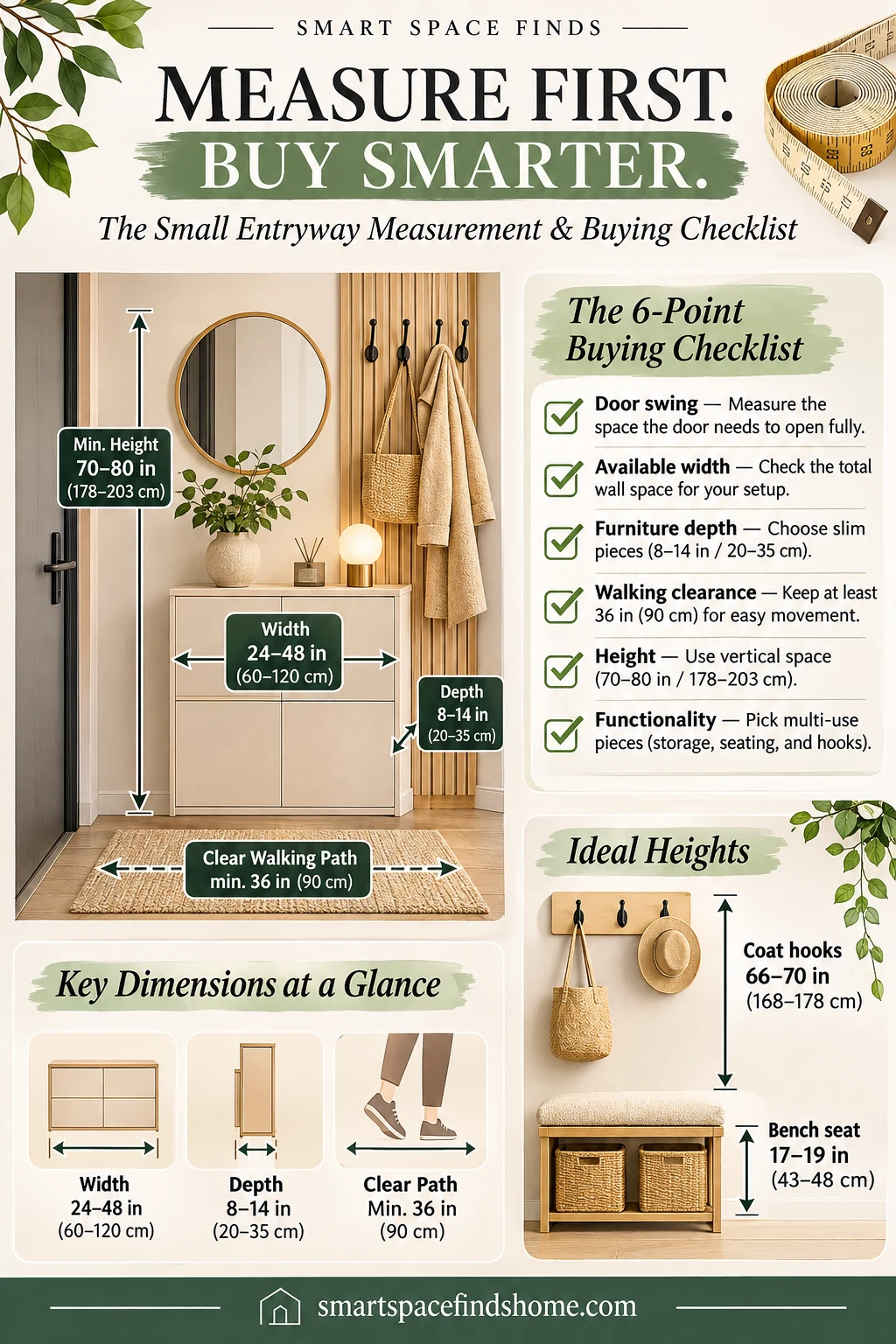
Good entryway furniture is sized for your apartment. Record these measurements before comparing shoe racks, narrow cabinets, hooks or entry benches. Product dimensions alone do not tell you whether a piece will work once it is installed and loaded.
| Measure | Why it matters |
|---|---|
| Full door swing | The door must open as intended without hitting storage. |
| Available floor depth | Include shoes, handles, baskets and overhang. |
| Clear walking route | Preserve safe circulation and required exit access. |
| Height and reach | Hooks and trays must work for everyone using them. |
| Drawer or cabinet opening | Leave room to open storage and retrieve items. |
| Wall and mounting surface | Check rental terms, fasteners and product load limits. |
The best first purchases for a no-hallway entryway
Skip the impulse-buy shopping list. Start by matching one product category to the exact problem in your space. These are selection criteria, not product endorsements; size, suitability and installation depend on your apartment.
- For scattered keys: a shallow, easy-clean tray on an existing surface.
- For tracked-in dirt: a flat nonslip mat that does not catch the door.
- For daily shoes: a narrow tray, low rack or appropriately secured shoe cabinet.
- For bags and coats: hooks suited to the surface and load, or stable freestanding storage.
- For mail: a small document holder that is cleared regularly.
Five entryway mistakes that make small apartments feel smaller
- Buying before measuring. A slim-looking console can still obstruct the door or walking path.
- Keeping every pair of shoes at the entrance. Seasonal pairs belong elsewhere.
- Choosing storage that is hard to use. Deep baskets and high hooks lead to clutter returning.
- Relying on unsafe mounting. Verify adhesive limitations, loads, anchors and lease rules.
- Overdecorating the landing zone. Save the useful surface for keys, not a crowd of accessories.
Your seven-day entryway reset plan
- Day 1: observe where everyday items land and photograph the current situation.
- Day 2: measure door clearance and mark possible storage footprints.
- Day 3: establish one key-and-wallet landing spot.
- Day 4: edit shoes down to the pairs you use most.
- Day 5: test safe bag and coat storage.
- Day 6: manage the mat, wet-weather gear and mail.
- Day 7: walk through carrying groceries, refine the layout and keep only what works.
Frequently asked questions about entryways without hallways
How do I create an entryway when my front door opens directly into the living room?
Create a compact arrival zone with a mat, a tray for keys and a suitable location for shoes and coats. Keep the finishes consistent with the living room so the entrance feels intentional. You do not need a console table if existing furniture already provides a landing surface.
What is the best shoe storage for a very narrow entryway?
The best option is the smallest stable solution that holds your everyday shoes without reducing a required walking route or interfering with the door. That may be a shallow tray, a low rack or shoe storage in a nearby closet. Measure with shoes in place before buying.
Can I organize a rental entryway without drilling?
Yes, potentially: reuse furniture, add a safe mat and consider a stable freestanding solution or a removable hook appropriate to its mounting surface. Always review the lease and the manufacturer’s load, installation and removal guidance. Adhesive products are not risk-free.
How can I make a small entryway look expensive?
Choose a restrained palette, repeat materials already used in the room, minimize visible clutter and prioritize properly scaled pieces. A functional mat, clean landing surface and consistent hardware often look more polished than several decorative storage containers.
Should I put an entryway bench in a small apartment?
Only if the bench fits without restricting circulation, door swing or access to other furniture. In many apartments without hallways, a bench takes up more useful space than it provides. Test the footprint with tape first.
Where should coats go if there is no coat closet?
Keep frequently worn coats on suitably rated hooks or stable storage located away from the door swing. Store off-season coats in an existing wardrobe or other appropriate location. Avoid overloading doors and lightweight wall fixtures.
How do you stop a small entryway from getting cluttered again?
Keep only daily-use items near the door, give each item one obvious home and do a two-minute reset each evening. If belongings still pile up, change the location or capacity of the storage rather than relying on reminders.
Do you need a separate entryway area in a studio apartment?
No. A functional routine can be distributed across nearby storage locations. Keys might sit on a compact shelf, while shoes live in a closet and outerwear hangs on a safe hook. A large visual divider is not necessary.
More small-space organization ideas
Continue with our entryway drop-zone ideas for apartments without a hall for further layout inspiration, or explore renter-friendly storage hacks for solutions that respect rental restrictions.