
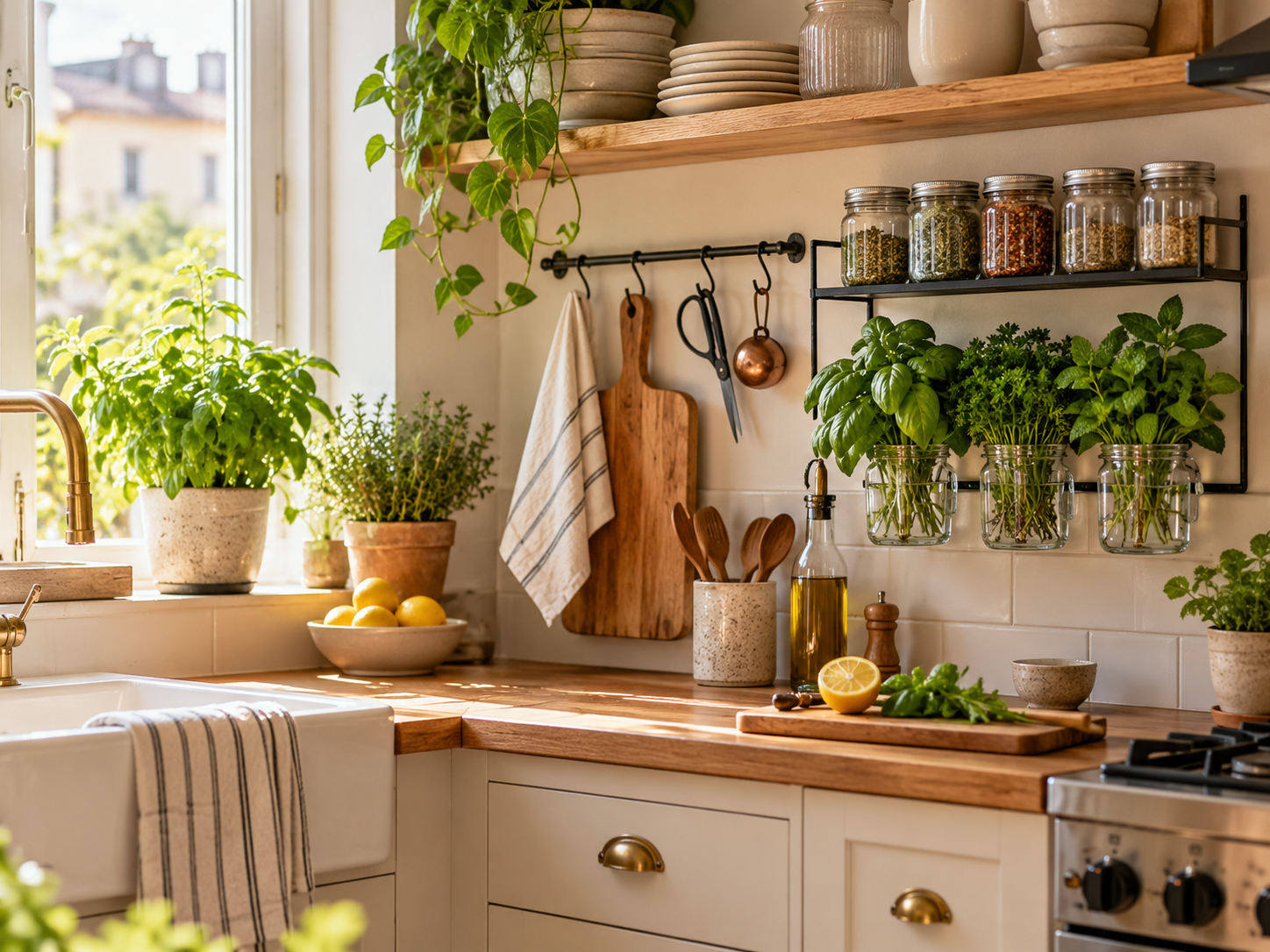
Fresh herbs can transform everyday meals, but a small kitchen may not have room for a collection of special storage containers. The key is to match each herb to its moisture needs, preserve good airflow and build meals around what you already have. This guide explains realistic methods for basil, parsley, cilantro, dill and woody herbs, plus a simple plan to reduce waste.
Why Fresh Herbs Spoil So Quickly
Fresh herbs are more delicate than most vegetables. Once cut, their leaves continue losing moisture, while bruising, excess surface water and cold injury accelerate deterioration. A large bunch purchased for one recipe can become waste within days if it sits loose in a refrigerator drawer. The solution is not one universal storage trick. Start by identifying whether the herb has soft, tender stems or sturdy, woody branches. Check its condition immediately after shopping, remove damaged leaves and choose a storage method suited to its texture. A tiny kitchen needs simple methods that make the remaining herbs easy to see and use.
Sort Tender Herbs From Woody Herbs
Parsley, cilantro, dill, mint and basil generally need different treatment from rosemary, thyme and sage. Tender bunches have relatively soft stems and wilt more quickly. Woody herbs tolerate handling better but can still dry out or become moldy in a damp package. Keep different types in separate containers if they have different moisture needs. Do not compress several kinds into one tightly packed bag simply to save shelf space. If a mixed herb packet includes multiple varieties, inspect them separately before storing. Labels are useful when leaves look similar or when several people cook in the same household.
The Special Case of Basil
Basil is especially sensitive to chilling injury. Many cooks find that freshly cut basil keeps its flavor and appearance better for a short period at cool room temperature, with cut stems in a small jar of clean water, rather than in a very cold refrigerator. Keep it away from direct intense sun, heat and drafts, and change cloudy water. A loose covering can help reduce moisture loss without crushing the leaves. Results vary with the bunch’s freshness and your room temperature, so inspect it daily. If basil is already chopped or prepared as a sauce, follow appropriate refrigerated storage practices instead of leaving it on the counter.
Store Parsley and Cilantro Like a Small Bouquet
For fresh parsley or cilantro with intact stems, trim any damaged ends and place the bunch upright in a narrow jar containing a little clean water. Keep the leaves above the waterline. A loose bag over the top can reduce drying, while allowing the leaves enough space to avoid being crushed. Put the jar where it cannot tip and where storage conditions suit the herb. Replace the water when it becomes cloudy and remove yellowing stems promptly. In a compact refrigerator, a short, wide-based jar is safer than a tall unstable drinking glass. The method is useful only if the jar actually fits without pressing against a shelf.

Use the Towel Method for Dill and Mint
A clean, lightly damp paper towel can help protect suitable tender herbs from drying. The towel should not be dripping wet: trapped free water encourages sliminess and spoilage. Lay the herbs loosely in a food-safe container or bag, with the towel cushioning rather than tightly wrapping the leaves. Check the package frequently and replace an overly wet towel. This method can be easier than jars when your refrigerator has very little vertical space. Store the package where it will not be flattened by vegetables or leftovers. Any leaves that become slimy, moldy or unpleasant-smelling should be discarded rather than blended into a sauce.
Give Rosemary and Thyme Their Own Space
Woody herbs such as rosemary and thyme usually benefit from gentle handling and protection from excessive moisture. Keep sprigs loosely wrapped in a slightly damp towel or in a suitable container according to their condition. Avoid submerging the leaves unnecessarily, and do not seal them into a wet plastic pouch. Check stems for signs of mold before adding them to slow-cooked dishes. Where possible, leave sprigs intact until cooking; stripping leaves ahead of time increases exposed surface area. Use rosemary and thyme strategically in several meals, such as roasted vegetables, tomato sauces and braises, rather than purchasing separate bunches for every recipe.
Should You Wash Herbs Before Storing?
Washing immediately can be convenient for meal preparation, but moisture left between leaves often reduces storage life. If you wash herbs before refrigerating, drain thoroughly and use a salad spinner or clean towel to remove excess water without crushing delicate stems. Put them away only when the surfaces are suitably dry for the chosen storage method. If you prefer to wash just before use, keep the unwashed bunch separate from foods that are ready to eat and follow safe produce-handling practices. In either approach, clean utensils and hands matter. Never use soap or household cleaners on fresh herbs; rinse produce with appropriate potable water.
Plan One Dedicated Herb Zone
A small refrigerator is easier to navigate when herbs occupy one predictable location. Choose a drawer or shelf area with enough room for the chosen container and suitable temperature, without blocking air circulation. Do not hide a herb jar behind milk cartons or stack heavy ingredients on top of delicate leaves. If basil is being kept separately at room temperature, place it in one visible kitchen spot away from heat. Avoid purchasing elaborate tiered organizers until you know how much fresh greenery you genuinely use each week. One shallow washable tray or a couple of stable jars may be sufficient for a one- or two-person household.
When Freezing Is the Better Choice
If a bunch will not be used while fresh, freeze suitable herbs rather than waiting for them to deteriorate. Chop parsley, dill or cilantro and portion the pieces into small freezer-safe containers or bags, removing excess air. Freeze herbs in appropriate small portions so you can add them directly to cooked soups, sauces and stews. Their texture generally softens after thawing, so frozen herbs are not a perfect substitute for a fresh garnish. Mark the container with the herb name and freezing date. For herbs frozen with oil, use suitable freezer-safe equipment and follow safe storage guidance; do not treat an infused oil mixture as shelf-stable.

Cook Through a Bunch in Three Meals
A practical anti-waste strategy is to plan for an herb in more than one dish. A bunch of parsley might contribute to a yogurt dressing, a grain salad and a vegetable soup. Cilantro can season rice, beans and a quick salsa. Dill works with eggs, potatoes and a lemony yogurt dip. Use the most delicate leaves first for raw applications and the remaining sound stems or chopped leaves later in cooked recipes. Plan menus around what you have rather than buying several new varieties for an elaborate meal. A small note on the refrigerator door can remind the household which bunch needs using soon.
How Long Can Fresh Herbs Last?
There is no reliable single number for every fresh herb. The starting freshness, temperature, moisture level, variety and handling conditions all matter. An herb that has already spent several days in distribution may have a short useful life even with careful storage. Check appearance, smell and texture before cooking, while remembering that visual checks cannot guarantee food safety. Discard herbs with mold, sliminess or clear signs of spoilage. For cut, packaged or prepared products, follow the manufacturer’s date and storage information. Good organization reduces waste, but it does not reset freshness or make spoiled food safe.
A Two-Minute Herb Reset
When you open the refrigerator to start dinner, check the herb zone first. Lift a damp towel, remove visibly damaged leaves, check water in jars and bring forward anything that should be used soon. This takes less time than sorting a neglected drawer at the end of the week. Before shopping, see whether existing parsley or cilantro can serve another recipe. Wash reusable jars and trays regularly, and let them dry appropriately. If your household consistently throws away half of each bunch, buy smaller portions when available or grow a small pot of the most-used variety. The best system matches your cooking frequency, not a photograph of a fully stocked kitchen.
Frequently Asked Questions
Can I store every herb in the same bag?
No. Tender and woody varieties differ in their response to cold, drying and excess moisture. Separate herbs with different needs and inspect them frequently.
Can I use herbs once they become slimy?
No. Sliminess, mold and strong off-odors are warning signs; discard spoiled herbs.
What if my refrigerator is too small for herb jars?
Try a shallow container with a barely damp clean towel for suitable herbs, or freeze portions you cannot use while fresh.
For more kitchen routines, see our tiny-kitchen meal preparation guide.