
The Small-Space Edit · Closet Organization
The most beautiful small closet is not the one packed with organizers. It is the one where every folded sweater, T-shirt and pair of jeans has a place you can find—and put back—in seconds.
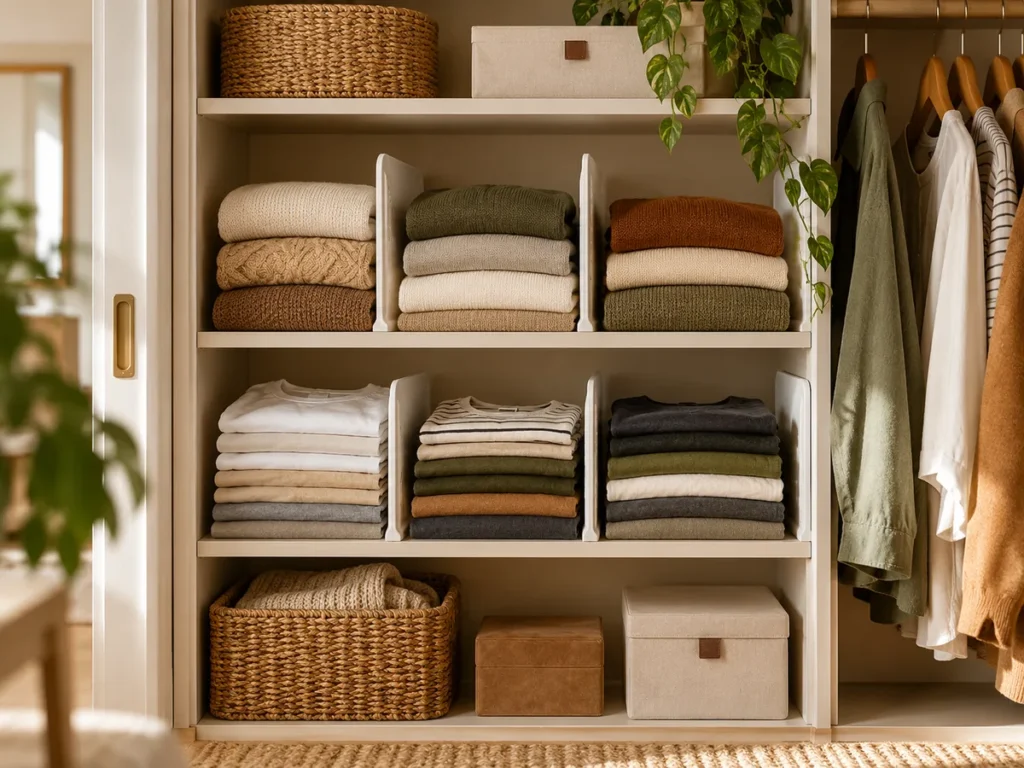
Closet shelf dividers, folding boards and stackable clothing organizers can create order in a narrow wardrobe, but the right solution depends on shelf material, depth, door clearance and what you actually wear. This guide shows you how to measure, choose and arrange each system without sacrificing valuable space—or creating another daily chore.
01 / Planning
Measure Your Closet Before Buying a Single Divider
A storage product can fit on a shelf yet fail to pass through the door opening. Measure the usable shelf width, depth and vertical clearance as well as the unobstructed door opening. Include the space lost to shelf brackets, hanging rails and hinges. On adjustable shelves, note the actual position you intend to use.
Measure between the inside walls; subtract brackets and the clearance needed to reach each stack.
Measure from the front edge to the back wall; compare it with the depth of a folded garment.
Check clearance above clothing and space needed to slide baskets out comfortably.
Practical test: Fold your largest frequently worn sweater before choosing divider spacing. A divider should keep the pile upright, not squeeze garments into a narrow slot.
02 / The edit
Shelf Dividers vs. Bins vs. Stackable Organizers: Which Works Best?
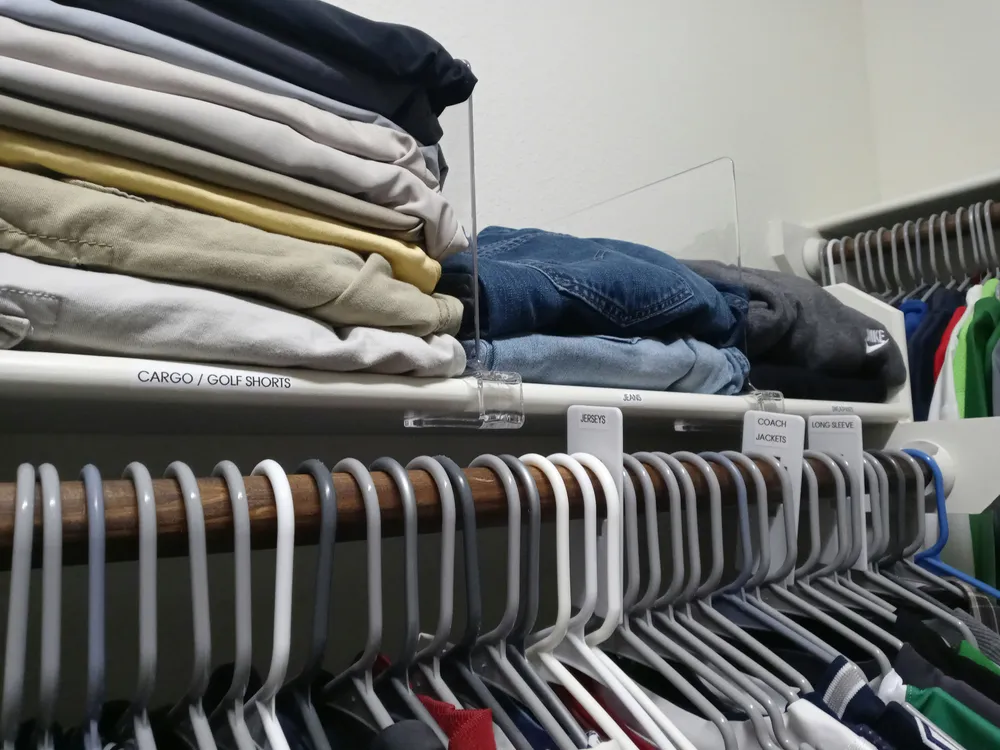
The best closet shelf organizer solves a specific problem. Use this comparison to avoid buying several products that compete for the same space.
| Storage system | Best for | Watch out for |
|---|---|---|
| Clip-on shelf dividers | Separate short, stable piles of sweaters, jeans or tees on compatible solid shelves | Shelf thickness, surface finish, clamp pressure |
| Wire shelf dividers | Wire shelving when the attachment is designed for that exact wire configuration | Bar spacing and compatibility |
| Open-front stackable bins | Deep shelves and clothing you want to access from the front | Opening size, stack stability and full-unit height |
| Shallow baskets | Scarves, leggings and irregular small accessories | Wasted space in thick walls or deep opaque containers |
| Hanging shelf organizers | Closets with unused hanging height and a suitable rail | Reduced hanging space and the rail’s rated capacity |
| Folding board | Consistent shirt dimensions for repeatable stacks | Another tool to store; not necessary for everyone |
Choose a divider when…
Clothes already fit but piles lean together and categories keep mixing.
Choose a bin when…
Small pieces vanish at the back of the shelf or are awkward to fold.
Clear acrylic or metal dividers?
Transparent dividers offer a quiet, barely-there look and keep sightlines open. Metal dividers can feel more architectural and may suit frequent use. Neither material is automatically better: inspect the mounting method, edges, surface protection and dimensions. Avoid assuming that every clip-on divider fits laminated particleboard, glass or ventilated wire shelving.
01 · Shelf organization
Closet Shelf Dividers & Stack Separators
Keep garment piles apart, or organize handbags in a dedicated compartment. Check shelf material, usable depth and product dimensions before ordering.
Affiliate disclosure: As an Amazon Associate, Smart Space Finds earns from qualifying purchases. Product availability, prices and variants may change; check the Amazon listing before ordering.
03 / Folding studio
The Folding System That Keeps Small Closet Shelves Tidy
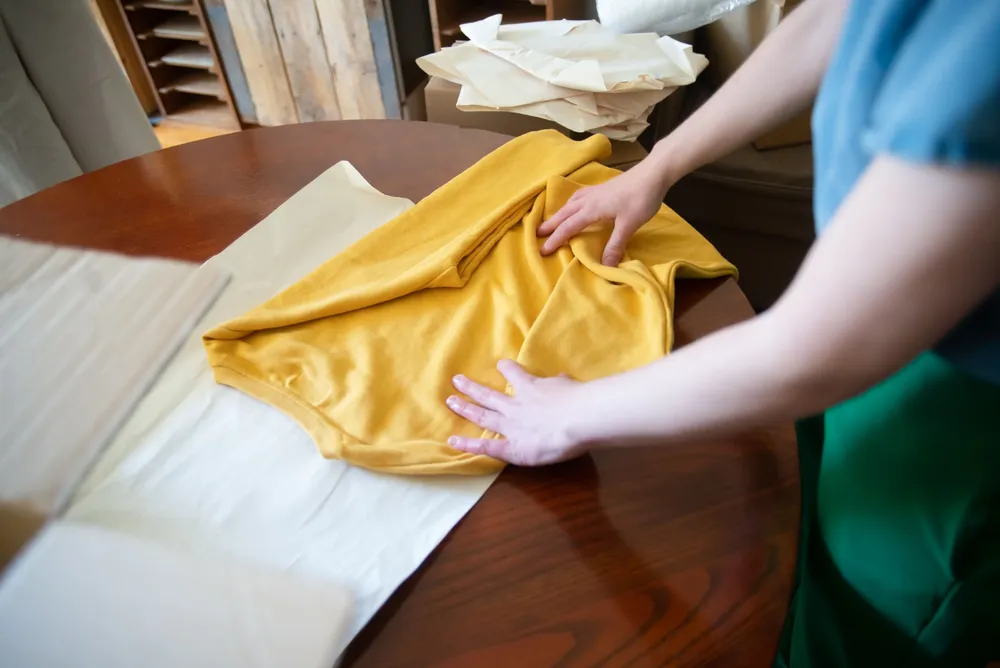
Consistency matters more than a perfect department-store fold. When your T-shirts have roughly the same folded width, shelves stay readable and dividers can be positioned correctly.
How to fold T-shirts into uniform rectangles
- Lay the clean, dry shirt face down on a flat surface and smooth the fabric.
- Fold each side inward to form a tidy, even-width column; tuck the sleeves inside.
- Fold the bottom upward once or twice until the rectangle fits the shelf depth.
- Test the fold with the thickest T-shirt before creating a full stack.
A folding board can speed up the process when you fold many shirts regularly, but it is optional. A simple cardboard template can help you test the ideal dimensions before buying a dedicated tool.
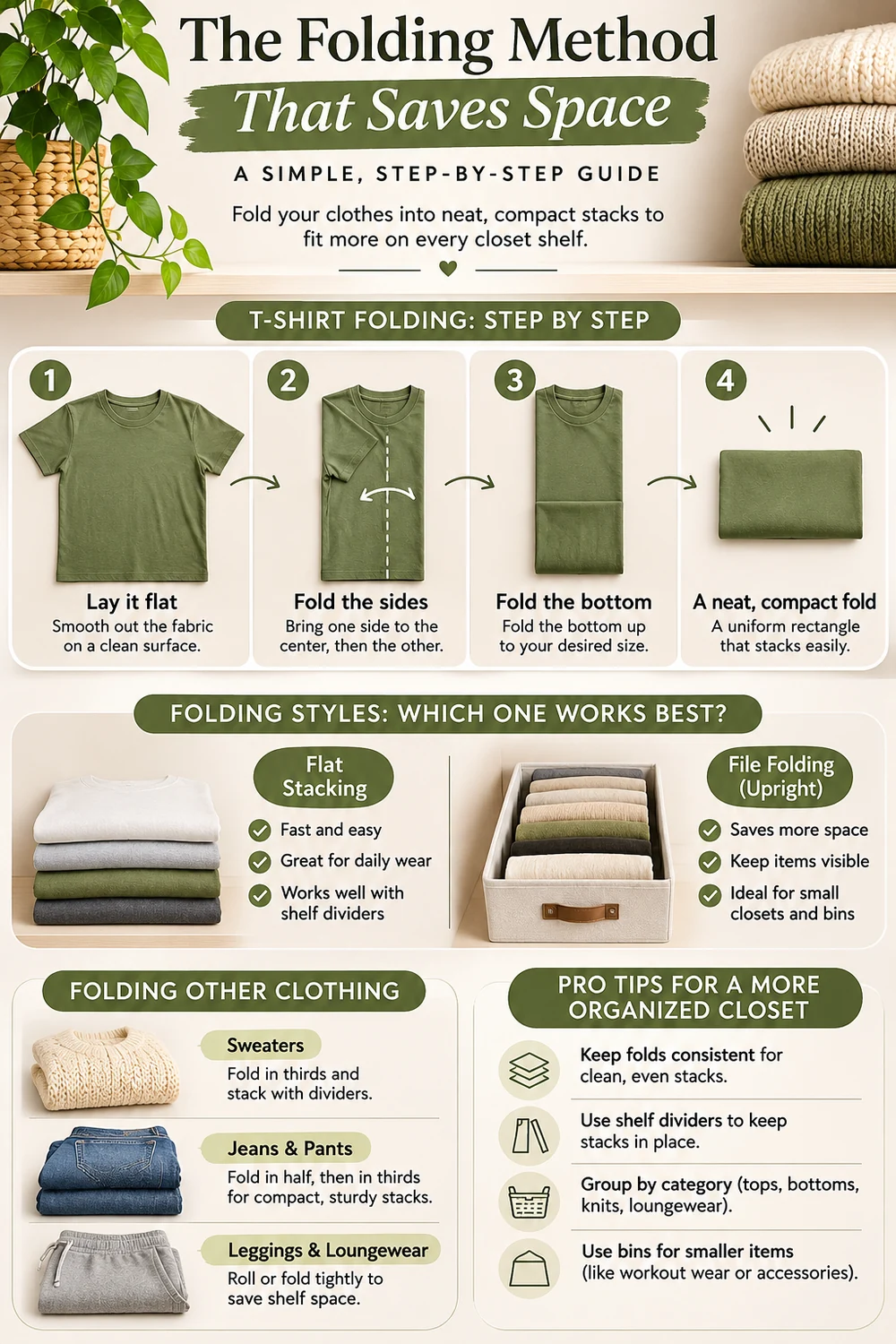
File folding vs. flat stacking
File folding
Best for drawers and bins where you view each garment from above. Items should stand without being tightly crammed.
Flat stacking
Best for open closet shelves and heavier knitwear. Keep piles short enough that removing one piece does not topple the rest.
Fold sweaters without stretching their shoulders
Heavy sweaters and delicate knits are usually better folded than hung on narrow hangers. Fold loosely along the natural seams, protect embellishments from rough zippers, and avoid very tall towers. Always follow the care label, especially for wool and fine cashmere.
The considered edit · Folding tools
Shop Folding Boards for Small Closets
A consistent fold helps shirts stack more neatly. Choose the board size that fits your garments and folding surface.
Affiliate disclosure: As an Amazon Associate, Smart Space Finds earns from qualifying purchases. Product availability and offers may change.
02 · Fold with precision
Two More Folding Board Options
Additional folding-board formats for building consistent shirt stacks; compare the latest size and variant on Amazon.
Affiliate disclosure: As an Amazon Associate, Smart Space Finds earns from qualifying purchases. Product availability, prices and variants may change; check the Amazon listing before ordering.
04 / The layout
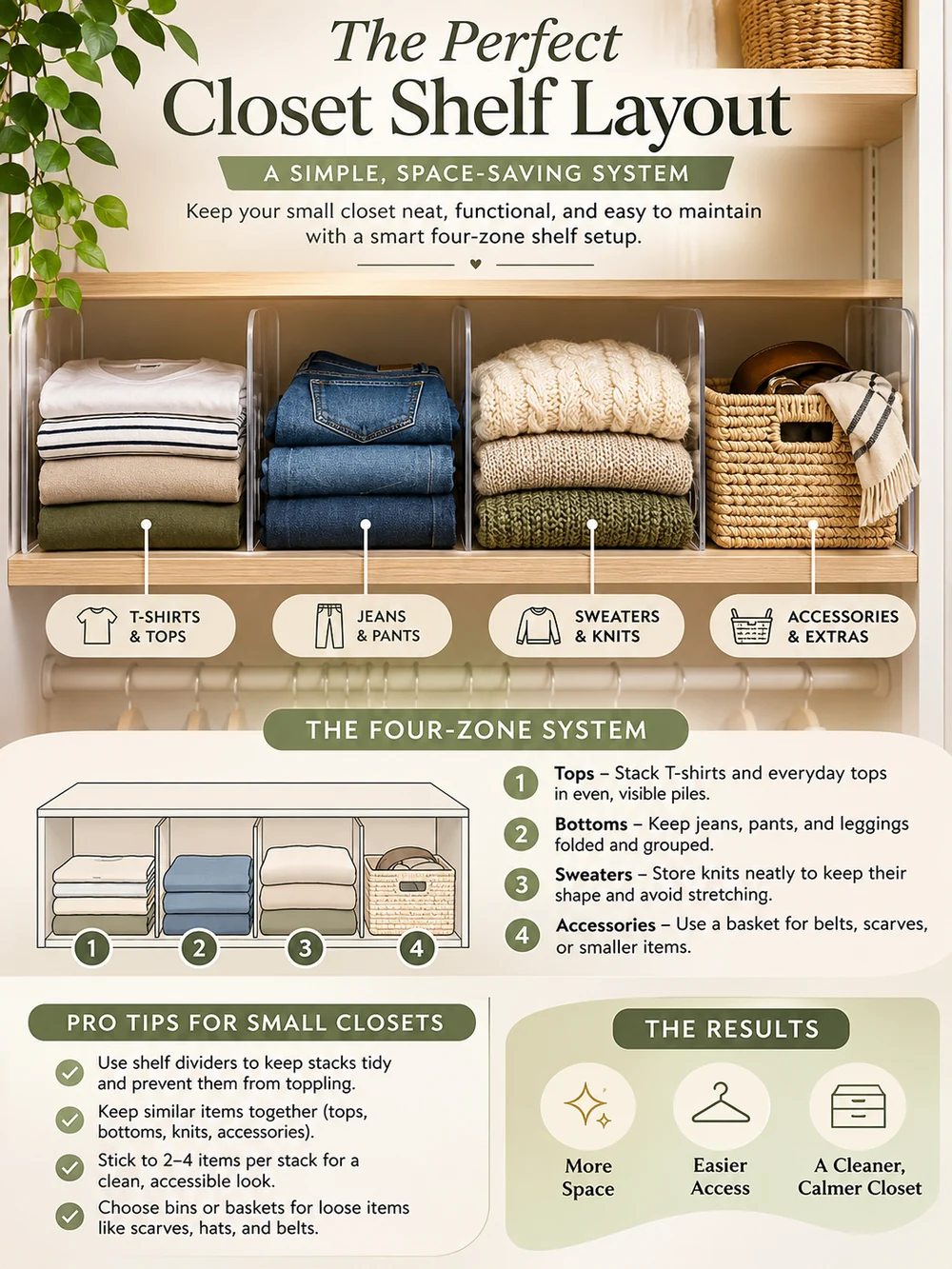
A Four-Zone Layout for a Small Closet Shelf
Organize the easiest-to-reach space around your routine rather than trying to make every category equally prominent. The following arrangement is a conceptual layout, not a universal measurement.
tees
basket
Illustrative shelf zoning. Adjust the number and width of zones to your measured wardrobe.
Top shelf: lighter, occasional items
Use clearly labeled, lightweight containers for seasonal accessories or spare textiles. Avoid heavy boxes overhead and make sure anything stored high can be removed safely without pulling on a divider.
Eye-level shelf: high-frequency essentials
Reserve the most accessible shelf for the T-shirts, jeans and knitwear you reach for several times per week. Keep the center visually open; do not force another basket into space better used for reaching.
Lower shelf: substantial folded pieces
Lower positions can suit bulkier sweaters or stable baskets, provided the furniture is designed for the load. Keep frequently used pieces within easy reach.
Deep shelves: organize front-to-back carefully
Use a shallow removable tray or pull-out-compatible bin for smaller items at the back. Avoid piling frequently worn clothes behind other clothes; a beautifully arranged shelf that requires constant excavation will not stay organized.
05 / Real homes
03 · More accessible storage
Stackable Storage for Deep Closet Shelves
Use these for grouped folded garments on shelves that offer enough height and pull-out clearance. Choose according to measurements rather than pack count alone.
Affiliate disclosure: As an Amazon Associate, Smart Space Finds earns from qualifying purchases. Product availability, prices and variants may change; check the Amazon listing before ordering.
Smart Closet Organization for Different Wardrobe Types
Narrow reach-in closet
Choose two or three generous categories instead of many tiny compartments. Put your most-used stack beside the most accessible door opening. If the closet has sliding doors, check which section remains covered in each position.
Rental apartment wardrobe
Start with removable dividers and freestanding baskets instead of drilling into cabinetry. Use pads where appropriate, follow the organizer’s surface guidelines and test any contact point on an inconspicuous area.
Wire-shelf closet
Use accessories explicitly designed for the wire grid. Solid-shelf clip designs may not grip correctly. A fitted shelf liner can provide a more even surface for light folded garments, but it does not change the shelf’s load rating.
Shared closet
Assign each person a visible section with separate bins or dividers. If clothing quantities differ, allocate space based on actual use rather than forcing perfect symmetry.
The small-details edit · Fabric organizers
Keep Small Clothes in Their Place
For socks, underwear, baby clothes and other small garments, soft drawer compartments can work better than open shelf stacks. Measure drawer space first.
Affiliate disclosure: As an Amazon Associate, Smart Space Finds earns from qualifying purchases. Availability may change.
07 · Keep small items separated
Adjustable Drawer Dividers
Adjustable drawer inserts can help with small garments and accessories. Measure drawer interior width and height before buying.
Affiliate disclosure: As an Amazon Associate, Smart Space Finds earns from qualifying purchases. Product availability, prices and variants may change; check the Amazon listing before ordering.
Very small bedroom closet
Do not lose half of the hanging space to a bulky hanging organizer unless it genuinely solves your storage problem. For other constrained spaces, see our small closet organization ideas and closet organization inspiration.
06 · Maximize vertical space
Vertical Closet Storage & Wardrobe Systems
Hanging organizers suit compact wardrobes; full closet systems require careful fit checks and more substantial installation.
Affiliate disclosure: As an Amazon Associate, Smart Space Finds earns from qualifying purchases. Product availability, prices and variants may change; check the Amazon listing before ordering.
06 / The buying guide
What to Look For in Closet Shelf Dividers and Folding Accessories
Prioritize dimensions, compatibility and ease of use before aesthetics. No organizer can increase the structural load capacity of a shelf.
Before You Buy: 8-Point Checklist
- Measure usable shelf width, depth and height.
- Check whether the shelf is solid wood, laminate, glass or wire.
- Confirm clamp thickness or attachment compatibility.
- Check door opening and bin removal clearance.
- Look for smooth edges around delicate knits.
- Confirm organizer dimensions in the exact product variant.
- Prefer products that are easy to wipe clean and reposition.
- Buy for the garments you actually own, not a staged product photograph.
Three shopping mistakes worth avoiding
Too many dividers: Over-segmented shelves make clothing harder to put away. Too-tall stacks: A towering pile defeats the purpose of a divider. Buying first, measuring later: The product may fit the interior but not clear the door.
Affiliate note: Smart Space Finds may earn from qualifying purchases through affiliate links when product recommendations are added. No unverified product links are included in this guide.
07 / Make it last
04 · Store soft knits
Sweater & Seasonal Clothing Storage
Soft-sided storage for occasional clothing and off-season overflow. Keep heavy knitwear folded and protect garments from moisture.
Affiliate disclosure: As an Amazon Associate, Smart Space Finds earns from qualifying purchases. Product availability, prices and variants may change; check the Amazon listing before ordering.
A 20-Minute Closet Reset You Can Actually Maintain
Remove stray garments and return anything that belongs elsewhere.
Rebuild unstable stacks and place daily essentials at the front.
Wipe shelves, check fittings and adjust any overcrowded zone.
Repeat this quick reset whenever piles start shifting. If one zone overflows every week, the problem may be space allocation or excess clothing—not a need for another organizer.
05 · The styled closet
Premium Closet Storage Baskets
Soft fabric and natural seagrass options for calm, coordinated storage. The seagrass basket is a divided narrow organizer best suited to small accessories.
Affiliate disclosure: As an Amazon Associate, Smart Space Finds earns from qualifying purchases. Product availability, prices and variants may change; check the Amazon listing before ordering.
How to Make an Organized Closet Look Like a Magazine
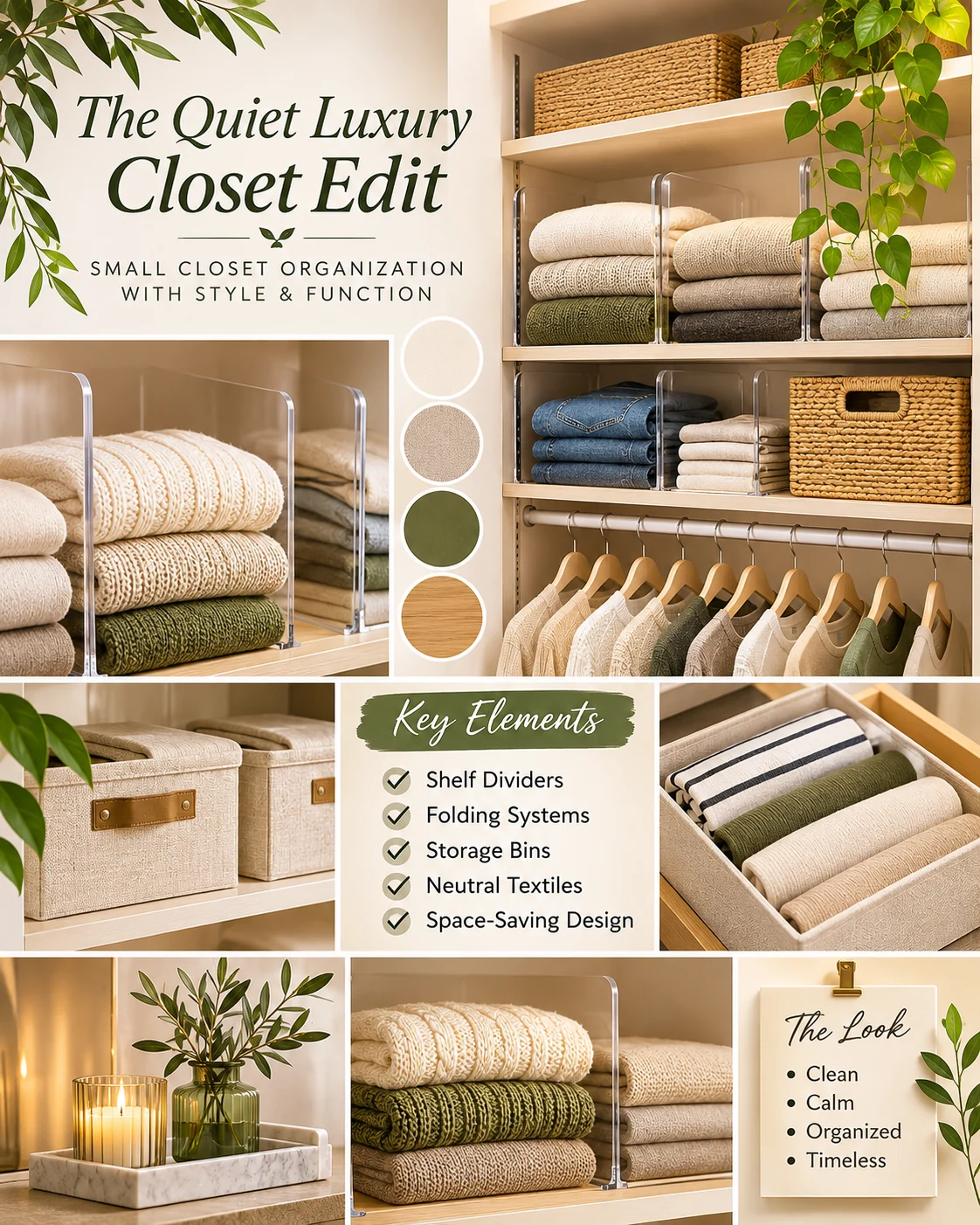
Luxury closet styling is built on restraint. Keep baskets within a small family of materials, use one consistent folding width per category and let a little shelf surface remain visible. A limited palette—warm white, oatmeal, soft gray and natural wood—creates cohesion even when your clothes are colorful.
Never buy a full matching storage set just for appearance. Reuse good containers first, then add a few purpose-built accessories where they genuinely improve access. The result should look effortless because it is effortless to maintain.
Frequently Asked Questions About Small Closet Shelf Organizers
Do closet shelf dividers actually save space?
They can make existing shelf space more usable by keeping piles separated and visible. They do not create extra physical capacity or increase the shelf’s safe load.
Are shelf dividers better than baskets for folded clothes?
Dividers work well for stable folded stacks on accessible shelves. Baskets are often more useful for small accessories, loose clothing and deep shelves.
How many dividers should I use on one shelf?
Start with the minimum number needed to stop categories from leaning together. Test stack width and retrieval clearance before adding more.
Will clip-on dividers damage a wooden or laminate shelf?
They can mark or stress an unsuitable finish. Check the product’s allowed shelf thickness and material, avoid overtightening, and use surface protection only if the manufacturer permits it.
What is the best way to fold sweaters on shelves?
Fold them loosely into short, stable piles. Avoid hanging heavy knitwear on thin hangers and follow each garment’s care label.
Are shirt folding boards worth buying?
They are useful if consistent folds save you time, particularly for many similar T-shirts. They are optional for smaller wardrobes and can be tested with a simple template first.
Can I use shelf dividers with wire shelving?
Only use models explicitly compatible with your wire shelf design. Many clip-on organizers are intended for solid shelves.
How do I organize very deep closet shelves?
Keep regular-use items near the front and use removable, shallow containers for low-frequency or small pieces farther back. Verify that each container can pass through the opening.
Smart Space Finds editorial approach: measure first, choose fewer better storage tools, and favor everyday usability over picture-perfect staging. Product specifications and compatibility should always be checked directly with the manufacturer before purchase.