
Affiliate disclosure: This guide contains paid product links. As an Amazon Associate I earn from qualifying purchases.
A small closet can feel spacious when every garment has a purpose, a place, and an easy way back after laundry. This practical wardrobe reset combines decluttering, smart hanging and folding, seasonal rotation, and a maintenance routine designed for real life.
Quick answer: To reset a small wardrobe, edit one clothing category at a time, separate daily wear from off-season items, measure available storage, place frequently worn pieces within easy reach, and reserve a little breathing room for clean laundry. Shop for organizers only after you know what remains.
In this guide
How to Reset a Small Wardrobe: A Step-by-Step Plan
1. Choose a manageable starting point
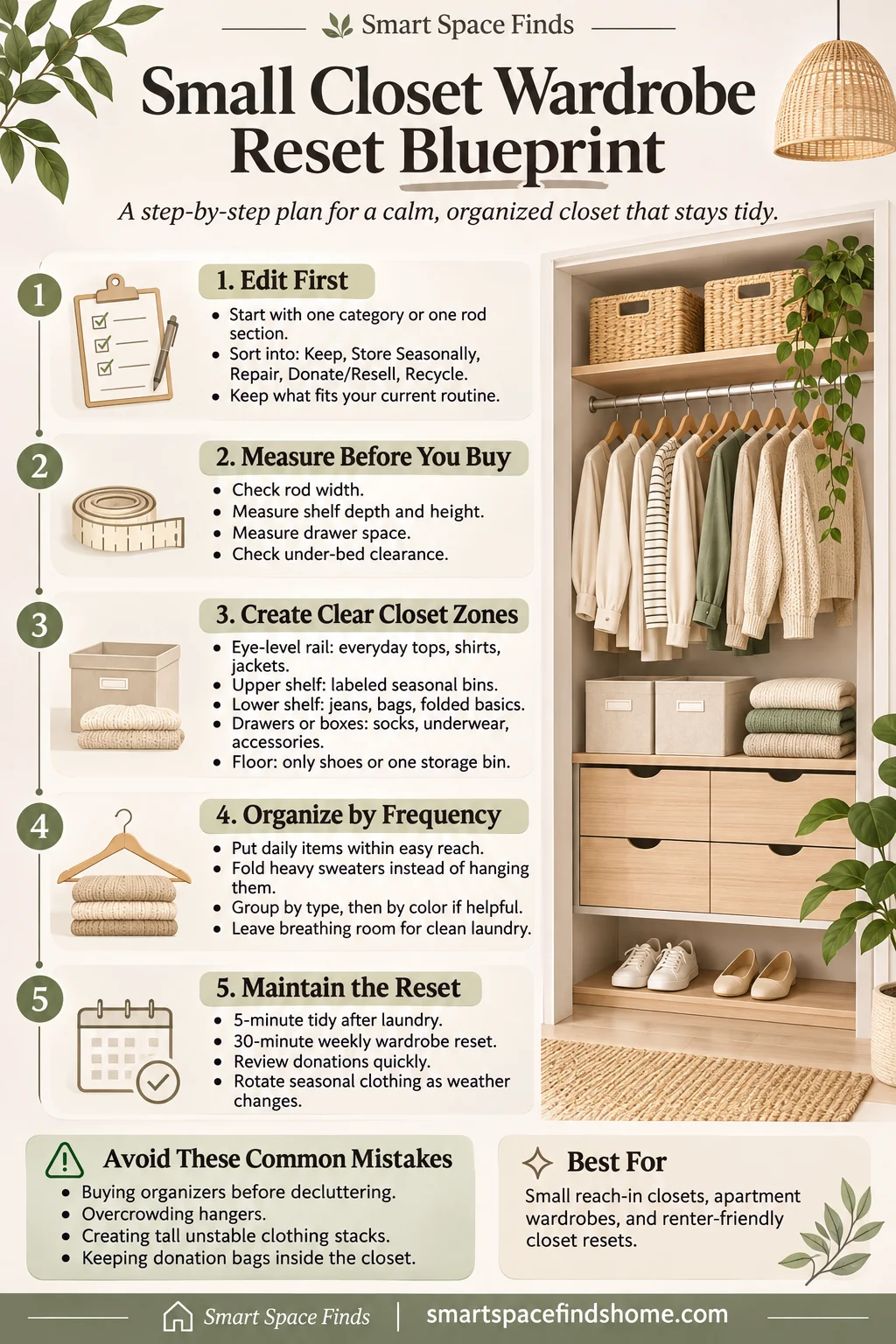
If your closet is overflowing, you do not need to empty the whole room at once. Start with one rod section, one shelf, or one clothing category. Set aside 20–30 minutes and keep the rest of the room usable. For a larger reset, repeat the same process over several short sessions.
2. Sort clothing into five clear destinations
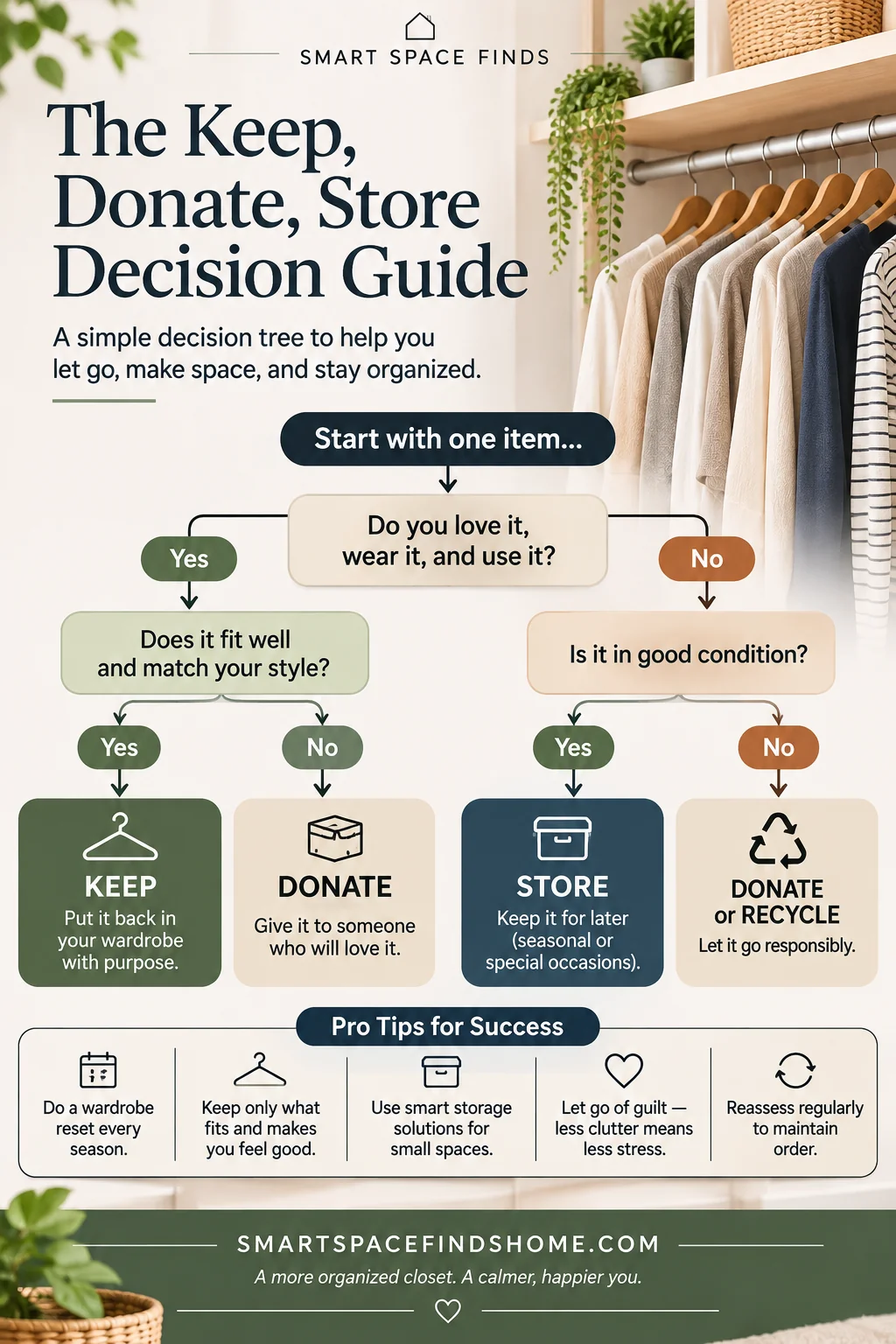
- Keep accessible: clothes that fit, feel comfortable, and support your current routine.
- Store seasonally: clean, wearable clothes you will genuinely use later in the year.
- Repair or tailor: items worth keeping with a specific, realistic fix.
- Donate or resell: clean, usable pieces that no longer suit your needs.
- Recycle responsibly: textiles too damaged to wear, subject to your local textile-collection rules.
Ask whether you would choose the item again today, whether it works with your current clothes, and whether keeping it makes your mornings easier. A rigid one-year rule is not appropriate for every garment: special-occasion pieces and sentimental clothing need a separate decision.
3. Measure before buying organizers
Record your usable rod width, shelf depth, shelf height, drawer dimensions, and the clearance needed for doors or drawers to open. Allow enough space to slide garments apart and return clean laundry without squeezing. Choose storage to fit the measurements—not the other way around.
4. Build your everyday wardrobe first
Put frequently worn tops, pants, dresses, and layers at comfortable reaching height. Group by garment type, then by color only if that makes selection easier. Keep full-length hanging space for long garments; shorter pieces may benefit from a second rod if the structure allows it.
5. Finish with an easy return system
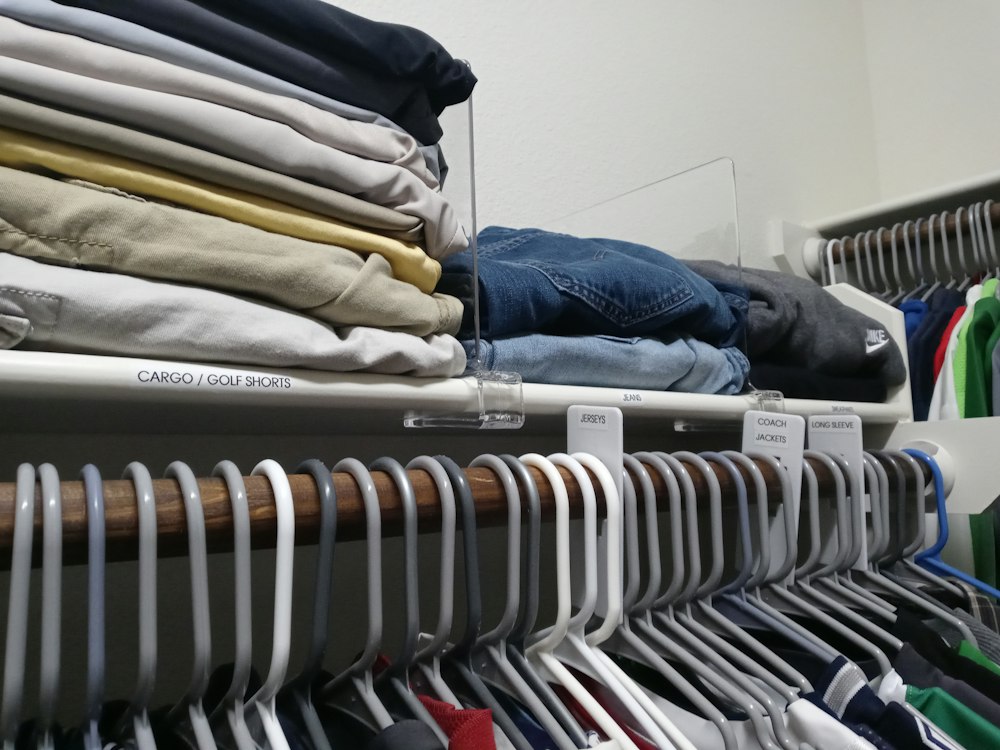
Give every category a visible home. A labeled bin for accessories, one shelf for folded jeans, and a consistent hanger arrangement work better than stacks that collapse as soon as one item is removed. Keep a small landing spot for clothes that are worn but not dirty, and clear it regularly.
The Small Closet Storage-Zone Blueprint
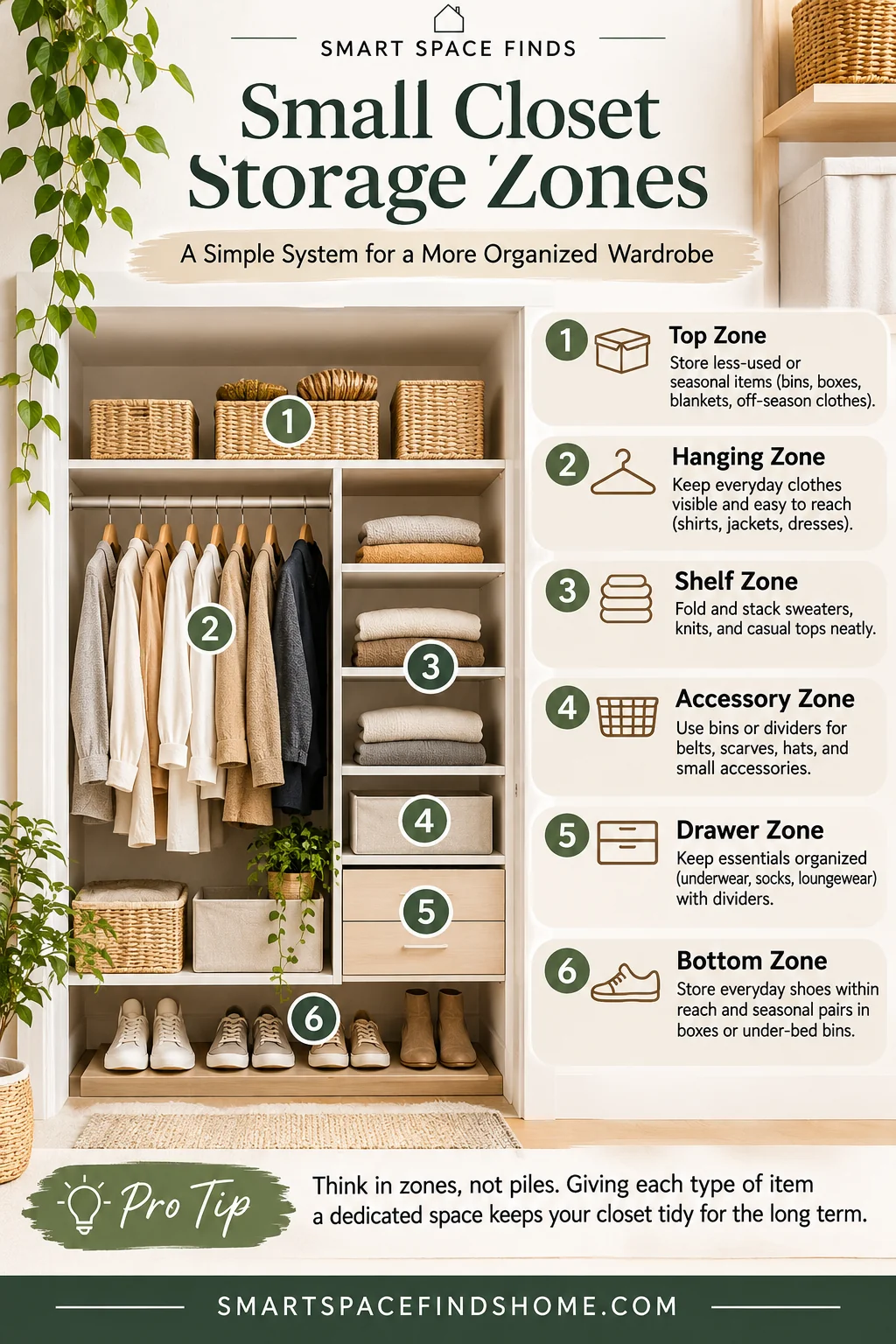
Think vertically rather than treating every inch equally. The most accessible area should serve your most frequently used clothes.
| Closet zone | Best for | Common mistake |
|---|---|---|
| Upper shelf | Lightweight, labeled seasonal bins and occasional accessories | Storing heavy boxes overhead |
| Eye-level rail | Daily tops, shirts, jackets and frequently worn outfits | Overcrowding hangers |
| Lower rail or shelf | Folded pants, jeans, bags or short-hanging garments | Tall, unstable clothing piles |
| Drawer or basket | Socks, underwear, activewear and small accessories | Mixing unrelated categories |
| Floor | Accessible shoes or one low, stable bin | Blocking closet doors |
Design tip: Matching hangers, a limited neutral palette, and a few cohesive bins create a Scandinavian or Japandi look—but visibility, accessibility, and workable spacing matter more than perfectly coordinated containers.
How to Organize Different Types of Small Closets
Narrow reach-in closet
Use slim hangers for suitable garments, group short items together, and make use of the shelf above the rail. Check that organizers do not interfere with sliding or hinged doors. In a rental, choose freestanding or removable systems rather than drilling without permission.
Optional hanger upgrade: Choose the pack size that matches the number of garments you actually hang. These are alternatives, not products you need to buy together.
Closet with one high shelf
Use shallow, lightweight, labeled bins that can be removed safely. Keep daily accessories lower down. Avoid deep containers that hide what is at the back.
Closet shared by two people
Assign each person a clear rail or shelf zone and reserve a shared area for items such as luggage or special-occasion storage. Divide by practical usage, not necessarily into equal halves.
No dresser or very few drawers
Try hanging fabric shelves for lightweight folded clothes, or compact boxes on a sturdy existing shelf. Heavy items can make soft hanging organizers sag; keep knits folded rather than stretched on hangers.
No dresser? A lightweight hanging organizer can create a dedicated home for folded T-shirts and accessories without permanent alterations.
Small Closet Organizers: What to Buy and What to Skip
Buy only for a specific storage problem. The right organizer makes items easier to see and put away; the wrong one simply reduces usable space.
| Storage solution | Best use | Check before buying |
|---|---|---|
| Slim velvet hangers | Maximizing room on a crowded rail | Garment weight and fabric compatibility |
| Drawer dividers | Socks, underwear and smaller folded categories | Interior drawer dimensions |
| Shelf dividers | Keeping separate folded stacks upright | Shelf thickness and divider stability |
| Hanging shelf organizer | Lightweight tops or accessories without drawers | Available hanging width and maximum load |
| Over-door organizer | Belts, scarves or other small items | Door clearance and hook fit |
| Under-bed storage | Clean, off-season garments | Bed clearance, moisture and dust protection |
| Garment bags | Occasional coats or special-occasion clothing | Breathability and garment length |
Budget-first order: edit your clothes, reuse existing boxes, standardize hangers if needed, then add a divider or bin only where the current system fails. Avoid buying a matching multi-piece storage set before measuring.
For drawers and shelves: If folded clothing does not stay in its assigned zone, these are two different organizers for two different surfaces.
How to Rotate Seasonal Clothes Without Creating More Clutter
- Choose a weather-appropriate transition date rather than changing everything on a calendar deadline.
- Wash or clean clothes before storage, and make sure they are fully dry.
- Repair loose buttons or seams before storing anything you intend to wear again.
- Fold knitwear and delicate pieces that could stretch on hangers.
- Pack by category into appropriately sized, labeled containers; protect garments from moisture, heat and pests.
- Keep a small selection of transitional layers accessible for unexpected weather.
Vacuum bags may be useful for some washable textiles when their care instructions permit compression, but they are a poor default for structured, delicate, wool, or down garments. Store those with appropriate support and airflow. Review seasonal storage each time you rotate rather than repeatedly packing clothes you no longer use.
Seasonal storage option: Once winter or summer items are cleaned and fully dry, under-bed bags can free up the daily wardrobe.
How to Make a Small Closet Look Calm and Expensive
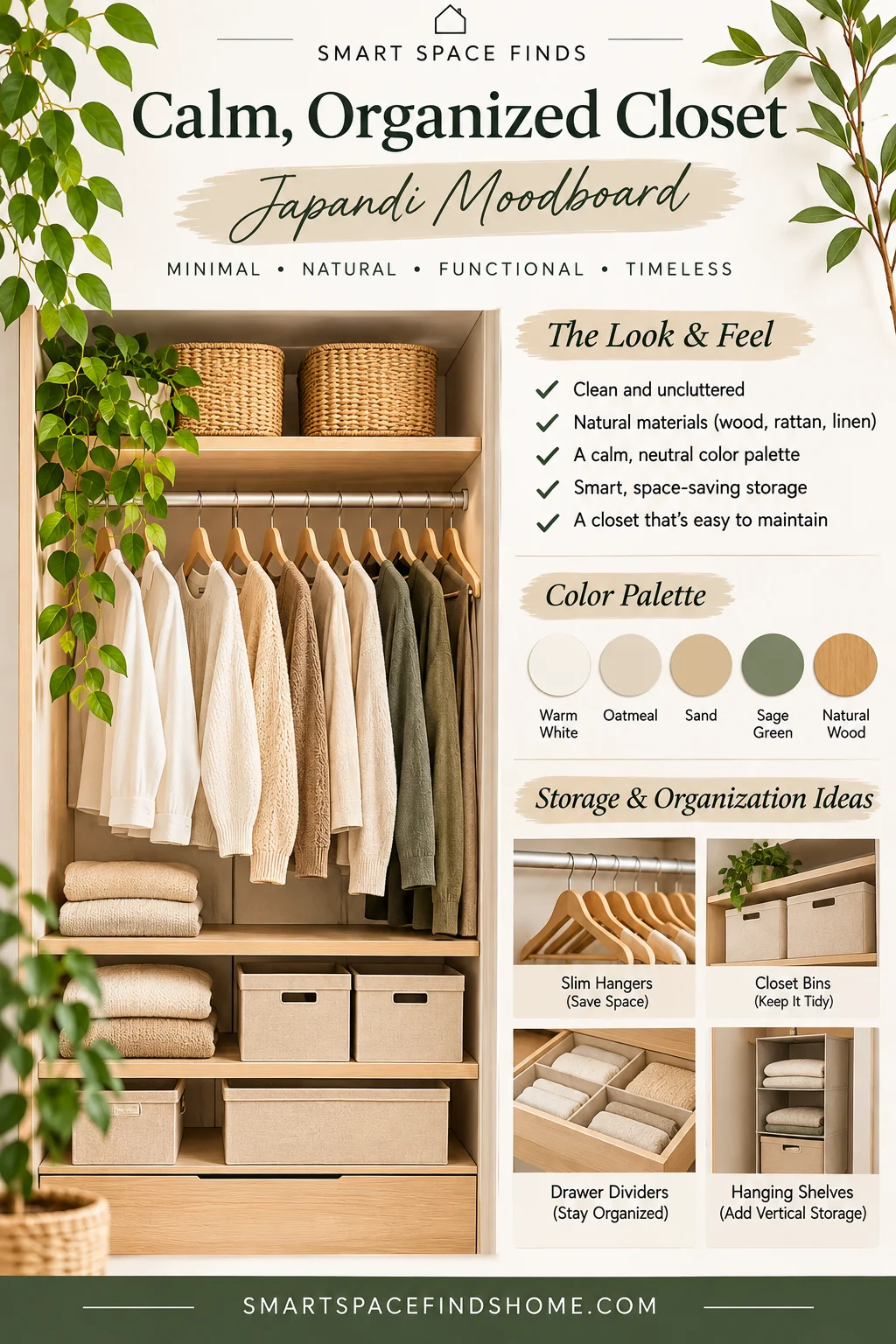
Use warm white, soft oat, natural wood, muted sage, and charcoal accents for a modern-organic palette. Keep labels simple, align containers on each shelf, and allow visible negative space. Avoid decorative objects that compete with useful storage. If your closet needs lighting, prefer a safe, renter-friendly light installed according to its instructions and avoid blocking door movement or ventilation.
Your 30-Minute Weekly Wardrobe Reset
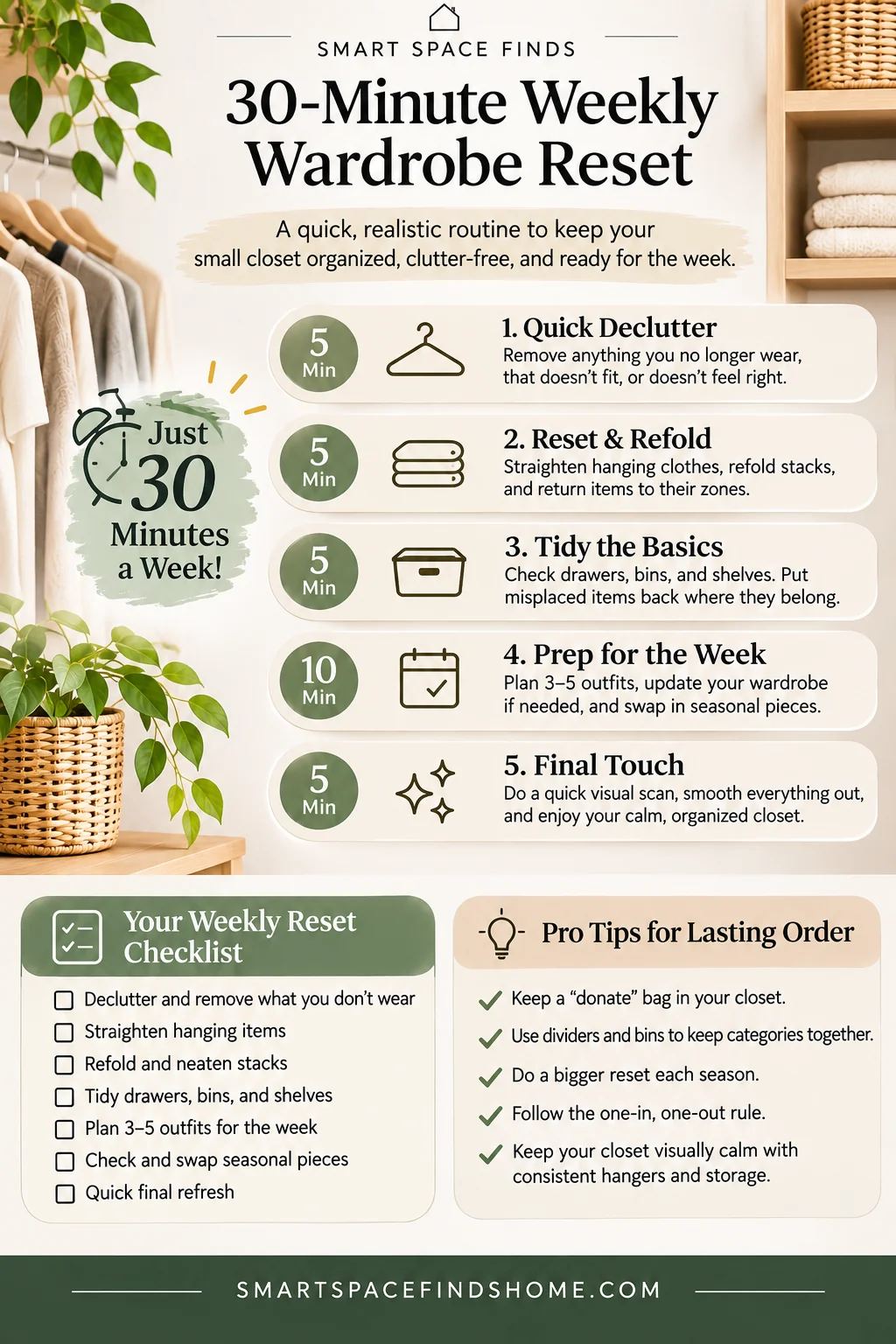
- Minutes 0–5 — Quick declutter: collect items that no longer belong in the active wardrobe, then set aside donations and repairs.
- Minutes 5–10 — Reset and refold: straighten hanging items, refold untidy stacks, and return clean laundry to its assigned zone.
- Minutes 10–15 — Tidy the basics: check drawers, baskets, shelves, accessories, and shoes; put misplaced items back.
- Minutes 15–25 — Prep for the week: plan three to five outfits, note missing essentials, and swap seasonal layers only when needed.
- Minutes 25–30 — Final refresh: clear visible surfaces, check that doors and drawers open freely, and leave room for clean laundry.
For busy weeks, a five-minute return-to-home routine is enough to prevent most clutter from accumulating. If a particular section is constantly messy, change that section’s storage logic rather than relying on more discipline.
Common Wardrobe Reset Mistakes
- Buying organizers before reducing or measuring what you own.
- Forcing all clothing onto a single rail while leaving vertical storage unused.
- Hanging heavy knitwear that may stretch.
- Hiding everyday essentials in opaque or hard-to-reach bins.
- Using overly tall stacks that fall apart during daily use.
- Keeping donations in the closet instead of moving them out promptly.
- Creating a photo-ready closet with no spare room for returning laundry.
More Smart Space Finds Guides
Continue with our closet organization ideas, explore under-bed storage solutions for seasonal clothing, and consider renter-friendly storage hacks if permanent closet modifications are not an option.
Frequently Asked Questions
How can I organize a small closet with lots of clothes?
Start by separating active-season clothing from off-season pieces, then group by garment type. Use accessible hanging, shelves, and drawers for the clothes you wear most. If everything still feels cramped, edit the quantity before adding products.
Should I hang or fold sweaters?
Fold most heavy or stretch-prone sweaters to help them retain their shape. Follow each garment’s care instructions and avoid tight stacks.
Can I reset a wardrobe without buying anything?
Yes. Decluttering, seasonal rotation, rearranging existing bins, and giving categories permanent zones can all improve a closet before new purchases are necessary.
What is the best solution for a renter?
Start with reversible options such as compatible slim hangers, freestanding bins, and over-door organizers that do not obstruct the door. Check your lease before making permanent alterations.
How often should I reorganize my closet?
Do a five-minute tidy as needed, a 20–30-minute weekly reset when practical, and a larger review during seasonal clothing changes. Adjust the schedule to how quickly clutter returns.
Final takeaway: A wardrobe reset succeeds when everyday items are easy to find and just as easy to put away. Edit first, zone second, and accessorize last.