
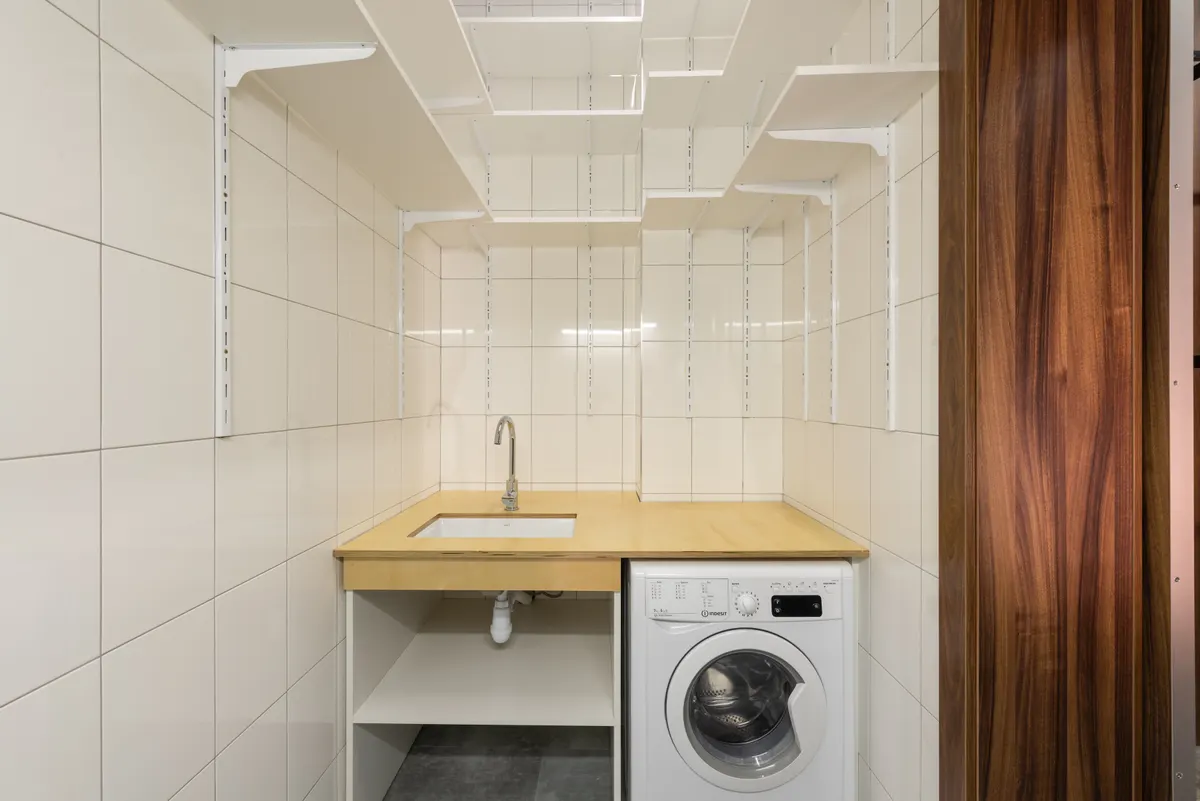
A tiny laundry room does not need custom cabinets or a renovation to work better. Whether you have a washer-dryer closet, a narrow utility area, or laundry tucked into a bathroom, the right layout can make sorting, washing, air-drying, and folding feel less chaotic. Start with four simple laundry zones, make vertical storage earn its space, and choose organizers that fit your actual measurements and routine. The practical ideas below work for compact homes and renters—and prioritize a system you can keep tidy after laundry day.
If you are comparing organizers rather than planning a full room reset, see our laundry room storage products for small spaces for compact options and buying considerations.
Affiliate disclosure: As an Amazon Associate, Smart Space Finds earns from qualifying purchases. We may earn a commission when you shop through links in this guide, at no extra cost to you.
The Small Laundry Room Plan: At a Glance
- Plan the layout: Check appliance doors, service access, and available vertical space.
- Create four zones: Sort, wash, dry, and fold or put away.
- Keep storage lean: One accessible supply shelf, one well-positioned hamper, and only the accessories you use.
- Build a habit: A 10-minute reset after laundry day prevents the room from becoming a catchall.
Safety First: A Practical Laundry Storage System
Divide the space into sorting, washing, drying and putting-away zones. Even without a dedicated laundry room, a slim hamper and one labeled shelf can reduce the movement of clothes and supplies between rooms.
Store detergent and stain-treatment products in their original labeled containers, inaccessible to children and pets. Allow ventilation around laundry appliances and never block access to hoses, outlets or service panels.
Measure Before You Organize
Photograph the room from the entrance and from the position where you spend the most time. Measure usable surfaces and check routes for doors, drawers, appliances and people. Identify three items that currently cause daily friction and decide whether they need better access, different storage or removal.
How to Organize a Small Laundry Room: Start With the Layout
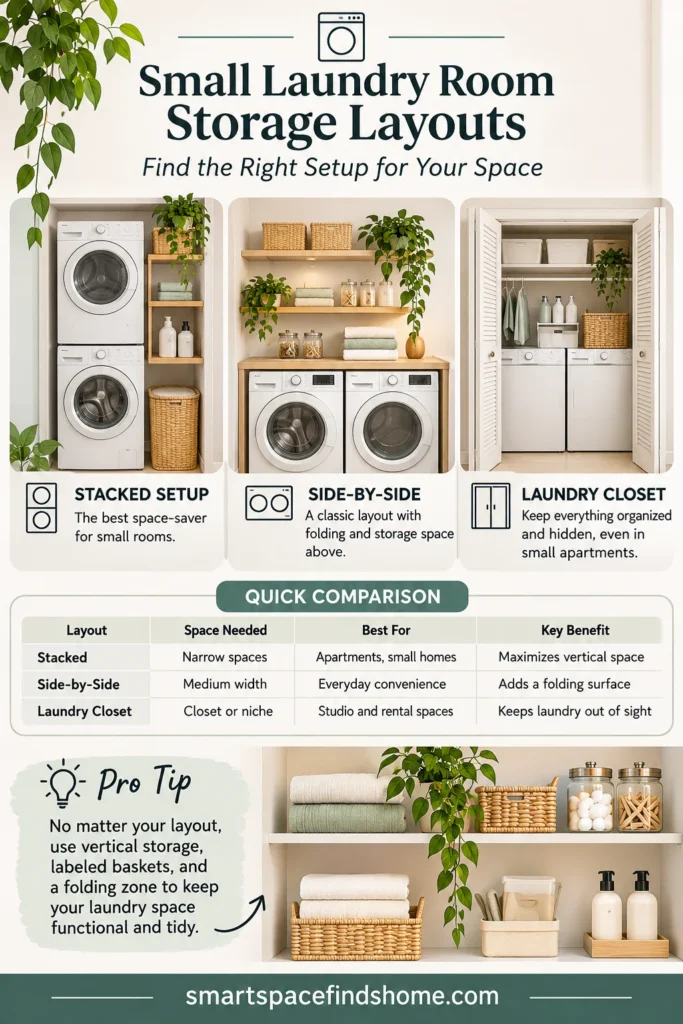
The best small laundry room organization starts with the space you actually have—not a shopping list. A laundry closet, a narrow pass-through room, and a washer tucked into a bathroom each need a different approach. Before adding shelves or baskets, measure the available wall space, check appliance door swing, and locate outlets, hoses, shutoff valves, and ventilation openings. Keep all service access clear and follow the appliance manufacturer’s clearance requirements.
Choose the setup that matches your space
- Stacked washer and dryer: Use an accessible side wall or a nearby freestanding cart for daily supplies. Do not place loose items on vibrating appliances.
- Side-by-side front-loaders: Consider a properly supported worktop only when manufacturer clearances and access permit it; do not rest a heavy countertop directly on appliance tops.
- Top-loading washer: Keep the full lid-opening area free. Use wall shelves set high enough to avoid interference, or a slim cart at the side.
- Laundry closet with doors: Check that a door organizer does not obstruct closing, ventilation, or the machine controls.
- Shared laundry or no dedicated room: Keep a portable carry kit for detergent and essentials and a collapsible hamper or drying rack that can be stored elsewhere.
Create Four Simple Laundry Zones
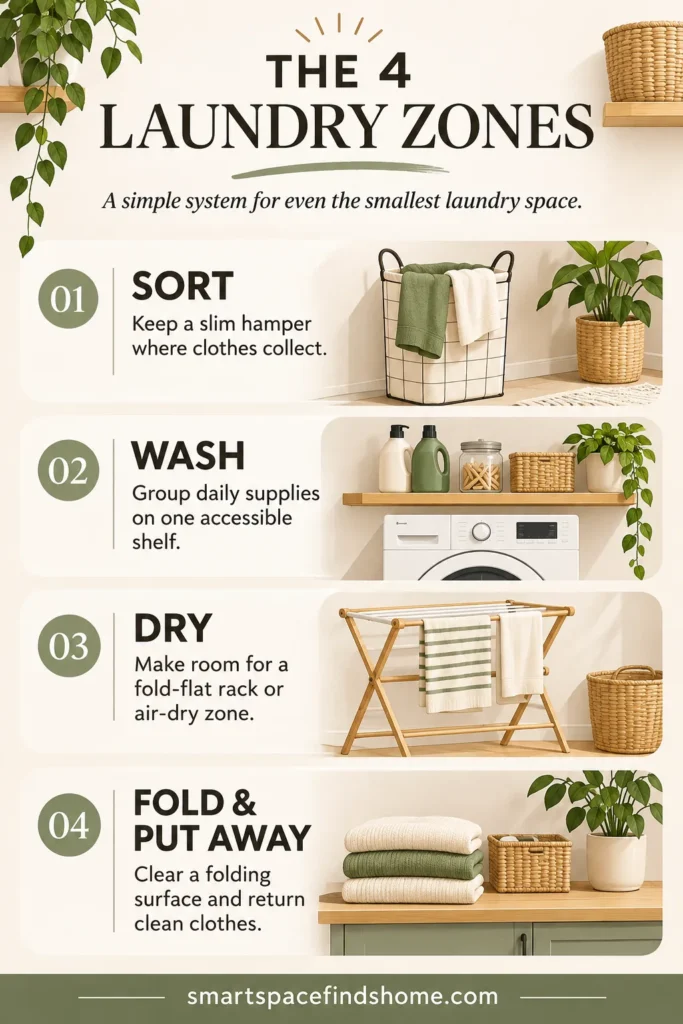
Organize around the sequence sort → wash → dry → fold and put away. The goal is to minimize extra steps rather than fill every available inch with organizers.
1. Sorting zone: one obvious place for dirty laundry
Use one narrow divided hamper for lights and darks if you sort that way, or a single lightweight basket if your space is extremely tight. Put it where clothes actually accumulate. If a tall hamper blocks circulation, move the sorting station into the bedroom or closet rather than forcing it beside the machine.
2. Washing zone: keep only frequent supplies close
Keep detergent, stain treatment, and a small laundry brush together on a stable shelf or in a washable caddy. Store laundry chemicals in their original, labeled containers and securely out of children’s and pets’ reach; do not decant detergents or pods into decorative jars. Keep heavier containers on appropriately rated, easily reachable shelving.
3. Drying zone: plan for items that cannot tumble-dry
A fold-flat drying rack, retractable line installed according to its instructions, or a small hanging rail can handle delicates without permanently occupying floor space. Allow airflow, control indoor moisture, and do not attach loads to appliance doors, pipes, or ventilation fixtures.
4. Folding and put-away zone: make the exit easy
Use a clear folding surface such as a nearby table, a safe wall-mounted fold-down shelf installed into suitable structure, or a portable folding board on laundry day. Place a clean-clothes basket beside the workstation and return folded items to their rooms promptly so the laundry area does not become a storage pile.
Make Vertical Storage Work Without Visual Clutter
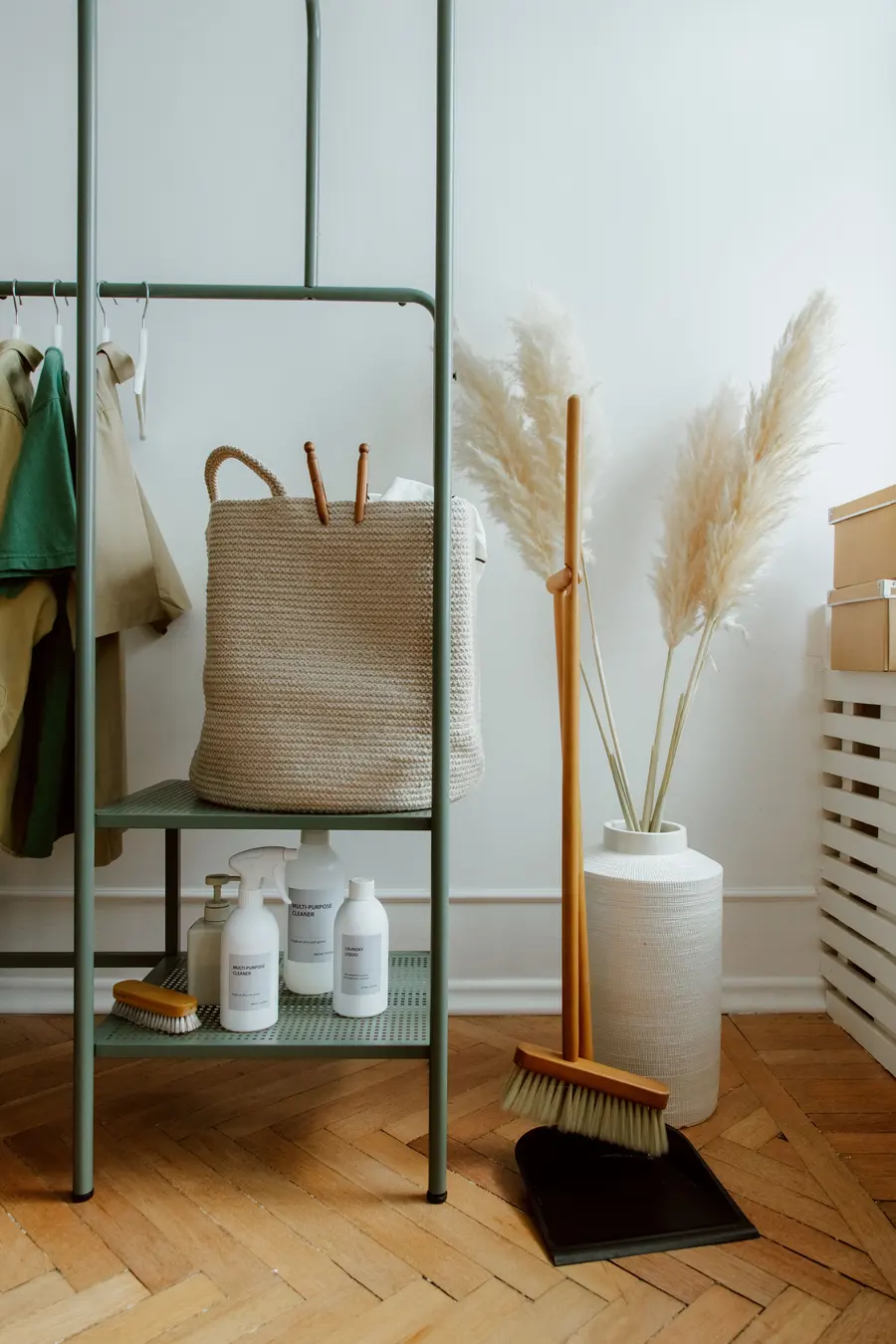
Use shelves for inventory, not decoration
Group frequently used supplies on one accessible lower shelf and backstock above, only when the load rating, wall anchors, and reach height make that safe. A shallow shelf often works better than a deep one because small items stay visible. Never mount storage where it blocks dryer exhaust, appliance ventilation, shutoff valves, electrical panels, or service access.
Try over-door and wall storage selectively
Over-door pockets can hold light accessories such as dryer balls or empty mesh wash bags. Hooks work for an empty laundry tote or clothespin bag. Use drill-free solutions only within their stated load limits and avoid adhesives on surfaces that may peel when removed. Heavy detergent bottles are better in a stable, child-inaccessible cabinet or shelf than on a hanging fabric organizer.
Choose a slim rolling cart only after measuring
Measure the narrowest point of the gap, including trim and hoses, plus clearance for wheels and hands. Leave the manufacturer’s required appliance space unobstructed. Choose a cart with a stable frame and lockable wheels if relevant, and keep the top tray easy to reach. A cart that must be pulled out every time you wash may be less useful than one well-placed shelf.
Laundry Baskets and Hampers That Fit the Way You Wash
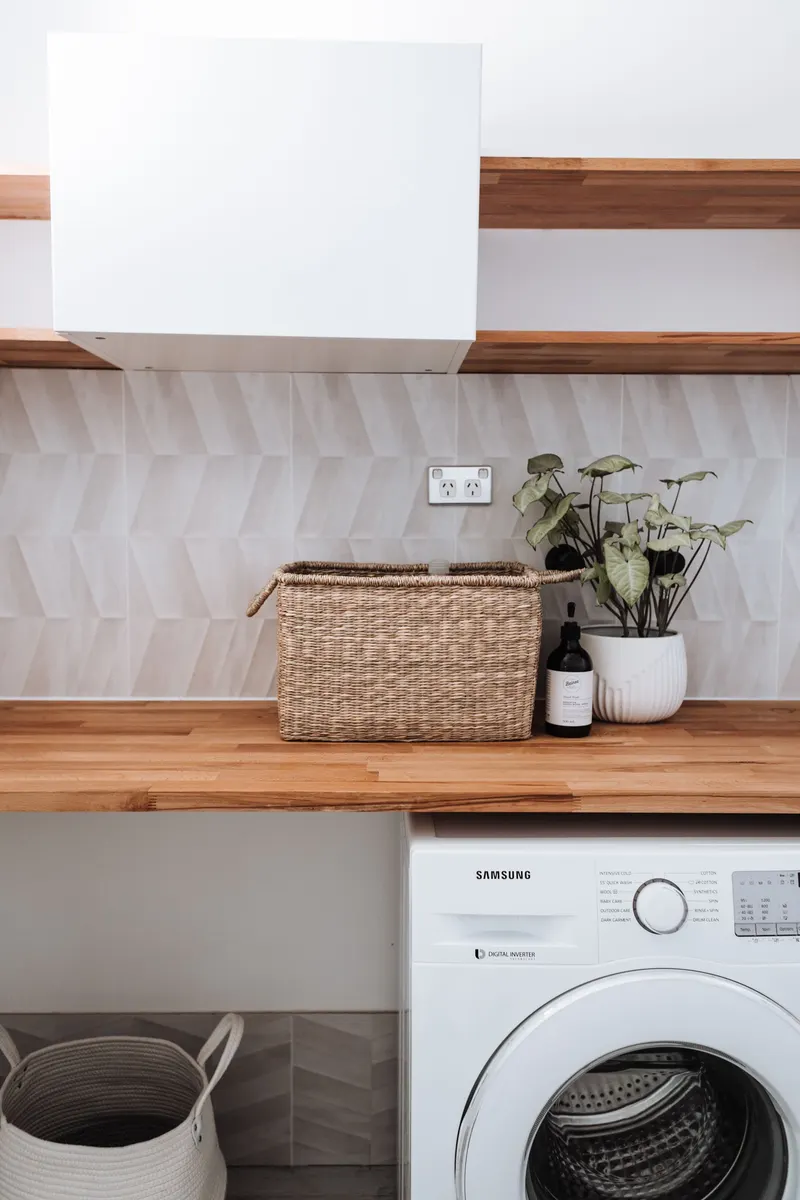
There is no universal best basket. A divided hamper is useful for households that presort; a collapsible basket suits a closet that must be cleared between loads; and a lightweight handled basket helps when clothes travel between floors or a shared laundry room. Before buying, consider where a full basket will stand without blocking a doorway and how easily you can carry it when loaded.
Small-Space Folding Stations That Actually Work
If you have front-loading appliances, a separate, properly supported counter can create a folding zone when installation and appliance access allow it. In rentals, a portable folding surface elsewhere in the home is often more realistic than building anything above machines. If you choose a fold-down wall unit, check your lease, wall construction, appropriate anchors, load rating, and the clearance required for safe use. Keep a permanent counter free of bins so it remains available when laundry is clean.
Use the Back of a Door for Ironing Storage
When a laundry room has no cabinet space, an over-door ironing caddy can help keep an ironing board off the floor. Check door thickness, clearance, and the organizer’s mounting and weight instructions.
Renter-Friendly Laundry Organization: No Major Renovation Required
- Start by relocating an existing basket or small shelf to reduce unnecessary movement.
- Use a freestanding narrow shelf or wheeled cart where floor space and appliance clearances allow.
- Try an over-door organizer for lightweight accessories only if the door closes freely.
- Use removable labels on existing bins rather than replacing all containers.
- Keep a folding drying rack behind a door or in a closet when not in use.
- Check the lease before drilling and test removable adhesive in an inconspicuous area.
For additional small-apartment ideas, explore our renter-friendly storage hacks.
A 30-Minute Laundry Room Reset
Daily maintenance: After the deeper 30-minute reset, use the five-step, 10-minute checklist below to keep the room organized between loads.
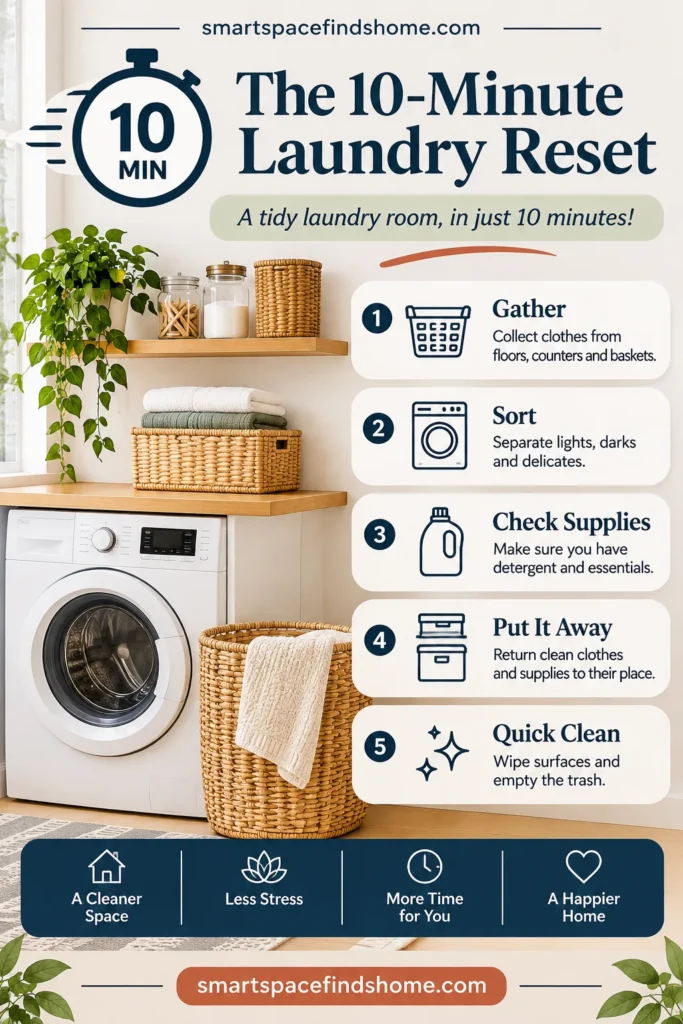
- Minutes 0–5: Empty one shelf or counter and discard truly empty packaging.
- Minutes 5–10: Return misplaced items to their actual rooms and check for duplicate tools.
- Minutes 10–15: Wipe the surface and inspect access to vents, hoses, outlets, and doors.
- Minutes 15–20: Group existing supplies by sorting, washing, drying, and folding.
- Minutes 20–25: Assign one specific home to each frequently used item.
- Minutes 25–30: Test one complete laundry workflow and note what still causes friction.
What to Measure Before Buying Laundry Organizers
- Gap width and depth: Measure the usable space at multiple heights and account for baseboards and connections.
- Door movement: Test full appliance doors, cabinet doors, and top-loader lids.
- Safe reach: Daily detergents should be reachable by the intended adult users while securely inaccessible to children.
- Load capacity: Confirm shelf, hook, cart, and wall-mount ratings.
- Ventilation and servicing: Maintain manufacturer-specified clearances and accessible connections.
How to Keep a Small Laundry Room Organized
Keep dryer accessories contained
One small container or drawer can hold reusable dryer balls and other lightweight accessories. Keep them clear of appliance controls and vents, and follow the care instructions for your garments and dryer.
After each load, return detergent to its designated storage, remove lint following the dryer instructions, and take clean clothing out of the room. Once a week, wipe the supply shelf and return stray items to their zones. Once a month, check whether any organizer is collecting clutter instead of solving a genuine problem. A useful system takes seconds to reset.
Keep a compact garment-care kit
For lint or pet hair on clothing, a reusable garment brush can be easier to store than disposable supplies. Keep it near your folding area or alongside your ironing accessories.
Small Laundry Room Organization FAQs
How do you organize a very small laundry room?
Start with the actual workflow: one sorting spot, one safe shelf for washing supplies, a plan for air-drying, and a place to fold or immediately put clothes away. Use walls and narrow gaps only after checking appliance clearance and access.
What can I store above a washer and dryer?
Properly installed shelving may hold lightweight bins and supplies when it is within load limits and does not interfere with ventilation, access, or appliance lids. Avoid unsecured items on vibrating machines.
Is a rolling cart worth it for a laundry closet?
Only if the measured gap accommodates the cart and required appliance clearances, and you can pull it out comfortably. Otherwise, a shallow wall shelf or portable laundry caddy may work better.
How do I organize laundry without cabinets?
Try one stable freestanding shelf, a lightweight carry caddy, or a compact hamper. Put backstock elsewhere rather than overcrowding the laundry area.
What are the best renter-friendly laundry storage ideas?
Freestanding shelving, portable caddies, collapsible hampers, and folding drying racks are generally practical reversible choices. Always check the lease and avoid blocking machine access.
Should I transfer detergent into matching containers?
No. Keep detergent and other laundry chemicals in their original labeled packaging, securely out of reach of children and pets. Uniform bins may organize unopened, correctly labeled products without removing their safety information.
What to avoid
Do not copy an inspiring image without adapting it to the actual dimensions of your home. Crowding shelves, blocking ventilation and adding decorative containers without reducing excess belongings can make a room less practical. Prioritize comfort, safety and easy cleaning.
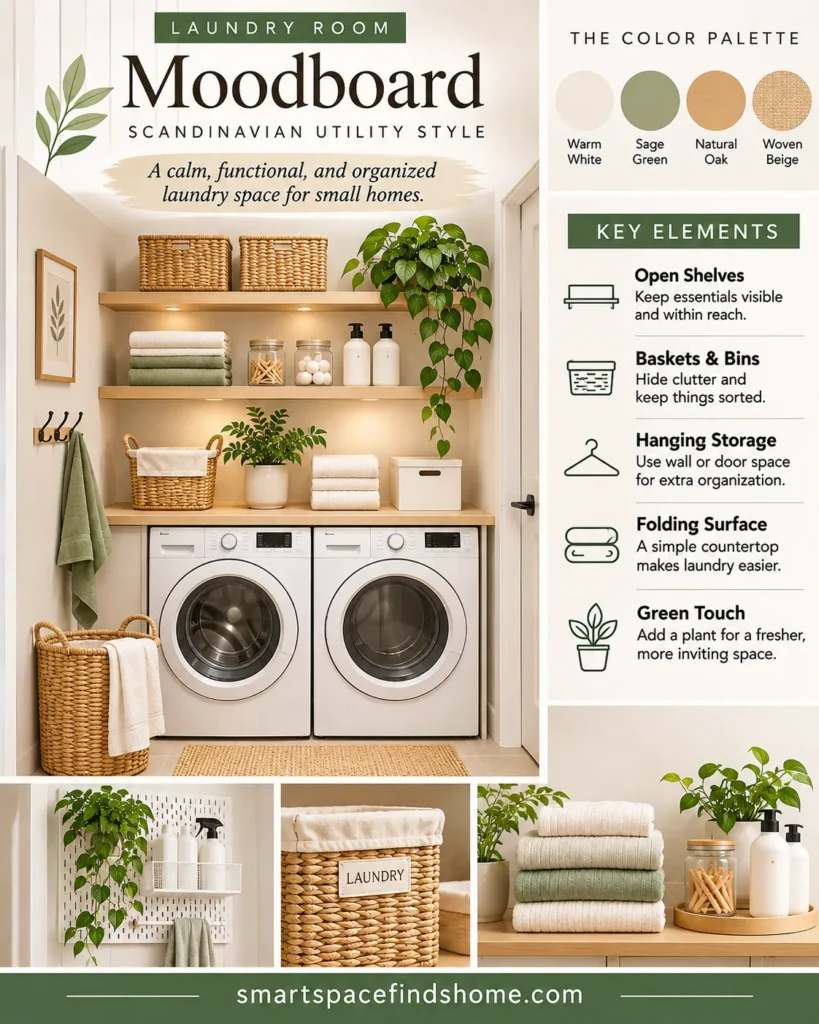
Scandinavian Utility: A Calm Laundry Room Color and Material Palette
A warm-white background, a few natural-oak details, and muted sage accents can make utilitarian storage feel considered. Choose wipe-clean surfaces and practical containers first, and use plants or woven textures sparingly where moisture and clearances allow. Keep laundry chemicals in their original labeled packaging and safely out of reach; the decorative containers pictured are for inspiration, not for transferring hazardous products.
Final thought: A successful refresh is the one you can maintain. Choose one change you can test this weekend, then gradually add details that genuinely improve the room.
For further inspiration, visit our small-space guides.