

Looking for mini vacation ideas that don’t require a hotel or a flight? Start with a new neighborhood, a nearby garden, a destination-inspired dinner, a self-guided art walk, or an intentionally slow afternoon. Each can fit into one weekend day, with options for different budgets, energy levels, and weather.
You don’t need a plane ticket, a hotel reservation, or a long weekend to feel like you’ve gone somewhere. Sometimes the best mini vacation is a few hours spent seeing familiar surroundings with fresh eyes: a neighborhood you’ve never wandered through, a garden at its quietest, or a meal that transports you somewhere new.
The secret isn’t pretending your hometown is a resort. It’s giving yourself a brief, intentional break from the routines that make every Saturday feel the same. These five weekend experiences are flexible enough for a solo afternoon, a low-key date, or time with a friend—and most can be planned without spending much.
Quick guide: which mini vacation fits your weekend?
| Experience | Time | Typical spend* | Best for |
|---|---|---|---|
| Explore a new neighborhood | 2–4 hours | $0–$25 | Curiosity |
| Garden or nature escape | 1–4 hours | $0–$30 | Fresh air |
| Cook a destination dinner | 2–3 hours | $10–$35 | Rainy days |
| Architecture and art route | 2–3 hours | $0–$20 | Discovery |
| Screen-light slow afternoon | 2–5 hours | $0–$15 | Unwinding |
*Illustrative US budget ranges per person, not live prices. Transit, admission, groceries, and local costs vary.
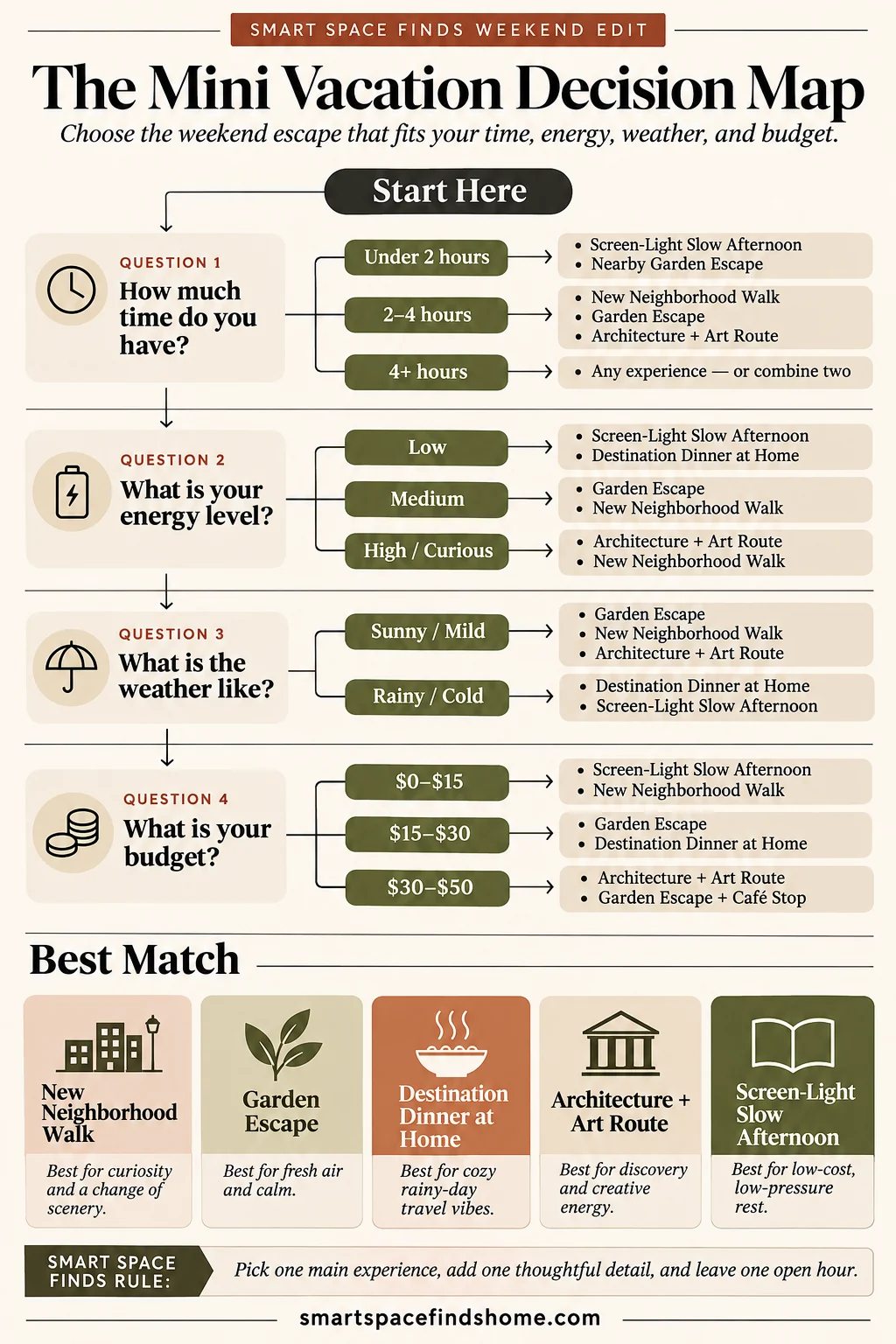
THE FIVE EXPERIENCES
1. Be a tourist in a neighborhood you’ve never explored
Choose one walkable neighborhood—not an entire city—and visit it as if you’ve just arrived for the first time. Look for independent bookstores, historic details, murals, little parks, and coffee shops. Give yourself permission to turn down a side street simply because it looks interesting.
Make it feel like a getaway
Start with a destination café or public square. Set a loose walking loop with two or three points of interest, then stop whenever you find something worth noticing. Take a few photographs if you enjoy it, but don’t turn the afternoon into a content-production assignment.
Budget-friendly version: Bring water, skip paid attractions, and use public transportation when practical. Accessibility option: Choose a route with seating, restrooms, smooth sidewalks, and short distances.
THE CITY EXPLORER EDIT · OPTIONAL ESSENTIALS
Little Essentials for a Day Out
A few genuinely useful extras for an easy neighborhood adventure. Only bring what makes your day simpler.
Affiliate disclosure: As an Amazon Associate I earn from qualifying purchases, at no additional cost to you.
2. Escape into a garden, park, or nearby nature area
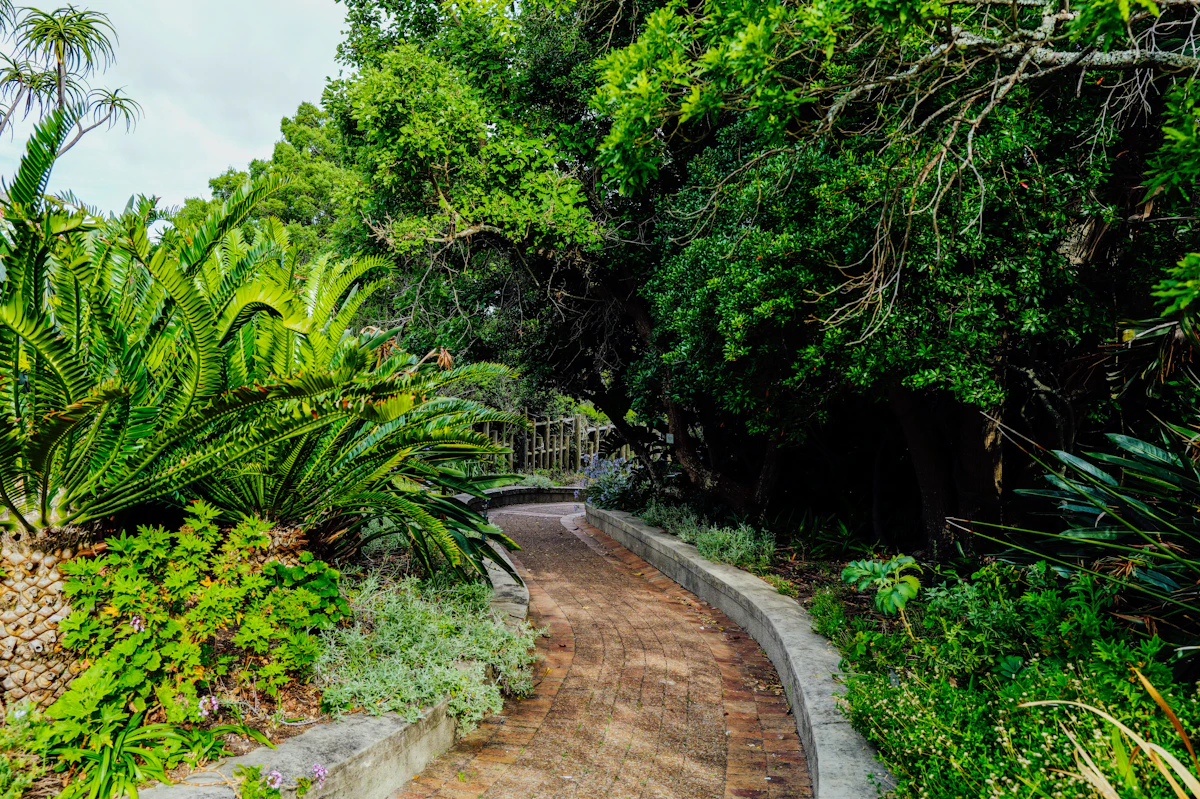
A botanical garden, riverside walkway, arboretum, lakeshore, or shaded local park can offer the change of pace people often hope to find on vacation. The key is to visit at a comfortable time and give yourself enough space to enjoy the experience without rushing.
The simple nature-escape formula
Choose a manageable walking distance. Pack water, a light layer, and a snack. If your route permits it, spend fifteen minutes seated somewhere pleasant rather than moving constantly. On a rainy or cold day, a greenhouse or conservatory may be an alternative, but check admission and access first.
Before leaving: Confirm current hours, weather, parking or transit, trail conditions, and any required reservations. The National Park Service trip-planning guide is a useful example of checking practical access details ahead of time.
THE NATURE & PICNIC EDIT · OPTIONAL ESSENTIALS
Pack a More Comfortable Nature Escape
Choose one picnic blanket or a small cooler if you need it; you do not need the entire collection.
Affiliate disclosure: As an Amazon Associate I earn from qualifying purchases, at no additional cost to you.
3. Turn dinner at home into a culinary trip

When going out isn’t appealing, let dinner be the destination. Choose a dish from a place you’re curious about—perhaps a Greek mezze-style table, a Japanese noodle dish, a regional Mexican recipe, or a classic French bistro supper. Read a little about the dish and follow a reliable recipe rather than reducing a whole cuisine to an aesthetic.
Build a low-effort destination dinner
- One main dish: Choose something you can reasonably cook with your equipment and skills.
- One easy side: Fresh salad, bread, vegetables, or another simple accompaniment.
- One small ritual: Set the table, use the plates you like, and make the meal feel unhurried.
Shop your pantry before buying specialty ingredients. A new preparation method or flavor combination often creates more novelty than an expensive grocery haul. If your kitchen is small, our small-kitchen coffee station ideas offer inspiration for a simple, café-like finish to the meal.
THE DESTINATION DINNER EDIT · OPTIONAL ESSENTIALS
Make the Meal Feel Like an Occasion
Thoughtful food-prep accessories that can also earn their place in your everyday kitchen.
Affiliate disclosure: As an Amazon Associate I earn from qualifying purchases, at no additional cost to you.
4. Take yourself on an architecture-and-art discovery route

Many communities have public art, historic buildings, libraries, or interesting architecture that residents pass every day without looking closely. Make a self-guided afternoon from three to five stops: a striking building exterior, a public mural, a civic space, and possibly a small museum or gallery.
Plan the route in 10 minutes
- Search for an official local heritage trail, public-art map, or visitor bureau walking route.
- Choose stops close enough to visit comfortably.
- Read a short history of each place from a reliable source.
- Check which buildings are open to visitors and respect private property and photography rules.
A good route doesn’t need spectacular landmarks. Look for craftsmanship, old signs, unusual windows, contrasting eras of construction, or a beautiful public courtyard. The pleasure is in noticing what you would otherwise pass by.
THE PRACTICAL OUTING EDIT · OPTIONAL ESSENTIALS
A Couple of Extras for Longer Outings
These additions make more sense for a full-day adventure than for a simple two-hour walk.
Affiliate disclosure: As an Amazon Associate I earn from qualifying purchases, at no additional cost to you.
5. Give yourself a screen-light afternoon that feels genuinely restful
Sometimes the vacation feeling comes less from going somewhere than from being unavailable to the endless demands of an ordinary day. Create a small window with fewer notifications, no household errands, and one activity that holds your attention: reading, sketching, visiting a library, having a long conversation, or taking a simple picnic.
The two-hour slow-afternoon itinerary
- First 15 minutes: Put away the chores and prepare the space or bag you need.
- Next 75 minutes: Enjoy one activity without switching tasks.
- Final 30 minutes: Sit somewhere comfortable, have a snack, or take a gentle walk.
Keep necessary communication available for safety, caregiving, and work obligations. The point is not a perfect digital detox. It’s choosing where your attention goes for a while.
For an at-home alternative, explore our small-apartment self-care corner ideas or boutique-hotel atmosphere guide; those articles focus on the home setting rather than the outing itself.
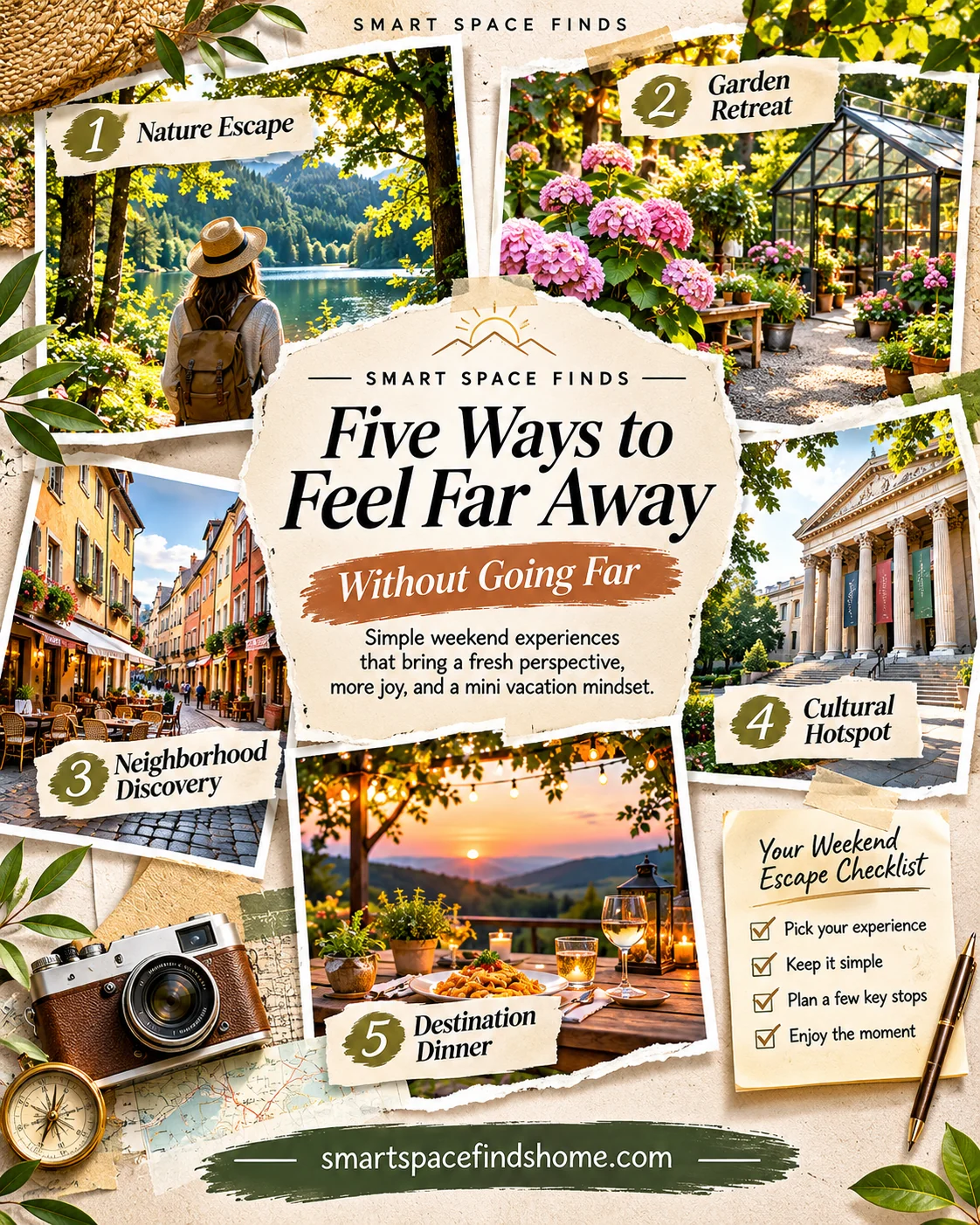
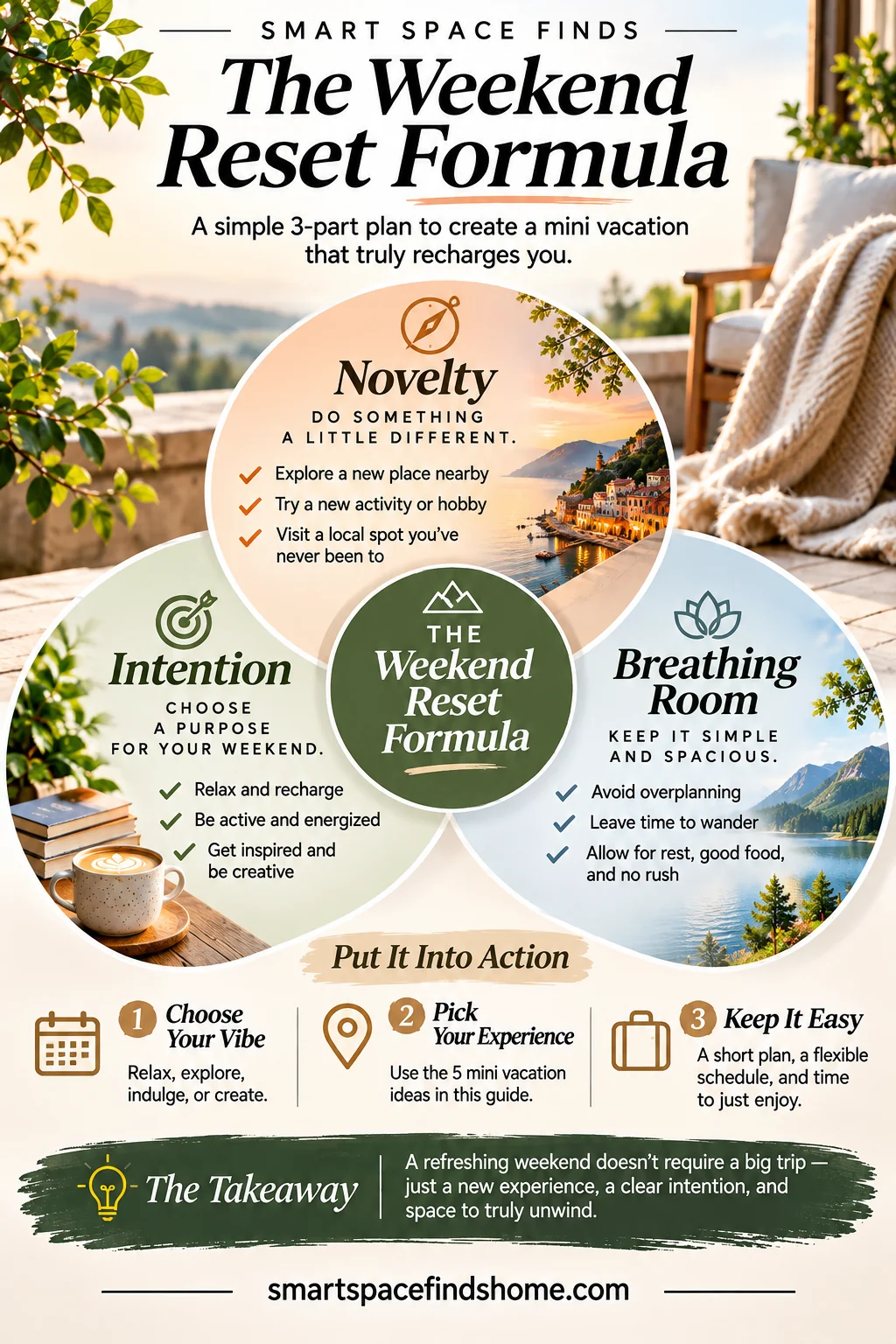
THE WEEKEND FORMULA
A small escape. Three meaningful ingredients.
One place, flavor, or activity outside your usual routine.
A budget and itinerary that fit the time you actually have.
Enough room to notice, linger, or change your plans.
THE SLOW AFTERNOON EDIT · OPTIONAL ESSENTIALS
A Little More Comfort, Wherever You Unwind
Start with what you already own. If these genuinely add to your plans, here are three thoughtful options.
Affiliate disclosure: As an Amazon Associate I earn from qualifying purchases, at no additional cost to you.
The Weekend Escape Planner: choose in five minutes
Try a realistic $0, $20, or $50 weekend
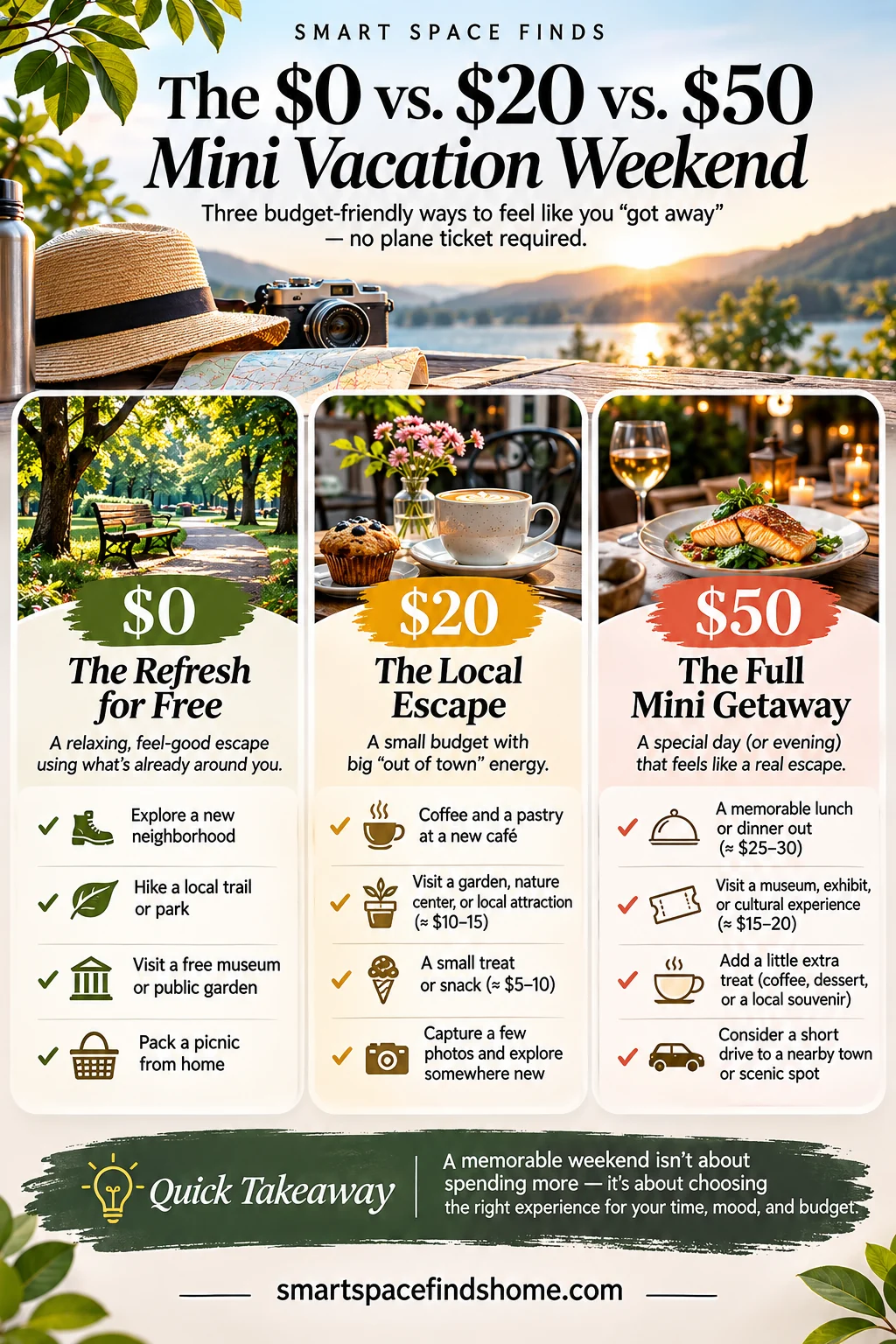
$0 plan: Walk a new neighborhood, bring a snack, and visit a public park. $20 plan: Add a café stop or low-cost local admission. $50 plan: Consider a paid garden or museum plus food, provided it fits your budget. These are planning examples, not guaranteed total costs.
The five-point checklist
Use these five quick checks before you leave. You can screenshot them instead of downloading an app or creating an account.
- Choose one experience, not five.
- Verify access, opening hours, route, and weather.
- Set a budget that includes transportation.
- Prepare a flexible backup if plans change.
- Leave time afterward so the day doesn’t end in a rush.
THE ITINERARY EDIT
Three ready-made mini vacations you can copy this weekend
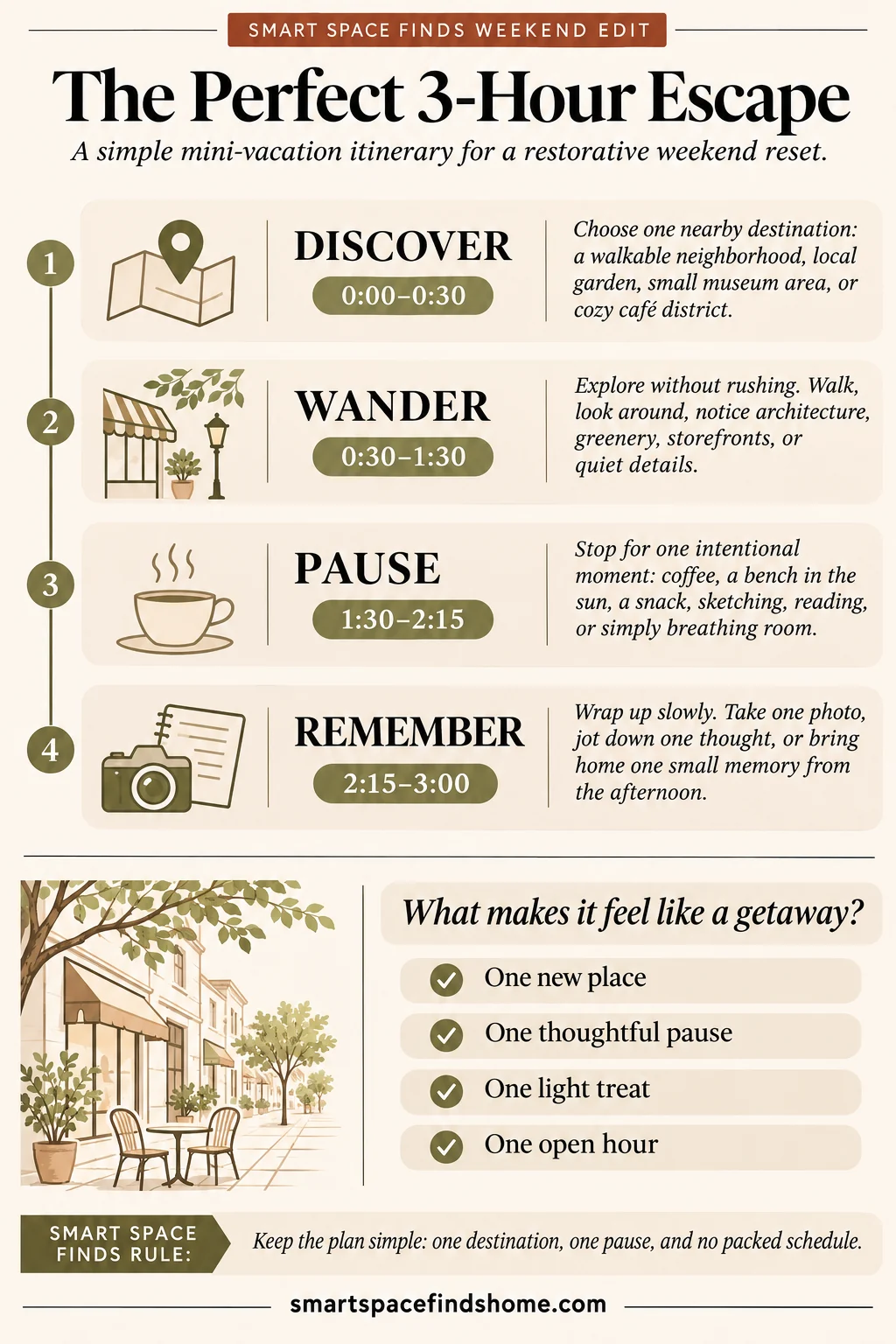
Not every great weekend needs a blank-slate plan. Choose a starting point below and swap in places that are realistically accessible where you live. Times are examples, not schedules you must follow.
PLAN 01 · 2 HOURS
The $0 Neighborhood Reset
0:00–0:30 Walk a new street or district.
0:30–1:15 Visit a public square, mural, or library.
1:15–2:00 Sit in a park with your own snack.
PLAN 02 · 3 HOURS
The Culture & Coffee Date
0:00–1:00 Explore a free gallery or architecture route.
1:00–2:00 Choose one café stop.
2:00–3:00 Wander home by a different route.
PLAN 03 · ONE EVENING
The Rainy-Day Food Escape
Before: Pick one recipe and check your pantry.
During: Cook slowly, without multitasking.
After: Set the table and keep the evening unscheduled.
Accessibility and weather note: Adjust walking distances, seating, venue accessibility, transit, and indoor options to your circumstances.
What makes a short break feel more memorable?
Novelty: Choose one unfamiliar detail. Intention: Decide what you want from the day—rest, discovery, or connection. Comfort: Match the plan to your energy and accessibility needs. Flexibility: Make room for unexpected discoveries. Reflection: At the end, notice what you actually enjoyed and repeat it in another form.
Buying accessories, booking an overnight stay, and filling the schedule are optional—not the definition of a successful getaway. In fact, a well-planned free afternoon may suit you better than an expensive trip that leaves you tired.
Frequently asked questions
How can I feel like I’m on vacation without leaving town?
Change one part of your normal routine: explore an unfamiliar area, plan a scenic walk, eat somewhere new, or dedicate a few unhurried hours to a favorite activity. Set a clear start and end time so it feels intentional.
What are good mini vacation ideas on a budget?
Free parks, neighborhood walks, local art routes, library visits, homemade themed dinners, and picnics are strong options. Check local admission, travel, and food costs before planning.
What if I only have two hours?
Pick a destination no more than a comfortable travel distance away and keep the plan to one activity. A short garden visit or quiet café-and-book afternoon can be enough.
Can a staycation work in a small apartment?
Yes. A pleasant meal, carefully chosen music, a comfortable reading spot, and a temporary break from routine can work without a spare room or new purchases.
What if the weather changes?
Keep an indoor backup such as a library, small museum, gallery, or destination dinner. Recheck hours and conditions before traveling.
Your next weekend doesn’t need to be bigger—just different
The most satisfying mini vacation is the one that fits the life you actually have. Choose a single experience from this guide, put it on your calendar, and make the practical arrangements in advance. You’ll spend less time deciding what to do and more time enjoying the change of pace.
Start small this weekend: Pick one unfamiliar place within easy reach—or make one ordinary evening feel like a special destination. That is enough for a meaningful beginning.