
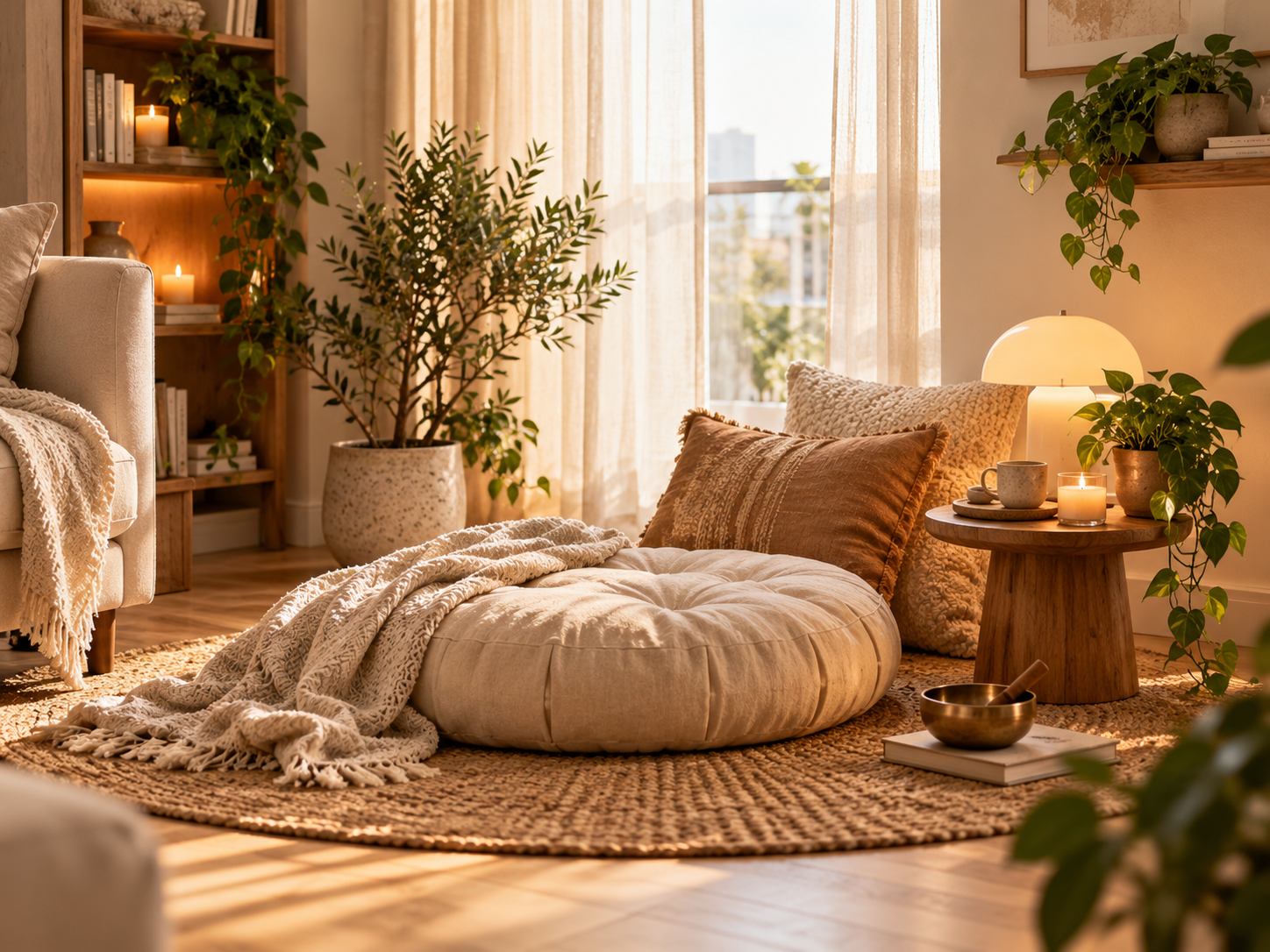
A meditation corner does not need an entire room
A meditation corner is a deliberately chosen place to sit comfortably and spend a few quiet minutes. It can be a cushion beside a bookcase, an armchair near a window or a temporary arrangement on the bedroom floor. What matters is ease of use, not whether it resembles a studio. In a small apartment, the most successful solution often disappears into normal life when you are finished. Begin by choosing the activity you actually intend to do: quiet sitting, reflection, guided audio or gentle breathing. This article is about spatial design and comfort rather than making medical claims about meditation.
Affiliate disclosure: This article contains Amazon affiliate links. As an Amazon Associate, we earn from qualifying purchases at no additional cost to you.
1. Measure the real footprint
Before buying a mat or low chair, mark the available area with a folded towel or the cushion you already own. Sit down and stand up a few times. Check whether doors, wardrobes, drawers and walkways remain usable. If you plan to stretch, test your arm reach with the furniture in its normal position. Avoid positioning yourself in front of an emergency exit, heater or a frequently used cabinet. A corner that forces other people to step around you will be hard to use consistently.
2. Try a chair before floor seating
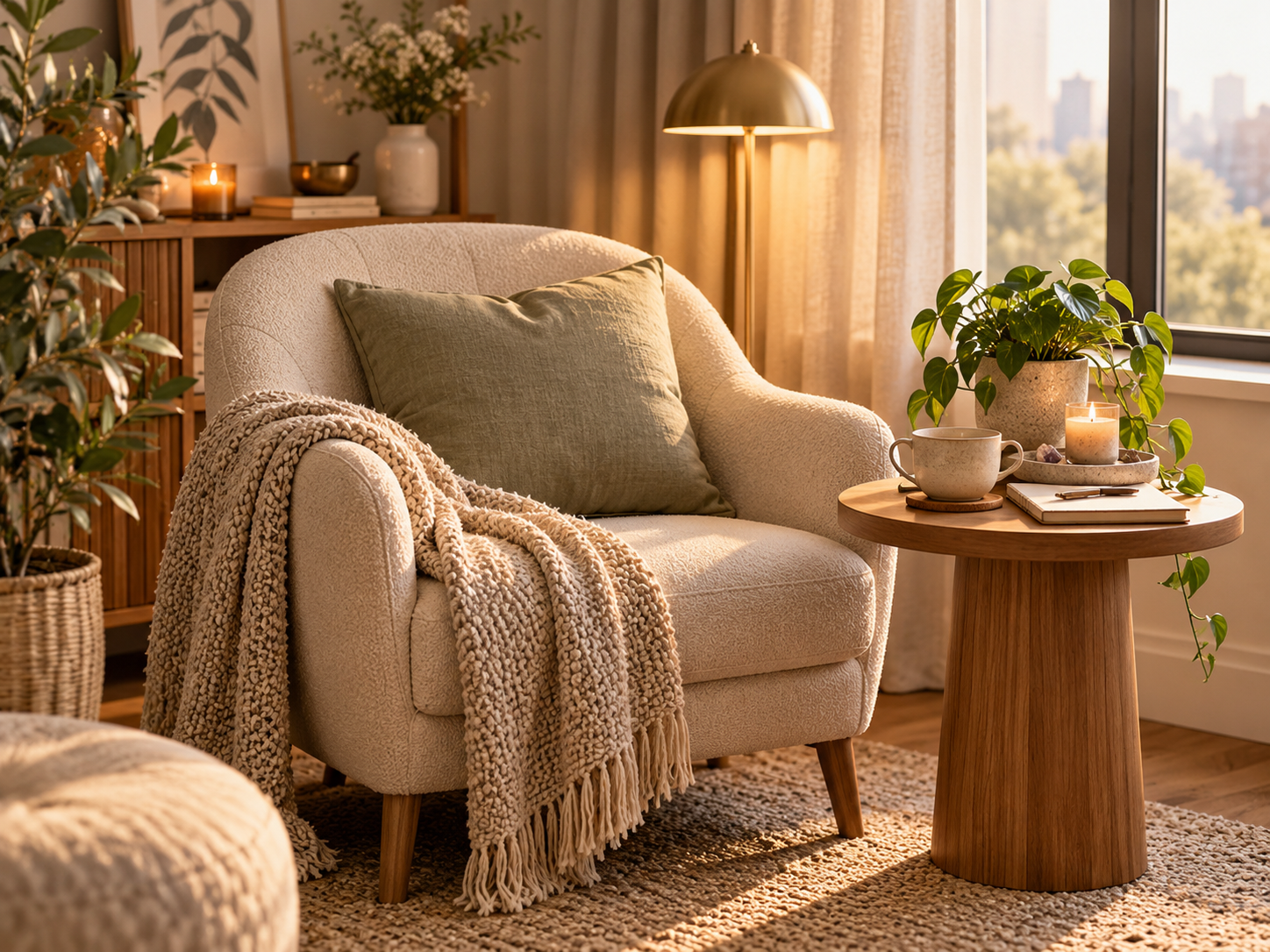
Floor cushions can look beautiful, but they are not comfortable or accessible for everyone. A stable dining chair with back support may be a better meditation seat than a low cushion. If you prefer the floor, use a mat with reliable grip and a folded cushion that keeps you comfortable. You do not need to hold an idealized posture or endure pain. Design the space so you can change position or stand up whenever necessary. Personal comfort matters more than an aesthetic convention.
3. Borrow warmth from the existing room
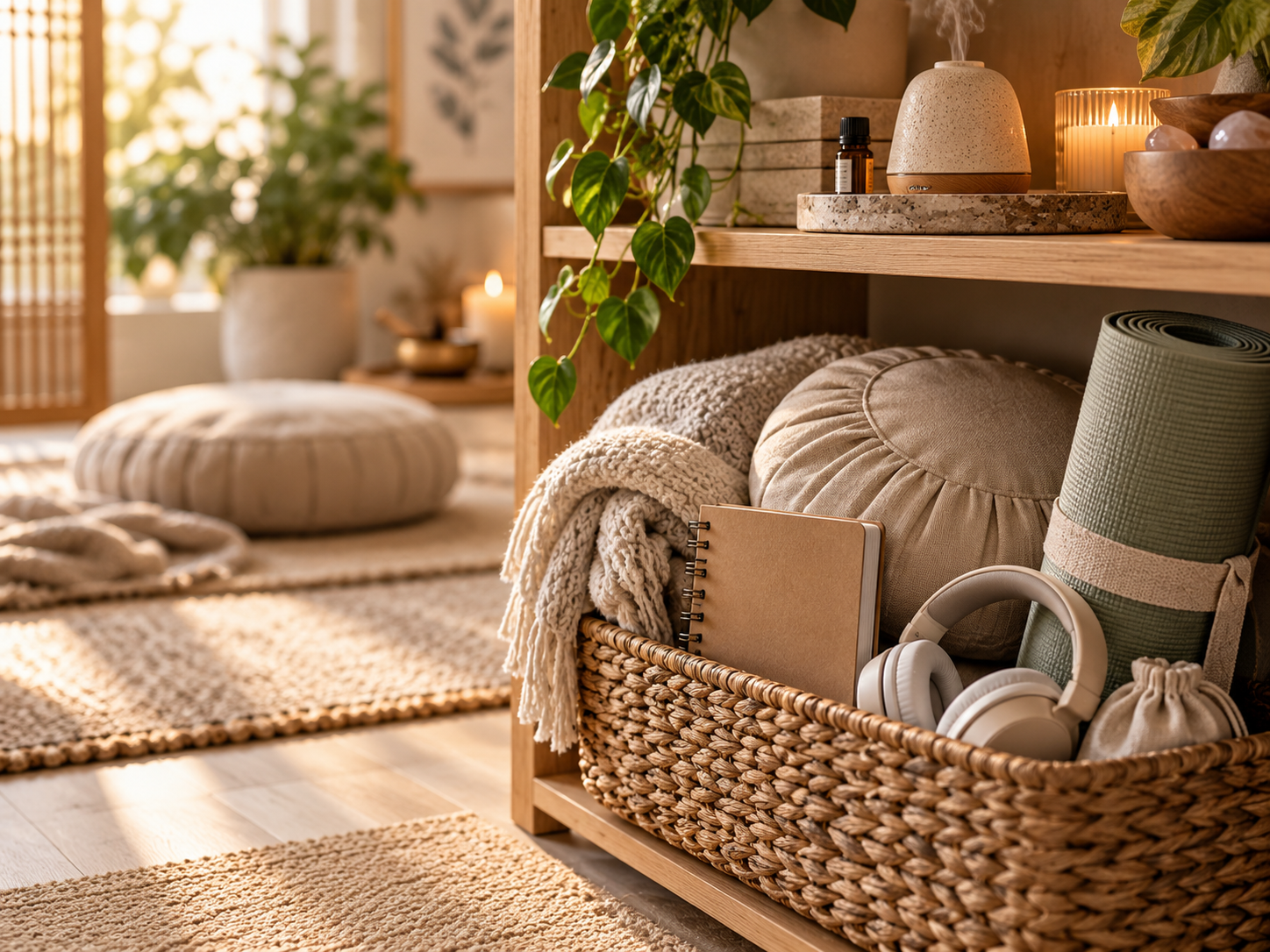
Avoid turning one corner into a conflicting color theme. Notice the material of your flooring, curtains, sofa or bed frame. A warm ivory blanket, a muted olive cushion or a natural wood tray can echo the rest of a cozy apartment. Limit yourself to one or two textural accents. In a room already filled with warm browns, for example, a cream cushion and a modest oak side table will look integrated. Buying a matching collection of decor is rarely necessary.
4. Make daylight an advantage
A window-side location offers pleasant natural light, but direct sun can create glare or excessive heat. Try the spot at the hour you expect to use it. Rotate the seat so light falls beside you rather than directly in your face. Keep the window and its handles accessible for ventilation. If the window is beside a busy street, consider whether the activity would be easier at a quieter time of day. Daylight is an option, not a requirement.
5. Choose a safe evening lamp
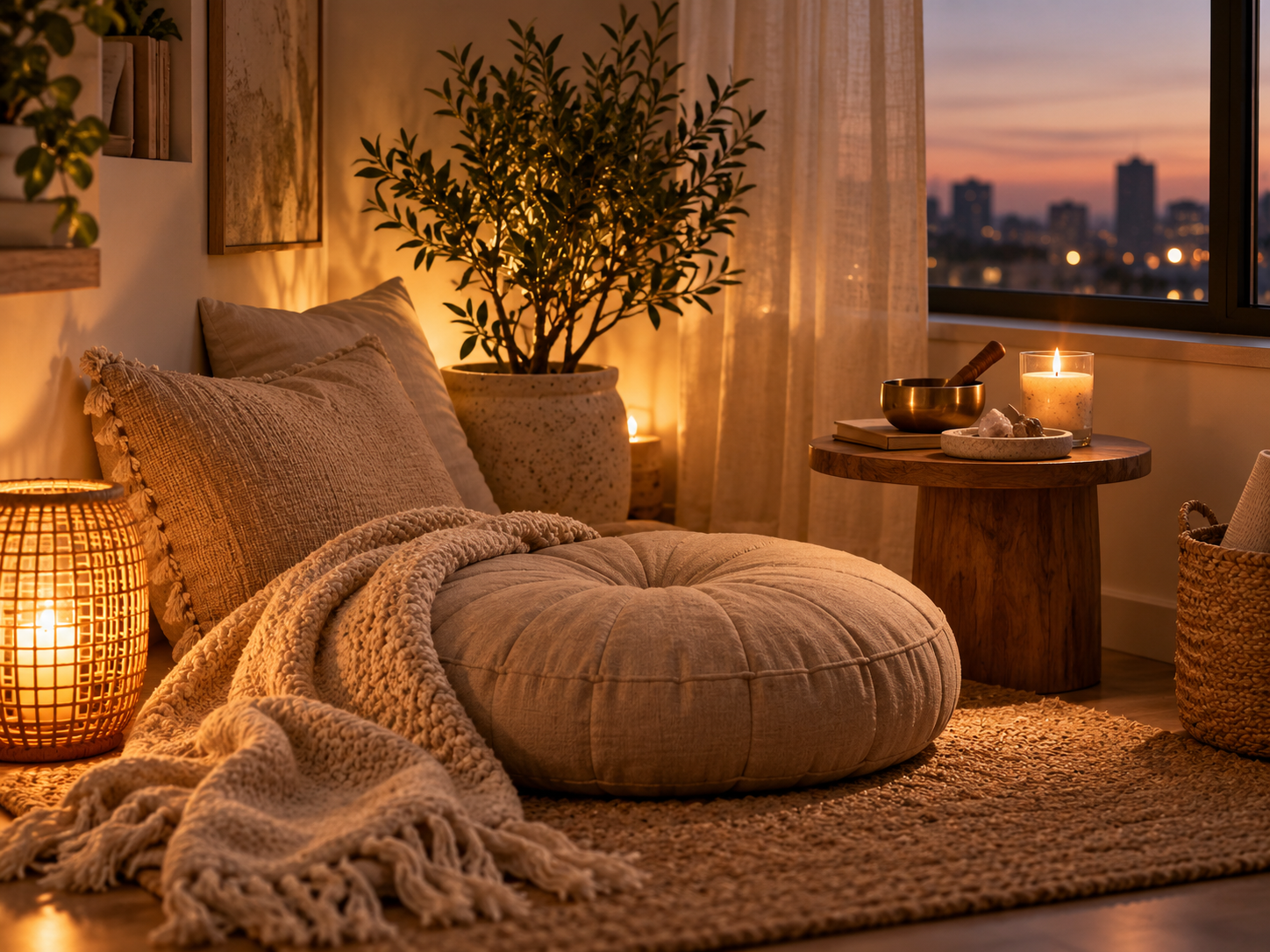
For evening use, a warm-toned table or floor lamp can distinguish the corner from the rest of the room. The light should be gentle enough to feel comfortable but bright enough to move safely. Position the switch where you can reach it without stretching behind furniture. Keep cords along safe routes and away from walking paths; do not cover electrical fittings with fabric. Battery candles can suggest a warm glow without bringing an open flame close to textiles.
6. Use a single visual anchor
A piece of artwork, a modest healthy plant or one meaningful object may provide a natural focal point. You do not need an altar, statue or special equipment. In fact, a collection of small decorative objects often makes a tiny surface feel busy. If you add a plant, choose one that suits the available light and is safe for the animals in your household. A low-maintenance object is preferable to something that turns a quiet corner into another chore.
7. Store the setup in one place
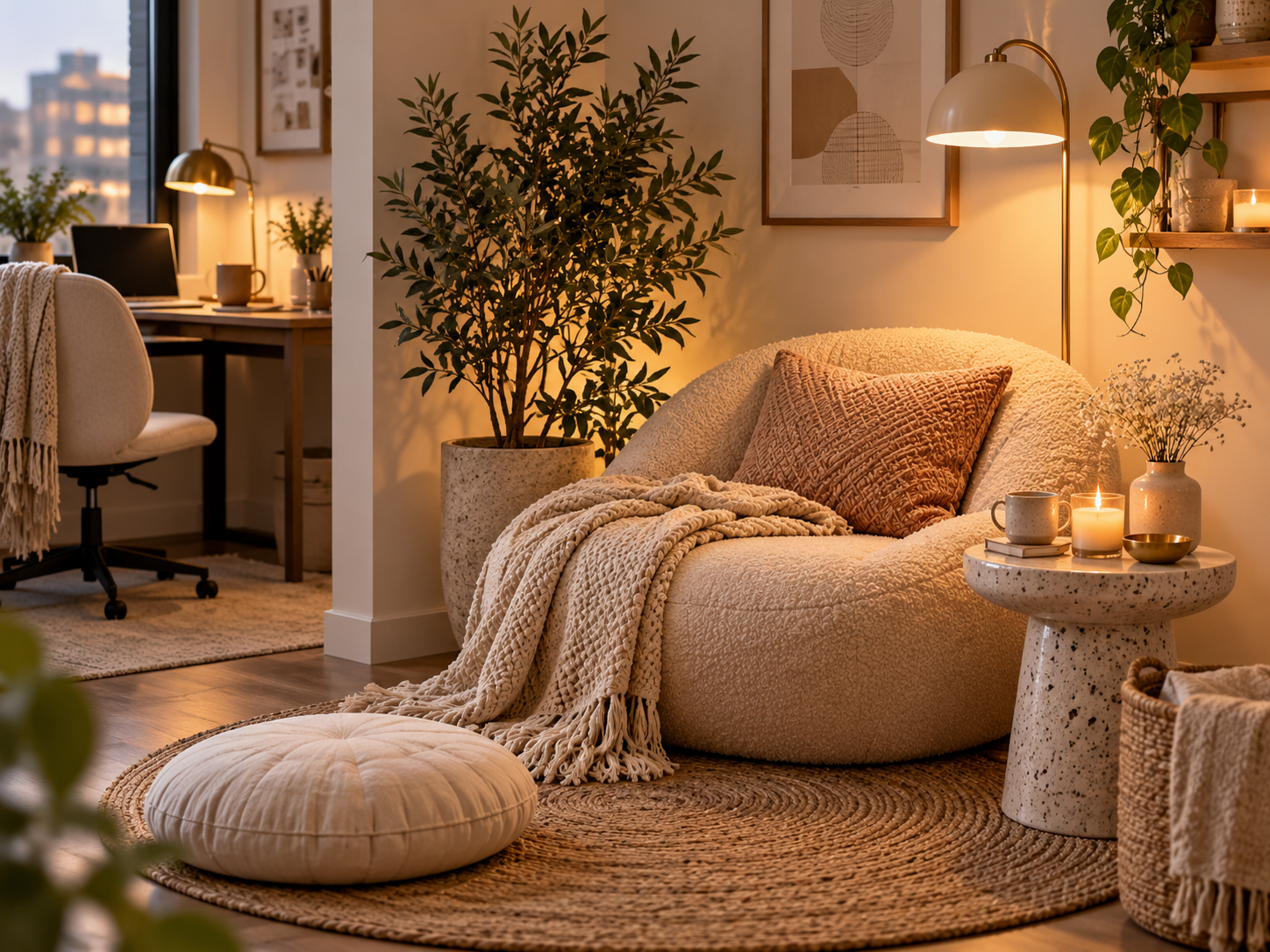
A meditation cushion, headphones, notebook and light blanket can fit in a basket or drawer. Keep supplies close to their point of use without leaving the floor cluttered. If storage is limited, a portable tray can contain the entire setup and move to whichever chair is free. Avoid tall shelves leaning against walls or poorly mounted hooks above seating. A good storage system shortens setup and cleanup so the corner remains useful on ordinary weekdays.
8. Handle noise realistically
A thick rug or curtains may soften some echo inside a room, but they do not soundproof a home. If conversations or traffic sounds interrupt you, try changing the time of day, closing a door where ventilation permits or using comfortable headphones. Agree on quiet periods with roommates instead of expecting a purchase to fix shared-space routines. If audio is part of the practice, keep the volume at a comfortable level and be considerate of others.
9. Make a studio-apartment version
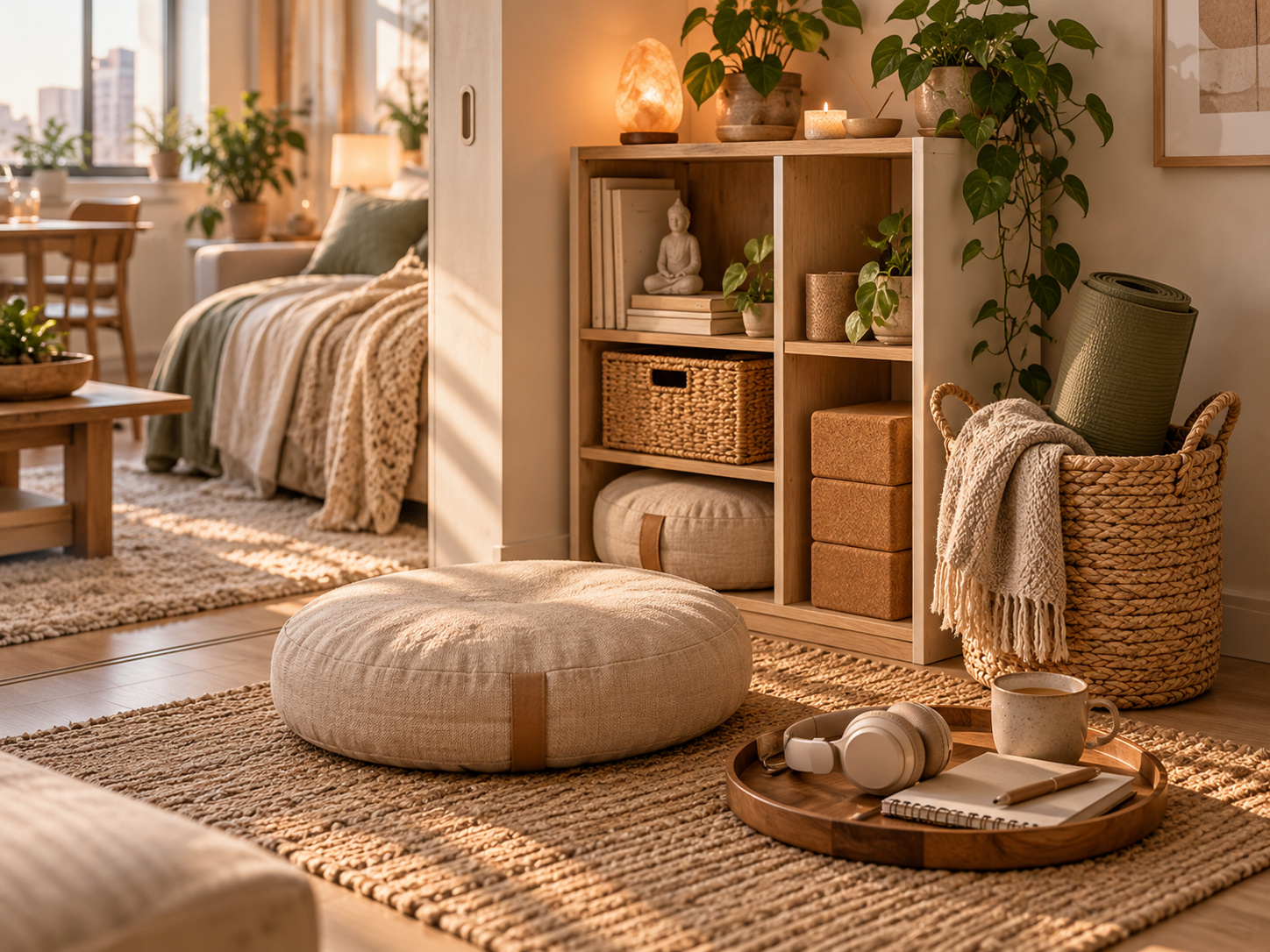
In a studio, one armchair can serve as a reading chair, guest seat and meditation place. Define the transition with a simple routine: clear the side table, put away your phone if desired and switch on one warm lamp. The seat does not need to remain permanently labeled as a wellness corner. Avoid adding folding screens if they make an already narrow studio feel cramped. Flexible use is a design strength.
10. Design a bedroom option
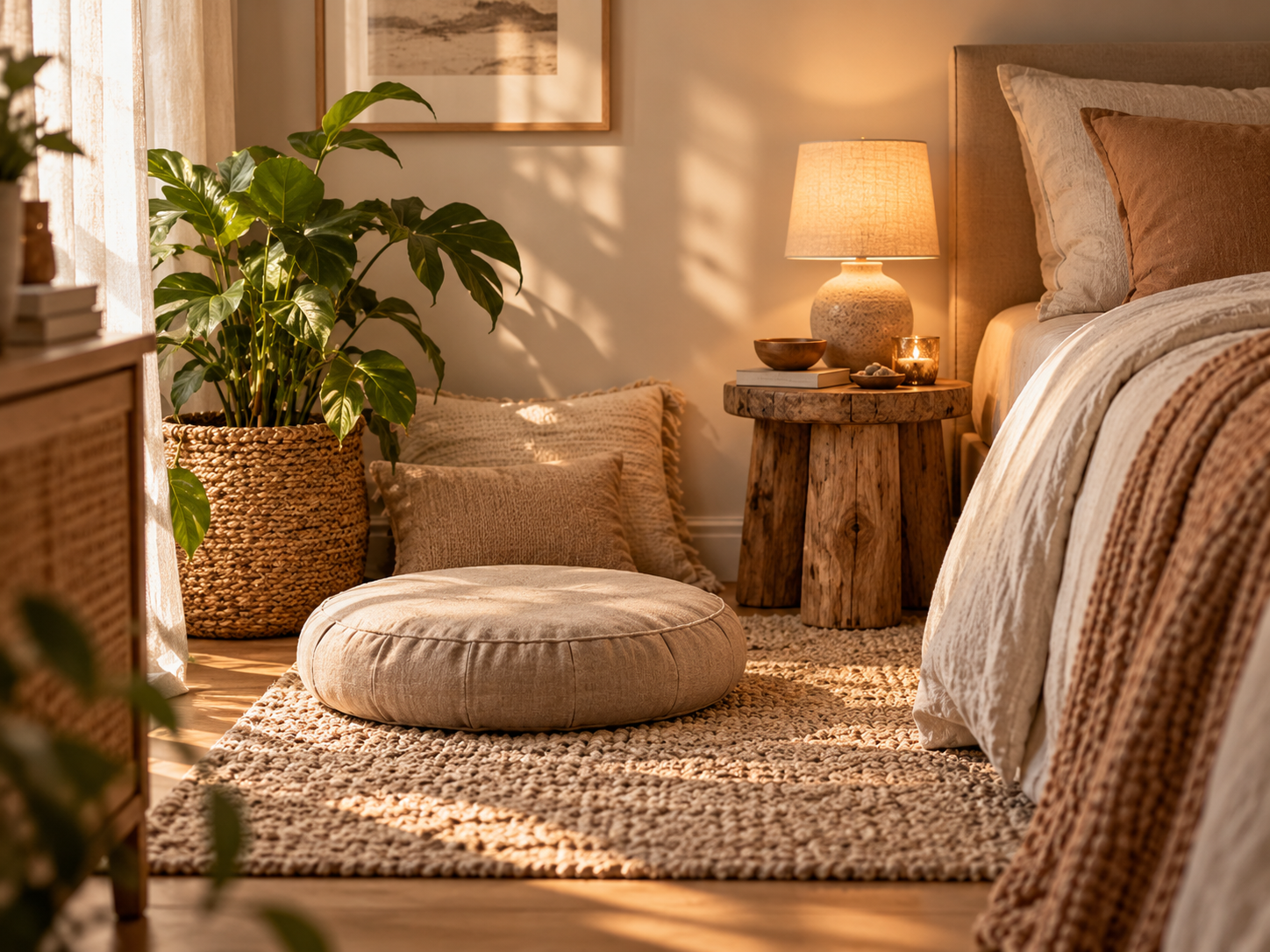
A bedroom corner is useful if the living room is shared, but do not crowd the path around the bed. A supportive chair, folded blanket and small lamp may be all you need. If there is no chair space, choose a seated position on the bed that is comfortable and stable. Keep charging cables, laundry and work documents away from the immediate surface. The goal is to reduce distractions without turning the room into a rigid minimalist display.
11. Consider an office reset corner
People working from home may not have space for a dedicated retreat. Try an arrangement at the end of the desk: move the keyboard back, set a notebook down and turn the chair away from the screen for a few minutes. If you have a separate chair, place it near the desk without obstructing the walkway. A small behavioral transition can be more useful than buying another piece of furniture. For further ideas see our small home office comfort guide.
12. Build a portable setup for shared homes
In a busy household, reserve a cushion, compact notebook and headphones in one basket. Carry them to an available quiet seat rather than expecting an entire room to remain vacant. This can help when the living room changes purpose throughout the day. Talk to housemates about shared spaces and leave everything tidy afterwards. Portability keeps the practice inclusive rather than imposing a permanent arrangement on others.
What to buy only after testing
| Need | Free first step | Purchase only if |
|---|---|---|
| Comfort | Use an existing stable chair | Current support is inadequate |
| Softness | Fold a washable throw | A dedicated mat solves a real problem |
| Lighting | Move a safe existing lamp | Useful light is missing |
| Storage | Clear one drawer | Supplies still create clutter |
| Privacy | Try another time or seat angle | A screen fits without blocking movement |
Measure any purchase, check cleaning instructions and consider whether it will serve more than one purpose. A costly chair or decorative collection does not automatically create an effective practice.
A five-minute routine that fits the layout
First, take the supplies you actually need to the chosen seat. Next, check comfort and clear any immediate trip hazards. Adjust the lamp or curtain. Spend a few minutes in the activity you selected, whether quiet reflection, a guided recording or a simple pause. When finished, return the cushion and notebook to their storage spot and leave the chair or floor accessible. This routine can be adapted to different hours and rooms. If it remains inconvenient after several attempts, change the setup rather than blaming yourself for not using it.
Frequently asked questions
Can I create a meditation corner without buying anything?
Yes. A comfortable chair, reasonably quiet spot and a small amount of clear space are enough to begin.
Does a meditation corner need plants or candles?
No. Decorative elements are optional. Avoid open flames near textiles and consider pet safety before choosing plants or fragrance.
What if I live with roommates?
A portable setup and a mutually agreed quiet time are more practical than taking over a shared room.
Should the corner be on the floor?
Not necessarily. A chair may provide better support and accessibility.
Keep the corner practical through the seasons
A good corner should adapt when daylight, temperature and household routines change. In winter, you may prefer a seat near a warm but unobstructed part of the room, with a washable throw and adequate task lighting. In summer, move away from direct afternoon sun or use a different seat when the room is cooler. Keep ventilation open and never place cushions directly against heaters. Review the setup whenever you rearrange furniture or change your working hours. A small seasonal adjustment can preserve comfort without buying new decor every few months.
Photograph the corner only as a practical record of where things belong, if that helps you reset it. The purpose is not to document an ideal space for social media but to make returning it to working order straightforward. When the corner stops being useful, adapt it to the life you are living now.
Quick visual checklist: a meditation corner that fits
- Seating: A stable chair or supportive cushion you can get in and out of comfortably.
- Clearance: Keep doors, drawers, walking routes and emergency exits unobstructed.
- Light: Use daylight or a stable warm lamp with a safely routed cord.
- Storage: Keep one small basket or drawer for the cushion, headphones and notebook.
- Comfort: Adjust warmth, airflow and noise to suit the time of day.
- Safety: Keep fabrics away from heaters and open flames, and choose plants with household pets in mind.
Styling note: One tactile cushion, a practical seat and a soft lamp will usually feel calmer than a corner crowded with decorative accessories.
The takeaway
The best meditation corner is easy to access, comfortable and simple to tidy. Test a location, adapt your existing furniture and add only the details that improve the actual experience. For related inspiration, explore warm lighting ideas, cozy bedroom styling and our home office upgrades.