
Seasonal decorating should make a small home feel refreshed without requiring a new storage cupboard every three months. The most sustainable approach is to keep a consistent year-round look and switch a few practical layers of color, texture and light as the weather changes.
Start With a Permanent Foundation
A small apartment does not need four complete sets of decorations. Begin with year-round pieces such as a neutral throw, one ceramic vase, a washable table runner and a wooden tray. They provide a quiet base that can be refreshed using color and texture rather than additional furniture. Photograph the room before rotating anything and identify the surfaces you really notice during daily life. When the foundational pieces already work together, each seasonal change becomes easier and more cohesive. Keep the layout functional, with space for books, meals and everyday objects rather than styling every available corner.
Choose a Storage Limit Before Shopping
Identify a single dry box, under-bed drawer or wardrobe shelf for off-season accents. Measure its usable space, including lid clearance, before deciding how much to keep. This limit prevents decorations from gradually filling the entire apartment. Separate fragile objects from textiles with suitable wrapping, and avoid placing heavy ceramics on delicate ornaments. A simple inventory on the box reduces forgotten purchases. If one new object does not fit, consider which existing item it replaces. Reserve a small amount of empty space so packing is straightforward and containers close without pressure. Storage is a design constraint, not an afterthought.
Build a Coherent Seasonal Color Story
Work with the existing flooring, upholstery and paint instead of imposing a completely different palette each season. For spring, a sage-green accent and light cream textile can freshen warm neutrals. Summer might introduce linen, sand and muted blue. Autumn suits cinnamon, rust and chestnut, while winter can shift toward ivory and deep forest green. Choose two dominant colors and one small accent for each rotation. Repeating the same wood tones and ceramics across seasons ensures that the home continues to look like one thoughtfully furnished space. Restraint has more visual impact than many competing colors.
Rotate Cushion Covers Instead of Cushions
Cushion inserts occupy far more room than removable covers. Keep a few quality inserts that suit the sofa and store folded covers by season. Choose machine-washable materials when possible, especially for a frequently used living room. Autumn velvet or textured cotton can provide warmth, while spring linen and lighter woven fabrics create an airier mood. Avoid buying oversized pillows that reduce comfortable seating. Launder and dry covers fully before packing them away. One small fabric bag often holds an entire year’s change of covers, making this one of the most space-efficient decorating habits.

Concentrate Decorations in One Focal Area
Pick one surface that naturally draws attention: a coffee table, narrow console, open shelf or windowsill. Build a small arrangement with varied heights using objects you already own. Leave room for mugs, remote controls or keys, because the space still serves a daily purpose. Decorating every shelf and counter simultaneously can make a small home feel crowded even when each individual arrangement is attractive. If you use candles or string lights, follow fire and electrical safety instructions and keep combustible textiles clear. Remove one object if the display feels difficult to clean or inconvenient to use.
An Autumn Refresh With Minimal Storage
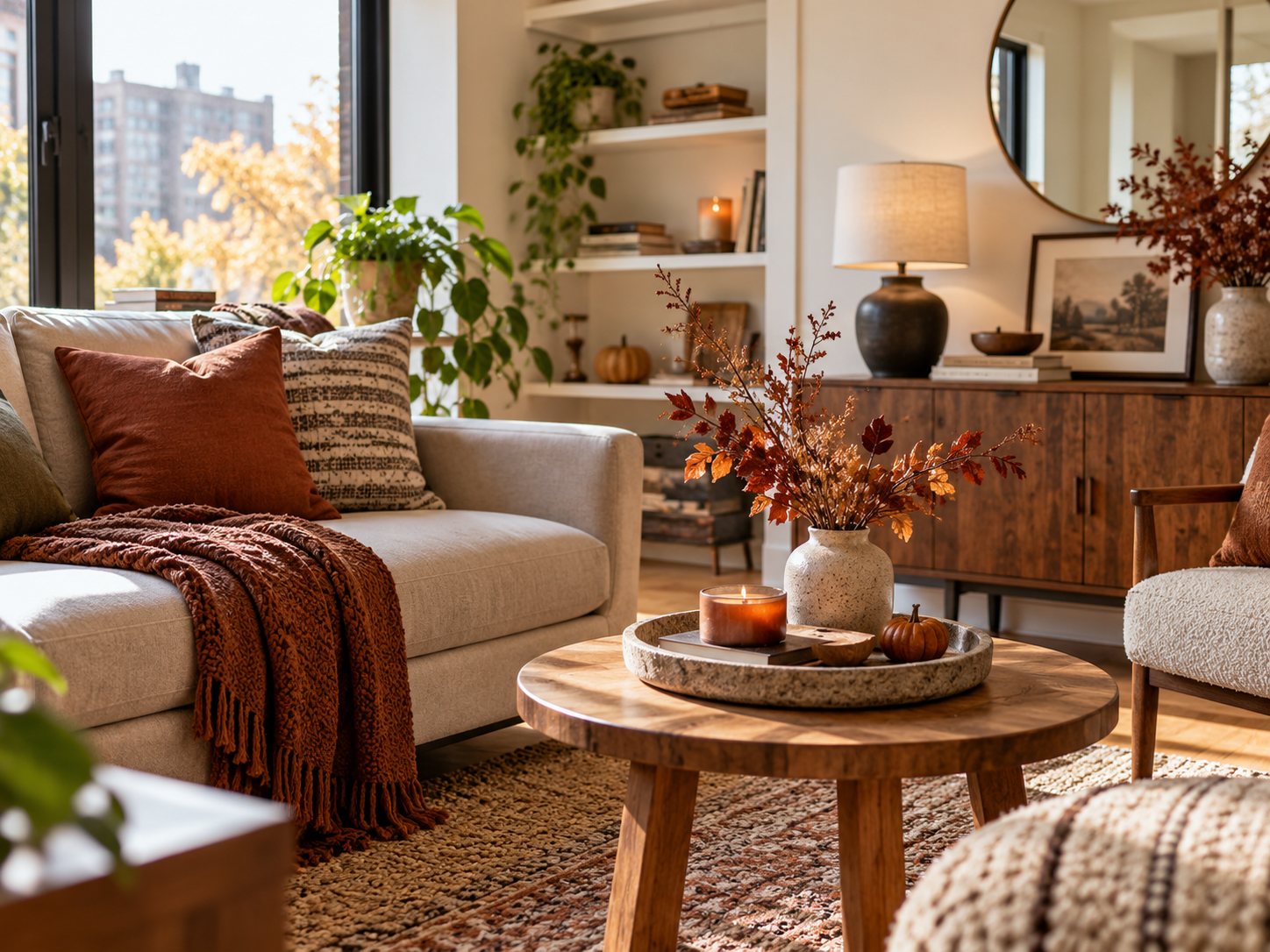
Create an autumn mood using a rust-colored cushion cover, a cozy throw and a restrained arrangement of dried branches. Existing ceramic bowls and wooden trays can hold seasonal fruit or natural materials, eliminating the need for numerous novelty figurines. Select botanicals that are clean, dry and appropriate for indoor use, and inspect any fresh produce for spoilage. A warm-toned lamp can reinforce the atmosphere on darker evenings without additional decorative clutter. Place textiles where they will actually be used. The result should look lived-in and comfortable, not like a seasonal showroom or a display that must be dismantled before dinner.
Winter Style After Holiday Decorations Go Away
Winter decorating can continue long after Christmas without retaining festive clutter. Keep textured throws, warm lighting and a small arrangement of evergreen-colored accents, then pack holiday-specific ornaments separately. An ivory cushion and dark green ceramic vase can feel seasonal but still useful into February. Avoid leaving electrical decorations running unattended or charging battery-powered items against soft furnishings. Dust dried branches and remove damaged decorations promptly. A compact winter scheme works best when it supports relaxed evenings and maintains clear pathways, rather than filling the apartment with objects used only for a few weeks.
Bring Lightness Into Spring
Spring rotation is a chance to wash heavy textiles, clean display shelves and introduce brighter textures. A pale runner, small vase of flowers or sage-toned cover can shift the mood without a major purchase. Consider how natural daylight changes the room. Keep windowsills usable, and place plants according to their actual light requirements rather than positioning them only for photographs. Avoid excessive floral accessories that clash with the home’s main palette. Pack winter items only after they are thoroughly clean and dry. The room should feel fresher because it is simpler and more open, not because everything has been replaced.
Summer Without a Theme Overload
Choose breathable-looking fabrics, a lighter throw and a few organic textures to make the space feel calm during warmer months. Sand, warm white, muted blue and olive can work well with an existing autumn-inspired foundation. Clear the route to a balcony or open window, and avoid adding floor baskets that collect dust or obstruct movement. A single coastal-colored cushion may create enough contrast without turning the room into a beach-themed collection. Protect surfaces from condensation around drinks and keep delicate natural materials away from damp areas. The goal is a bright practical home, not a temporary themed set.

Store Decorative Objects by Material
Fabric, paper, wood and fragile ceramics often need different protection. Fold dry textiles in a breathable suitable bag; store delicate paper ornaments flat where they will not be crushed. Wrap breakable items individually and use dividers to prevent impact when a box is moved. Label the box with the season and major contents. Avoid compressing fragile decorations beneath heavy household items or keeping cardboard next to a potentially damp external wall. When possible, store battery-powered accessories according to their manufacturer’s instructions rather than leaving batteries forgotten inside for many months. Good storage preserves the pieces you already own.
Create a Seasonal Shopping Rule
Before buying a new item, ask three questions: does it work with the existing palette, will it survive several rotations, and where will it be stored? A neutral stoneware vase or a durable cushion cover can usually serve longer than a dated novelty object. Set a modest annual budget and reserve part of it for replacing worn essentials, not expanding the total collection. Avoid purchasing duplicate fairy lights, trays or artificial stems simply because old ones are out of sight. Keeping an inventory photograph on your phone makes this decision easier in a store. The best seasonal decor has a clear purpose and a long useful life.
A Simple Weekend Rotation Routine
Start by clearing and cleaning the focal surface. Remove the previous season’s accessories, inspect them for damage and wash or wipe pieces according to their care requirements. Lay out the next season’s choices before putting anything in the room, selecting only a few cohesive items. Style the focal area, change one textile and adjust the lighting if desired. Step back and check that chairs, drawers and walkways still function normally. Finally, label the stored pieces and update a short inventory. An efficient rotation should feel like a refreshing maintenance task, not a full redesign that consumes an entire weekend.
Frequently Asked Questions
How many seasonal decorations should I keep?
Start with whatever fits comfortably into one dedicated storage area without displacing essential belongings. Choose versatile pieces that work in multiple seasons.
How can I change the look without shopping?
Rearrange existing textiles, change the focal display and remove visual clutter before considering new purchases.
What is easiest to rotate?
Removable cushion covers, small runners, lightweight botanical accents and adjustable warm lighting are relatively easy to swap.